
 Erin Maxwell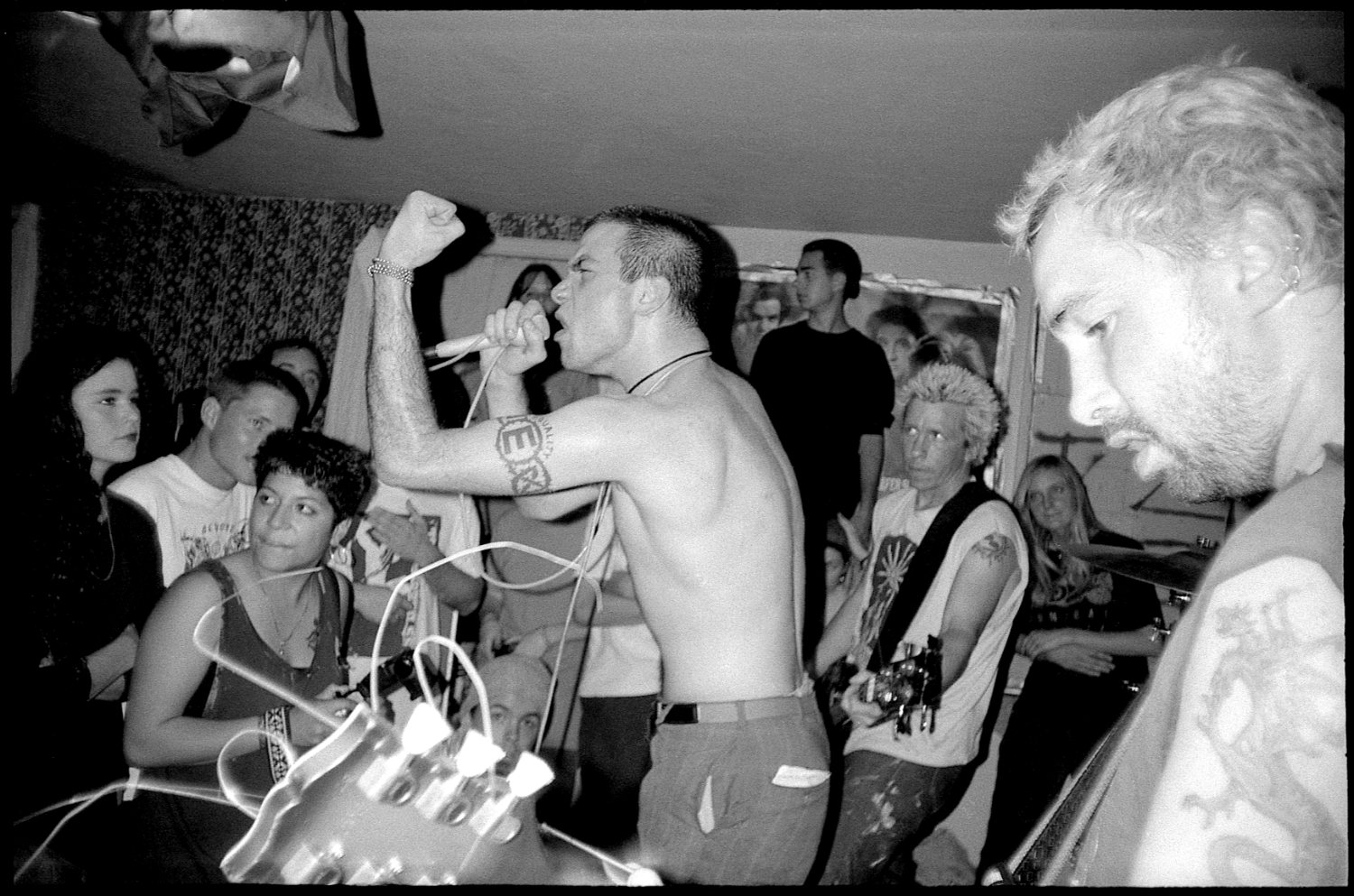
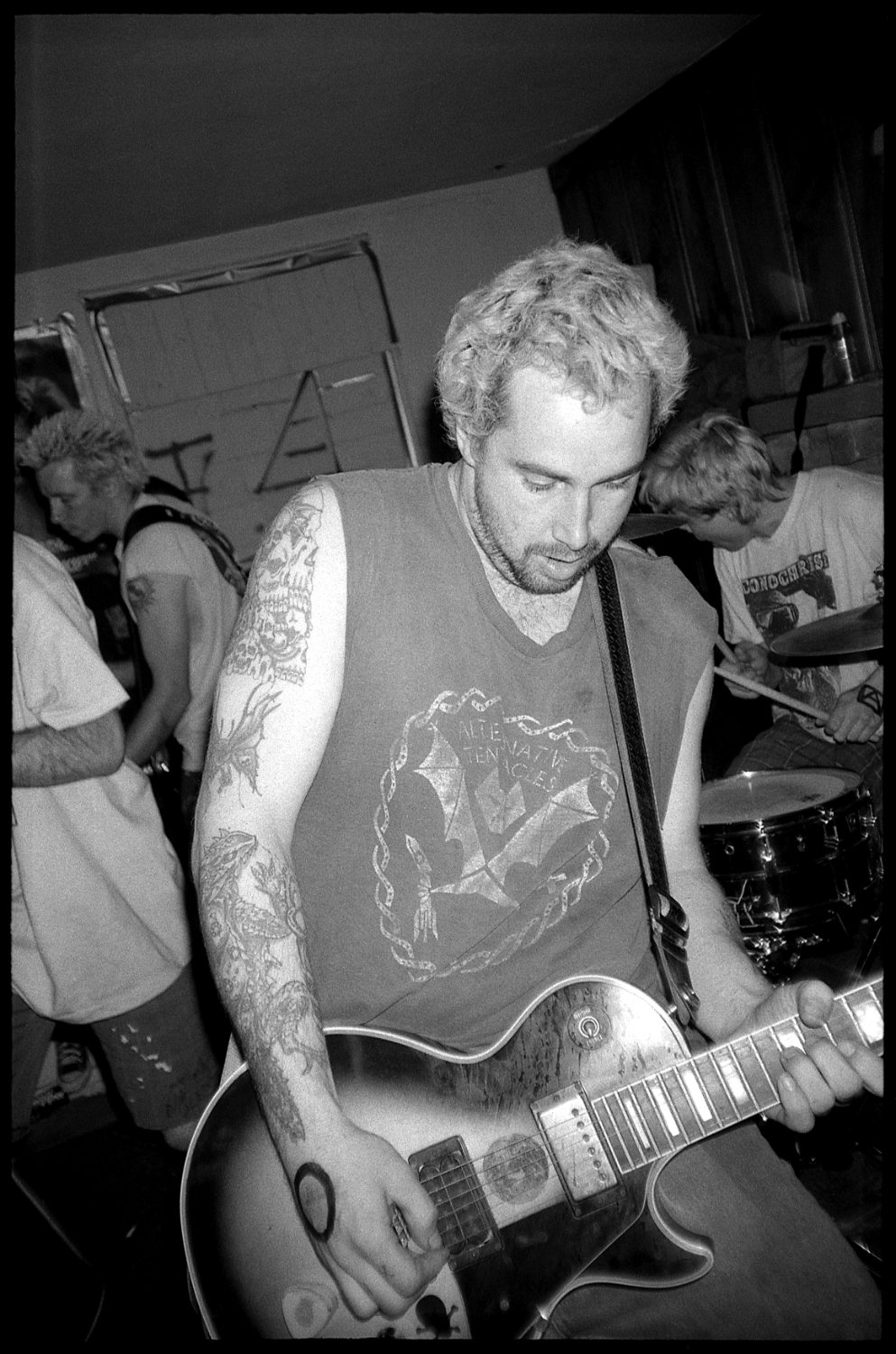




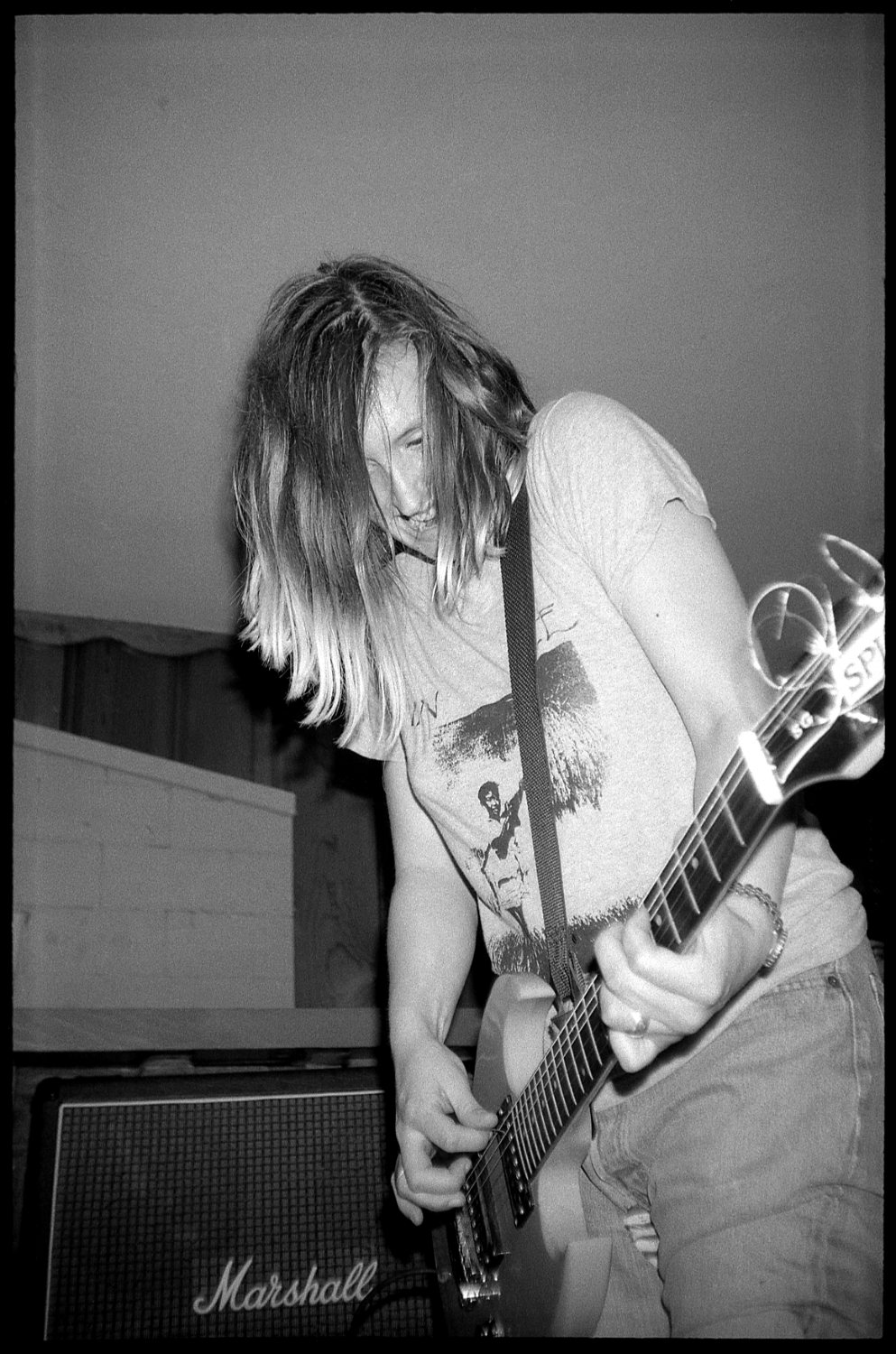
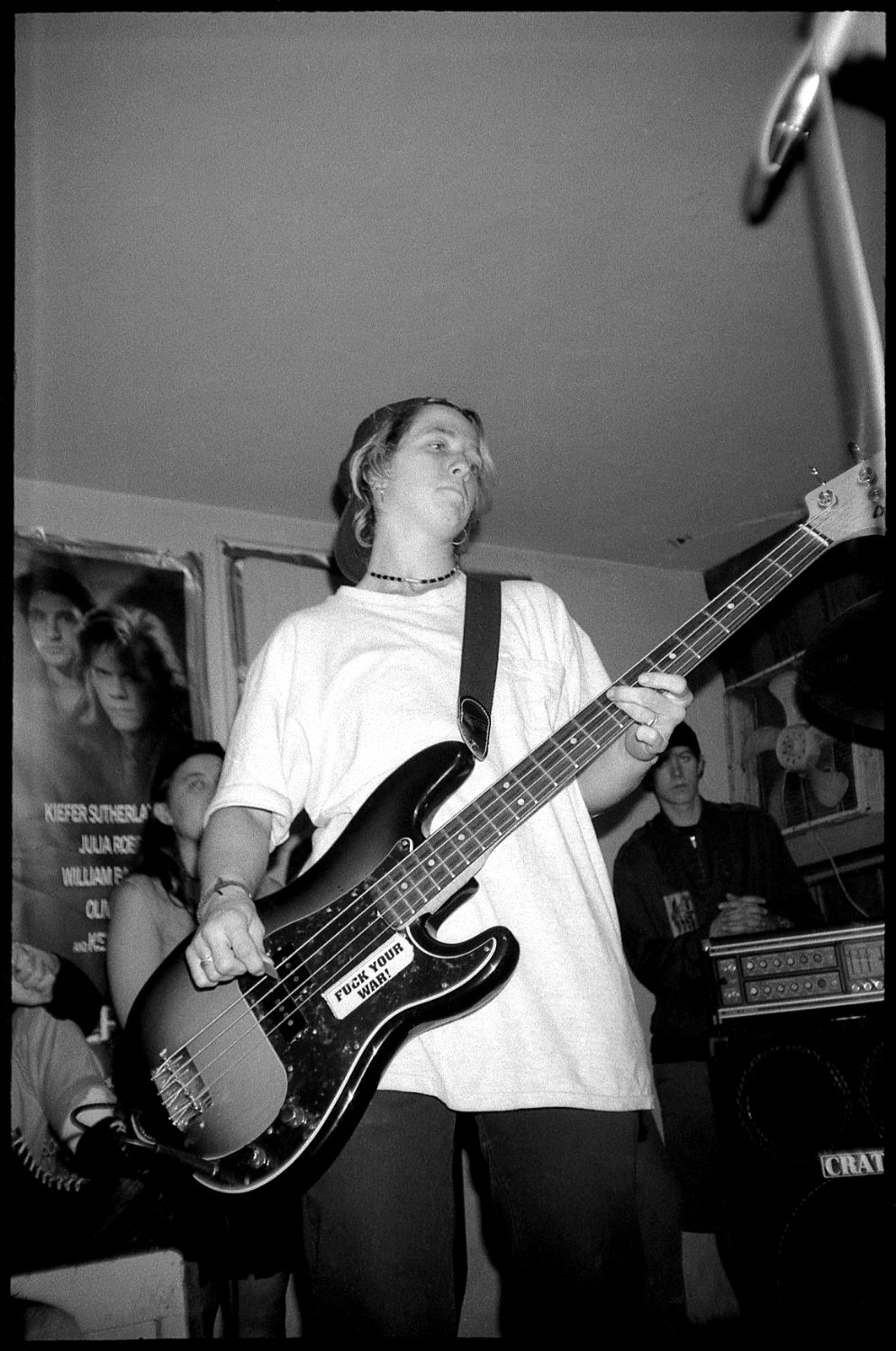
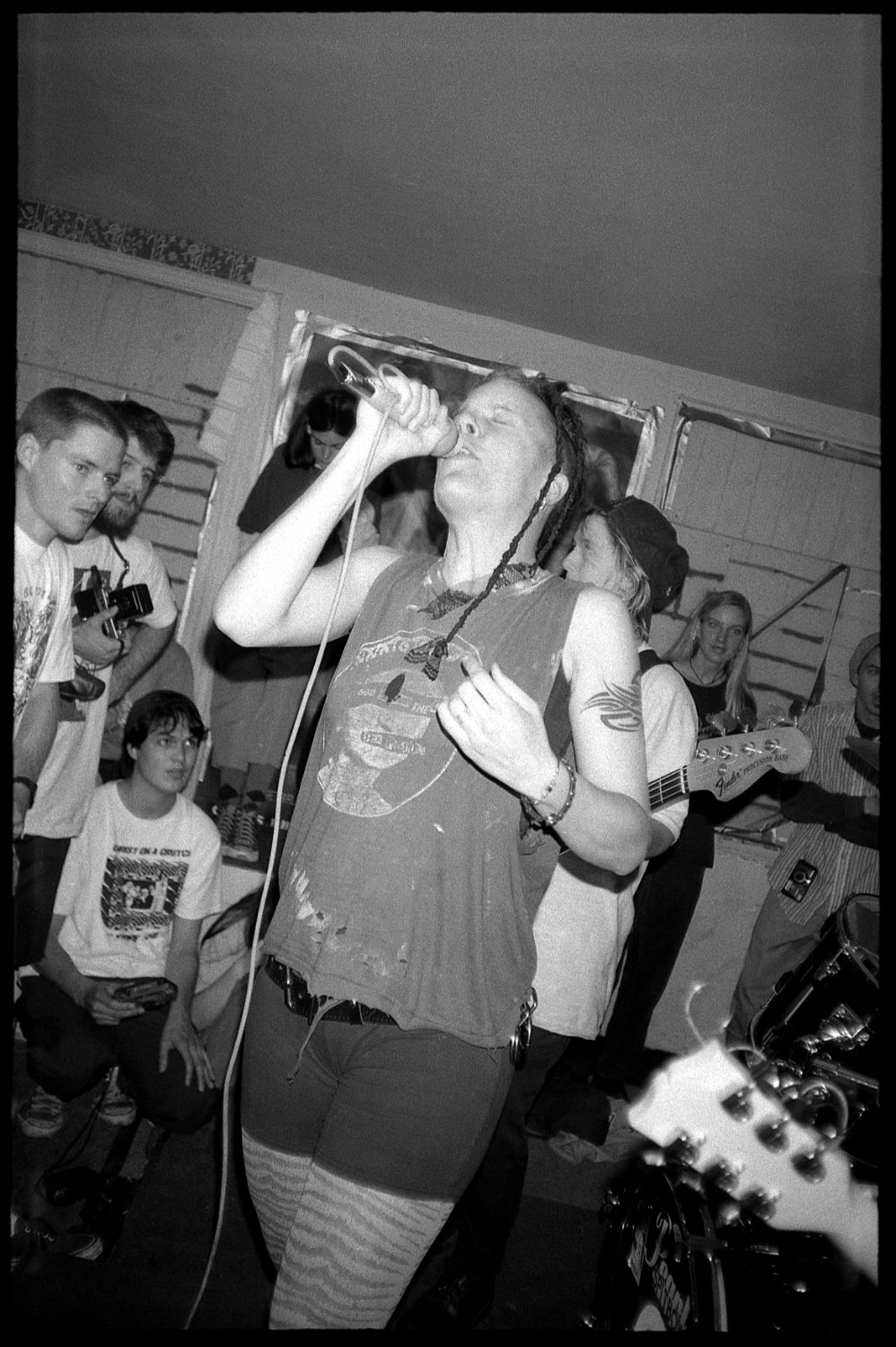
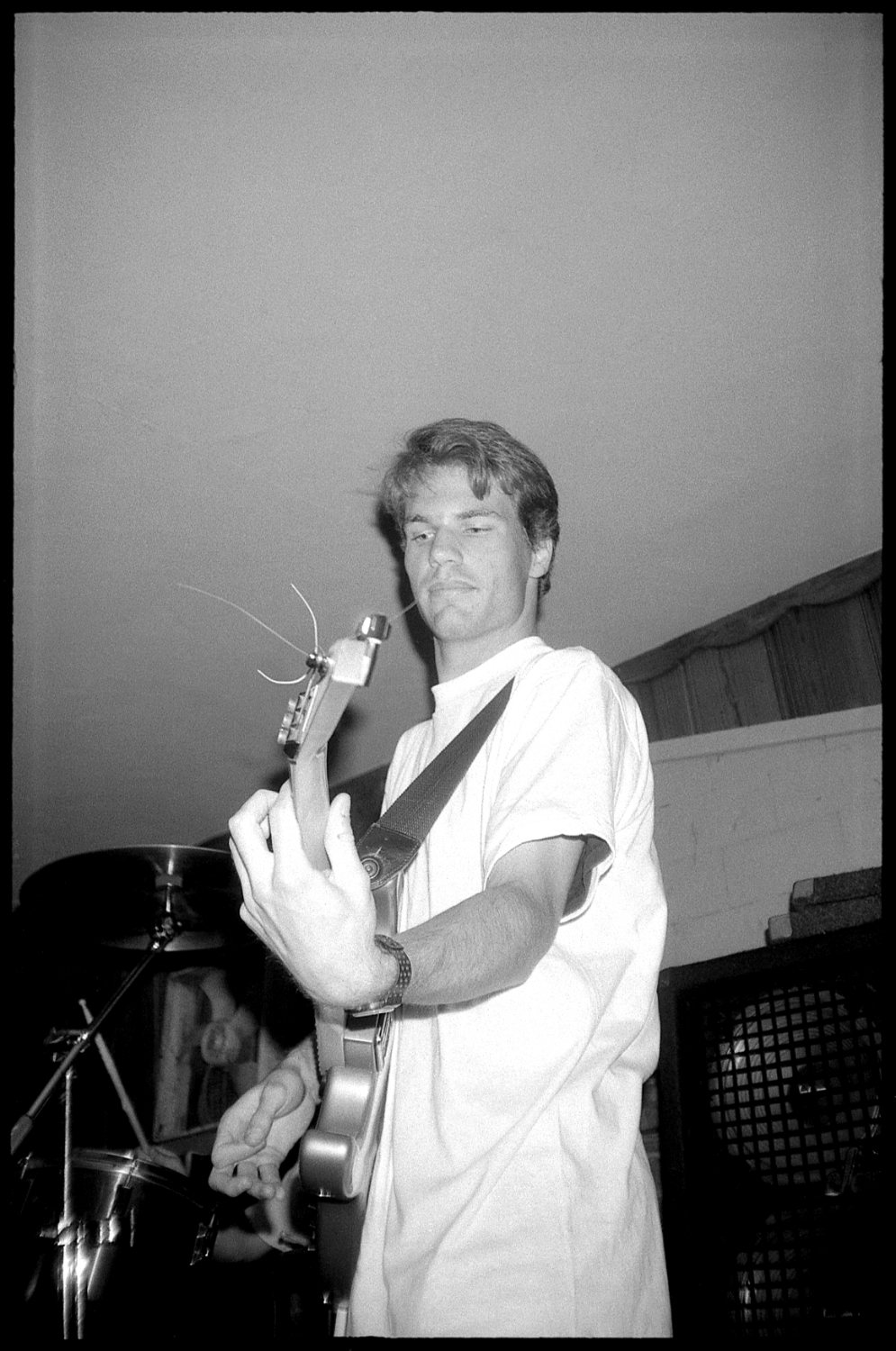
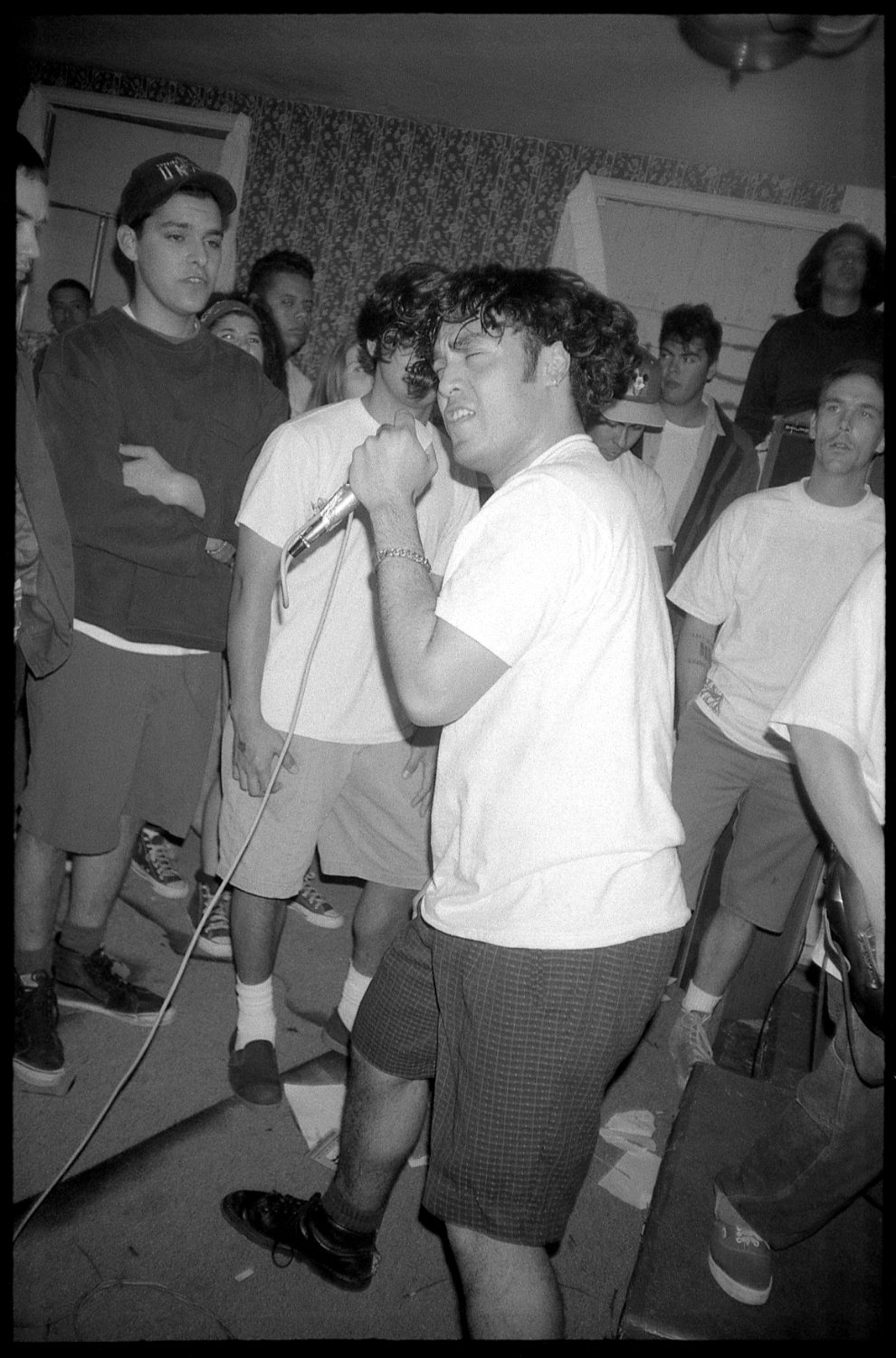
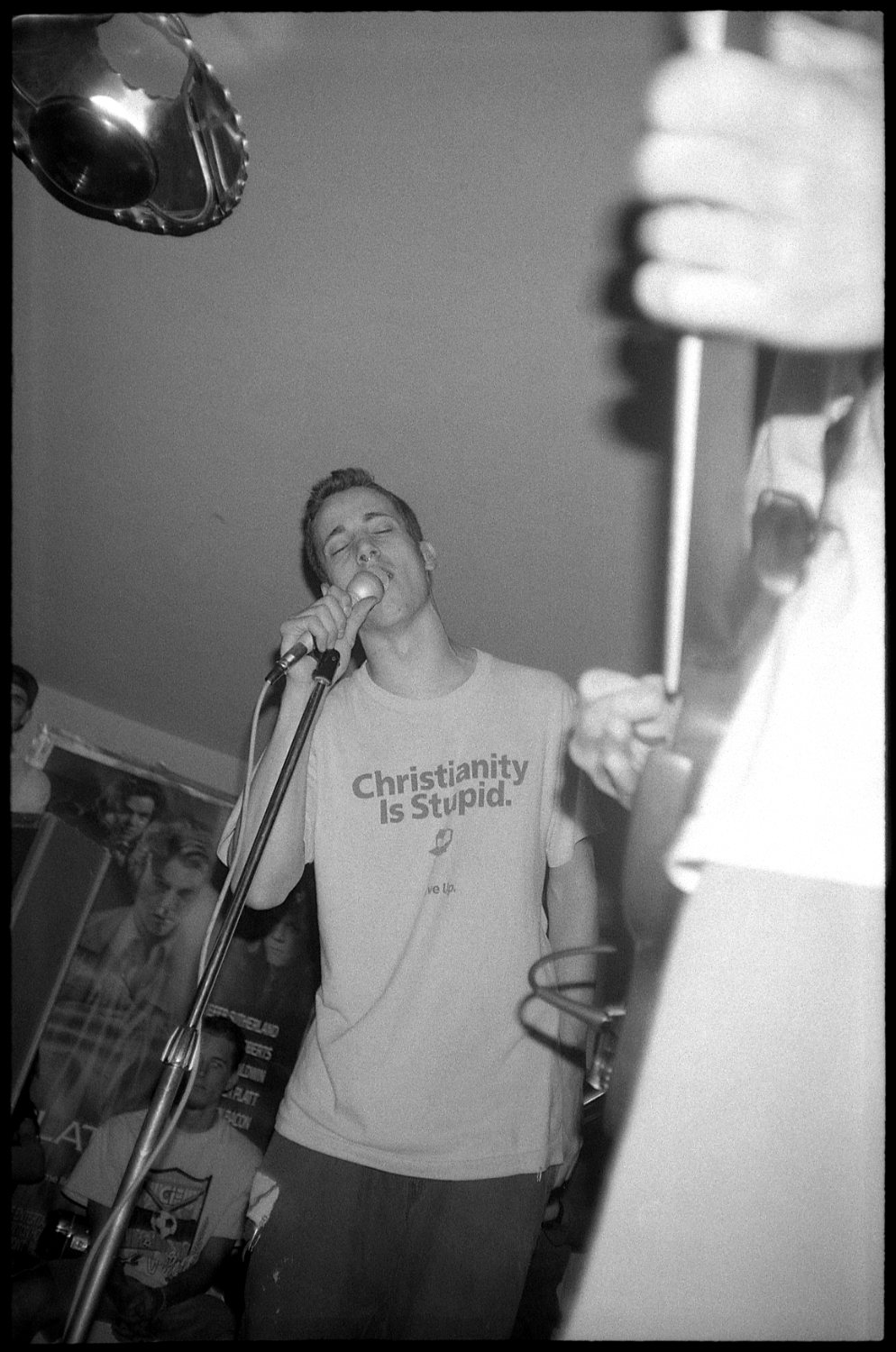
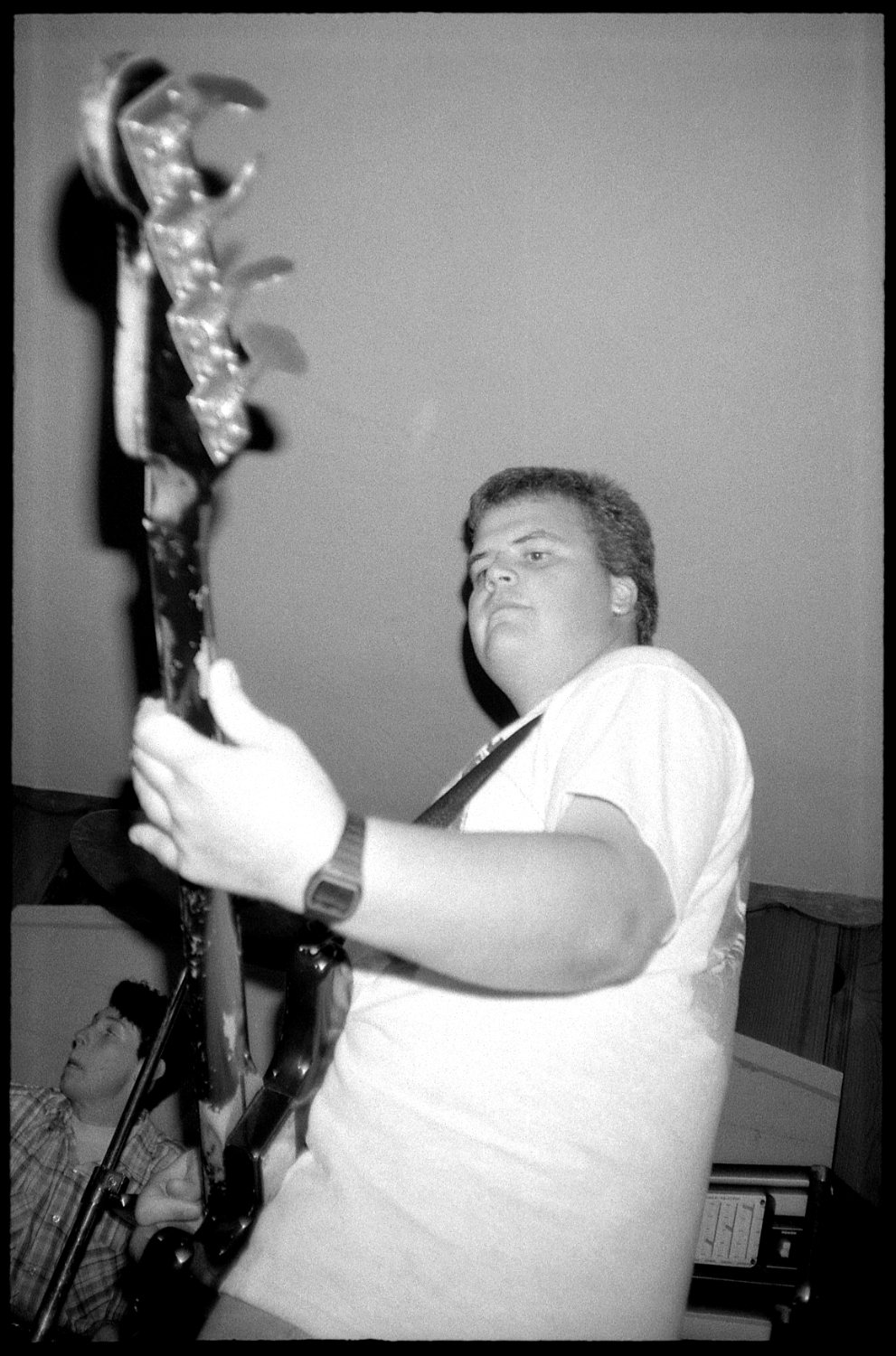

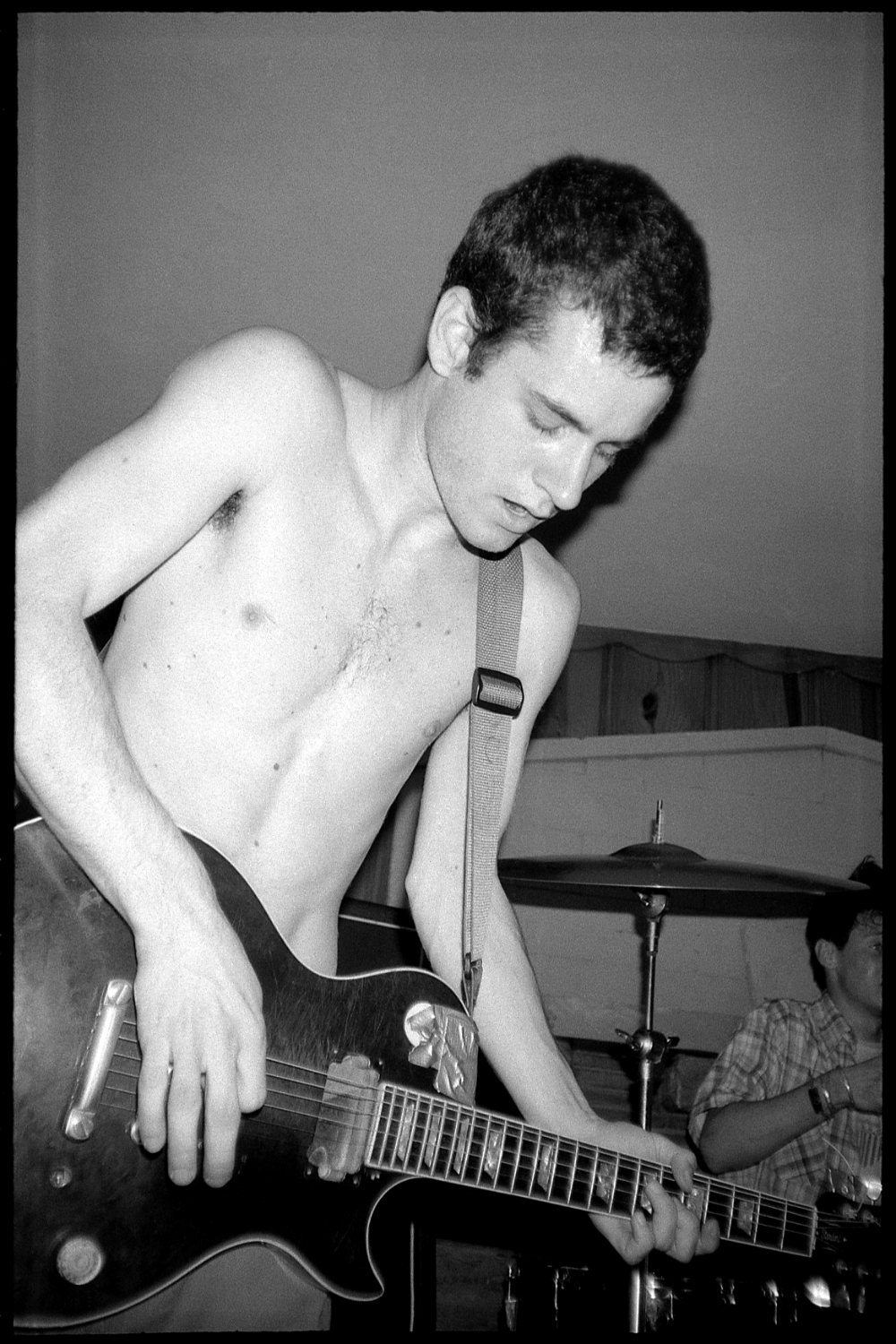

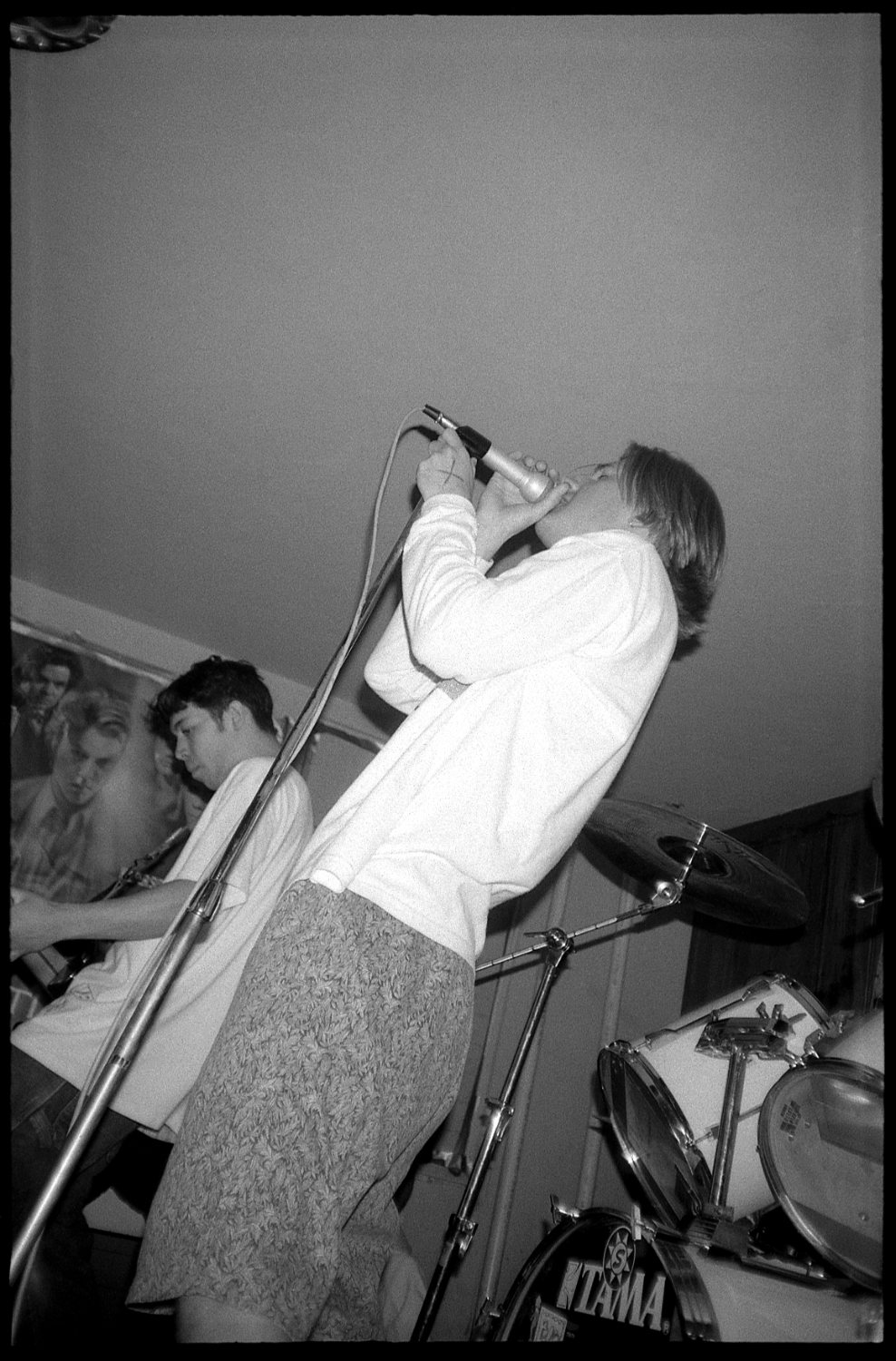
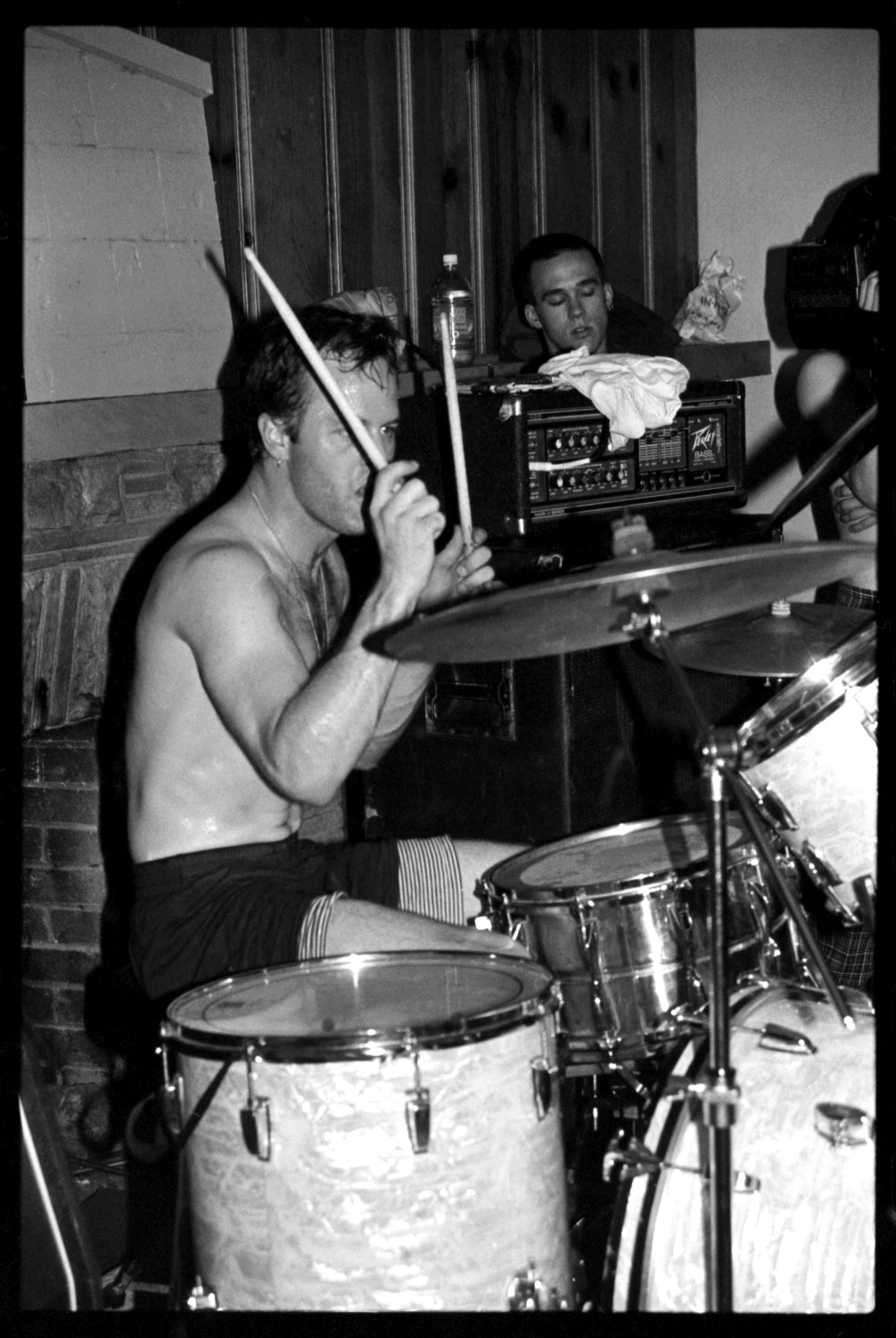
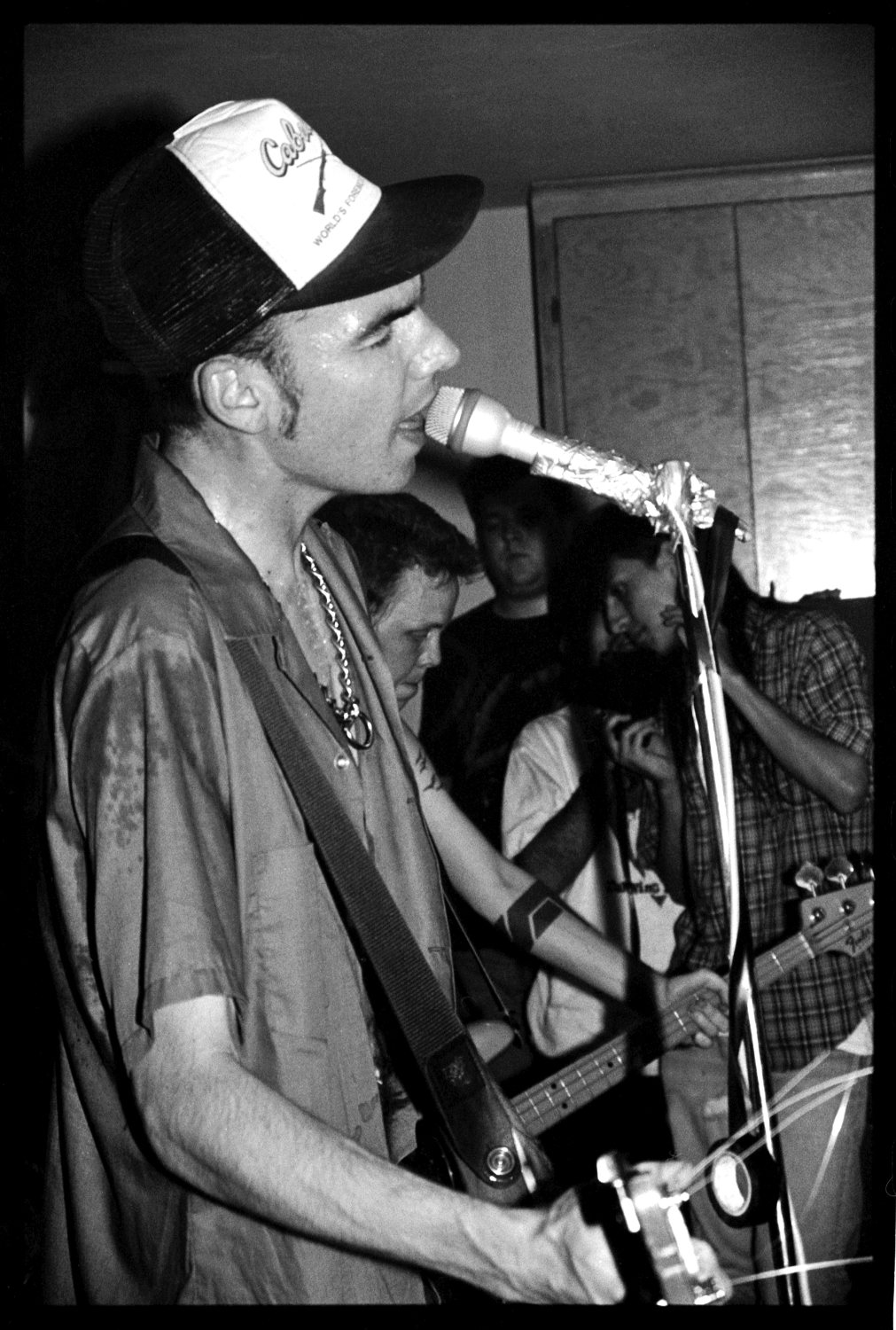
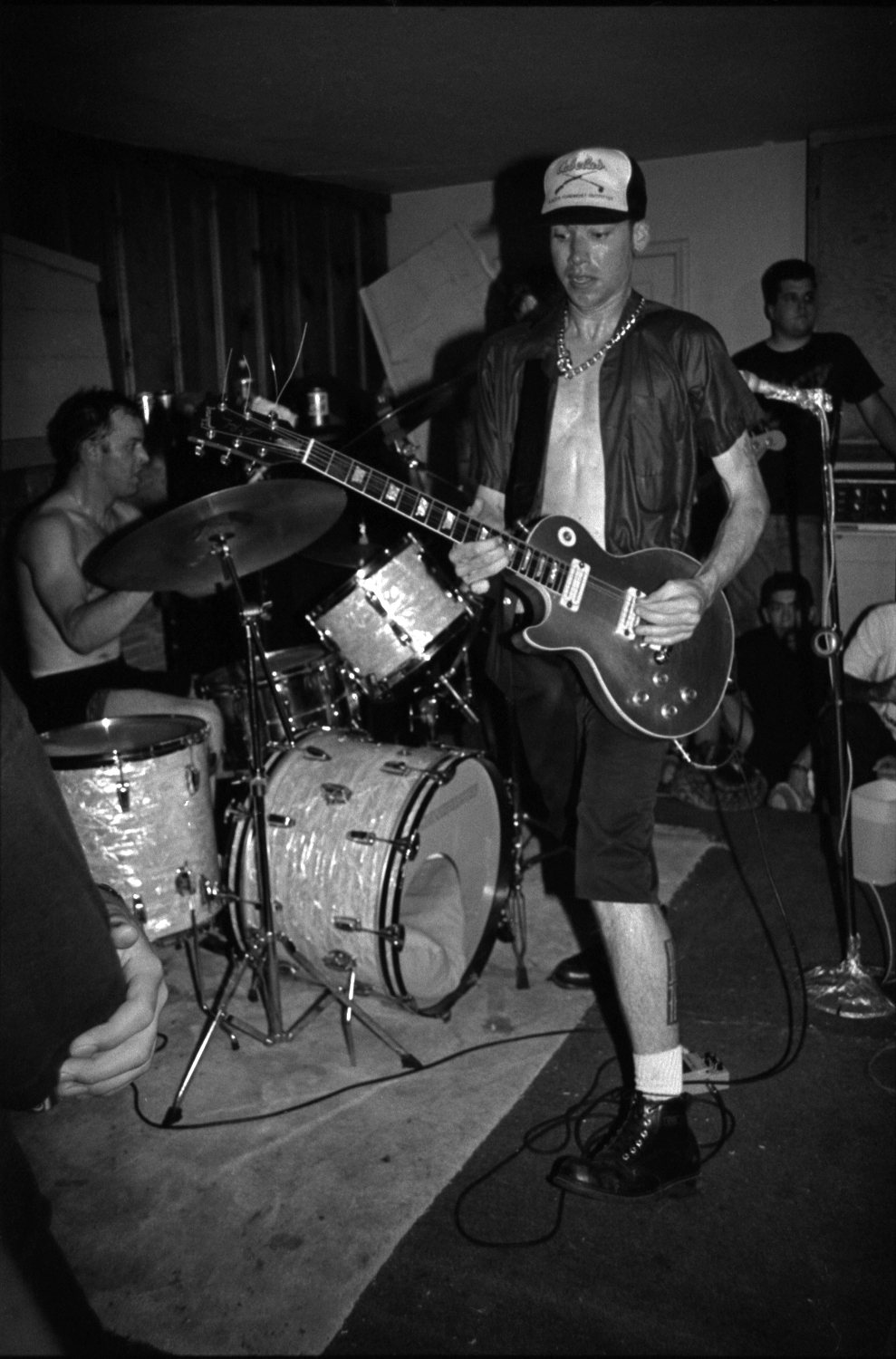
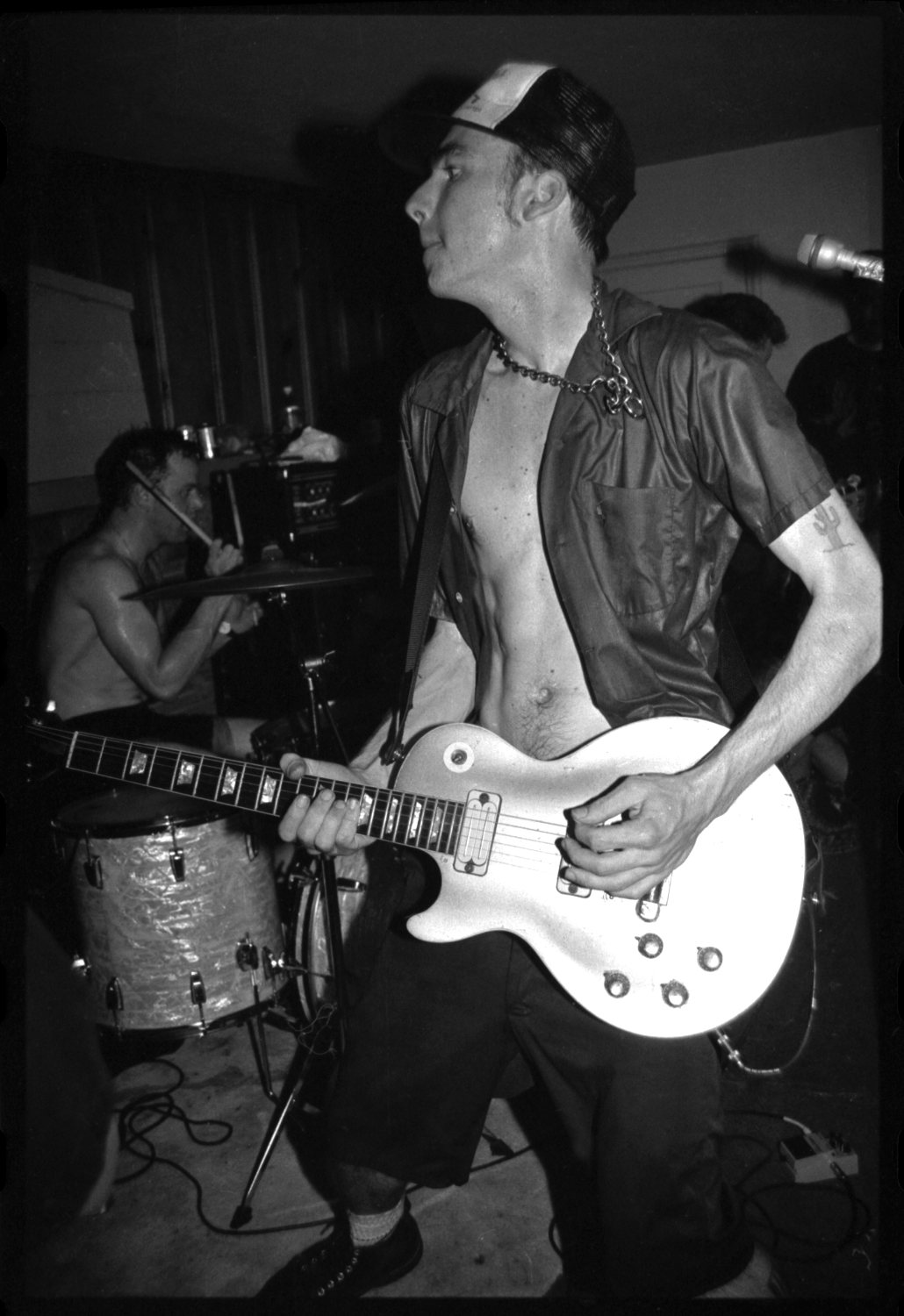
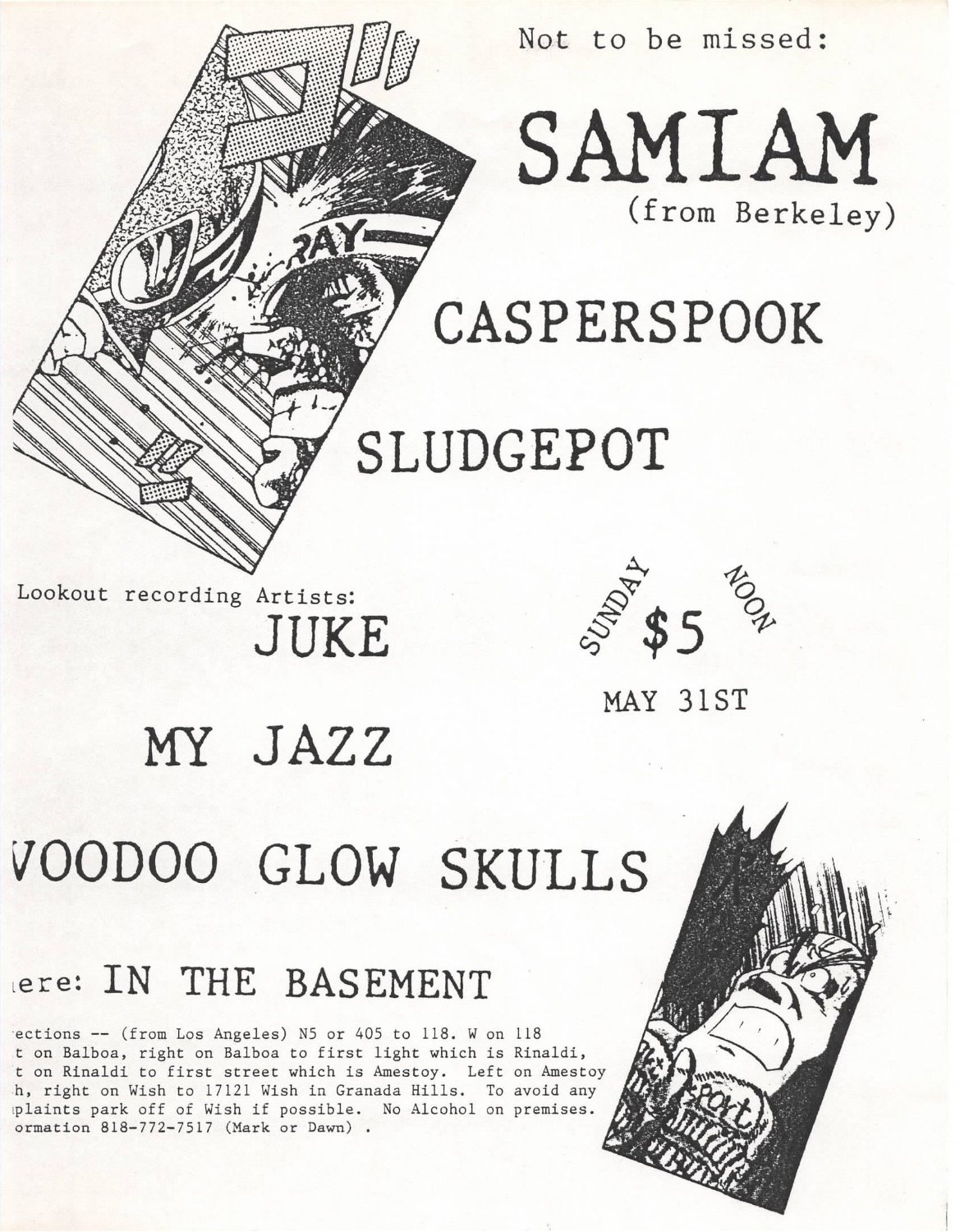
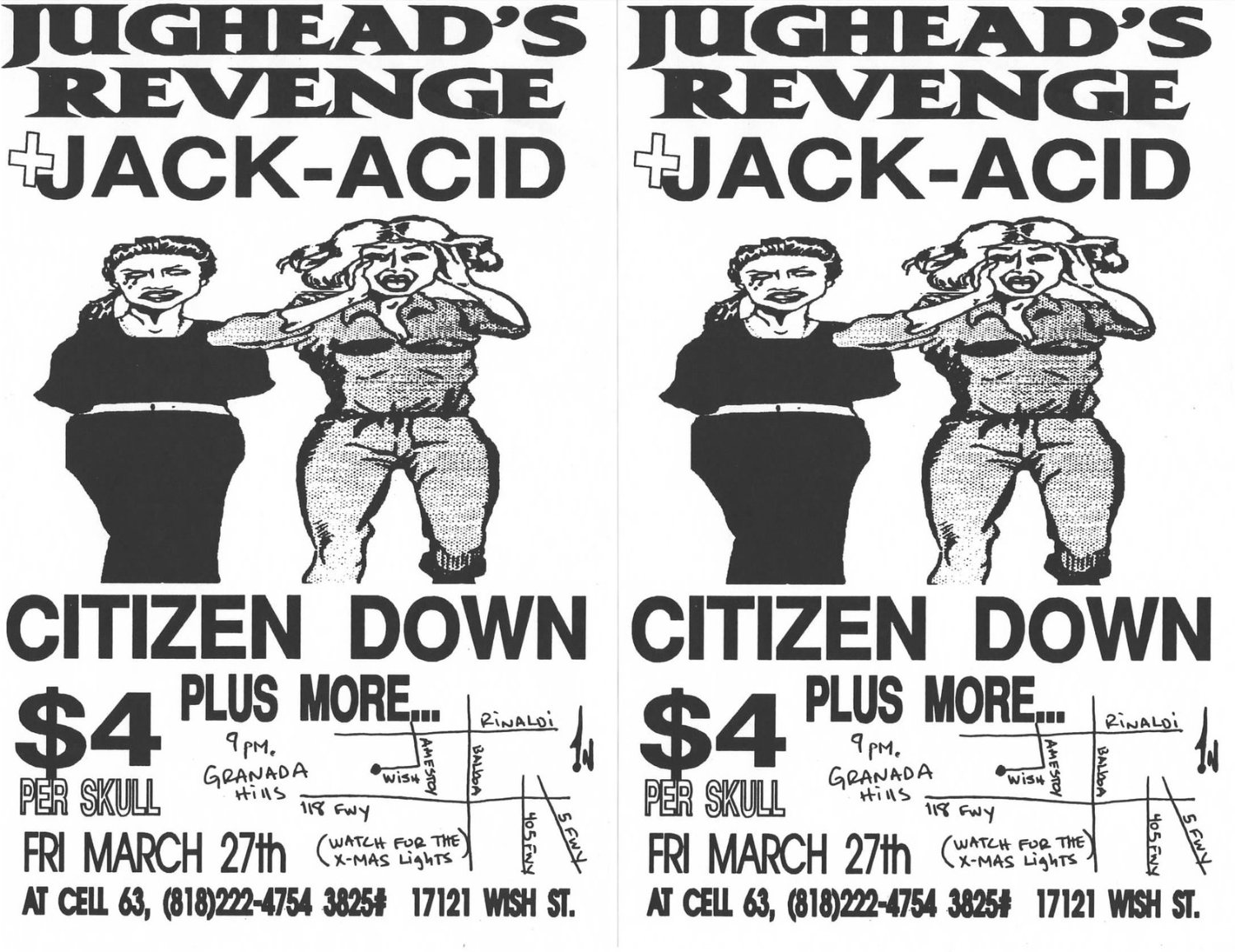
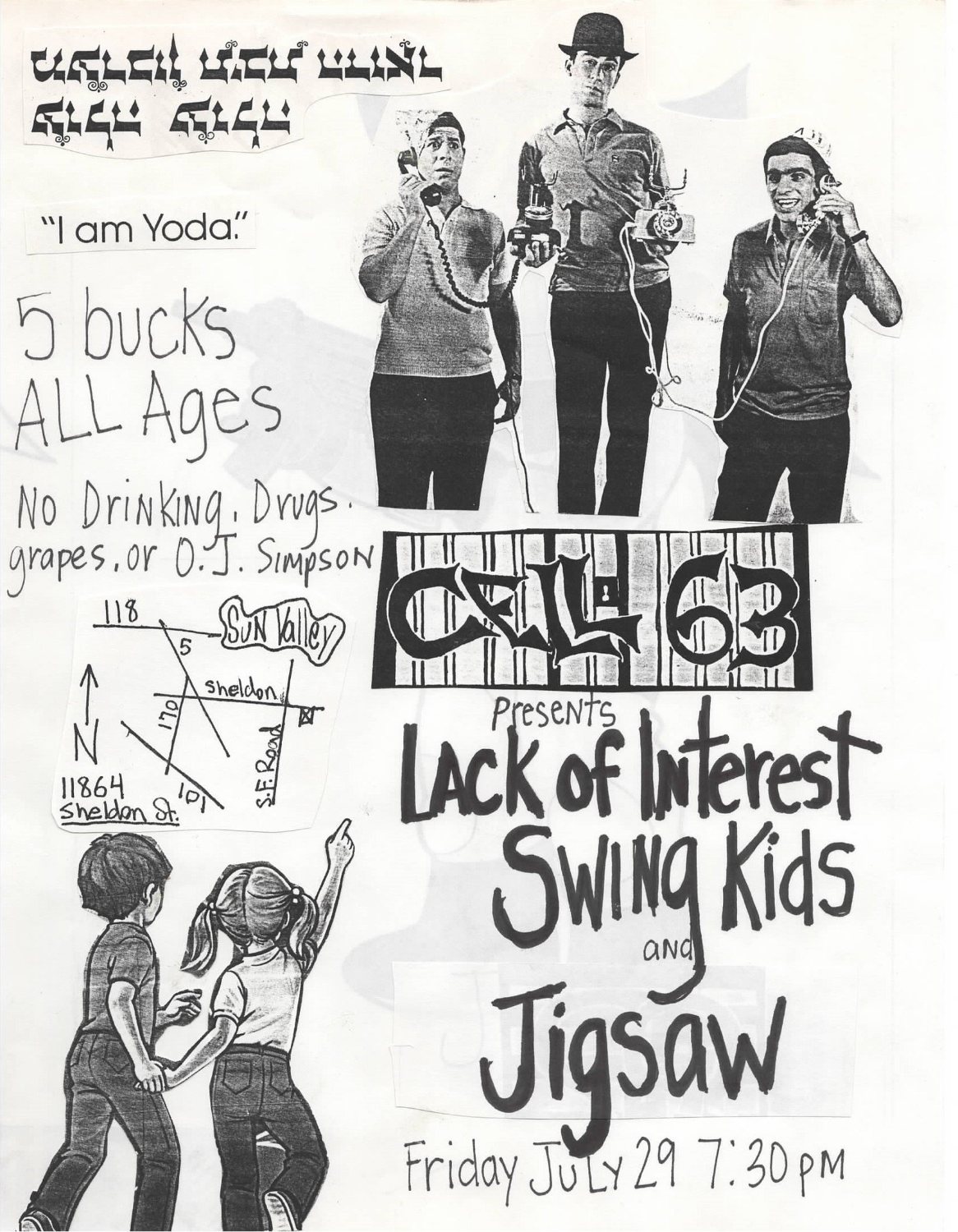
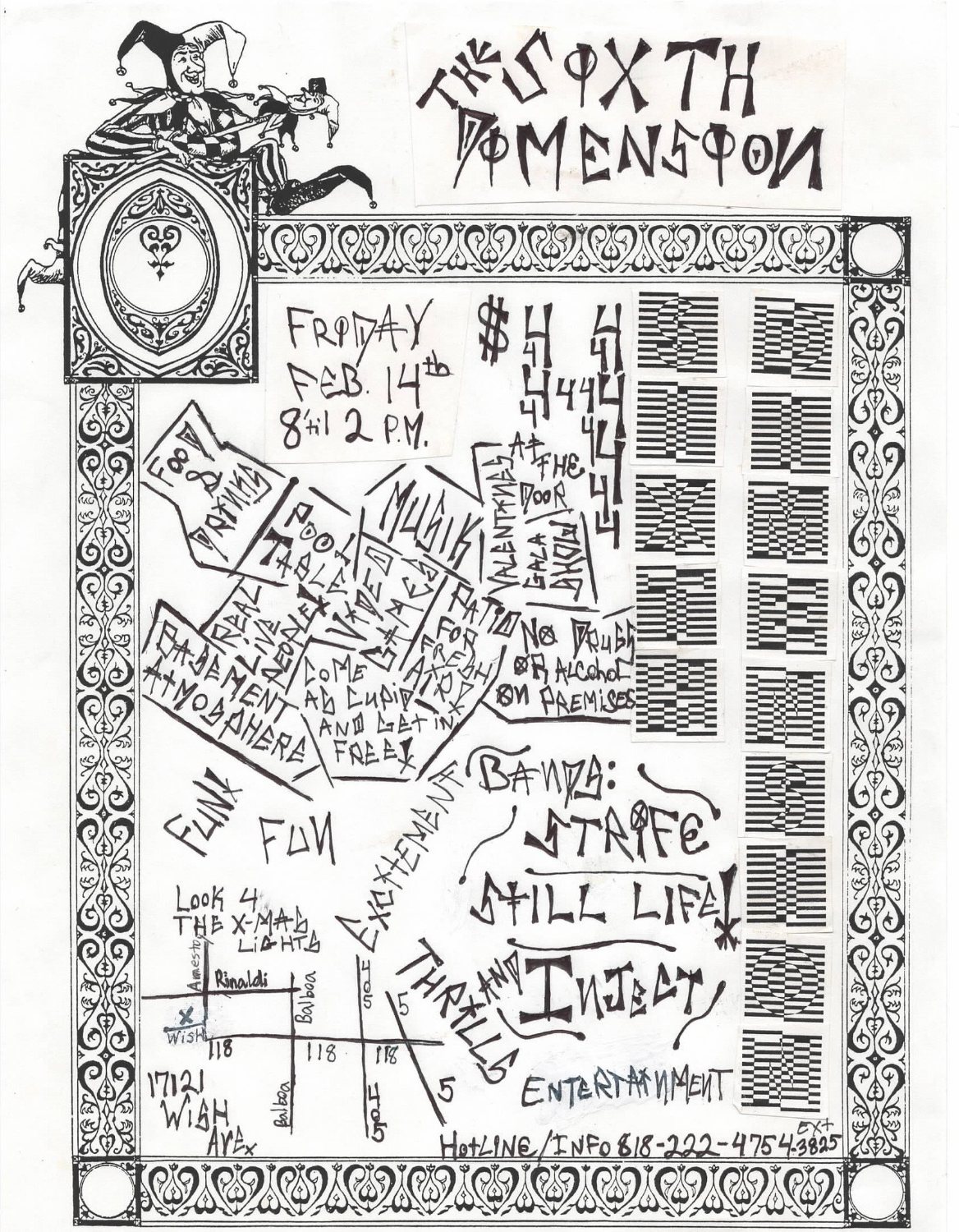
In the early ‘90s, tucked away in a quiet residential home in the San Fernando Valley — near the corner of Wish and Rinaldi in Granada Hills — a hidden secret lurked within an otherwise ordinary suburban neighborhood. Go around the back so as to not attract the attention of the neighbors or authorities, offer a donation of a few bucks, food, or other items of use, and you will be taken down a small five-step staircase leading to a rare sight in Los Angeles — a basement. At just 17, Nathan Peterson embraced the do-it-yourself punk ethos, converting the lower level of his parents’ wood-paneled home into an unconventional venue. The intimate space, dubbed Cell 63, became a hot spot of LA’s alternative music scene, drawing punk rockers, rivetheads, and goths who thrived in the Valley in the 1990s.
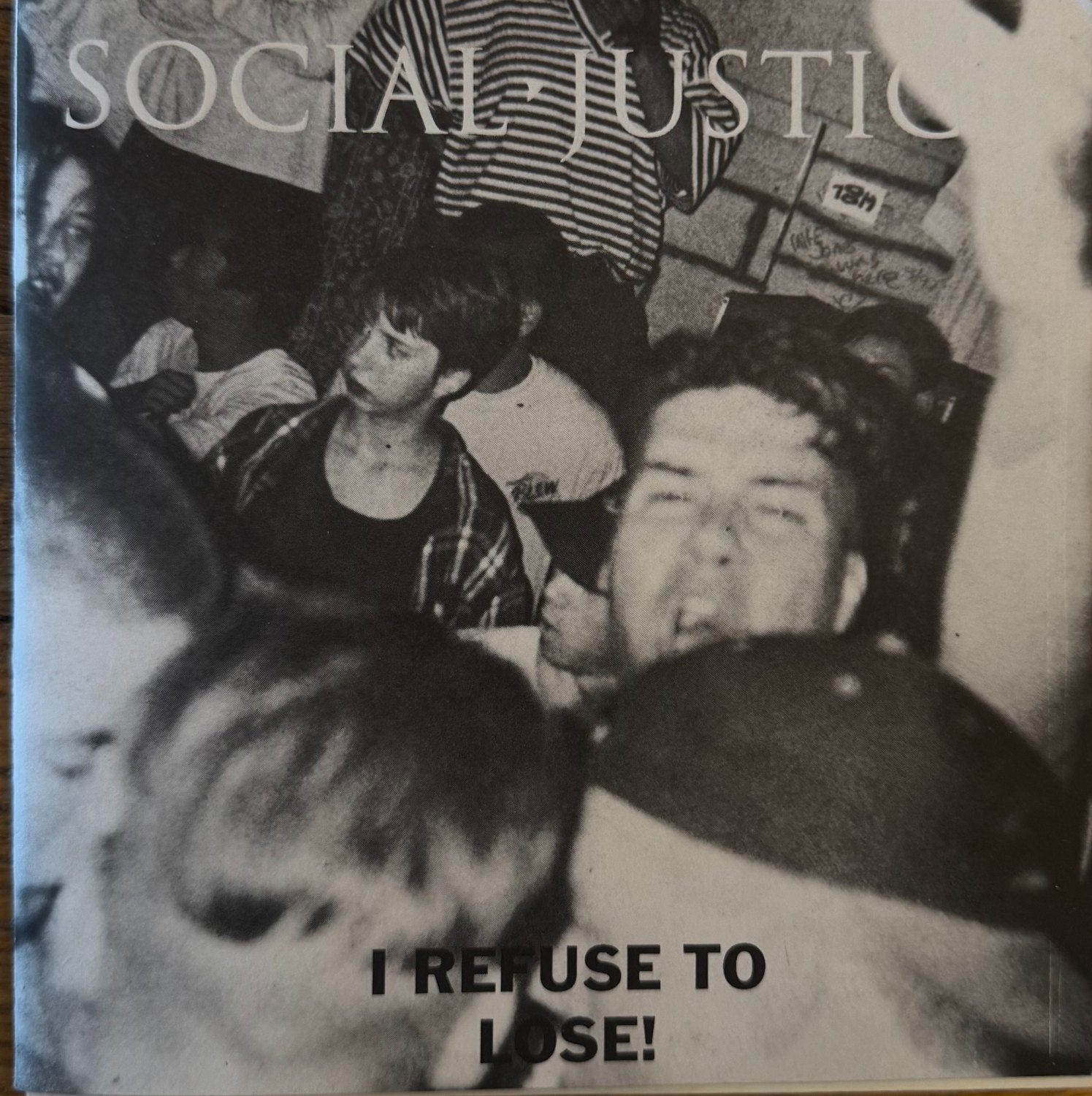
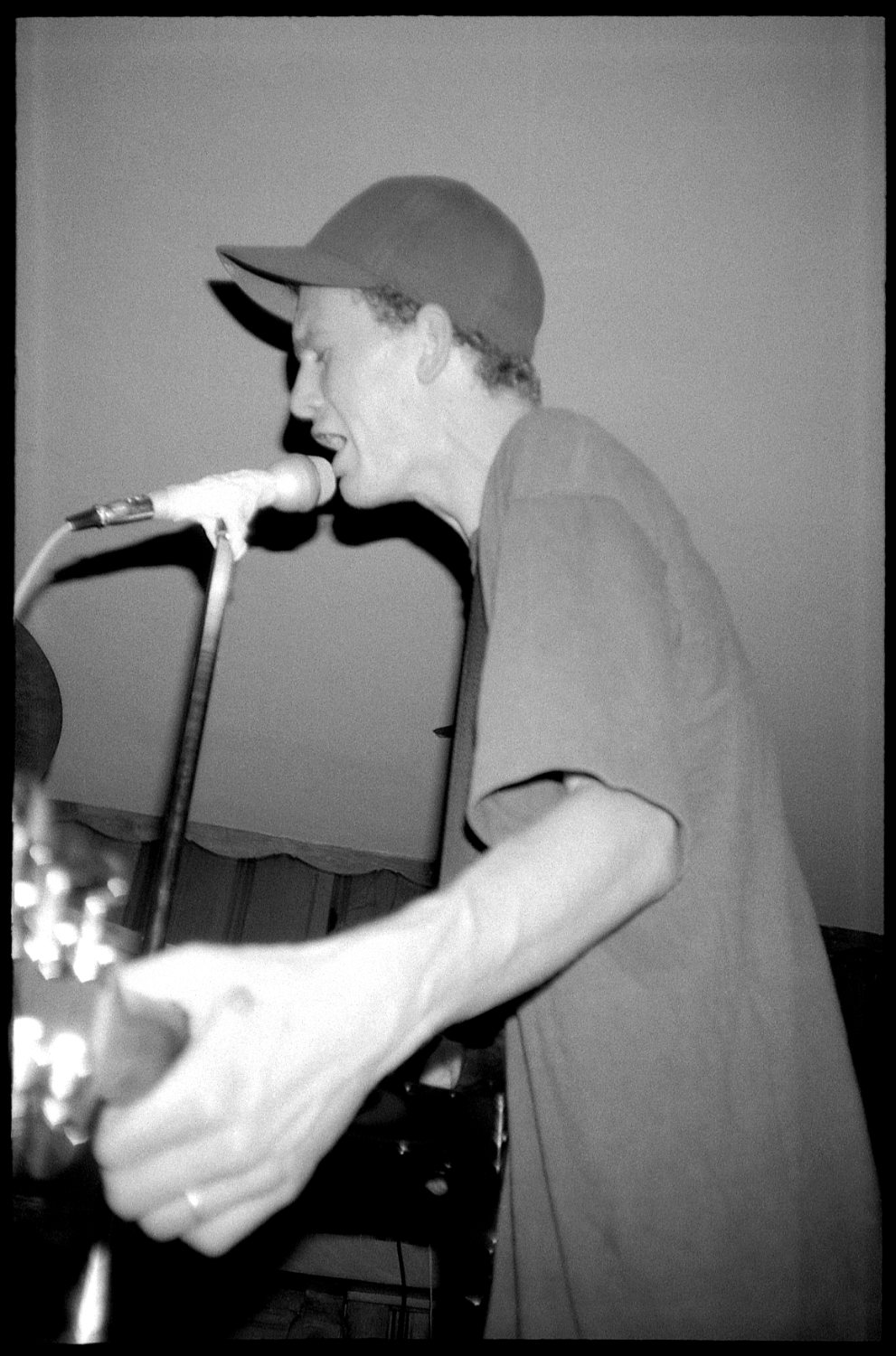
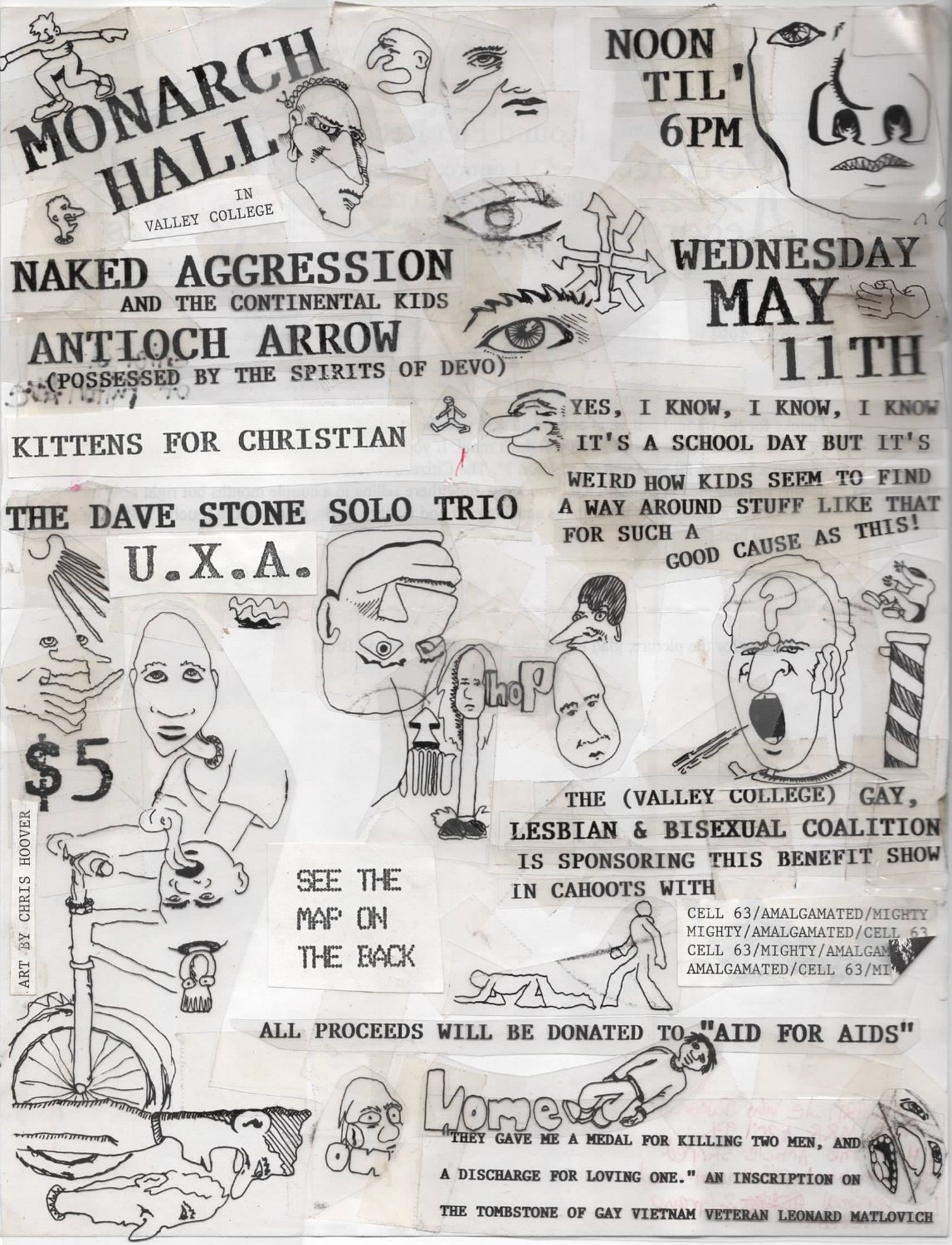
From 1992 to 1996, operating as first a basement venue that threw special pop-up events, Cell 63 hosted over 200 bands during more than 100 shows. Originally known as the Sixth Dimension — both that and Cell 63 are names from Richard Elfman’s 1980 cult classic The Forbidden Zone — the subterranean venue began drawing talent from far and wide, eager to perform in Nathan’s parents’ basement, and later, the guerrilla gigs Cell 63 would later become. During its heyday, the club played host to many legendary acts, including members of Rage Against the Machine, as well as performances by Jawbreaker, Naked Aggression, Dogstar (featuring Keanu Reeves), Jughead’s Revenge, Voodoo Glow Skulls, Social Justice, Huggy Bear, and many more.
Peterson’s DIY passion project captured a moment in time when LA’s music scene thrived beyond traditional avenues thanks to individuals with can-do spirits and fuck-you attitudes. Now, Gen Xers who once roamed the streets of Granada Hills can relive that era with their kids as Cell 63 reopens for Inside Cell 63, a pop-up exhibit running March 28 to April 6. The event features rare artifacts, interactive displays, reunion performances, and first hand stories from key figures of the ‘90s punk scene.
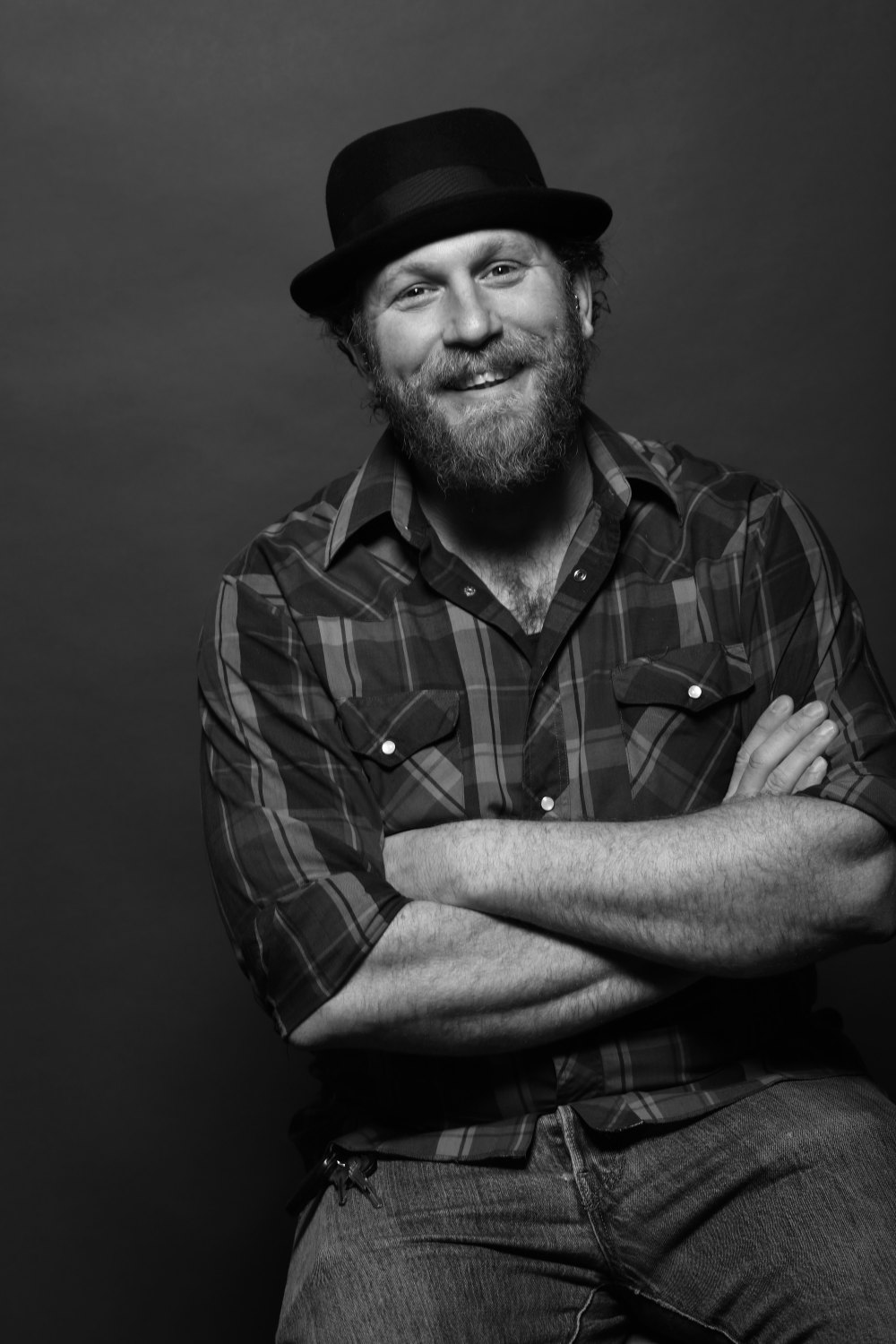
Nathan Peterson today (Courtesy of Landry Major)
Now the owner of Nathan’s Tattoo & Piercings, as well as a full-time father and husband, Peterson looked back on the strange and sordid history of the DIY venue, the upcoming exhibition, and what sparked a teenager to create an industrial venue out of his family’s bonus space.
“I ended up dropping out of 10th grade halfway through, and then again in 11th grade I went back … But after 10 weeks, I’m like, ‘This sort of sucks,’” said Peterson. “So I think there’s a little bit of an impetus: I’m not going to school, but I don’t want to be a loser at the same time. So what am I going to do with my time that I would enjoy and find productive?
“I think [Cell 63] made me. It made me feel a sense of accomplishment. I guess, you know when you put it together and you’re able to book shows and people come out and have a good time, and it made me feel like, ‘Wow, I actually did this,’” Peterson continued. “It later parlayed into working at a record label. I got scouted through the shows. My [future] boss would come to the shows, so he pulled me in to work with him. So when all my friends were in their senior year, I was like working at a label and just doing it. It was neat.”
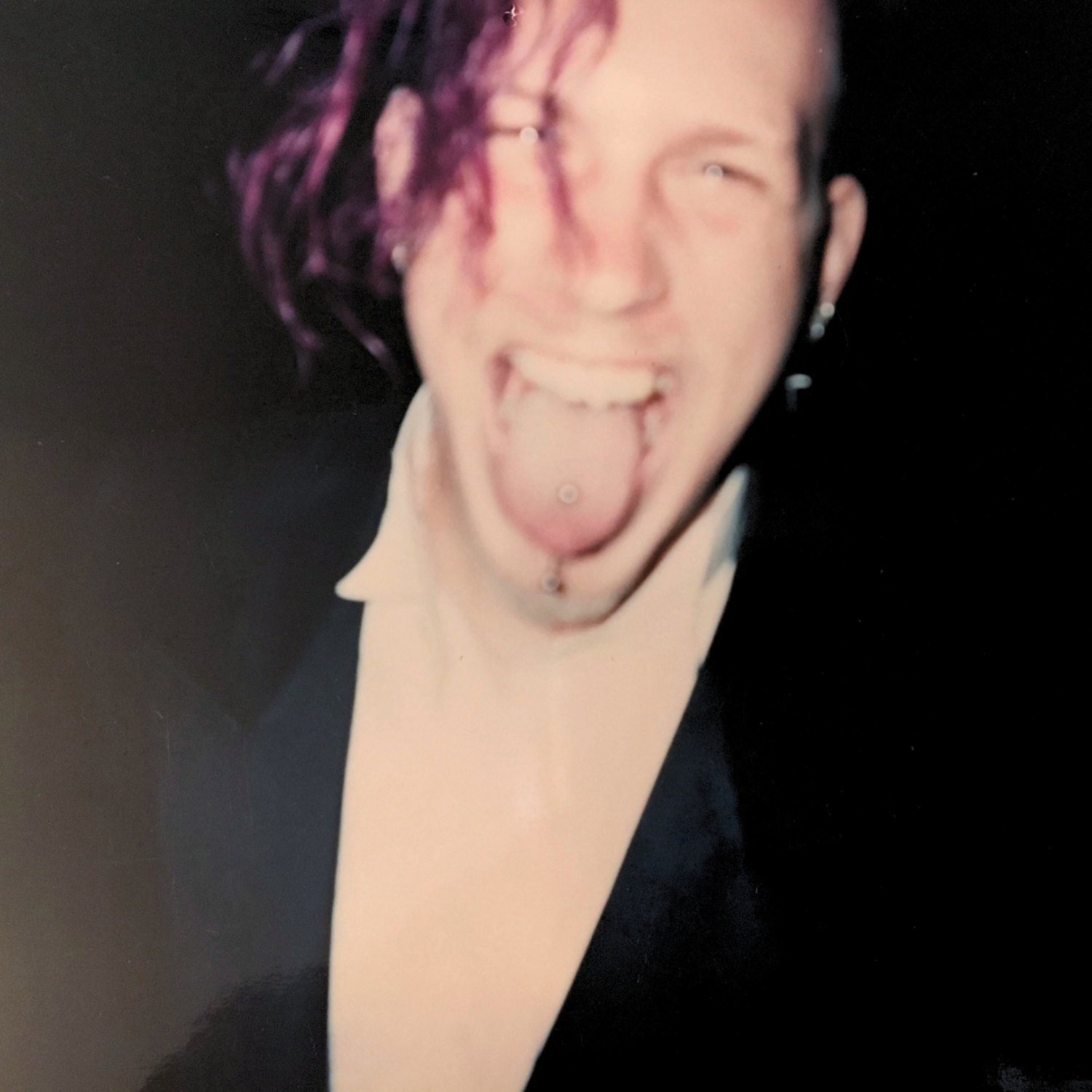
An old photo of Nathan Peterson (Courtesy of Nathan Peterson)
Over the years for a few measly bucks, or a donation of decor and a promise to be on their best behavior, folks could go to the Peterson household and see some of the most raucous and unruly bands the music scene had to offer. The underground venue earned notoriety among musicians and fans, and though unpopular with the neighbors, Nathan’s parents seemed fine with the arrangement.
“I think my parents didn’t really care about much, you know.” laughed Peterson. “They were two stories above, so it didn’t really bother them. I mean, we had a big family with a lot of noise all the time.”
Cell 63 quickly evolved from a single location into a full-fledged scene, shifting from the Peterson homestead to various warehouses. As its reputation grew, so did its audience, along with attention from more than just local authorities and upset neighbors. The venue began drawing bigger names, most notably Inside Out, Zack de la Rocha’s band before Rage Against the Machine.
“When Rage Against the Machine played CSUN, my brother used to work with Tom Morello in a band called Lock Up with Brian Grillo, who went on to do Extra Fancy. My brother was on tour with The Cramps in Europe, and Tom called my house looking for my brother. My mom’s like, ‘Oh, well, he’s in Europe, but his little brother’s here, and he can help you.’ You know, I was helping out with roadie stuff. My brother would bring me out to shows and have me lug around gear and such. So I was somewhat familiar with a roadie life,” Peterson explains. “So Tom pulled me into the CSUN shows, working with them for probably their first 20 or 30 shows.
“And Zack was still buddies with Inside Out, which was his prior band. So it wasn’t like anything bad happened there. He just saw more of an opportunity, I think, with Rage. So they were like, ‘Hey, let’s get the band back together for one last time, because things were picking up for Rage.’ So, you know, I had a warehouse, and I’m like, ‘Cool, hey, let me get one of the shows.’ So we booked one of them out in my warehouse.”
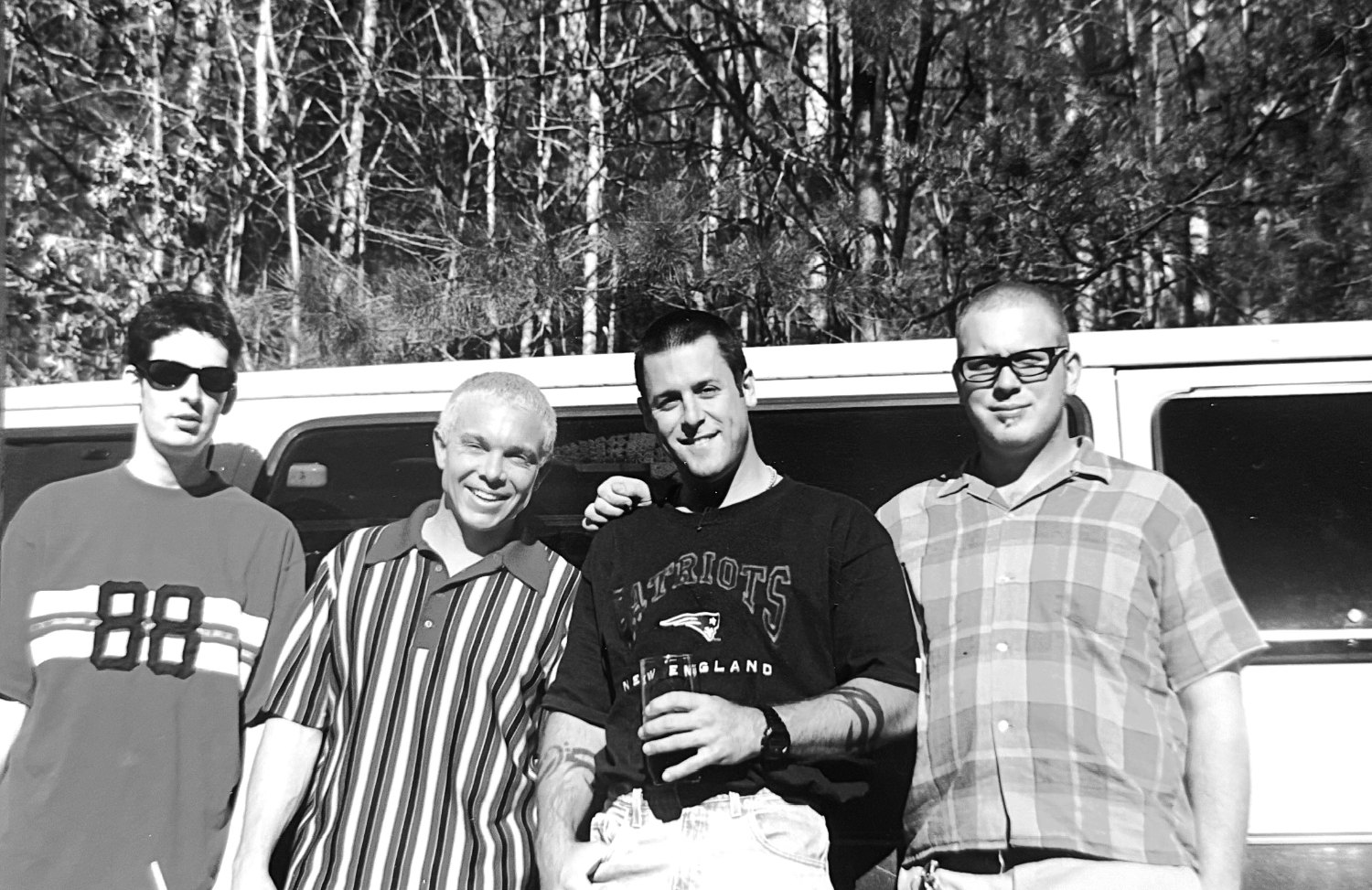
Nathan when he was touring with the band The Gain. (Courtesy of Nathan Peterson)
And as for Mr. Reeve’s and his band, Dogstar?
“You know, there’s an old saying: ‘If you remember the ‘60s, you weren’t there.’ And that’s part of it for me,” laughed Peterson. “Being in the middle of this, it was such a whirlwind of booking shows and figuring out life and navigating the police and, you know, I just felt like I was constantly doing something, working at the record label, you know, running around. So I was never like a star fucker, and I’m still not. I never really cared. I think we should be honoring teachers and people making an impact in society more than we elevate our social media personalities or our actors.”
It wasn’t the big name bands that left a lasting impression on Peterson, as smaller, more raw acts attacked the senses and the psyche of audiences.
“There was a band that played called Punishment,” recalled Peterson. “They left an impression, just based on a nihilistic aspect. They were these cute kids from San Diego … their set, it was just sort of this grinding, pulsing element that wasn’t necessarily pleasing to the ears. The next thing you know, they lit old road flares, which sucked a lot of oxygen out of the air, and then they let fire extinguishers go off, and the whole room just got overwhelmed.
“People are running out coughing and choking. I think [the band] wore gas masks through it, so this drudgery kept going, and that impact on the psyche was almost like the world was coming to an end. That was a very interesting emotion to be experienced.”
Like any beloved Los Angeles institution, Cell 63 evolved beyond its original concept. It transformed from a simple venue into a thriving hub where a collective of artists found both community, creative sanctuary, and a chance to pursue social change. Picture the film Suburbia, but with far less wild dogs and a stronger focus on activism.
“We were more than a venue,” recalled Peterson. “The whole crew would get together before and after [shows]. People would hang out and sleep over. We had mattresses and couches, and we’d wake up the next day and make art, or go swimming at 1 in the morning in the summer, or skate in an empty pool. So it wasn’t just, ‘Hey, show up for the show. Unlock the space, lock it.’ These were places we were living, we would create art in, and we would silkscreen in. It was so much more than just a venue. It was a culture.”
For Peterson, the tumult within the club reflected the greater political tenor of the time.
“I mean, there’s so much going on then. There was the Gulf War that had happened in the early ‘90s, then you had the riots, the Rodney King stuff, then the Northridge earthquake. You had all this stuff going on. You had AB101 veto going on where [Governor] Pete Wilson was not giving equal rights to gay people. So you had all these elements. So it would funnel us into going to protests or community action by helping with [organizations like] Food Not Bombs. We were almost like a mass of a little community that would just shift around.”
Beyond Food Not Bombs, those who rallied around Cell 63 also lent their support to various local charities striving to make a difference, including Aid for AIDS, the Valley College Gay & Lesbian Coalition, Neighbors Against Nazis, and P.A.R.T. (People Against Racist Terror), among others. During Cell 63’s run, Peterson often accepted donations of food or clothes in lieu of cash to get into shows.

Econochrist performs (Courtesy of David Sine)
But all good things must come to an end, and such was the case with Cell 63, whose artisanal spirit came in direct conflict with city regulations and authority figures who didn’t see the value in a homegrown hangout for hellraisers looking to make a difference. Peterson knew his days were numbered even when the club was still in the basement.
“It came to a point where we would come under heat, and we’d play a little bit of Whac-A-Mole game, where we would be quiet for a month and we’d start easing back in, and then the cops would show back up. We would sneak back in, do another show, get busted. And eventually it came to a point where I was officially summoned to Van Nuys courthouse,” recounted Peterson.
City authorities did not look kindly upon Peterson and his associates, even if they were doing good works.
“Then they dragged my mom out there too. And they were like, ‘Hey, you keep doing this, we’re going to find you guys.’ They started laying on the pressure a bit heavier, saying there’s going to be more serious ramifications. And then shortly thereafter, I think we rented a warehouse down in Northridge, and then the earthquake hit. Then we ended up renting another warehouse in Sunland. So we just did it more through pop-ups wherever we could.
“When the warehouses were getting shut down, those were a little bit harder to go quiet and come back up on, because you’d still have to pay the rent during the quiet time. When they got shut down, we just moved somewhere else. It just became exhausting.”
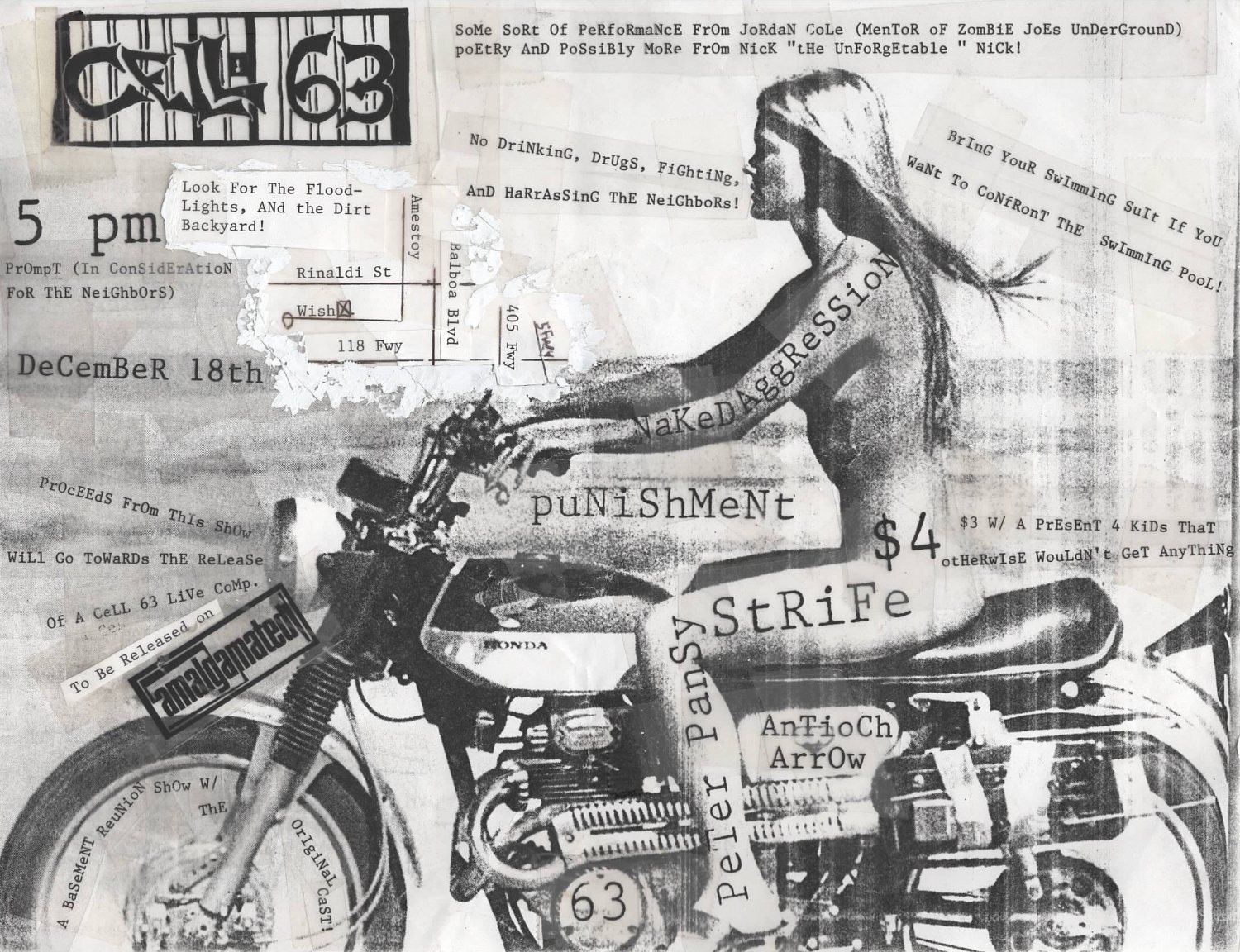
The Cell 63 “Basement Reunion Show” on December 18th, 1993, marked a return to the iconic basement venue after a series of warehouse shows, which had been temporarily disrupted after the Parthenia warehouse was shut down. The event featured performances from Strife, Punishment, Naked Aggression, Antioch Arrow, and Peter Pansy. Attendees could get in for only $3 by donating a children’s present, which would be given to those in need during the holiday season. Additionally, the monetary proceeds from the show would go toward the creation of a compilation record to be released under Nathan’s label, Amalgamated Records. The show highlighted the continued dedication to community and activism. (Courtesy of Nathan Peterson)
After a few more attempts, Cell 63 closed its doors for a final time in 1996.
And now, almost 30 years later, Peterson and his motley crew of supporters are reviving Cell 63 for a limited time, recreating the iconic space for visitors to explore images from a bygone era while new generations are introduced to the DIY venue and its enduring legacy. According to Peterson, that legacy carries a message that is more relevant today than ever before.
“We booked a lot of great bands, and there’s something to be said for that,” said Peterson, “But I think some of it is, is it was a culture. It was a safe space.
“I think we don’t sacrifice much for each other anymore. And I think the DIY aspect is more important than ever. I think as things start getting more and more developed and centralized, we’re going to see a collapse of certain structures, and we’re going to need to have a DIY element and we’re going to need to learn to build community.
“As you get older, it’s hard to fight nostalgia,” Peterson continues. “It’s going to be nice to see people that were around at that time having memories of their youth that may be sparking ideas of who they were and how they changed and what they’ve lost, for better or for worse. So I think that’s important.
“But I think equally, if not more important, is to pull in a younger generation and say, ‘Hey, we did all this without social media. We did all this by living life together, hanging out with each other, just physically living life, hand in hand. And I think that’s a different experience than what you get through social media. So that’s what I think I’m hoping to convey, is to encourage people to have more of a sense of community with each other than what we have now, and to also just chase things down that are important for you.”
Opening Night of “Inside Cell 63” is March 28, 2025 at BEAM Studios, 6469 Van Nuys Boulevard Los Angeles, CA 91401.
Tickets for events and additional information are available via the official site, insidecell63.com.
Event schedule:
- Friday, March 28: Opening Night at 5 p.m., Punk Rock Panel Discussion with Nathan Peterson, Andrew Kline (Strife), James Morris (Social Justice & Downset), Kirsten Patches (Naked Aggression), Johnny Whitman (Lava Diva) at 7 p.m.
- Saturday, March 29: Live Show: Nothing Yet and Lack of Interest at 7 p.m.
- Sunday, March 30: Musician turned Filmmaker Film Fest showcasing four short films starting at 3 p.m.:
- Viscera written by Zac Canon
- The Unbearable Weight of Existence by Clifford Nicgorski
- Ride the Range by Shepherd Stevenson
- Passing Through by Sarah Ingram
- Followed by a panel discussion with the filmmakers at 6:15 p.m.
- Friday, April 4: Live Show: Lava Diva & Naked Aggression at 7 p.m.
- Saturday, April 5: Pop-Up Punk Piercings & Tattoos with Punk DJ Set by Johnny Scott at 5 p.m.
- Sunday, April 6: Punk Rock Kids at 3 p.m. & Closing Party with Live Show: The Gain, Makeshift, The Zoinks at 6 p.m.