
 Wyles Daniel
Two regulatory changes took effect over the past year. Together they decide which compounded prescriptions are lawful in this state, and one of them turns on a shortage the FDA says does not exist.
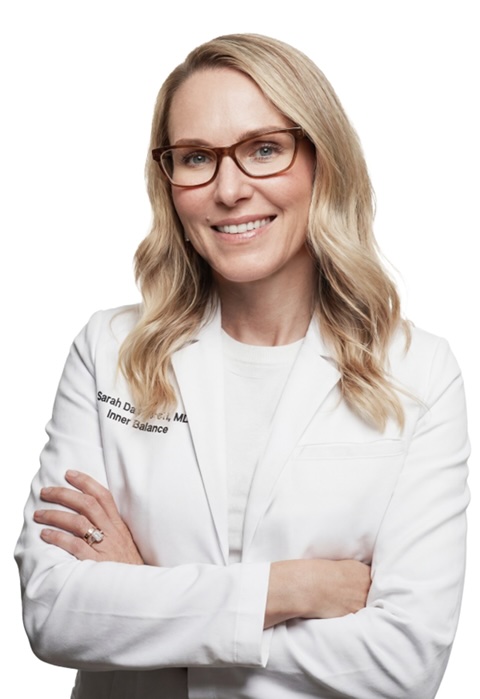
Photo Courtesy: Inner Balance
On October 1 of last year, California quietly raised the bar on compounded medication, and almost nobody receiving one was told.
The rules, codified at 16 CCR §1735.1(d) and §1736.1(e), treat a compounded drug as “essentially a copy” of a commercially available product if it contains the same active ingredient. Compounding it anyway is permitted only where a pharmacist has verified and documented a clinically significant difference for an identified individual patient.
California went further than federal guidance in two ways. It added the word “clinically,” and it put the burden of verification on the pharmacist rather than the prescriber. A patient preference does not satisfy it. Neither does cost.
For the enormous market in compounded hormone therapy, that is the whole ballgame.
The Exception That Runs Through a Bulletin
The regulation carves out two exemptions. A drug may be compounded as an alternative to a commercial product if it appears on the FDA’s shortage list, or if it appears on the shortage list maintained by the American Society of Health-System Pharmacists.
Those two lists do not agree, and this year the disagreement became consequential.
ASHP formally listed a shortage of estradiol transdermal systems on January 30, 2026, and has updated the bulletin repeatedly since. The FDA’s database has never listed the product at all. An FDA spokesperson said over the summer that all six manufacturers were producing at full capacity.
The two bodies measure different things. The FDA declares a shortage when national supply fails to meet national demand. ASHP builds its list from pharmacists and prescribers who cannot obtain a specific product. Both descriptions are accurate, and women standing at pharmacy counters have been experiencing the second one since winter.
Under California’s rule, the ASHP listing is sufficient on its own. A shortage the federal government does not recognize is, in this state, the legal basis for compounding an alternative.

Photo Courtesy: Inner Balance
A Second Deadline That Passed in July
The other change arrived through AB 1503, signed the same day the compounding rules took effect.
From July 1 of this year, any pharmacy located outside California that dispenses to California residents must designate and employ a California-licensed Pharmacist-in-Charge, one actually working at that facility, with full authority over how the operation complies with California law. The Board must be notified of changes within ninety days, and nonresident sites are subject to inspection at their own cost.
This matters more than it sounds. A large share of telehealth hormone prescriptions are filled by compounding pharmacies in other states and shipped in. As of this summer, those pharmacies are answerable to the California Board of Pharmacy in a way they previously were not, and patients have a question worth asking that did not exist eighteen months ago.
A third measure, AB 1990, moved through Assembly committees this spring and would tighten sourcing and advertising standards for compounded medications specifically. It has not yet become law.
The View From Inside the Business
Dr. Sarah Daccarett has a direct commercial stake in all of this. She founded Inner Balance, a telehealth practice built entirely around compounded hormone therapy, and she is not a neutral party.
Her argument is that the rules land differently depending on what a company was built to do.
The practice’s flagship therapy, Oestra, is a bioidentical formulation delivered vaginally rather than through the skin, compounded in a licensed United States pharmacy, and prescribed only after a licensed clinician reviews a full health assessment. Because formulations are matched to the individual patient rather than dispensed in fixed strengths, the documentation the new rule demands is closer to a description of the existing process than a new obligation.
“Women are being told there is no shortage while standing at a counter that cannot fill the prescription,” she says. “Both cannot be true for the patient. What matters is whether she has a route that works.”
The harder position is occupied by operations that compound a near-copy of a commercial product and justify it on price or convenience. Under 16 CCR §1735.1(d), that reasoning no longer reaches the standard, and the Board has issued no formal guidance defining what does, leaving enforcement fact-specific and discretionary.

Photo Courtesy: Inner Balance
Four Questions Worth Asking Before Paying
Where the pharmacy is located, and whether it has a California-licensed Pharmacist-in-Charge. Since July, that is a legal requirement for anyone shipping into this state.
What clinical justification is documented for the specific formulation, and whether the patient can see it. The rule requires it to exist for an identified individual.
Whether the prescription follows a licensed clinician’s review of a full history, or a questionnaire that approves nearly everyone.
And whether the claims made rest on published trials or on the company’s own internal data. Both can be informative. They are not equivalent, and a provider unwilling to say which one it is citing has answered the question.
What the Rules Did Not Fix
None of this resolves the underlying problem, which is that the patch shortage continues, the FDA still does not recognize it, and analysts expect supply to take at least a year to recover. Progesterone has begun tightening for related reasons.
What California has done is decide who may lawfully fill the gap, and on what evidence. That is a narrower achievement than it sounds, and it is more than most states have managed.
___
Dr. Sarah Daccarett is a physician specializing in hormone health and the founder of Inner Balance.