
 Will Jones
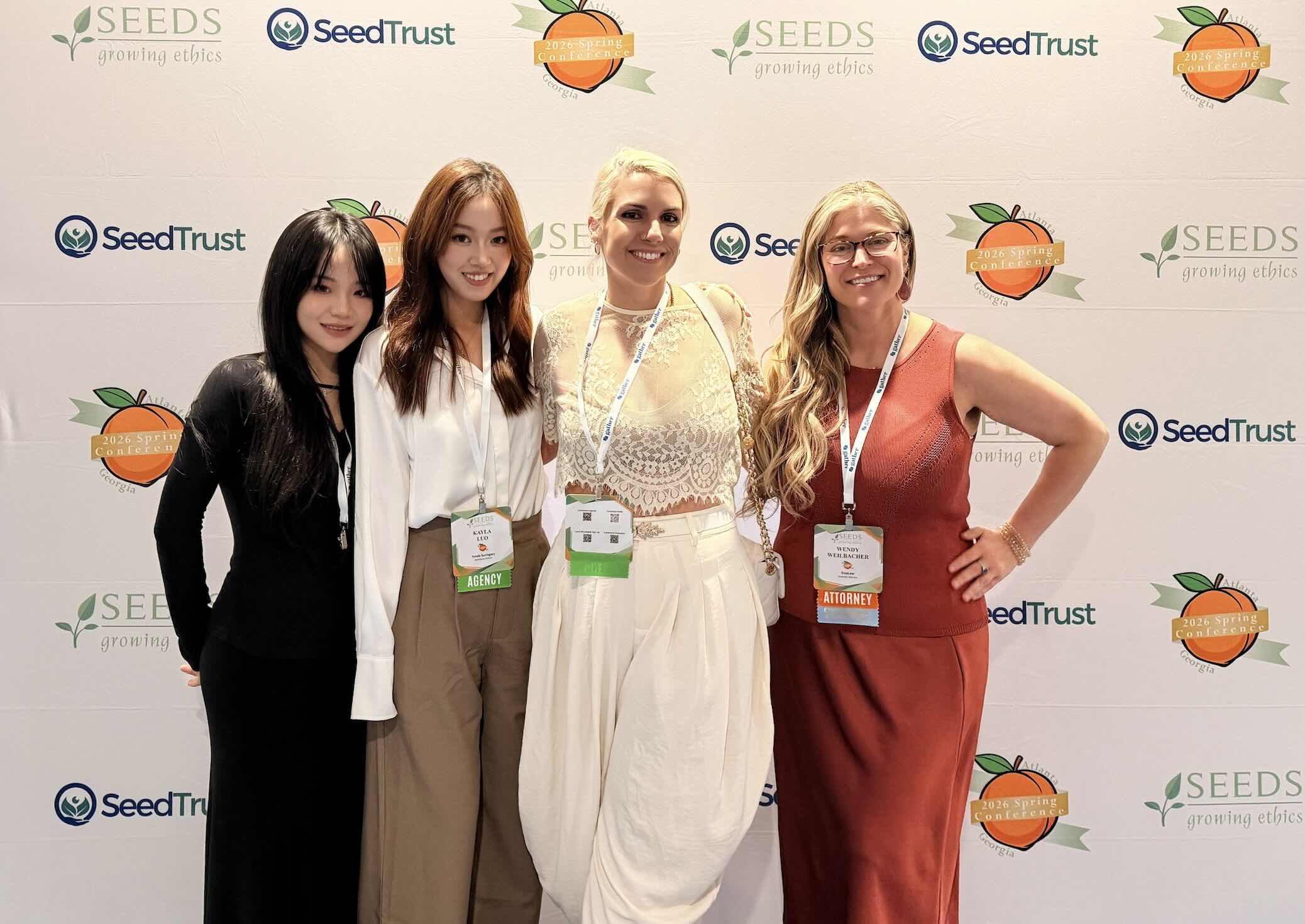
Southern California has long been one of the places international families consider when pursuing surrogacy in the United States, in part because California law recognizes gestational agreements and requires independent legal counsel for each party. The medical and legal infrastructure is well established. What families arriving from abroad describe as the harder problem is more ordinary: how to commit to a multi-year, multi-party process while unable to read the documents, meet the professionals in person, or confirm at any given moment what is actually happening. Few people in this business have thought harder about that problem than Manyuan Luo — and her answer is starting to get the industry’s attention.
Manyuan Luo, founder and Vice President, North America, of Yunda Surrogacy, a Los Angeles-based coordination firm, has built her work around that problem. She began her career as an international fertility consultant and subsequently became a parent via surrogacy— an experience she says changed how she understood the gaps she had already been observing professionally. “As a consultant I could see where the process broke,” Luo says. “As a parent I felt it. Knowing a hand-off is risky and lying awake because your file is sitting in it are two different things.”
The approach Yunda uses is, by Luo’s own description, administrative rather than clinical. The firm sequences and documents independent providers across six stages: clinical care, legal representation, escrow, insurance verification, gestational-carrier matching, and post-birth documentation, without providing medical or legal services. It adds a layer for non-English-speaking families.: bilingual review of documents before signature, an explanation of the legal sequence in plain language before decisions are made, and a case-management system through which families can view progress, escrow balances and records in their own language.
“Transparency only means something if the family can use it,” Luo says. “A dashboard in a language you can’t read isn’t transparency.”
Luo is also willing to say something practitioners tend to leave unsaid: that the people at the center of this process intended mothers gestational carriers nurses coordinators are predominantly women, while much of the industry’s structure was built without their input. She frames this as a design question rather than a grievance. “Women carry most of the emotional and physical weight of this process, on every side of it,” she says. “If the people designing the system have never been on the receiving end, you get something that is technically correct and humanly incomplete.”
How that translates into practice is less dramatic than the language suggests. Yunda requires independent counsel for every party, including the gestational carrier; insists that insurance be verified in writing before any medical step; and administers escrow under written fiduciary protocols. Luo says the firm staffs for time zones and language, so that a family in Shanghai or Taipei can reach a Mandarin-speaking coordinator during their own business hours. None of this is unique to Yunda, and Luo does not claim it is. Her argument is that it should be standard, and auditable, rather than left to each agency’s discretion.
That argument is one she has started to make publicly. And it is finding an audience. Luo has taken part in educational interviews with physicians and insurance specialists and has spoken at industry gatherings on standardized hand-offs, record-keeping and the ordering of legal, financial and medical steps — a position she describes as operational governance. “A standard that lives only inside one company isn’t a standard,” she says. “It’s a competitive advantage. The field needs the former.”
Consensus within the field remains uncertain. Third-party reproduction in the United States is predominantly self-regulated at the agency level; however, advocates, legal scholars, and select practitioners have advocated for more robust oversight. Luo’s position is that the industry would do better to set verifiable standards itself before they are set for it. She also notes that many of the women entering the field now arrive as she did — through consulting, nursing, law, or their own fertility journeys — carrying the first-hand knowledge she believes the sector has historically undervalued. “The experience that makes you a good patient advocate is the same experience that makes you a good operator,” she says.
Asked what families should expect in the years ahead, Luo keeps the answer narrow. “The medicine is good. The law in California is clear. “Families really need to know what happens next,” she says. “That’s a bit of a mix-up in how things are set up. We can fix those kinds of issues—but someone needs to step up and oversee the whole process.”