
 Wyles Daniel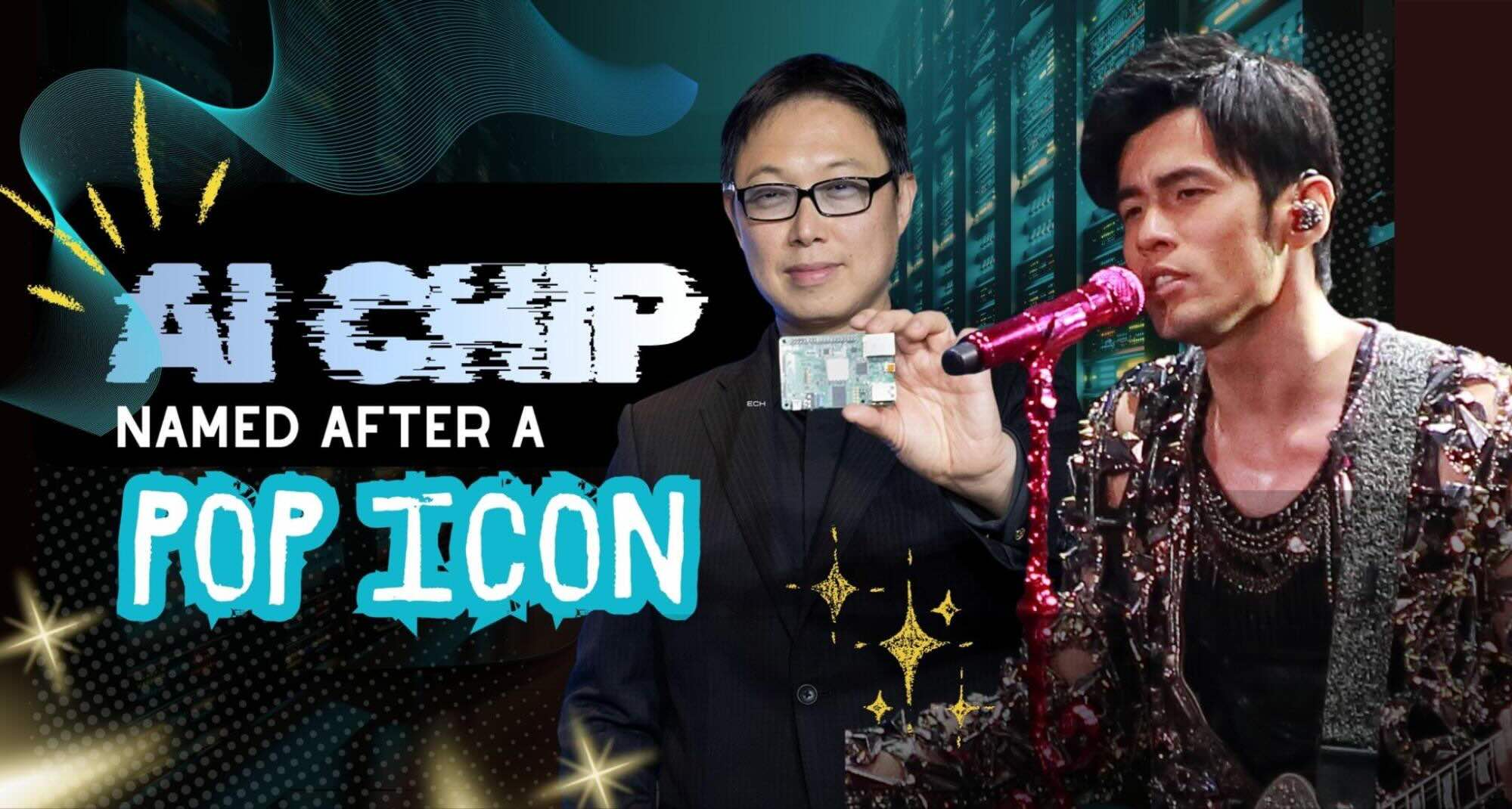
One of Asia’s biggest cultural icons has spent more than two decades dominating music, entertainment and popular culture. Now Jay Chou’s name has appeared somewhere no one would expect: inside an advanced artificial intelligence chip. The story of how it got there begins with a child in hospice care and ends inside a much bigger race to determine where the future of AI will live.
Jay Chou is not simply a pop star. Across Asia, the Taiwanese singer, songwriter, producer, actor and cultural icon has achieved the kind of influence reserved for a small group of generational entertainers. Since emerging in 2000, he has helped reshape Mandopop by combining R&B, hip hop, classical influences and traditional Chinese musical elements into a sound that became unmistakably his own.
More than two decades later, his commercial power remains extraordinary. His 2022 album Greatest Works of Art topped the International Federation of the Phonographic Industry’s Global Album Sales Chart, ahead of albums by BTS and Taylor Swift, making Chou the first Mandopop artist to achieve the distinction. His influence has stretched far beyond music into film, fashion, art and popular culture.
Now his name has entered an entirely different industry. Artificial intelligence.
One of the advanced Neural Processing Units being developed inside Kneron carries an unusual internal codename: “Jay Chou.” That would be an intriguing piece of semiconductor trivia on its own. Except Kneron is not simply another chip company.
The San Diego headquartered company is a world leader in AI chips and an early pioneer of the Neural Processing Unit, or NPU, the specialized processor increasingly becoming central to a new phase of artificial intelligence in which AI moves out of massive data centers and into the devices people use every day.
And that makes the story behind “Jay Chou” considerably bigger than its name.
Before the AI Industry Started Talking About NPUs
Today, NPUs are appearing across the technology industry as companies race to put more artificial intelligence directly into computers, phones, vehicles, cameras and other intelligent devices.
Kneron began building for that future nearly a decade ago. Founded in 2015, the company pioneered dedicated NPU technology and developed proprietary reconfigurable NPU architecture around a conviction that was far less obvious at the time: artificial intelligence would eventually need to move beyond centralized cloud computing and live directly inside the devices surrounding us.
Kneron has built proprietary intellectual property around NPU architecture, artificial intelligence, computer vision and image processing. Founder and CEO Albert Liu holds more than 30 international patents across artificial intelligence, computer vision and image processing, while the company has spent years developing the core processor architecture, software and systems needed to run AI locally. As its performance has been validated, Kneron’s high-end NPU architecture is actively engaging with a number of the world’s leading edge-application and smart-device ecosystems.
The idea is becoming increasingly important as artificial intelligence moves from something people deliberately access to something embedded into everyday technology. Instead of every intelligent interaction requiring information to travel to a distant data center and back, NPUs can allow more of that computation to happen directly where the data is created. What the technology industry now calls on-device AI is the future Kneron has spent years building toward.
And some of that technology is now being developed for major global consumer technology ecosystems whose devices are already sitting in pockets, on desks and inside homes around the world. Kneron is building for a world in which AI does not live only in the cloud. It lives in the device itself.
Eventually, the company believes, consumers may stop thinking about whether something is an “AI device” at all. Intelligence will simply become part of the products surrounding them. But inside that ambitious technology story is a remarkably human one.
From Bach and Beethoven to Jay Chou
Kneron has long had an unusual naming tradition inside its engineering teams. Its chip projects have carried the names of some of history’s greatest composers, including Bach, Mozart, Beethoven and Chopin.
For engineers, the comparison was surprisingly fitting. A sophisticated processor requires architecture, memory, performance, software, programmability and energy efficiency to work together. No single element defines the final product. Like a musical composition, everything has to work in harmony.
Then Kneron broke its own tradition. One of its advanced NPU projects would not carry the name of another classical composer. It would be named after a living Asian superstar, Jay Chou.
The reason had little to do with celebrity endorsements, marketing campaigns or record sales. It began years before Kneron even existed.
A Child Had One Wish
Before Albert Liu became the founder of an AI semiconductor company, he volunteered in hospice care as a student. During that time, he spent time with a seriously ill child approaching the end of life.
The child loved Jay Chou and had one wish: to hear from him. Chou was already one of the biggest entertainers in the Mandarin speaking world. Liu had no connection to him and little reason to believe that a message from an unknown student would ever reach a superstar surrounded by managers, schedules, concerts and millions of fans.
Still, Liu decided to try. He reached out, explained the child’s situation and asked whether Chou might send a few words of encouragement. Jay Chou responded. According to Liu, Chou personally recorded a message for the child. It may have taken only a few moments of Chou’s time. But for the child receiving it, and for the young volunteer witnessing what happened, those moments carried a very different weight. What Liu remembered was not Chou’s fame. It was what he chose to do with it.
Years passed. Liu completed his doctorate, entered the semiconductor industry and eventually founded Kneron. He began building technology around the idea that artificial intelligence would one day move out of centralized computing infrastructure and into the physical devices surrounding people.
Then, years later, as Kneron was developing one of its advanced NPUs, the memory of that child and that message returned. The chip became “Jay Chou.”
Why the Name Became Even More Fitting
There was another reason the name resonated with Liu.
Jay Chou built his career from Asia outward. He did not become influential by simply recreating an existing Western formula. He combined different musical traditions and created something distinctly his own, eventually building a cultural footprint that crossed countries, industries and generations.
Kneron is pursuing a strikingly similar trajectory in technology.
The company began developing NPU architecture at a time when much of the semiconductor industry was focused elsewhere. It developed proprietary architecture and intellectual property and spent years quietly building toward a future in which artificial intelligence would need to run efficiently inside devices. Now the industry is moving toward the problem Kneron built itself to solve.
The parallel became almost uncanny in 2022 when Chou released an album called Greatest Works of Art. The artist whose name would appear inside Kneron’s engineering roadmap had given his album a title that could almost be read as a challenge to the engineers building the processor bearing his name.
AI Is Leaving the Data Center
For years, the AI race has been about scale: bigger models, bigger GPU clusters and bigger data centers. But the next phase is about bringing intelligence closer to where it is actually used.
As AI moves into computers, vehicles, cameras, robots and everyday devices, constantly sending data back to the cloud creates challenges around latency, privacy, energy and cost. That is where the NPU becomes critical. Neural Processing Units are processors specifically designed for neural network computation. By moving more AI processing locally, NPUs allow devices to understand and respond to information without depending on a continuous round trip to the cloud.
This shift is already underway, with some of the world’s largest consumer technology brands adopting NPUs to bring AI directly into the devices people use every day. Kneron has spent nearly a decade building for this moment, developing technology across silicon, software and complete AI systems.
Its vision is simple, but potentially transformative: AI should not be somewhere you go. It should already be where you are.
The Engineering Behind the Story
The story behind “Jay Chou” gives the chip its humanity, but the engineering underneath it is what makes the story consequential.
Kneron founder and CEO Albert Liu, often described as the “father of the NPU,” began researching neural network processor architectures long before NPUs became a major focus of the technology industry. Kneron went on to pioneer proprietary NPU technology and reconfigurable AI computing architectures, with its work receiving the IEEE Darlington Best Paper Award and, in 2023, the IEEE Consumer Technology Society Corporate Innovation and Leadership Award.
Liu’s influence also extends into academia. His book, Artificial Intelligence Hardware Design: Challenges and Solutions, was ranked No. 6 among the world’s 100 most influential books in artificial intelligence by CNN, Forbes and other U.S. media, and has been required reading for AI chip courses at universities including Stanford and Princeton.
Kneron’s engineering lineage extends further. In 2025, cofounder Dr. Mau Chung Frank Chang received the John Fritz Medal, often called the “Nobel Prize of engineering.” Past recipients include Alexander Graham Bell, Thomas Edison, the Wright brothers, Robert Noyce, Gordon Moore and Elon Musk.
Together, these milestones tell a larger story. Kneron’s position in AI was not built around a single chip, but across years of research, NPU architecture, patented technology and commercial deployment. The world may only recently have started talking about NPUs. Kneron has been building them for nearly a decade.
From the Music Stage to the AI Stage
For Jay Chou, it is an extraordinary crossing of worlds. A name that has filled concert arenas, topped global album charts and defined a generation of Asian music now has a place in an entirely different arena: an advanced AI chip built for the next era of computing.
The parallel with Kneron is fitting. Jay Chou created something distinctly his own in Asia and took it to the world. Kneron spent nearly a decade pioneering NPU technology for a future in which intelligence moves beyond the cloud and into the devices people use every day. Now that future is arriving.
As the world’s biggest consumer technology brands bring AI directly into their products, Kneron’s technology is moving toward the computers, vehicles, cameras, machines and intelligent devices that will surround us everywhere.
Jay Chou called his 2022 album Greatest Works of Art. The NPU carrying his name may represent something equally defining for Kneron: the moment years of quiet innovation move onto the global stage.
Jay Chou took his sound from Asia to the world. Now Kneron is preparing to take its intelligence everywhere.