
 Will Jones
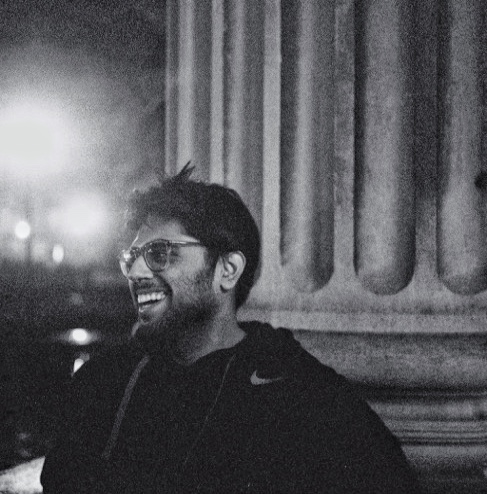
When Unlimited, Forever and Ever, No Matter What premiered at the Academy Award-qualifying Slamdance Film Festival earlier this year, it marked another milestone in the career of its producer, Kaustubh “Vick” Singh, os simply Vick. His international projects have flown him halfway across the world from New York to film sets in the Philippines, to North Macedonia, to Australia and India, to Louisiana and back to Los Angeles. More recently, even to a Cannes premiere in southern France.
But Vick’s story in America began much closer to home, in Orange County, as an undergraduate at Chapman University, where he was nowhere near the film industry- he was studying to be a broadcast journalist. Working part-time at a performing arts venue and splitting his weekends filming remote segments for Chapman News, working in film was never in the plan.
A New Beginning in Orange County
Vick was drawn to storytelling before he fully understood he wanted to produce it. Under the tutelage of Sally Rubin, the Emmy-nominated documentary filmmaker behind Hillbilly (2019), Vick’s mentorship would shape the next decade of his career. Rubin didn’t just teach him the craft of storytelling; she introduced him to the world of documentary as a serious calling, one built on patience, empathy, and the willingness to sit inside someone else’s reality long enough to actually understand it.
Through grants from the Sikhlens Foundation, a nonprofit arts and cultural organization dedicated to sharing Sikh heritage, history, and culture with the world, Vick made two documentary short films in Melbourne, Australia: Ride With Pride and She is Strong, both made over a month in Australia. She Is Strong, about Rupinder Kaur Sandhu, the only Sikh female wrestler of Indian origin to represent Australia at the Olympics, and Ride With Pride, following Parampreet Singh Rajput’s fight to secure a helmet exemption and formal recognition of his Sikh faith under Australian law- both movies went on to tour the world as part of the Sikhlens Film Festival, which exhibits the films in India, Canada, and other diasporic Sikh parts of the world.
Ray Broshears and the Ghosts of the Tenderloin
If Sikhlens taught Vick to sit inside a community’s present-day struggle, his next major project sent him looking for one buried in California’s past. That Was Ray (2019), an animated documentary Vick made with compatriots Brenten Brandenburg and Jordan Gorman, tells the story of Reverend Ray Broshears, founder of the Lavender Panthers, a group of armed patrols that formed in San Francisco’s Tenderloin district in the 1970s to physically defend the neighborhood’s queer community against a wave of violent attacks police refused to take seriously.
Vick was drawn to Broshears because his story had largely disappeared from the popular memory of California’s gay rights history, overshadowed by more famous names and more photogenic movements. Bringing Ray’s story back through animation, a medium that let Vick reconstruct scenes no camera had ever captured, became a way of insisting that the Tenderloin’s own history of resistance deserved to be remembered on its own terms. The film premiered at the BAFTA-qualifying Frameline San Francisco LGBTQ+ Film Festival and screened for audiences at public screenings at the Frida Cinema in Santa Ana and the Tenderloin Museum in San Francisco, the very neighborhood where Broshears once patrolled. It was also covered by Smithsonian Magazine and went on to earn a Student Academy Award nomination.
That education became personal almost immediately. As Vick navigated life post-graduation, still finding his footing in an industry that rarely makes room for young, uncertain immigrants, he found himself drawn to a story that mirrored his own precarity in ways he hadn’t expected.
Learning Los Angeles
The defining LA story for Vick became Status Pending (2020), a documentary short following a group of Mexican-American immigration lawyers in Los Angeles who built an informal support network to survive the exhausting, high-stakes work of defending their clients as immigration law itself came under sustained political attack. Vick joined the production as an assistant editor and associate producer to Priscilla Gonzalez Sainz, working through more than 100 hours of footage and, when the film’s producer was unavailable, stepping directly onto set to fill the gap himself as on-set line producer.
He remembers filming near LAX as a family said goodbye to a client preparing to leave the country entirely rather than continue fighting a system stacked against him, and standing for long, hot hours outside immigration court alongside the lawyers whose daily grind the film was built around. It was, Vick has said, the first time he understood viscerally what it meant to tell a story from inside the system rather than about it. Status Pending went on to premiere at the Big Sky Documentary Film Festival, screen as part of NBC’s Meet the Press Showcase at AFI, and air internationally on Al Jazeera’s WITNESS strand.
New York, and a Widening Lens
After a stint at Viacom Media at AwesomenessTV in California during COVID-19, Vick’s ambitions began to stray from journalism as the big media companies consolidated and press freedom came under attack. This revelation carried him east to New York, where he began building the international producing career that would define his life’s thesis and everything after it.
As an independent producer, Vick helped produce several short films, including Évangéline (2024), a Cajun French horror short film about the legend of the rougarou, which premiered at the Academy Award Qualifying New Orleans Film Festival.
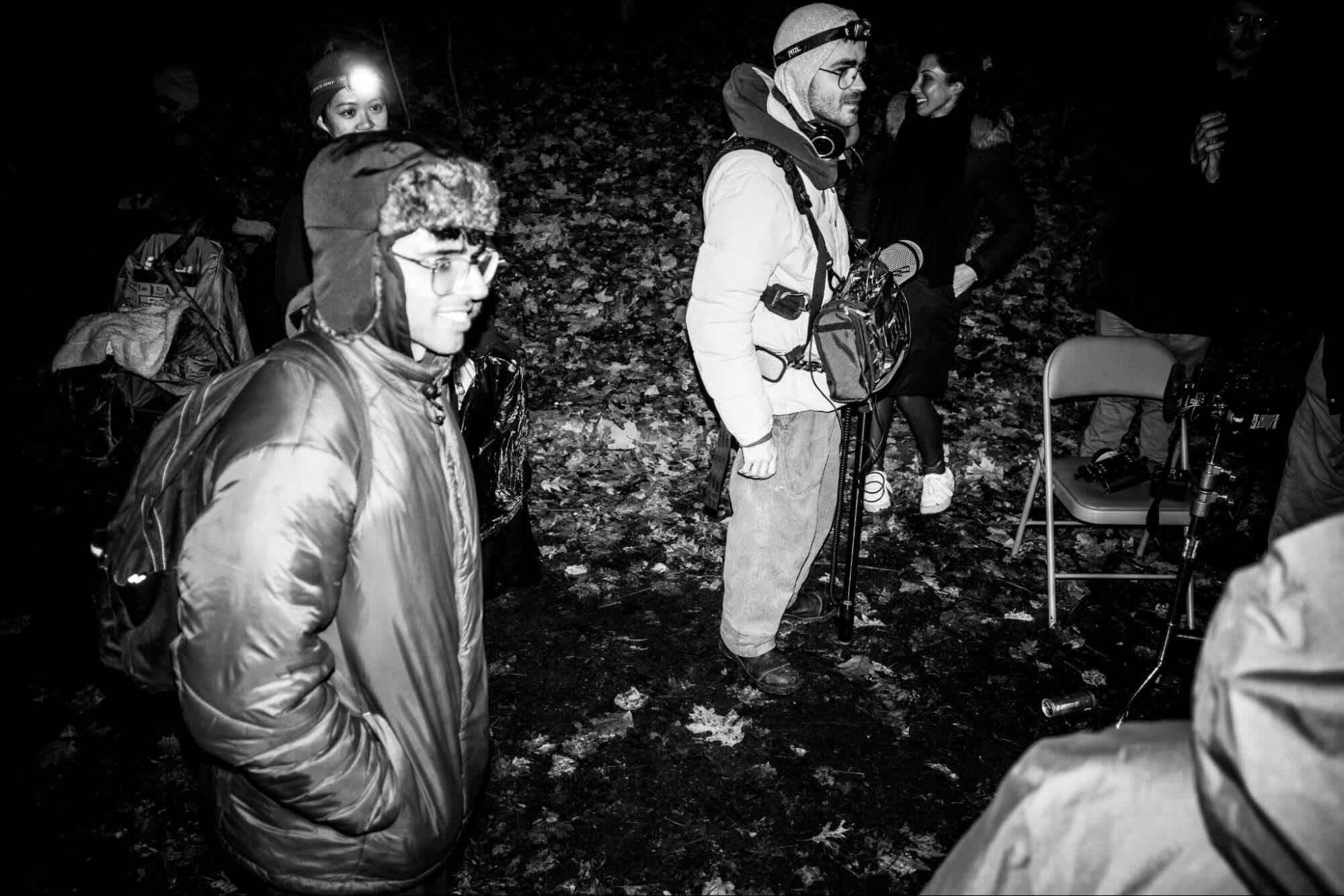
Finding creative companionship with Leon Ristov, Vick and Leon made Nikola, Nikola (2026), filmed in the forests of North Macedonia and made entirely through rigorous support from seven separate grants, including one from the Sundance Ignite program and PepsiCo, it went on to premiere at the Academy Awards and BAFTA-qualifying In the Palace Short Film Festival in Bulgaria and receive recognition from the National Board of Review.
During this time Vick met his future Obluda Films co-founders, Jeff Lichtenstein and Ren Guang, and began the collaborations, with directors like Jayme Coveliers and Leon Ristov, that would come to define his slate.
Obluda Films and the Work Still Ahead
Today, as Creative Executive at Obluda Films, Vick is producing stories that resist easy categorization by design: Filipino political history in Maláte Melody, Balkan family drama in Signs of Life, and, most recently, Resurrection, Bi Gan’s Cannes Special Award-winning feature and the first mainland Chinese production the young company boarded. He also co-founded MavenApt, a blockchain-based distribution platform built to give independent filmmakers a way to keep earning from their work long after a festival run ends, a problem he understands firsthand after years of watching hard-won films disappear the moment their premiere lights go down.
What connects all of it, Metro Los Angeles to Manila or Macedonia to Melbourne, is a producer who keeps returning to the same instinct: find the story that history nearly let slip away, and build whatever structure it takes- financial, technical, or simply physical presence on a film set at two in the morning- to make sure it finally gets told.