
 Will Jones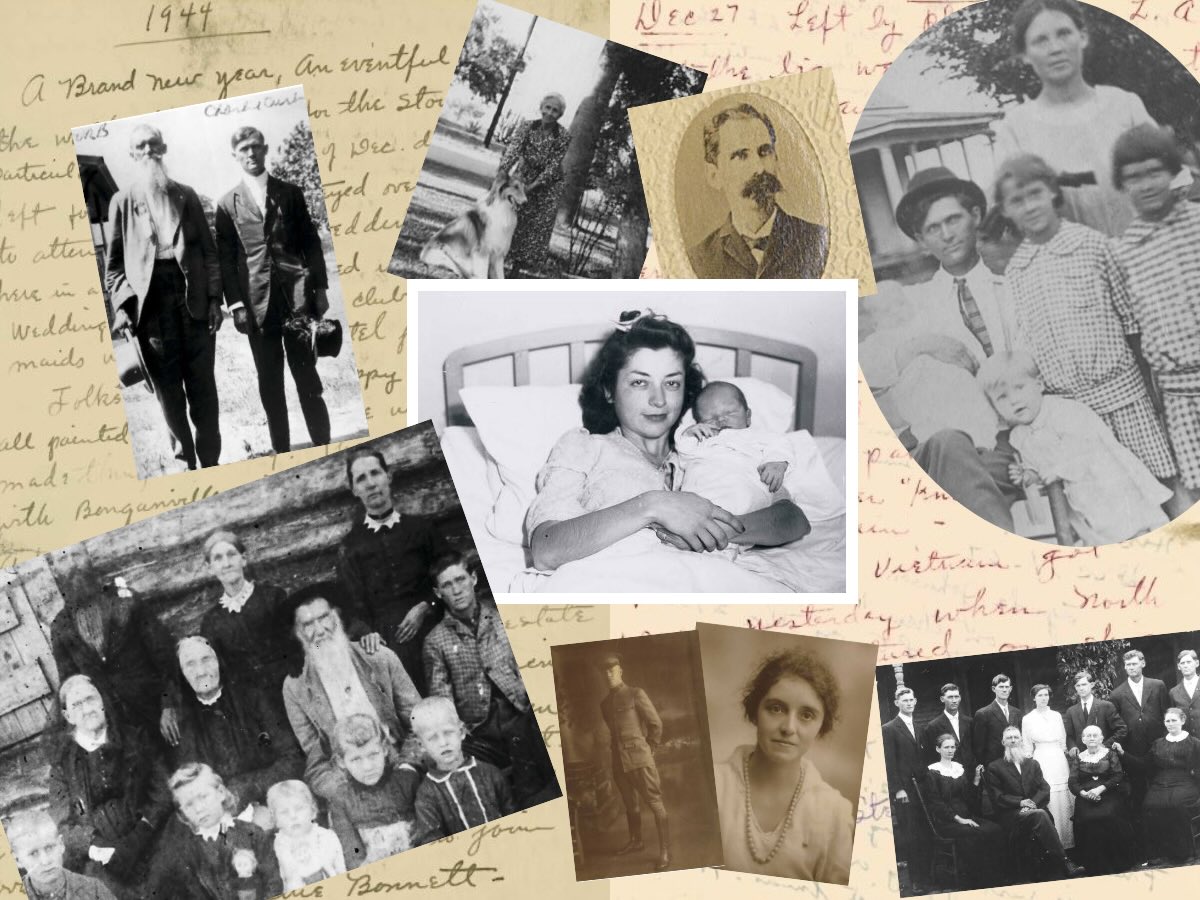
Images Courtesy of Mike Curb
As the United States recently celebrated its 250th anniversary, Mike Curb has been reflecting on the people who came before him. Not in a sentimental way exactly, but through the lens of someone whose family history begins to align with national history in unexpected ways. His earliest American ancestor, a man named Thomas Curb II, stepped off a ship from England and onto colonial soil in 1776, the same year a new country was declaring its independence. Two and a half centuries later, his descendant, Mike Curb, is still trying to understand what that timing means, and what it asks of him.
This is not a story Mike inherited as polished family lore. His mother, Estella Stout Curb, spent years tracing it through Baptist church records, old church programs, and county registries in the southern Appalachian foothills. She was determined to know exactly who arrived, when they arrived, and where they settled. What she uncovered would go on to shape how Mike thinks about much of what he has built since.
A Preacher on the Western Frontier
When Thomas Curb II arrived in 1776, the place he entered was not yet North Carolina as we know it today. It was still the Province of North Carolina, one of the original British colonies, and its western edge stretched far beyond the mountains into what would later become Tennessee. According to available records, Thomas became a Baptist preacher, traveling and ministering across the rugged frontier that stretched from the Atlantic coast deep into the west. By 1796, when Tennessee was carved out of North Carolina and granted statehood, he was living and preaching in Hickman County.
That detail matters more than it might seem. If you draw the modern boundary line across Tennessee and North Carolina, it is the same line that defined settlement patterns at the time. The Curb family happened to be on the Tennessee side of that line at the right moment in 1796, which allowed Mike’s mother to document the family as a Tennessee First Family. Mike was awarded a certificate recognizing that status, and his mom kept it proudly for the rest of her life. She had always wanted her children raised in Tennessee, Kentucky, or North Carolina, and the family record gave her a deeper sense that the connection ran beyond preference. The family’s Revolutionary-era roots have also been recognized in Mike’s own membership in the National Society Sons of the American Revolution, the lineage society for descendants of those who aided the fight for American independence.
There is a quiet symmetry in all of it. Two hundred and fifty years after Thomas Curb II set foot on colonial soil, his descendant, Mike Curb, now owns a museum in Kannapolis, North Carolina, not far from where Thomas first arrived. The Curb Museum for Music and Motorsports sits in the heart of American motorsports culture, in the state where the family’s American story began. Amazingly, two of the most legendary motorsports figures, Richard Petty and Dale Earnhardt, are both from North Carolina and achieved major success with Mike Curb Motorsports. The Curb Museum is also the home for Eddie Ray’s North Carolina Music Hall of Fame. The geography seems to fold back on itself, century after century, returning the story to its origins.
The Grandfather Who Taught Him to Play
Generations later, that same Baptist lineage ran through Mike’s paternal grandfather, Reverend Charlie McCloud Curb, who served as a minister for more than fifty years and was later inducted into the Oklahoma Baptist Hall of Fame. He was the first person to place Mike at a piano. Mike was only four or five years old when his grandfather taught him to play “Just As I Am,” the hymn Billy Graham would later bring to a wider audience. Decades after that first lesson, Mike’s successful music group, the Mike Curb Congregation, would record an album of Graham’s favorite hymns, including the same song the boy had first learned at his grandfather’s church piano. Today, the Reverend Charlie Curb Center for Faith Leadership at Belmont University is named in honor of Mike’s grandfather.
Mike often says he is inspired by his ancestors and that they were better people than he is. They were YMCA directors, ministers, military officers, law enforcement officers, and Sunday school teachers. Money was never their focus. Neither his paternal grandfather’s home nor his maternal grandmother’s home had an indoor bathroom. None of his ancestors invested in the businesses Mike would later build. His father never gave him startup capital, not even the kind of financial help some entrepreneurs describe. What his family gave him instead was something less tangible but more enduring, a work ethic and a way of moving through the world.
The Grandmother and her Diary
On his mother’s side, the story begins at the Mexican border. Mike’s grandmother, Eloisa Salazar, was born near the Mexico-United States border and began her life in the United States as a young woman. She fell in love with the country, and within a few years endured a devastating loss. Her father, Rafael, and three sisters, Estella, Enriquetta, and Ernestina, all died of tuberculosis during the influenza pandemic of 1918 to 1920, exactly one hundred years before the pandemic experienced by our current generation.
She did not collapse under the weight of that loss. Instead, she studied her adopted country with unusual intensity, learning the names of cabinet members and governors across every state. She graduated from San Marcos Baptist College, supported herself through her studies, and became a translator. She later married a soldier named Charles Joseph Stout, who spent his career running the YMCA, first in Kentucky and later in Pittsburgh.
Throughout her adult life, she kept a handwritten diary. Pages of it are now publicly archived on Mike’s personal website, and reading them offers a window into how she understood citizenship and service. Mike was her only grandson, and she held high expectations for him, not in wealth or fame, but in contribution. She often hoped he would join the Peace Corps or serve in public office. She made Mike watch political conventions as a child, explaining what was happening on screen as it unfolded. Years later, when he entered public office in California, he often said that much of what he understood about government came from her.
One passage from her diary stayed with him for decades. While traveling by train from Savannah, Georgia, where Mike was born, to Pittsburgh to visit her, Mike and his mother stopped in Washington, D.C. That night, Eloisa wrote that two great men were in the capital that day, General MacArthur and her grandson, Mike Curb. He was still a child at the time. It was the kind of expectation she set early, and one he spent much of his life trying to live up to. When he was later elected Lieutenant Governor of California and acted as Governor for approximately 250 days, the work felt in part like a promise kept to his Latino grandmother who believed deeply in the country she loved. Today, immigrants in Nashville are welcome and honored at the Eloisa Salazar Event Center.
Two Cultures, One Family
Mike’s family history brings together two distinct cultural traditions, each of which shaped him in different ways. On one side was the Latino heritage passed down through his grandmother. On the other was a Southern and Midwestern Baptist tradition that stretched back to his paternal lineage, including his father, Charles McCloud Curb Jr., who served as an FBI agent. Each side held firm to its values, and neither required the other to diminish itself. Instead, they layered together. The result was not a compromise, but a combination.
Mike sees this as the quiet version of the American story. Not the loud or simplified one, but the lived one, shaped by people who arrive, endure loss, study, teach, raise families, and leave behind lives well lived for others to build upon. Preachers and translators, parents and public servants, all contribute in ways that often go unrecorded but still endure.
Mike Curb has spent much of his life trying to live up to that work ethic. He often says his ancestors were better people than he is, and he means it as both admiration and obligation. Two and a half centuries after Thomas Curb II first set foot on a North Carolina shore, his descendant is still working to honor what came before. That sense of continuity, more than any title or achievement, is the legacy Mike Curb carries forward.