
 Jon Stojan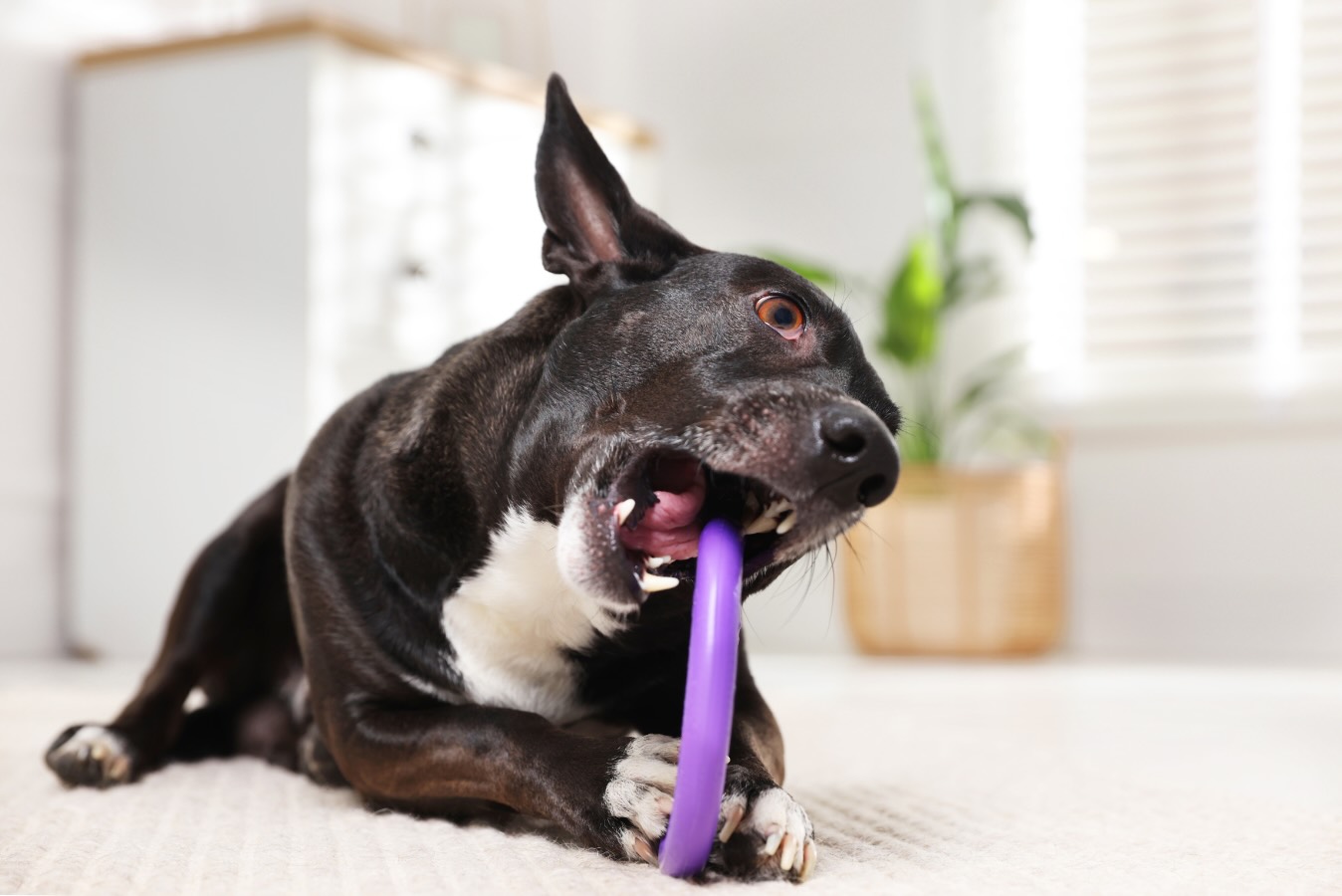
If your dog can destroy a new chew toy before you finish a cup of coffee, you’re living with a heavy chewer. While chewing is a healthy, natural behavior, extreme chewers can turn the wrong toys into safety risks and a constant drain on your budget.
Choosing interactive toys built for durability and engagement helps:
- Protect your dog’s teeth and digestive system
- Provide hours of engagement to prevent boredom or reduce anxiety
- Satisfy your dog’s natural chew instinct to protect other surfaces in your home
- Reduce how often you need to replace chew toys
- Creates more bonding opportunities for you and your pup
Why Extreme Chewers Need Unique Dog Toys
A heavy, or extreme, chewer is a dog that applies intense jaw pressure, chews for long periods, and can quickly tear apart standard toys. Pups with strong jaws, high energy, or anxiety-driven chewing tendencies often fall into this category.
Bully breeds, shepherds, retrievers, huskies, and boxers are all known for power chewing, but any dog can be an extreme chewer. If your pup exhibits strong jaws and persistence when chewing, they need toys designed to withstand aggressive use and promote safe chewing habits.
Toys that aren’t up to the task can lead to issues like:
- Choking hazards, as pieces of the toy may break off
- Intestinal blockages, as your dog may swallow large toy fragments
- Dental injuries caused by materials not designed for strong chewing
- Rapid toy destruction that leads to frustration for you and your dog
Why Rawhide Is Dangerous for Heavy Chewers
Rawhide is often marketed as a long-lasting chew, but for pups with strong jaws, these strips and sticks can be little more than a quick treat.
The ASPCA points out that, “Most dogs find rawhide chews highly palatable and often consume an entire chew during a single session.” It also notes that pet parents should limit rawhide use because it can lead to choking and gastrointestinal obstruction. Those risks increase when your heavy chewer can chomp down an entire rawhide in less than a minute.
Toy Options for Heavy Chewers
In its position statement on dog chews, the ASPCA recommends that pet parents take time to understand their dog’s individual chewing habits and select toys that work for them.
When selecting a chew or toy for your power chewer, look for options that:
- Your pet won’t be able to chew it into pieces quickly
- Don’t have parts that may break off and be swallowed
- Have enough give to reduce risks to your dog’s teeth when they chew
- Are made from non-toxic, pet-safe materials
- Are the right size for your dog’s mouth to support comfort and prevent swallowing them whole
- Are easy to inspect for wear, so you can replace them as needed
Below are some of the most reliable toy categories for extreme chewers and what makes each effective.
| Toy type | What is it? | Key benefits |
| Nylon toys | Hard molded chews designed to withstand intense pressure | ● Extremely durable and long-lasting ● Often textured to help clean teeth |
| Rubber toys | Thick, flexible toys made from heavy-duty rubber | ● Great for stuffing treats ● Absorb shock from strong bites |
| Ballistic toys | Toys reinforced with layered fabric or industrial-strength stitching | ● Better resistance to tearing ● Good for dogs that shred plush toys ● Often designed with elements that create crinkling sounds or other audio sensory stimuli |
| Cotton tug ropes | Tightly twisted rope toys designed for pulling and chewing | ● Encourage interactive play with humans or other dogs ● Help clean teeth through natural fiber friction |
How to Tell if a Toy is Too Hard for Your Dog’s Teeth
While durability matters, toys that are too hard put dental health at risk. Use the thumbnail test to ensure toys are a good texture for your dog:
- Press your thumbnail or fingernail into the toy to leave a small indentation
- If you can easily press your finger into the toy, creating a large dip, it may be too soft
- If you can’t make a small indentation with your nail, it may be too hard
Hard chews, like antlers, bones, and rock-hard toys, can increase risks like fractured teeth. If you notice chipped teeth, bleeding gums, or excessive drooling after your dog uses a chew, consider removing that toy from the rotation.
Matching Toy Types to Your Dog’s Chewing Personality
Not all heavy chewers destroy toys in the same way. Some dogs methodically gnaw for hours, while others tear, shred, or chew as an outlet for stress or excess energy. Understanding how and why your dog chews can help you choose better toys for them.
Matching toy type to your dog’s chewing personality improves engagement and lowers the risk of frustration or rapid toy destruction.
| Chewing personality | Common traits | Dog toys to try |
| Power gnawer | ● Slow, focused chewing ● Strong jaw pressure | ● Nylon toys ● Dense rubber chews |
| Shredder | ● Loves to rip fabric or tear plush toys apart | ● Ballistic toys ● Reinforced tugs |
| Anxious chewer | ● Chews to self-soothe ● Often chews for long periods ● Gnaws on things when you’re away | ● Rubber toys with treat-stuffing options
|
| Bored chewer or high-energy chewer | ● Needs mental and physical stimuli most of the day ● Destructive when not engaged | ● Rubber toys with treat-stuffing options ● Cotton tug ropes for interactive play ● Nylon toys |
Bond, Create Memories, and Burn Energy with Interactive Games
No matter the breed, our pups’ personalities really come out during playtime. It’s a safe space for them to express emotions, be vulnerable, and learn limits. It’s also a big part of how you communicate and bond with your bud.
Incorporating interactive games using durable, chew-safe toys helps your dog burn energy in productive ways, reducing boredom-driven destruction while keeping playtime safe. Plus, these joyful moments help reinforce your special bond and make it even stronger every day.
Tug-of-War
- Best toys: Cotton tug ropes, ballistic toys
- Why it helps: Tug-of-war satisfies your dog’s natural urge to grip and pull while providing an outlet for physical energy and interactive bonding. When played with the right equipment and supervision, it can be a safe, enriching and fun activity for power chewers.
- Safety tip: Choose thick, tightly twisted ropes or reinforced ballistic fabric toys. Avoid toys that fray easily, and replace them at the first signs of wear to prevent ingestion of loose fibers.
Fetch
- Best toys: Rubber toys, ballistic fabric toys
- Why it helps: Fetch is a classic and beloved dog game that provides exercise and helps tire out high-energy dogs. This can help reduce destructive chewing later in the day. Rubber toys with out-of-the-ordinary shapes have an exciting bounce dogs love to chase and fetch. Ballistic fabric toys are perfect for catching in the air and practicing for that next “Air Bud” casting call.
- Safety tip: Skip hard plastic that can damage teeth if caught in the air. Look for rubber toys with enough “give” to absorb impact, or ballistic that you can use as frisbee-style play.
Treat-Search or “Find It” Games
- Best toys: Treat-stuffable rubber toys or nylon dog toys
- Why it helps: Scent-based games and treat puzzles provide mental stimulation that’s especially beneficial for anxious or bored chewers. These activities encourage problem-solving and focused engagement, helping dogs self-regulate without resorting to destructive habits.
- Bonus: These games highlight why rubber toys are MVPs for heavy chewers. They’re durable, versatile, and can be used for both solo chewing and interactive enrichment. Nylon toys are flat and perfect for slathering on their favorite treat spread.
Why Supervision and Rotation Matter
Even toys designed for heavy chewers aren’t meant to be used indefinitely without oversight. Supervision lets you see how your dog interacts with a new toy and catch potential issues, such as cracking, fraying, or pieces breaking off, before they become safety hazards.
Rotating toys every few days also helps extend their lifespan and keeps your dog mentally engaged by maintaining novelty. When toys are always available, dogs are more likely to fixate on one item and wear it down quickly or start to ignore toy offerings because they’re bored with them.
One of the easiest ways to support healthy rotation of chews and treats is with a dog-themed subscription box. Top offerings get several new toys in your mailbox monthly. BULLYMAKE specializes in toys for tough chewers, helping you stock up on safe, effective engagement for your pup.