
 Will Jones
Inside a shared factory space in Inglewood, robots are doing something that used to require a hundred thousand square feet and a hundred workers. Solideon, the advanced manufacturing startup founded by Oluseun “Olu” Taiwo, has moved its headquarters from the Bay Area to Los Angeles this year, betting that proximity to the region’s growing cluster of aerospace and defense startups will accelerate a technology built to manufacture metal parts autonomously and on-site.
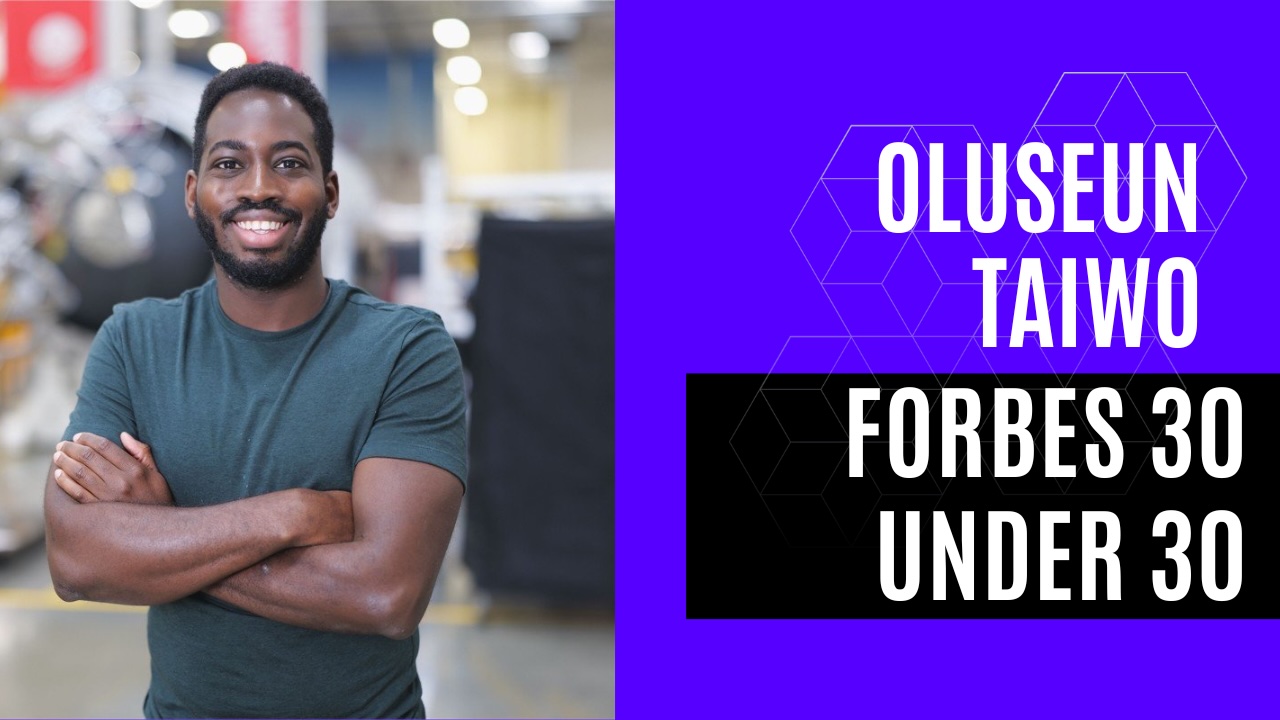
Taiwo’s path to founding Solideon involved two of the most closely watched names in modern rocketry. He studied manufacturing engineering with a minor in mechanical engineering in the Midwest, then moved to Southern California at 21 to join Rocket Lab USA, redesigning complex rocket components so they could be 3D-printed in metal. He later joined Virgin Orbit as an early hire, working on the Launcher One program and the additive manufacturing techniques that helped get larger rocket engines built faster. “That first job out of college was so crucial,” Taiwo said, describing how watching Rocket Lab grow from a scrappy underdog into a publicly traded company shaped his sense of what venture backed manufacturing could accomplish.
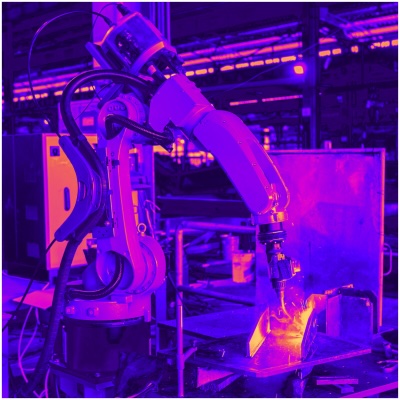
That experience convinced him the opportunity extended well past printing rocket engines. Solideon combines off the shelf industrial robots with proprietary software that lets people without an engineering background design a part, push a button, and let the robot fabricate it autonomously. Taiwo described the goal as building robots that can take over the work a factory used to need roughly 100,000 square feet and a hundred people to do by hand, with a system that learns from every part it builds and gets faster with each iteration.
The company’s clearest proof point right now is a contract with the Air Force. Solideon secured a Direct to Phase II SBIR/STTR award to build a forward deployed manufacturing cell, a shipping container sized unit stocked with robots that can fabricate metal parts on site rather than waiting weeks for a replacement to ship from a factory halfway across the country. The company is currently producing parts in the range of bicycle components inside these Connex boxes, testing domestically before the units head toward forward operating locations where few service members have robotics training. “That’s our biggest north star,” Taiwo said of the program, describing how a pivot toward Air Force focused manufacturing has reshaped nearly everything else the company works on.
The commercial upside became obvious almost by accident. If a deployable cell can print a spare part on an air base, the same technology could sit on an offshore oil rig or in any remote industrial site where shipping a replacement part costs real money and time. Taiwo sees that overlap between defense necessity and commercial demand as the highest value problem Solideon could chase as a startup that, by his own account, has raised roughly nine million dollars to date, with more anticipated funding expected in the near future.
Being based in LA now puts Solideon inside a cluster of companies solving adjacent problems, and Taiwo has been explicit that collaboration is part of the strategy. Solideon shares its factory floor with Zoo, an LA startup building agentic, speech to CAD design tools. The two companies are working together on workflows where a spoken design intent can move toward manufacture with minimal friction. “We need a network of companies to help with adoption,” Taiwo said, pointing to how young the broader shift toward autonomous manufacturing still is. “The factory floor is still in the eighties,” he added, arguing that unlike creative or knowledge industries already grappling with AI disruption, manufacturing has not yet felt the same pressure because the tools to automate it end-to-end simply have not existed until recently.
Solideon positions itself against better funded peers. Advanced manufacturing startups working in aerospace and defense have drawn serious capital lately, including Machina Labs, which closed a 124 million dollar Series C round backed by Lockheed Martin Ventures and Toyota’s Woven Capital earlier this year to scale a 200,000 square foot robotic manufacturing facility. Where many of those companies have built their identity around either hardware or software, Taiwo describes Solideon’s decision to build both at once as deliberate rather than incidental. “Everyone else chose a lane and we decided not to choose the lane very early,” he said, arguing that pairing parts manufacturing with the software that scales it, is what let Solideon weather a difficult stretch that might have sunk a company committed to only one side of that equation.
Behind the defense contracts and the ecosystem plays sits a longer term ambition that Taiwo is careful not to lead with. Every industry built on Earth will eventually need to be rebuilt for space if humans are going to live and work there, and Solideon’s terrestrial work, proving that robots can fabricate complex parts with minimal human oversight, doubles as a rehearsal for that future.”I sound like a crazy person if I go to investors saying … we’re going to go build robots that build a bridge between Earth and the Moon,” Taiwo said, adding that the math has to work here on Earth before that vision becomes realistic.
For now, the goal is simpler and more grounded, so to speak. After a quiet stretch, Solideon is rebuilding visibility, and the move to Los Angeles gives the company a stage among the investors, engineers, and fellow founders it needs to reach next.