
 Will Jones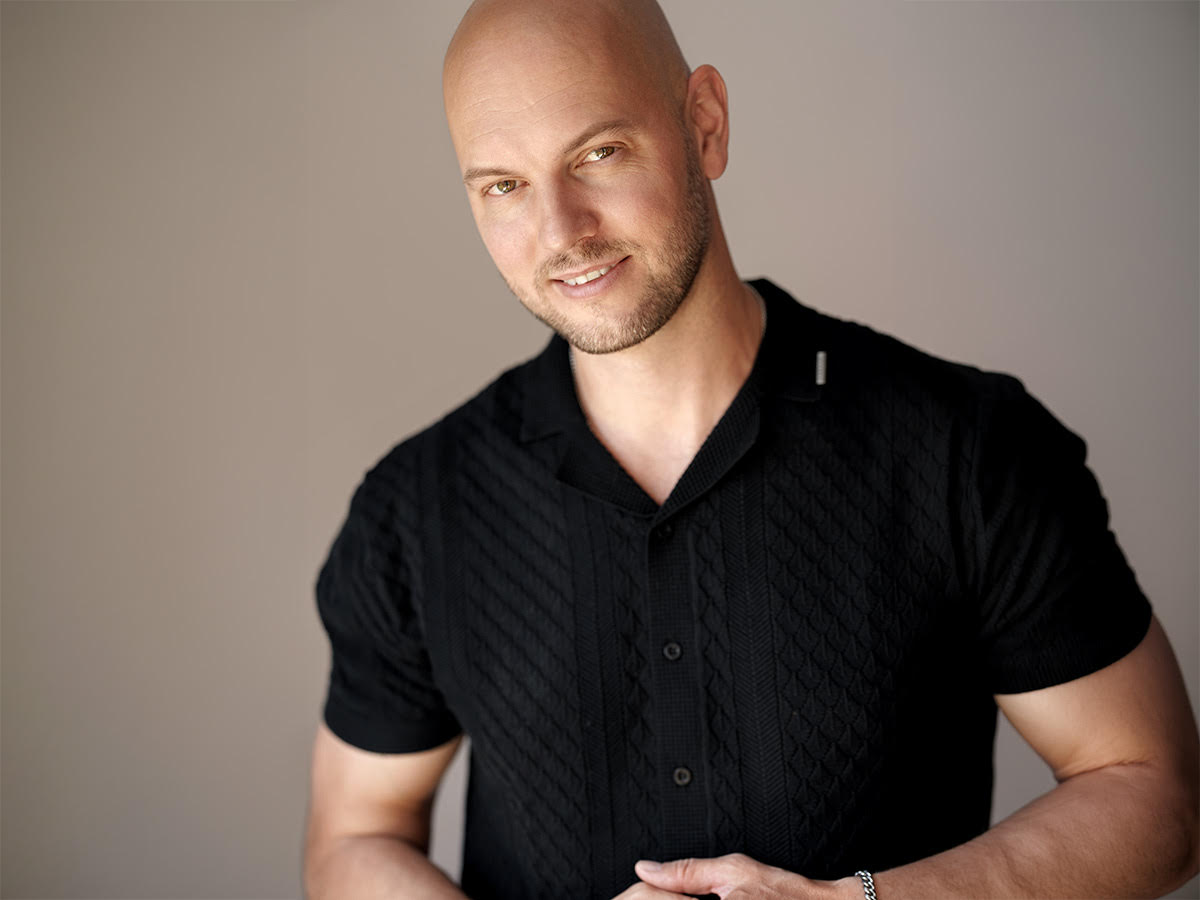
Image Credit: Alexander Gusev
Los Angeles has never been afraid of a new visual language. In a city built on image, reinvention is part of the job description. So it makes sense that one of the more interesting voices in commercial photography right now isn’t arguing against artificial intelligence – he’s arguing for a sharper definition of what human photography is actually for.
That voice belongs to Alexander Gusev, a Los Angeles–based CPP certified commercial photographer and founder of Snapshot Studio LA, whose work spans jewelry, eyewear, accessories, and high-conversion e-commerce imagery for American brands. His niche is deceptively narrow and technically unforgiving: reflective surfaces, color-critical products, tiny details, and visuals that have to do more than look beautiful. They have to sell, persuade, and build trust.
For Gusev, that is exactly why photography is not disappearing in the age of AI. It is becoming more valuable.
“AI can generate an image, but it cannot replace responsibility for visual truth,” Gusev says. “In commercial photography, especially with jewelry, eyewear, and consumer products, the image is not just decoration. It is part of the customer’s decision-making. If you distort color, material, scale, or finish, you’re not being creative – you’re breaking trust.”
That distinction sits at the center of his work. While public conversations around AI often swing between hype and panic, Gusev occupies a more practical middle ground. He sees artificial intelligence not as the death of photography, but as a tool that separates superficial image production from true visual expertise.
His view comes from years spent solving some of the least glamorous but most commercially important problems in product photography: how to capture mirrored lenses without dead reflections, how to make gemstones sparkle without blowing out detail, how to preserve true color for e-commerce, how to create a luxury visual feel without misrepresenting the object itself. These are not abstract aesthetic questions. They affect returns, conversion, customer confidence, and brand reputation.
That is one reason Gusev believes the photographers who will thrive in the AI era are not those who resist change, but those who understand image-making at a deeper level.
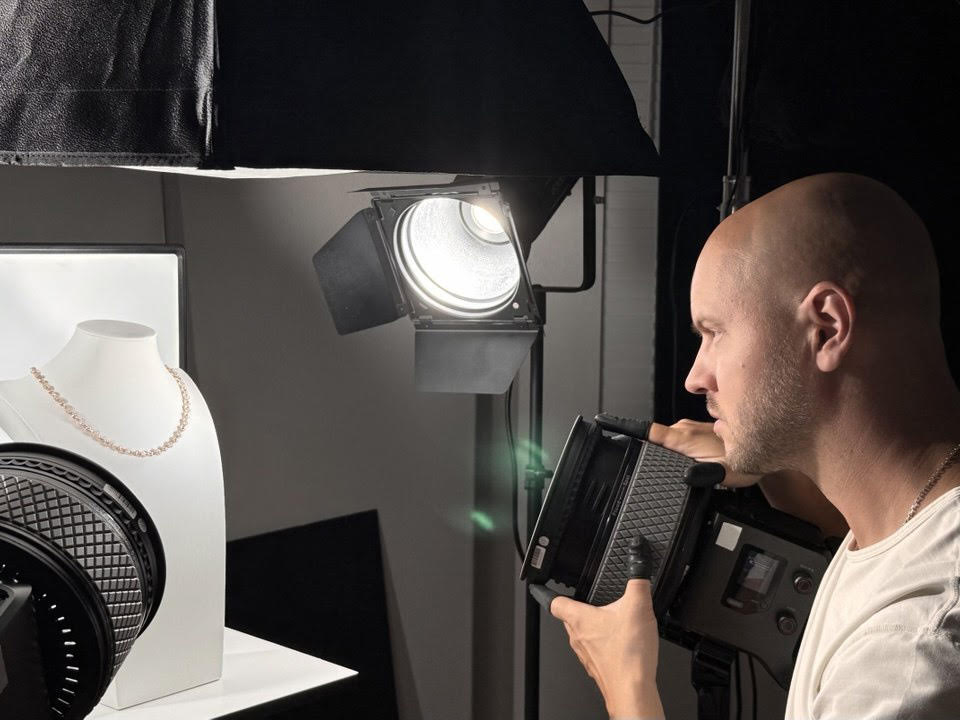
Image Credit: Alexander Gusev
“AI rewards clarity,” he says. “If you don’t understand light, composition, texture, proportions, and brand language, AI will only scale your confusion. But if you do understand those things, AI becomes an amplifier. It speeds up workflow, expands ideation, and helps you serve clients better – without replacing the photographer’s eye.”
That belief has become foundational to Gusev’s broader methodology. In Los Angeles, where visual industries increasingly overlap with tech, branding, and online retail, he has positioned himself at the intersection of traditional studio discipline and new production tools. Through Snapshot Studio LA and his educational platform Studio Mastery, he teaches commercial photographers how to build repeatable, technically accurate systems for product work – and how to integrate AI into that process without losing quality control.
What makes his position compelling is that it does not come from theory alone. It comes from market pressure. Brands need more images, more consistency, more speed, and more content variations than ever before. But they also need those images to remain believable, premium, and aligned with the product. In categories like fashion accessories, jewelry, supplements, and eyewear, the difference between a useful image and a damaging one can be measured in clicks, returns, and abandoned carts.
That’s where Gusev sees a widening gap between image generation and commercial photography.
“A photograph still begins with decision-making,” he says. “What should this product feel like? What should the customer understand in one second? What details matter? What creates desire without misleading the viewer? AI can assist with execution, but it does not replace authorship.”
His own path helps explain the confidence behind that argument. Before photography became his full-time profession, Gusev worked in IT, an experience that shaped how he approaches studio systems, consistency, and technical control. Over time, he built a commercial practice grounded in both aesthetics and process – first in Russia, then in the United States after relocating to Los Angeles. In Southern California, he found a market where his combination of precision and brand awareness translated naturally to e-commerce and product-driven businesses.
Today, his client base includes American brands in jewelry, lifestyle, wellness, and accessories – sectors where visual credibility is central to revenue. For these companies, strong photography is not an optional creative layer. It is core business infrastructure.

Image Credit: Alexander Gusev
That reality also informs his stance on AI ethics. Unlike creators who treat AI as a shortcut to image abundance, Gusev insists that the technology must be used within a framework of visual honesty.
“The danger is not AI itself,” he says. “The danger is using it without standards. If commercial visuals become detached from the actual product, consumers lose trust. The future belongs to photographers who can combine innovation with responsibility.”
It is a notably Los Angeles perspective: hybrid, fast-moving, commercially aware, and creatively ambitious without being naive about the market. In a city where image often moves faster than substance, Gusev’s argument is refreshingly grounded. He is not trying to preserve photography by freezing it in the past. He is trying to protect what makes it meaningful as the tools evolve.
That means insisting that photography is more than image output. It is interpretation, authorship, and technical judgment. It is the ability to translate a real object, real brand, or real intention into a visual form that people believe.
And in that sense, Gusev argues, the AI era may not be the end of photography at all. It may be the moment that reveals who actually knows how to see.
“Photography won’t die because people still need someone to decide what is worth showing, what is true, and what will connect,” he says. “The tools will change. The need for vision won’t.”