
 Elle dela Cruz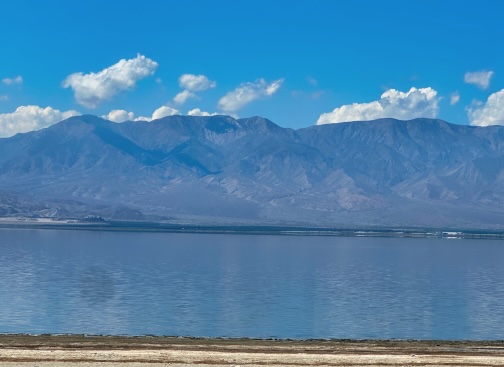
Photo Courtesy of Seized Property LLC
For a decade, the world’s appetite for lithium has grown into a force of nature. That soft, silvery element, once a niche component in consumer electronics, is the beating heart of batteries that power electric vehicles, grid storage, and portable devices.
Demand for lithium-ion technologies has soared as governments and corporations pursue cleaner energy systems, accelerating interest in every major deposit from the Lithium Triangle in South America to hard-rock mines in Australia and China. Global demand is projected to expand many times over the next decade as mobility electrifies and renewable storage becomes indispensable. Analysts estimate that meeting demand for clean energy and EV batteries will require significant increases in lithium production well beyond 2030.
Amid this global scramble, the Salton Sea, a shallow, landlocked lake in Southern California, has come into focus for what lies far below its surface. Federal scientists estimate that the geothermal brines beneath it contain lithium in quantities large enough to produce hundreds of millions of electric vehicle batteries. The deposit’s scale has been compared, in economic terms, to a vast hidden reservoir of “white gold.” That metaphor has taken on new gravity in markets where the energy transition, national security, and automotive manufacturing intersect.
People speak of “Lithium Valley” as a tectonic re-ordering of resource maps driven by demand for a metal that can fuel cars, store intermittent renewable power, and underpin mobile devices. As the world races for supply, attention has turned from distant salt flats and deep rock mines to the scarred deserts of Southern California, where the buried wealth beneath the Salton Sea has become a defining chapter in energy’s next great wave.
Lithium Valley: Buried Treasure in a Troubled Basin
Beneath the unfinished surface of the Salton Sea lies a geological anomaly: powerful geothermal activity that heats brine rich in dissolved minerals, including lithium. That brine has been tapped for decades to generate clean electricity from heat deep underground. Researchers now believe the same brine could yield substantial amounts of lithium carbonate, potentially hundreds of thousands of tons per year once extraction technology is fully deployed.
A comprehensive analysis by the U.S’ Department of Energy’s Lawrence Berkeley National Laboratory found that the Salton Sea region’s geothermal brine could contain more than 3,400 kilotons of lithium, enough to support over 375 million electric vehicle batteries. The California Energy Commission has also highlighted that this region may produce up to 600,000 metric tons of lithium carbonate annually, feeding both domestic demand and export markets.
For decades, most of the world’s lithium came from hard-rock mines in Australia and brine evaporation in South America’s high plains. Those operations have environmental and water-use challenges that have drawn criticism. The Salton Sea’s geothermal brine, by contrast, offers the possibility of co-producing geothermal power and lithium with a potentially lighter environmental footprint if the technology scales as promised.
The sheer scale of the resource has reframed Southern California from a backwater tourism site and ecological concern into a strategic asset. Policymakers, investors, and corporations alike are watching how this desolate basin may taper global reliance on imported lithium, particularly from China, which is forecast to dominate lithium refining by 2026.
A Rare Plot with a Vast Story Behind It
Amid this strategic moment, a 40-acre parcel of land near the northern Salton Sea has captured attention for more than its physical beauty. The property is one of the rare privately owned tracts in a region increasingly shaped by state, federal, and corporate control. It sits in Riverside County, where much of the surrounding land is held by government and utility interests.
That rarity is what compelled Michelle Curley, managing member of Seized Property LLC, to list it for sale with an unorthodox strategy. As interest in lithium dominates headlines and investment discussions, Curley has deliberately bypassed a standard Multiple Listing Service (MLS) approach to reach audiences that understand the region’s unique context. “Listing this 40-acre parcel now, as the Salton Sea dominates lithium news, makes me unique as a managing member,” she said, framing the moment as one of opportunity for investors and landholders alike.
Curley emphasizes that this parcel’s value lies in its place within a region increasingly viewed as an entry point to a broader economic story. “Land positions near the Salton Sea attract attention not only for immediate uses but also for long-term planning,” she explained, highlighting the flexibility such a tract offers in an otherwise tightly held landscape.
While the land itself does not directly imply mineral rights under the brine, its proximity to one of the world’s most talked-about lithium bearers positions it as a compelling stake in the narrative of energy transition. As demand for lithium intensifies, driven by electrification, battery storage, and renewables, the Salton Sea’s buried stores have made this once-forgotten inland sea a centerpiece of global supply discussions.
From Salton Sea’s Turmoil to Global Demand
The irony of the Salton Sea’s resurgence can’t be missed. Once a bustling recreational lake, the lake has shrunk over the decades due to agricultural runoff and water diversion, leaving exposed playa, toxic dust, and ecological decline that weigh on local communities. Yet below that troubled surface, the elements that make the region inhospitable to boats, heat, and brine may make it indispensable to energy systems around the world.
This is where global demand meets local geography. As automakers, grid developers, and nations push to expand lithium supply, places like the Salton Sea are no longer footnotes. They are central to the question of how and where lithium will be produced over the next decade. Analysts project that lithium demand could grow multiple times by 2040, and sources like the Salton Sea could be pivotal in meeting that demand while anchoring domestic production.
From strategic reserves to individual parcels like the 40-acre site, the story unfolding in the Salton Sea basin is about more than land. It’s about demand meeting opportunity, geology meeting technology, and a desert basin looking to write a new chapter in energy history.
For information about the property, kindly visit http://40acresofwhitegoldforsale.com