
 Malana VanTyler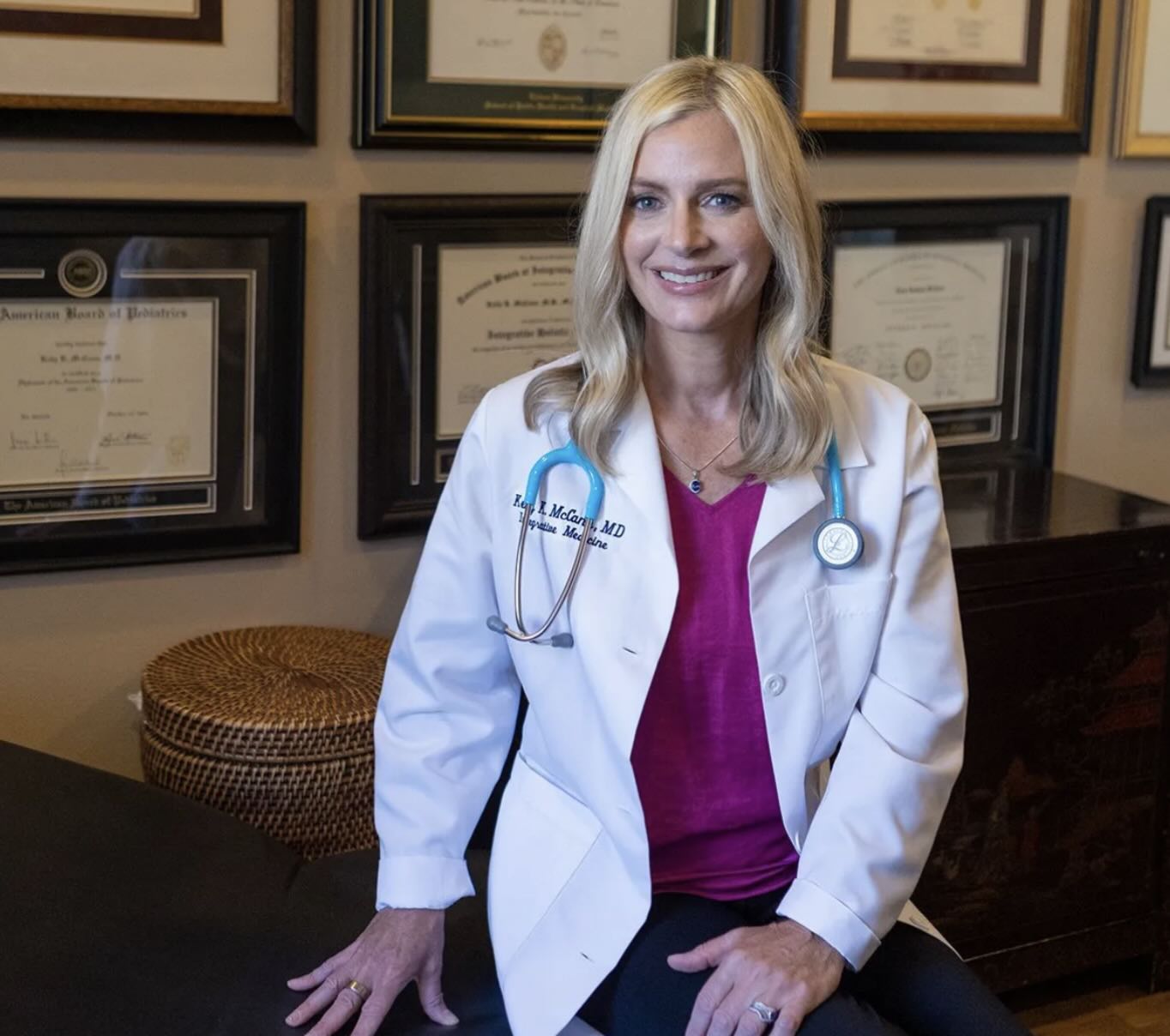
Across the world, millions of people are grappling with chronic illnesses that defy easy answers, autoimmune disorders, long COVID, Lyme disease, chronic fatigue, and countless others. Modern medicine has become remarkably skilled at managing symptoms, yet rates of these conditions continue to rise. As patients search for meaning in their suffering, a new perspective is emerging: what if illness isn’t just a medical event but a message? What if the body, in its pain and dysfunction, is actually trying to communicate something vital about how we live, think, and connect to ourselves?
Dr. Kelly McCann, Founder and CEO, The Spring Center, a board-certified physician in Internal Medicine, Pediatrics, Functional and Integrative Medicine, and Medical Acupuncture, has spent decades at the crossroads of science and spirit. From her practice at The Spring Center in Costa Mesa, California, she has witnessed a profound truth unfold again and again: chronic illness often isn’t just physical, it’s a message from the soul.
According to the CDC, six in ten American adults live with at least one chronic condition. The rise of autoimmune diseases, fatigue syndromes, and inflammatory disorders has become one of the defining health crises of our time. While environmental toxins, infections, and diet undeniably play major roles, Dr. Kelly McCann believes there’s an even deeper root cause, one that modern medicine has largely ignored.
“The real epidemic,” she explains, “is disconnection. Disconnection from purpose, from intuition, and from the self.”
Research increasingly supports this view. A 2019 meta-analysis published in JAMA Network Open found that individuals with a strong sense of purpose in life had a significantly lower risk of death from any cause and were less likely to develop cardiovascular disease. Numerous other studies have shown that emotional repression, chronic stress, and social isolation disrupt immune and hormonal regulation, increasing vulnerability to chronic illness.
“Purpose and connection are as vital to human health as nutrition or exercise,” McCann notes. “When we lose them, the body begins to speak in the only language it knows, symptoms.”
Her own path to this realization began not in a clinic but in her own body. After completing her medical training at Tulane and a demanding residency in Phoenix, McCann developed chronic fatigue and depression. Despite her medical expertise, conventional treatments brought little relief. It wasn’t until she began her fellowship in Integrative Medicine with Dr. Andrew Weil and later earned a Master’s in Spiritual Psychology that she began to understand her illness as something more than biochemical. “I realized my body wasn’t breaking down, it was breaking through,” she says. “It was trying to get my attention.”
This insight transformed her approach to medicine. In her clinical work, she began observing that patients who made the deepest recoveries weren’t always the ones who adhered perfectly to their treatment plans. They were the ones who were curious, who were willing to ask what their symptoms might be, trying to tell them.
One woman, for example, came to The Spring Center with mast cell activation syndrome, a complex condition characterized by inflammation, fatigue, and sensitivity reactions. Despite extensive medical support, detoxification, immune stabilization, and environmental remediation, her symptoms persisted. During one consultation, McCann asked her, “If your body could speak, what would it say?” The patient paused, then began to cry. She realized she had been living entirely for others, her family, her clients, her community, while neglecting her own needs. As she began reconnecting with her passions and setting healthy boundaries, her physical symptoms gradually diminished. “Her labs improved,” McCann recalls, “but more importantly, her light came back.”
For McCann, such cases underscore a vital principle: the body and intuition are inextricably linked. When we ignore our intuition or suppress our truth, the body will eventually find a way to make itself heard. Pain, fatigue, and anxiety are not enemies to fight but signals to interpret. “Symptoms are the body’s way of saying, ‘You’re off track,’” she explains. “When we listen, we heal. When we ignore them, they get louder.”
The body doesn’t betray; it awakens.
Conventional medicine, she argues, too often stops at the label, diagnosing and suppressing symptoms without asking why the body became vulnerable in the first place. Functional medicine takes a step deeper by addressing environmental and biochemical root causes like toxins, infections, and nutrient deficiencies. But McCann’s approach goes further still. She seeks what she calls “the root of the root cause”: the emotional, mental, and spiritual patterns that predispose people to illness.
That philosophy is the foundation of her latest initiative, The Unforgetting Project, a nine-week transformational program that weaves together functional medicine, environmental medicine, somatic awareness, and spiritual psychology. The program invites participants to decode their symptoms, rebuild trust with their bodies, and reconnect with their true purpose.
“The Unforgetting Project is about remembering who we really are,” McCann says. “When people stop treating their bodies as broken and start listening with compassion, they access a wisdom that has been there all along.”
Through this work, McCann aims to shift medicine’s paradigm, from symptom suppression to soul-level restoration. Her vision extends beyond her clinic: she’s building a movement to help both patients and practitioners recognize that true healing is not merely the absence of disease but the presence of coherence between body, mind, and spirit.
For Dr. McCann, the message is simple yet revolutionary. Chronic illness, rather than a malfunction to be fixed, can be a compass pointing us back toward authenticity and alignment. “When we begin to see symptoms as messages instead of malfunctions,” she says, “we stop fighting our bodies and start partnering with them.” In other words, the body isn’t betraying us. It’s inviting us to wake up.