
 Daniel Fusch
In the bustling heart of Hollywood’s ever-evolving media landscape, where content flashes across screens in seconds, Bang “Jovial” Xiao is crafting a quiet revolution—one decibel at a time. At just 27, this Chinese-born sound editor, designer, and mixer has swiftly established herself as a distinctive voice in film and television, bridging continents, formats, and emotions through the often-overlooked art of audio. Her journey from a student of English rhetoric in Beijing to an in-house sound supervisor at GoodShort, a rising microdrama studio, is not just a career path, but a testament to resilience, cultural curiosity, and a profound belief that sound is the soul of cinema.

Jovial’s entry into filmmaking was unconventional. After graduating with a degree in English rhetoric from Beihang University, she deferred her childhood dream of film production until a fateful gap year. A severe car accident left her hospitalized for months, but on the third day of her coma, she received her acceptance letter from the program of Cinematic Arts Film and Television Production at University of Southern California School of Cinematic Arts. Defying physical and pandemic barriers, she arrived in Los Angeles in August 2021, embarking on what she calls “an exploration of a childhood dream.”
At USC, Jovial initially aspired to be a writer-director. However, a short film project in her second semester served as a pivotal moment, crystallizing her professional aspirations. Sitting in a mixing session, she witnessed how poor dialogue recording could undermine a film’s impact—and how post-production sound could magically restore it. “That sparked my appreciation,” she recalls. A later musical short, where her production sound was praised as the semester’s best by her professor, confirmed her innate inspiration to audio. “My name, Xiao Bang, is the same as Chopin’s in Chinese,” she smiles. “Maybe my connection to sound was more than in name.”
This realization led her to specialize in sound, a field she had never considered as a dedicated career path in the film industry when she was in China. “In China, almost no one realizes the importance of sound for film,” she observes. “We take it for granted because it’s intangible. Only about 10% of the top films invest properly in post-production sound.” At USC, Jovial immersed herself in every facet of audio—from production recording and Foley to sound design and 5.1 re-recording mixing. A documentary on Afghan refugees taught her to listen to the world more attentively; a challenging avant-garde film project, where she consulted Oscar-winning sound designer Stephen Flick, showed her how sound could evoke heat, memory, and emotion through synesthesia. “Sound, as an abstract medium, can clearly and abstractly tie a whole story together,” she says.
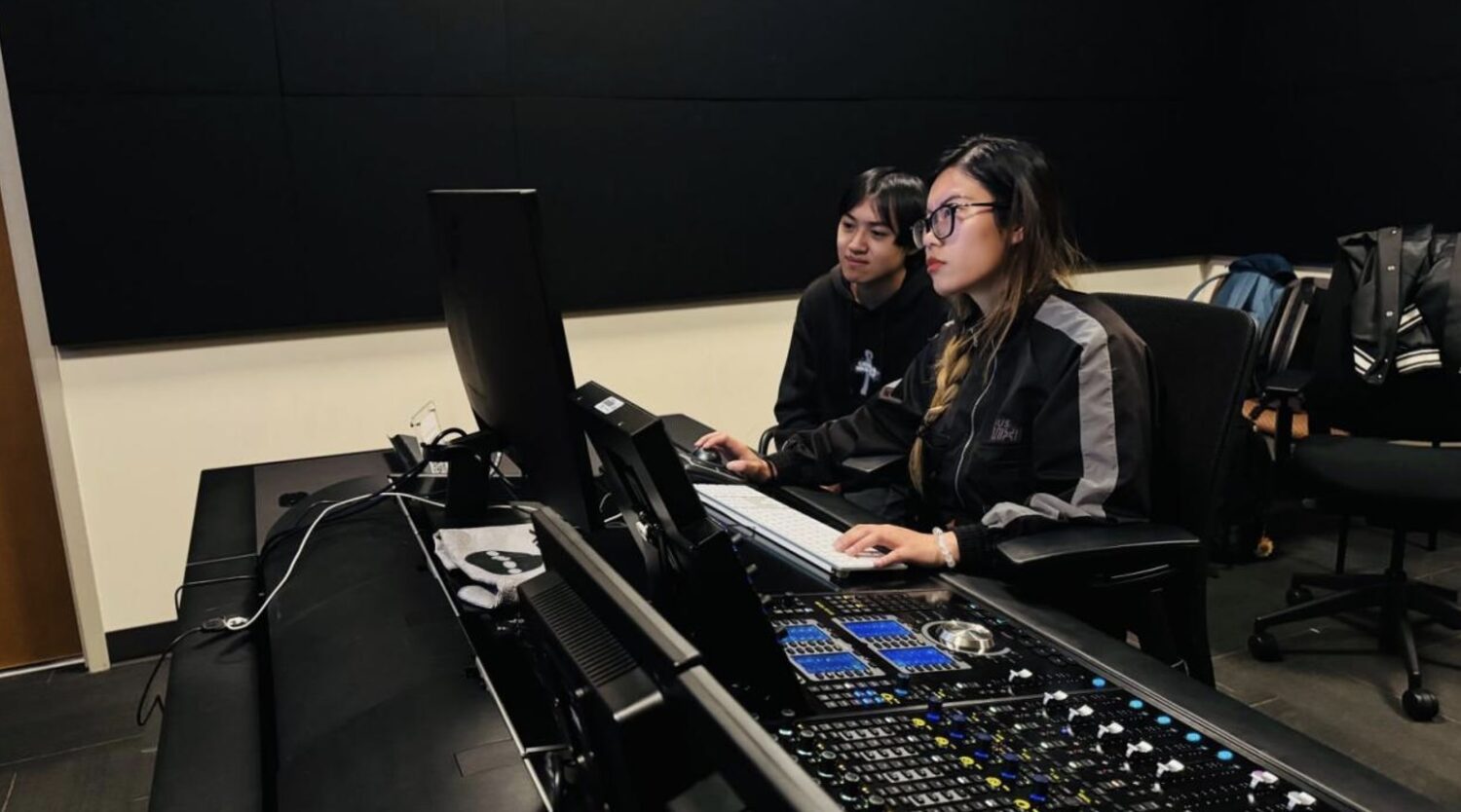
Professionally, Jovial’s trajectory has been both focused and expansive. Since 2022, she has worked as a production sound recordist and post sound supervisor on numerous shorts. In August 2025 she joined GoodShort as an in-house sound supervisor contributing to vertical dramas (microdramas) that garner millions of views.
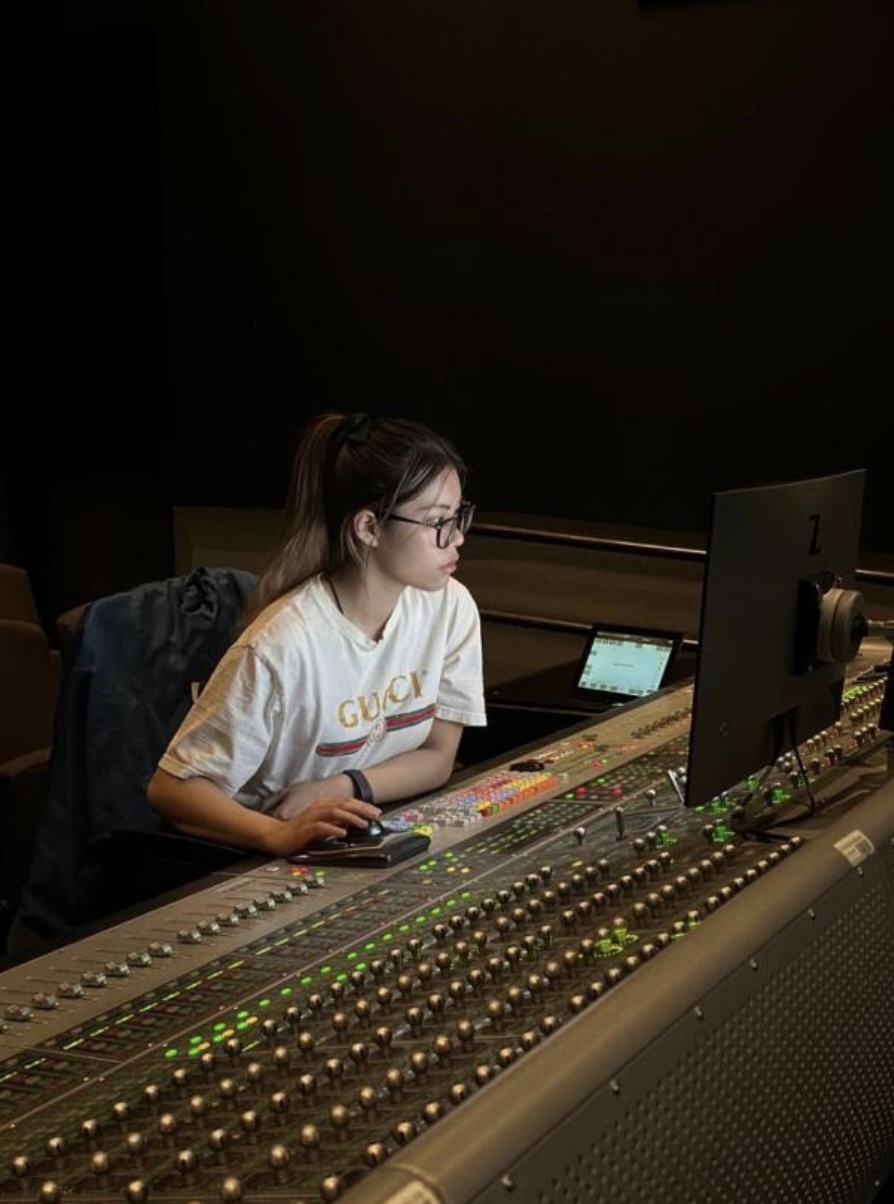
Her project portfolio reveals a versatile and impactful artist. She served as a storyteller working through acoustic narratives for an award-winning, politically sensitive short film (whose name she keeps anonymous) that screened at festivals worldwide, using sound to build tension and emotional climaxes. For GoodShort’s romance microdrama My Husband’s Nephew Is My Guilty Pleasure, her sound design enhanced intimate and comedic scenes, contributing to its 1.1 million views and awards for Best Romance and Best Domestic Tension. As the sole Foley artist for the Student Oscar-winning short Neither Donkey Nor Horse, she recreated the visceral sounds of historical medical procedures. She also led post-sound for an interactive film, The Case of the Missing Afikomen, selected by the 2025 Maryland Film Festival.
What sets Jovial apart is her narrative-driven approach. “I never see sound as just a technical job,” she explains. “Technology helps us elevate production quality, but understanding story comes first.” This philosophy stems from her multicultural perspective. Having worked on films about Black American history, Hong Kong youth in political turmoil, and Jewish family traditions, she engages deeply with directors to explore cultural nuances and emotional subtexts. “Being Chinese, I often need to discuss the cultural motivations behind characters. That leads me to understand stories and backgrounds more deeply than others might.”
In the rapid-turnover microdrama format, Jovial identifies a distinct audio paradigm: where film sound builds immersive environments, vertical drama demands economical sonic staging—minimal distractions and restrained perspective shifts tailored for mobile consumption. However, she recognizes this not as a limitation, but as the defining audio frontier of contemporary storytelling. “Audiences are on phones; our creative imperative is to develop purpose-built acoustic narratives for this scale,” she states. Her goal extends beyond technical execution to elevating the form’s artistic and ethical resonance, using disciplined sound design to subvert stereotypes and deepen narrative impact within condensed runtime.
Beyond technical skill, Jovial brings a profound personal philosophy to her work. A traumatic brain injury from her accident forced her to reevaluate life and art. Dancing, once her primary emotional outlet, is now limited, but she channels that energy into listening. “Without living fully, how can we tell good stories?” she asks. “You need space to be inspired. Your creative mind needs to breathe.” She maintains a strict work-life balance, believing that inspiration fuels passion and that pacing is key in this rapidly evolving industry.
Her connection to sound is also deeply autobiographical. Returning to China after years abroad, she realized how much “home” was tied to sound—the chatter of family dinners, the hum of Beijing streets and the crisp morning calls of street vendors that once anchored her daily rhythm. “Sound carries emotion and memory,” she says. Now, she records daily sounds, using them as both personal solace and professional inspiration.
Jovial’s ambitions are clear. She continues to develop her own microdrama ideas initiated in 2022, aiming to push content transformation. She stays connected with established sound professionals, eager to learn and innovate. “I want to push the boundaries of what can be achieved with sound in film,” she states. “I look forward to collaborating with filmmakers to bring their stories to life through sound.”
In an industry often dominated by visuals, Bang “Jovial” Xiao has been a storyteller working through acoustic narratives. Through her work, she is not only shaping the soundscapes of tomorrow’s stories but also advocating for the recognition of audio as a fundamental pillar of cinematic art. As she puts it, her mission is to breathe life into storytelling through the soul of cinema—sound. And in doing so, she is indeed making history, one layer of sound at a time.