
 Jon Stojan
Jaime Kravitz (Source: Kamron Khan Photography)
The structure of live events has long been built around roles that operate in parallel rather than in sync. A DJ manages music, a host handles announcements, and planners coordinate logistics. According to Jaime Kravitz, founder of The Energy Producer Entertainment, that separation often overlooks a central factor that determines how an event is experienced: energy.
“The truth is, we are not the celebrity, and we are not supposed to be the pivotal point of attention,” Kravitz explains. “Our role is to support what is happening in the room, amplify, and guide it, so people can fully engage with it.”
The Energy Producer Entertainment is a live event company that combines DJing, hosting, and facilitation into a unified service. Kravitz explains her work as energy production. In practice, that means reading the room in real time, adjusting pacing, shaping transitions, and ensuring that momentum is sustained from beginning to end. From her perspective, the difference between an event that people attend and one they remember often lies in those unseen adjustments.
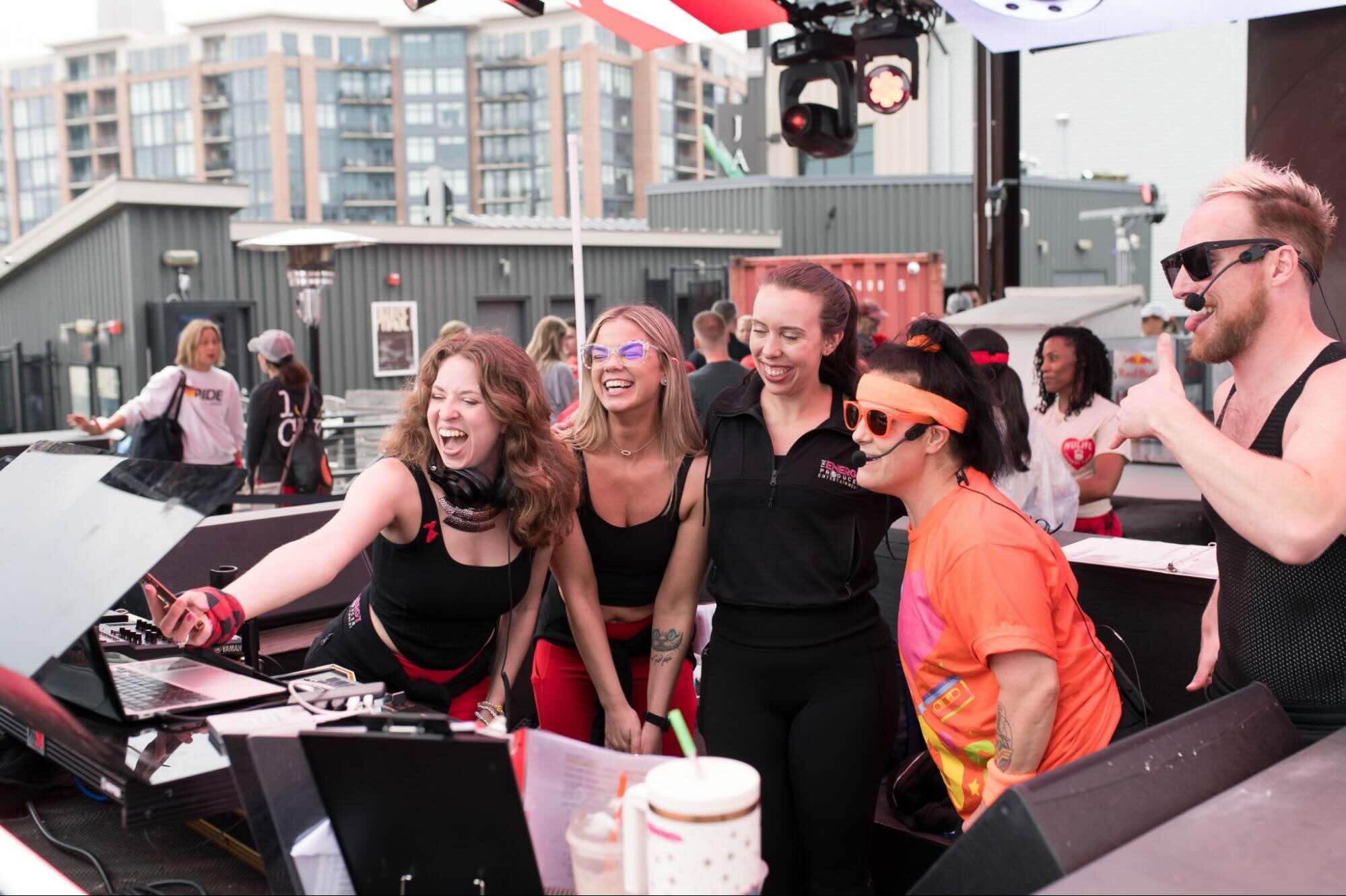
The Energy Producer Entertainment (Source: Kamron Khan Photography)
“Emotionally engaging experiences have a measurable impact on how people show up and remember an event,” Kravitz says. “When you create real connection and immersion, you are not just filling time, you are shaping how people perceive the moment and what they carry with them afterward.”
She suggests that these outcomes are not accidental but designed. She notes that unintentional moments of silence, poorly timed transitions, or disjointed segments can disrupt energy in ways that are difficult to recover from once attention is lost. “Dead air is dead energy,” she says. “Flow is not just a technical detail but a psychological one.”
From her experience, an energy producer operates as observer, participant, and leader. Rather than remaining removed from the audience, she believes proximity is essential. “My energy belongs in the space where it happens,” Kravitz says. “If I am not physically and emotionally present in the room, I cannot read what people need in real time or guide the experience in a way that feels natural and connected.” This allows her to notice subtle shifts, from body language to engagement levels, and respond before those shifts become disengagement.
This philosophy extends into how events are planned. Kravitz notes that many traditional approaches emphasize schedules and deliverables but spend less time designing how each segment connects. In her view, that is where opportunities are often missed. By collaborating closely with planners and clients, she positions herself as part of the event’s architecture, contributing to scripting, timing, musical integration, and sequencing decisions that influence the overall experience.
According to her, this level of involvement also changes the role of the client. When responsibilities are fragmented across multiple vendors, clients often find themselves managing communication and coordination. In contrast, a unified energy leader can reduce that burden.
“If you want to feel like a guest at your own event instead of managing every moving piece, that’s what we are here to create,” she explains. “When these roles are integrated, it allows the client to be present in the moment while we handle the flow, energy, and experience both on the stage and behind the scenes.”
The case for integration extends beyond the experience itself and into how events are executed. Kravitz notes that hosting, DJing, and facilitation are inherently interconnected roles that rely on constant communication and timing. When handled separately, she explains, it can introduce gaps that disrupt flow, whereas a unified approach allows for more seamless coordination and a more cohesive event from start to finish.

Jaime Kravitz (Source: Canfield Photography)
Her perspective is shaped by real-world scenarios where adaptability becomes critical. “In moments of disruption, whether technical issues or unexpected incidents, maintaining calm and continuity can influence how the audience perceives the situation,” Kravitz says. She explains her role as grounding the room, keeping people engaged, and guiding attention in a way that preserves the event’s purpose.
At the center of this approach is a shift in how success is defined. Rather than focusing solely on logistics or entertainment value, Kravitz frames events as emotional journeys. “Music becomes a strategic tool rather than background noise,” she says. “Transitions become moments of intention rather than pauses. Interaction becomes a mechanism for connection rather than an optional addition.”
She also points to the evolving expectations of audiences, who increasingly seek experiences that feel personalized and immersive. In that context, energy production becomes less about performance and more about facilitation. It is not about drawing attention to the person behind the microphone but about creating conditions where the audience can fully engage with each other and the purpose of the event.
“We are here to energize the space, not take it over,” Kravitz says. “The goal is to support what is already happening in the room and elevate it, not to become the focus, but to create an environment where everyone else can fully step into the experience.”
As events continue to evolve, this integrated model offers a different lens for understanding what drives engagement. By combining technical execution with emotional awareness, the concept of the energy architect introduces a new way of thinking about how experiences are designed, delivered, and ultimately remembered.