
 Jon Stojan
Explore Qi Gong’s rise to prominence in the West, starting with America’s introduction to Chinese culture in the 1970s to the work of renowned teachers like Qi Gong Master Lee Holden.
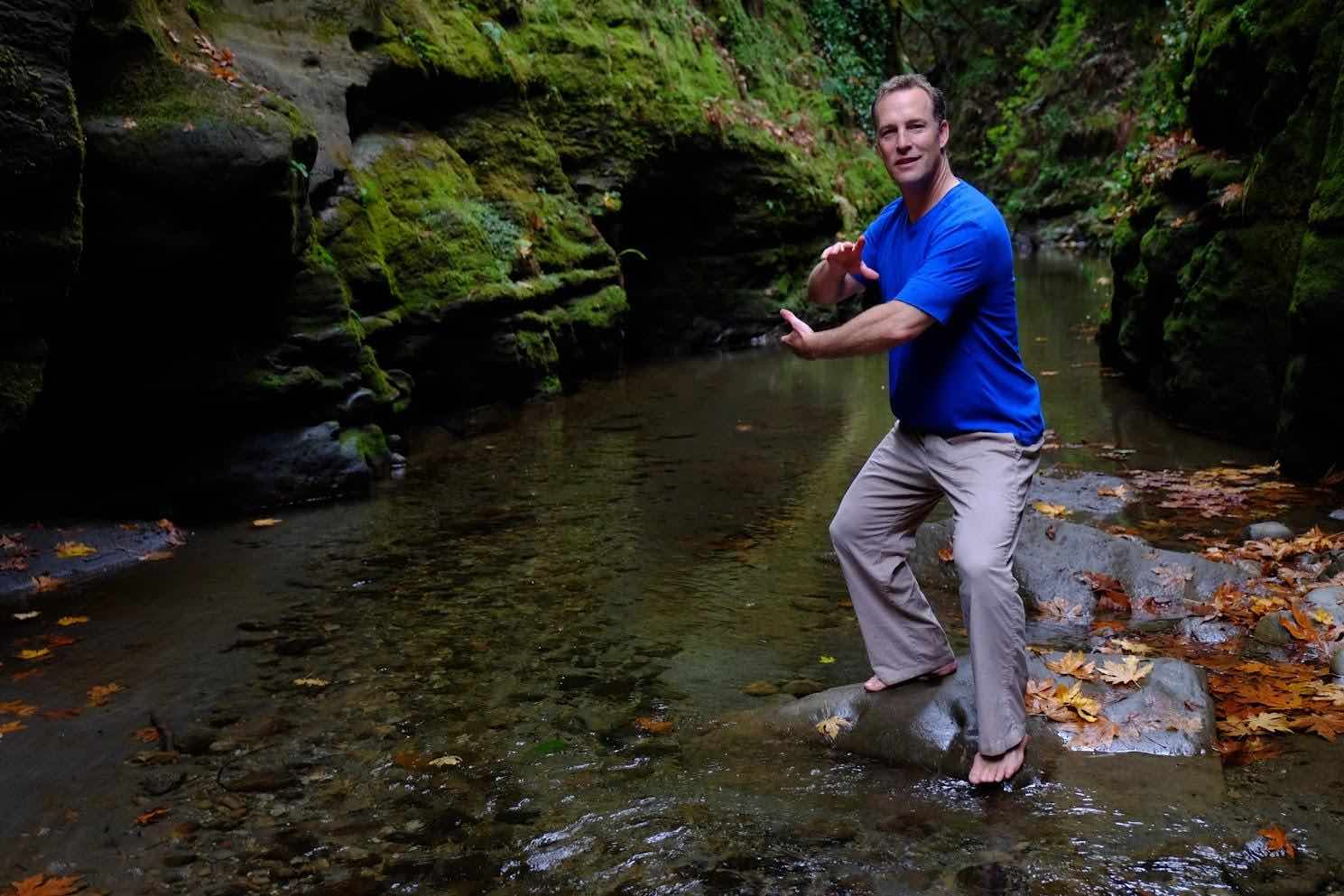
Photo credit: Lee Holden
Qi Gong waited thousands of years to make its way west. It wasn’t until the 1970s, when relations between China and America were opened up, that the concept was made accessible. For half a century, it’s been an object of fascination.
Researchers, health coaches, that guy you always see meditating in the park — there are a growing number of people pursuing Qi Gong to enhance everything from mindfulness to fitness. While Qi Gong was once something you had to stumble upon, these long-time practitioners are now bringing it mainstream.
From a total of 886 clinical studies, 97% found beneficial results from the practice, applying to facets such as mental health and physical function, including exercise capacity, joint mobility, balance, lung function, and more. Books continue to teach Western audiences about how to best apply this practice to stressful, busy lives. Documentaries explore the history of the practice, and how it came to be.
And one of the most influential players in Qi Gong’s rise to fame in the West?
PBS.
In the early 1990s, PBS’s marquee journalist, Bill Moyers, couldn’t get an old quote from Socrates out of his head: “The body cannot be cured without regard for the soul.”
Moyer’s curiosity about the concept led to the creation of a five-part documentary series: Healing and the Mind. The series’ second episode, “The Mystery of Chi,” took the former White House Press secretary and Peace Corps top aide to the People’s Republic of China.
Moyers explored acupuncture, Chinese medicine, and Qi Gong — all concepts that his nationwide audience was likely hearing about for the first time. This was the closest to the Western mainstream Qi Gong had ever been, and this wouldn’t be the first time that PBS dove all-in on the promise of Qi Gong.
Jump ahead to the early 2000s, and one Qi Gong devotee was making waves in Silicon Valley.
Lee Holden — now a founder of his holistic coaching practice Holden QiGong, author, and Qi Gong Master — was running acupuncture workshops for tech companies and working as a wellness director on movies like Big Daddy with Adam Sandler.
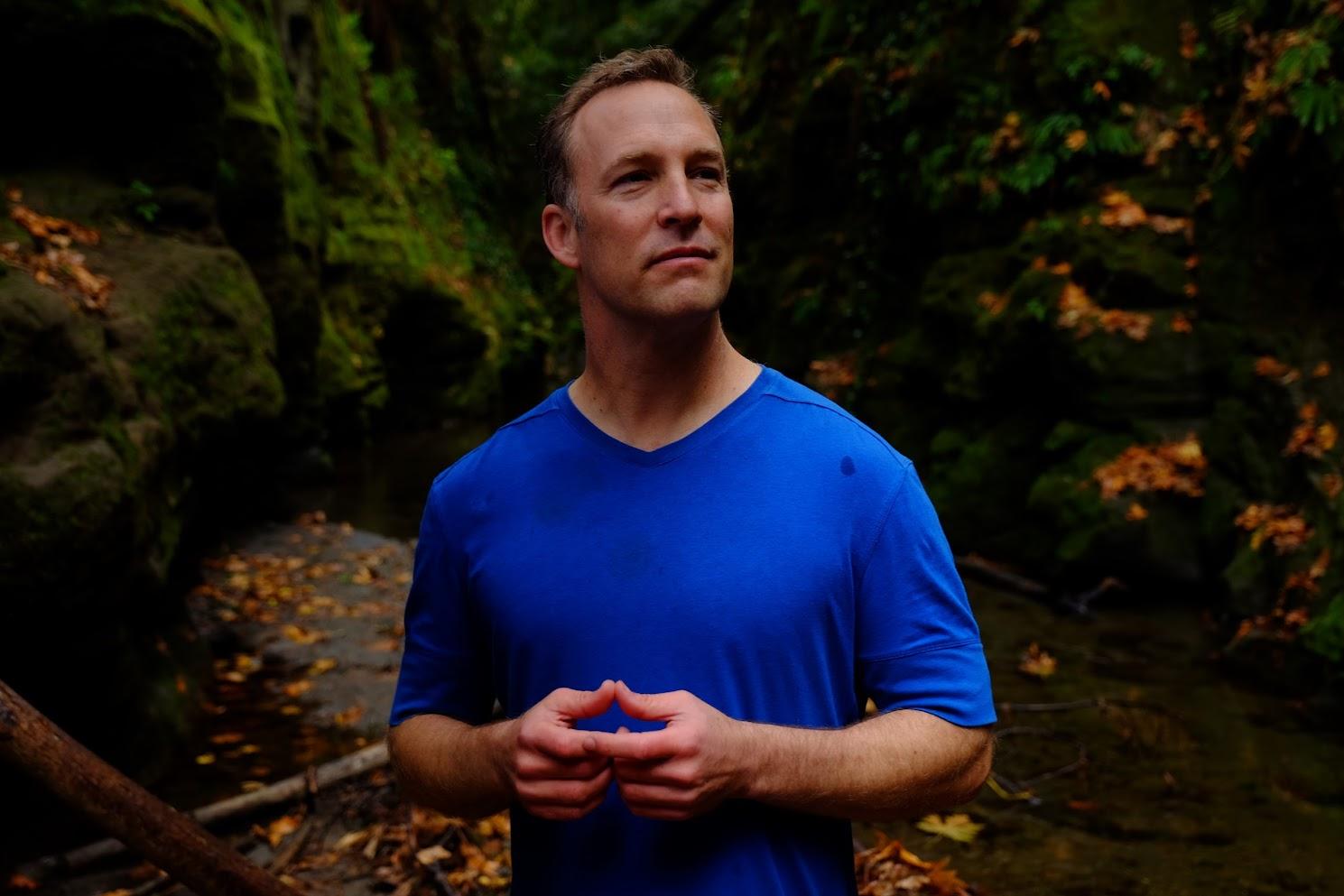
Photo credit: Lee Holden
Looking to get Qi Gong out to the masses, Holden had an idea.
“First I made a VHS tape,” he says. “Then, in the early 2000s, I made some DVDs. I was inspired to go outside in nature and film in the Redwoods with a couple of friends.”
The DVDs turned out beautifully — and it secured Holden a spot on PBS’s San Diego station in 2005.
“The producer said: ‘If this doesn’t pledge well today, that is it. There’s no more shows,’” he recalls. “I only had one shot.”
Over a decade after Healing and the Mind, it turned out that the PBS audience was still excited to learn more about Qi Gong. The airing flew off the chart and was picked up in 9 out of PBS’s 10 biggest markets.
“I didn’t have a website yet,” Holden laughs, “and the distributor putting the whole program together didn’t either. I was getting 50 calls a day to my home phone, and was just shipping DVDs out of my garage for the first month.”
The spot continued to air for three years until another one dropped in 2007. By 2009, Holden was hosting a show called “Your Fountain of Youth” on the network.
The rise of Qi Gong was no longer a slow burn. With teachers like Holden to turn to, this ancient art was finding renaissance in the West.
Qi Gong may be growing into a household name now, but for its Western pioneers, such as Holden, it was something you had to stumble upon.
“I was skipping class, my psychology class, because it was just so boring,” Holden recalls. Wandering around, Holden went to check out the local spiritual bookstore and happened upon the work of the renowned Tao Master Mantak Chia.
Taoist Ways to Transform Stress into Vitality was the book that caught his eye.
“It was on techniques and psychological tools for how to transform negative emotions into positive emotions,” Holden says. “I realized I was learning more in this book than I had in that whole semester at university.”
Walking out of the bookstore, right on the telephone pole, was a flyer for one of Chia’s workshops.
Holden quickly became one of Chia’s students, and later assisted the Tao Master with the creation of his future books. Through this training and work, Holden studied Qi Gong and other Eastern practices in Thailand, Japan, and China.
These were the experiences that sparked Holden’s journey into holistic healing — and what empowered him to later share the power of Qi Gong on television.
When looking at the history of Qi Gong in the West, an interesting thread sticks out:
Was it by chance that Bill Moyers decided to study the connection between the body and the mind? Was it random fate that Holden’s psychology professor was so painfully uninspiring he had to walk out of class? Or is this a conscious flow of energy, working to bring Qi Gong to a Western world that needs it?
In any case, Holden is excited about the future.
“Consciousness is shifting in terms of what people are awake and open to,” he says. “There’s more language and touchpoints around it where you can say, ‘Hey, Qi Gong is a little bit like yoga and mindfulness put together,’ and people get it.”
And you, right in the very chair you’re sitting in, can experience the power of Qi Gong right now. In this 20 minute video, Holden will guide you through an easy, at home Qi Gong exercise.
To learn more about Qi Gong and Lee Holden, visit his website.