
 Nia Bowers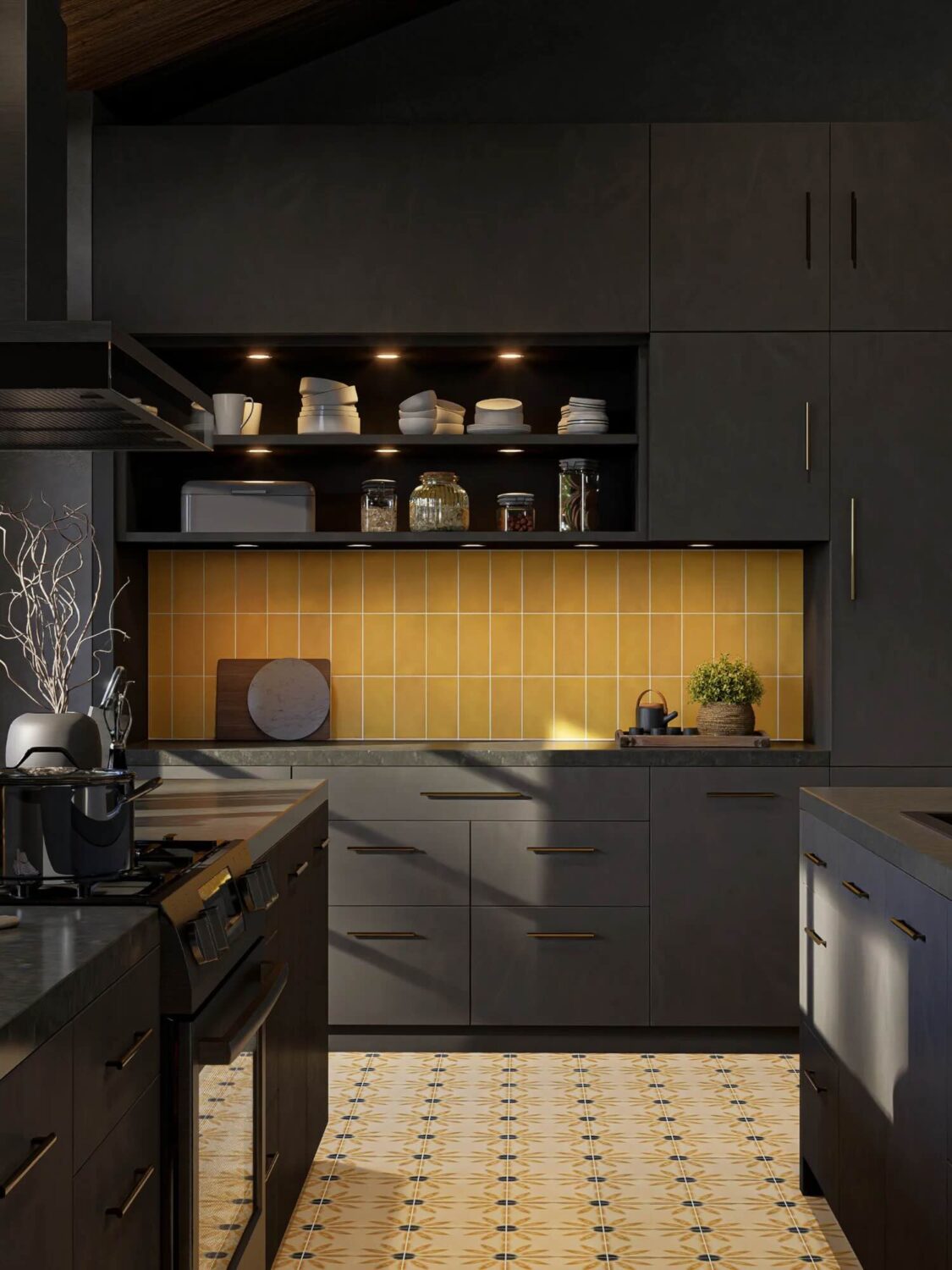
Walk through any kitchen renovation account on social media right now and you’ll notice something. The most-saved spaces, the ones generating thousands of comments, aren’t the clean white subway tile kitchens. They’re the rooms with color. Pattern. Texture. Surfaces that look like someone made them with their hands, because someone did.
Handmade cement tile is having a moment, and it’s not hard to understand why.
The Shift Away From Uniform
For years, mass-produced tile dominated residential and commercial design. Uniform sizing, consistent color, predictable finishes. Efficient to install, easy to source, and increasingly forgettable. As design culture has matured, so has buyer taste. Homeowners and interior designers alike have started asking a different question when specifying materials: does this space feel like it could belong to anyone, or does it belong to me?
Harley Gusman, a contractor and renovation content creator with millions of followers across social media, has watched this shift happen in real time. In a recent episode of the Room to Think podcast, she described the industry moving away from the perfect, cookie-cutter look toward handmade surfaces that reward attention. She talked about zellige tile specifically, describing surfaces you can look at for a long time because the eye keeps finding something new. “When it doesn’t look manufactured, I’m all about it,” she said. Her tile projects have drawn some of her most engaged audiences, with viewers describing finished walls as looking like artwork rather than flooring.
That reaction isn’t accidental. It’s the point.
A 170-Year-Old Process That Still Holds Up
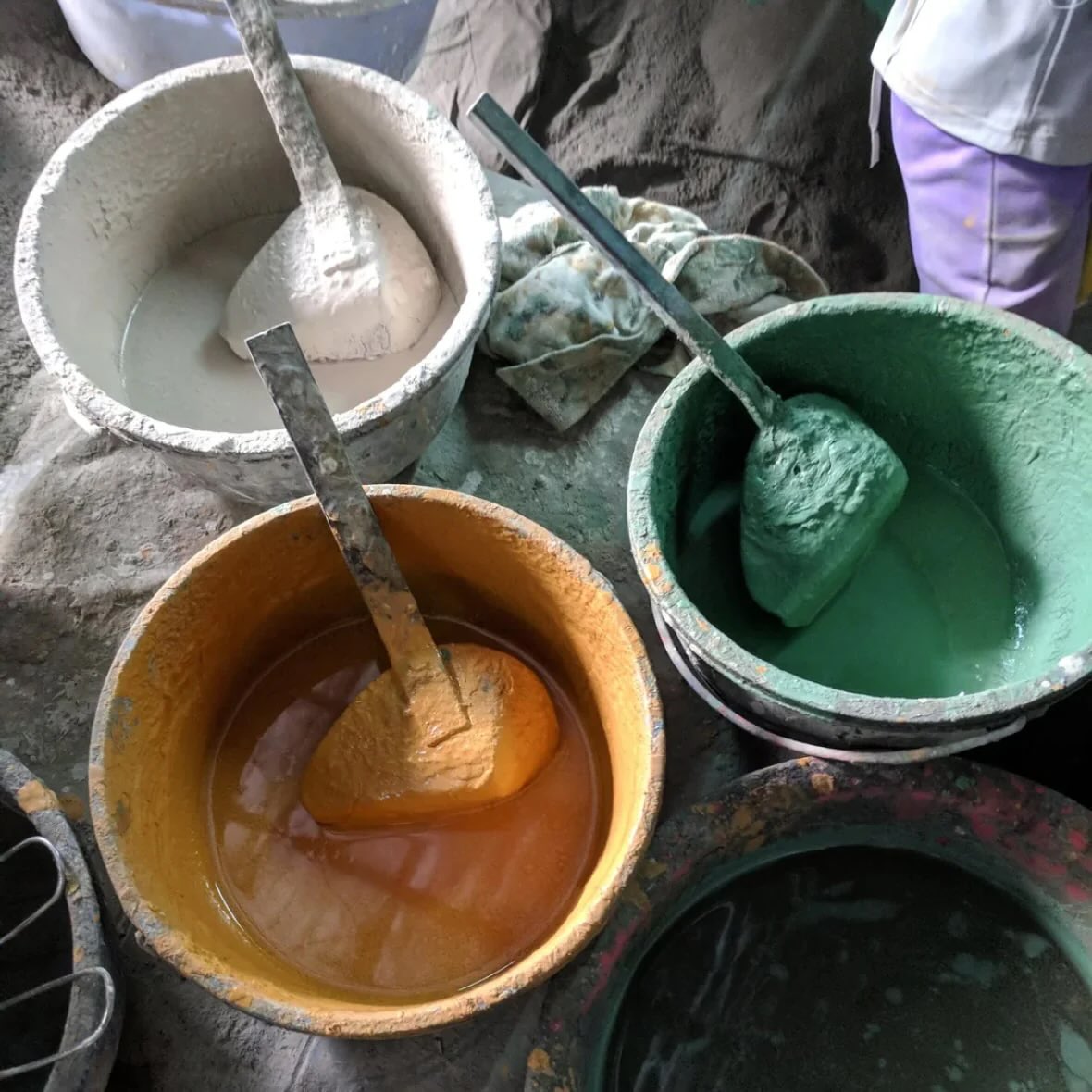
Cement tile isn’t new. The technique originated in Catalonia in the mid-1800s, earned international recognition at the Paris Exposition of 1867, and spread across Europe and beyond through artisans who refined and passed down the craft region by region. What made cement tile remarkable then is the same thing that makes it remarkable now: it requires no kiln and no firing, making each tile the product of hands, pressure, and time rather than industrial heat.
The process starts with a brass mold shaped to the design. Pigmented cement is poured carefully into each section, then topped with a blend of portland cement, sand, and marble powder. The tile is hydraulically pressed at 3,000 psi and cured for 11 days. That process has remained unchanged since the 1850s, which is either a testament to how right they got it the first time, or proof that some things don’t need to be improved.
Because each tile is made individually, no two are exactly alike. That variation is a feature of the craft. It’s also what makes a wall or floor installed with handmade cement tile look alive in a way that manufactured surfaces simply don’t.
The Brand at the Center of It

LiLi Tile, a family-led company based in Mt. Laurel, New Jersey, has become one of the most referenced names in the handmade tile conversation among designers and contractors. Founded over 20 years ago in the construction materials world, the company pivoted in 2014 toward artisan tile design with a specific focus on color, craftsmanship, and cultural authenticity. Their cement tiles are designed in the United States and handcrafted by skilled artisans in Vietnam, Morocco, Spain, and Thailand, each region contributing its own techniques and traditions to the finished product.
What separates LiLi Tile from most competitors in the handmade space is the depth of their design catalog. The brand has developed artist collaboration collections with painters and designers including Adam Trest, Tomma Bloom, Mary Engelbreit, and Hollis Callas, whose patterns are exclusive to the line and unavailable anywhere else. The brand has also appeared on HGTV, bringing handmade tile to a mainstream audience that had previously associated artisan materials with high-end trade-only sourcing.
The company ships from a fully stocked New Jersey warehouse, which addresses one of the most common friction points in the handmade tile category: lead time. Custom orders are available for projects requiring something entirely original, with no unusually high minimum quantities. For buyers who want to visualize a pattern before committing, LiLi Tile offers a digital tile customizer that lets customers build and preview their own configurations, a feature rare in the handmade tile space.
Why This Trend Has Staying Power
Unlike some design trends that arrive fast and leave faster, the move toward handmade surfaces is rooted in something more durable than aesthetics. Cement tiles require no heat or energy to produce, are non-flammable, and are fully recyclable. LiLi Tile has taken the sustainability angle further through a partnership with CaptureCrete and Carbon Limit that produces CO2-absorbing tiles, making them one of the few companies in the handmade tile space actively addressing the environmental conversation.
The rooms that feel most considered right now tend to share a common thread: they look like choices were made, not defaults selected. Handmade cement tile is one of the clearest expressions of that instinct in the materials market today.
For homeowners and designers looking to explore the full range of handmade tile options currently available, LiLi Tile’s catalog is a useful starting point. Their collections, installation guides, and custom design tool are available at lilitile.com.