
 Nia Bowers
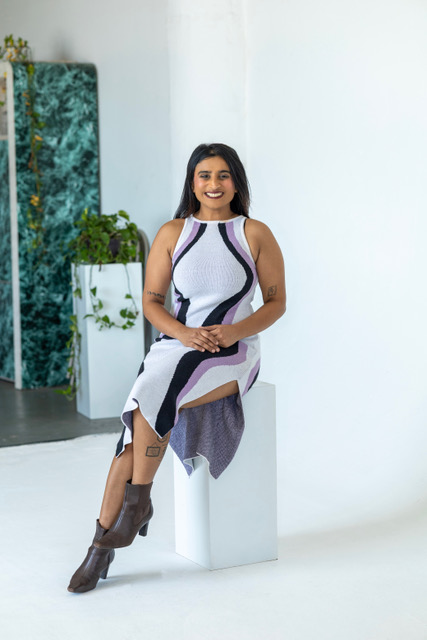
An editor has to wear several hats. There is the technician who makes sure the footage is ready to work with, the storyteller who decides how the pieces fit together, and the collaborator who has to understand what a director wants an audience to feel. Sometimes these roles overlap within a single scene. At other times, they demand entirely different ways of looking at the same material.
For Vedika Parekh, working across documentaries, independent cinema, television, digital productions and podcasts has meant learning to move between these perspectives. Her work has taken her from organising footage and building assemblies to shaping sequences and working with sound. Each role has offered a different view of what it takes to bring a project to its final form.
On The Gotti Files, an eight-hour true-crime documentary series for A&E scheduled to premiere in 2027, Parekh worked on assemblies for two episodes alongside editor Rich Hyatt. The source material included home movies, court documents, wiretap recordings, prison footage, interviews
and transcripts. Working with such a vast archive called for a methodical approach, but also an understanding of how individual pieces of evidence and personal accounts could contribute to the larger narrative.
One statement from a grieving mother became central to the emotional structure of an episode. Parekh was also tasked with selecting archival material for the series’ trailer. Both jobs required her to look at the same body of material differently: one in the context of a longer narrative, the other in terms of what could introduce the series to an audience in a matter of seconds.
The shift between these roles calls for mastery over the editing process. The editor must be able to step back and see the whole, then return to the smallest detail to understand whether it belongs. What serves a scene may not serve a trailer; what works in isolation may change when placed alongside another moment.
Her work across independent projects with editor Brian Schofield brought other demands. On Creatures, Abeline and Castro’s Daughter, Parekh worked across different stages of post-production, from organising dailies and building stringouts to sound design and direct editorial work. On Castro’s Daughter, a biographical drama about Alina Fernández, daughter of Fidel Castro, she edited the prologue and epilogue.
Working on these sections meant thinking about the film’s larger shape. A prologue has to welcome the audience into a world without giving too much away. An epilogue has to leave them with something that feels earned. Both require an understanding of the film beyond the individual scenes being cut. The editor has to consider how the sequence contributes to the experience of the film as a whole.
On Muscle Village, a documentary about Kushti, the traditional South Asian form of mud wrestling, Parekh’s fluency in Hindi offered a different kind of perspective. Understanding the language meant she could work directly with the dialogue and pick up on nuances of tone, humour and cultural context that might be lost in translation. Here, the work called for more than
an understanding of structure; it required sensitivity to the people and the world represented on screen.
At Tripod Media, Parekh worked on Come See Me in the Good Light, a documentary about poet Andrea Gibson, where she handled transcription and footage logging. It was a role that required her to engage closely with the material before the editing could take shape. Going through conversations and cataloguing footage gave the team a clearer picture of what they had, while ensuring that details within a deeply personal story remained accessible. The film went on to receive a Peabody Award, a Sundance Festival Favorite Award and a 2026 Academy Award nomination.
Parekh has also worked as an assistant editor on BBC India’s Shekhar Home, an adaptation of the Sherlock Holmes stories set in Bengal. At Supari Studios, she progressed from associate editor to senior associate editor on Flipkart-related content, before working as a video producer at DeadAnt. Her experience at Jio Studios included motion graphics and Comics for Change, a campaign connected to the UN Sustainable Development Goals. Her own editing credits include The Lovers, Comfort Food and the AFI thesis film Will. She has also edited episodes of The Fire Inside, a podcast centred on survival and life-altering experiences, where the tools of the trade are voice, timing and silence rather than images.
Moving between these roles has also meant working with different people and creative visions. An editor cannot approach every project with a fixed idea of how it should look or feel. The work involves understanding what the filmmaker is trying to achieve, knowing when to offer a different perspective and making choices that serve the narrative.
For Parekh, that trust has grown through working across platforms, genres and teams. The people she has collaborated with have come to trust her judgement and her ability to understand what a project needs.
Editing is not one job with a single set of skills. It is a constant shift between the technical and the creative, the individual frame and the larger story, one person’s vision and a shared goal. The editor has to know when to focus on the details and when to step back, when to take the lead and when to make someone else’s vision work. Ultimately, it is this ability to bring all these perspectives together that makes an editor’s contribution invaluable to the film.