
 Caroline Chang and Mark Stefanos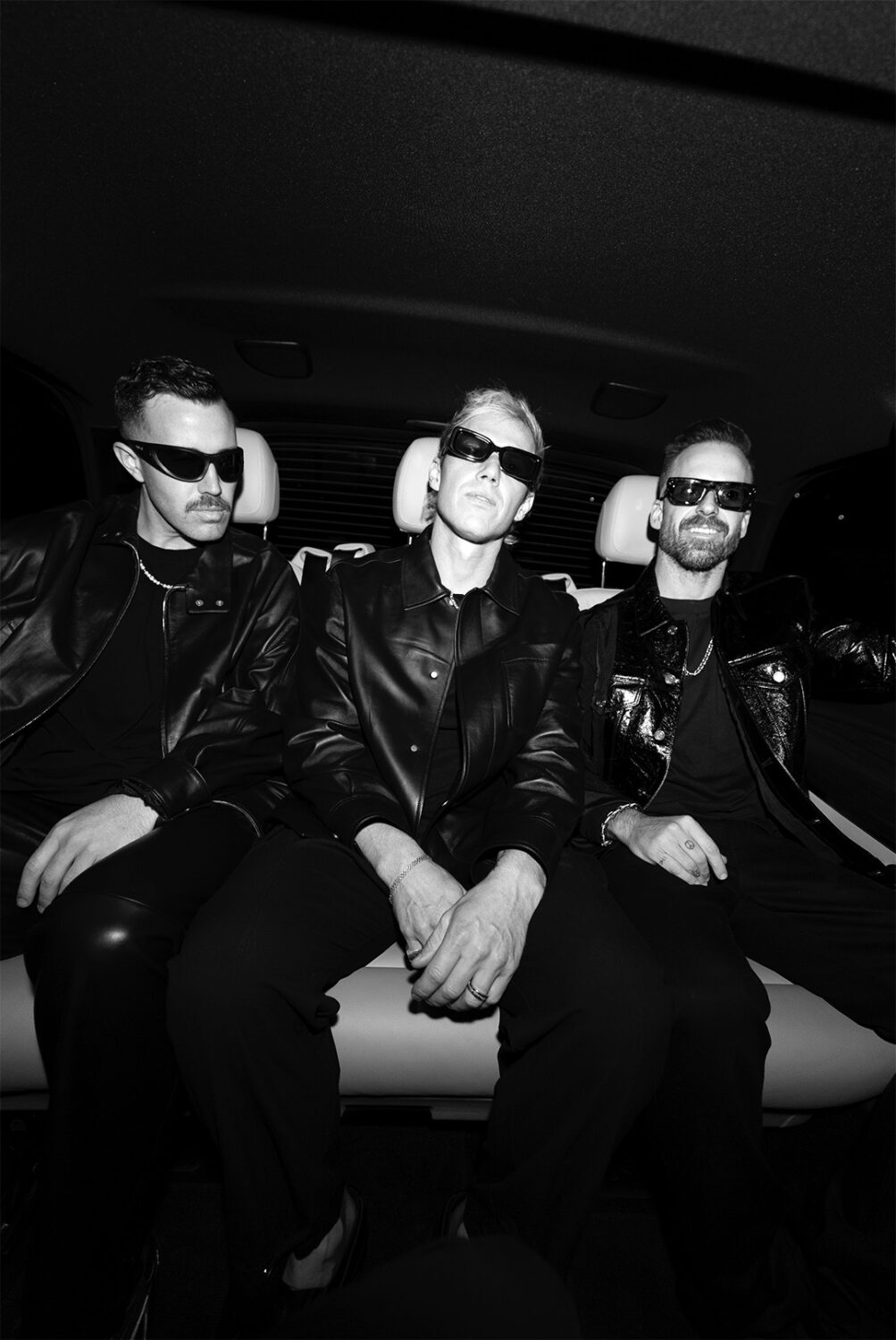
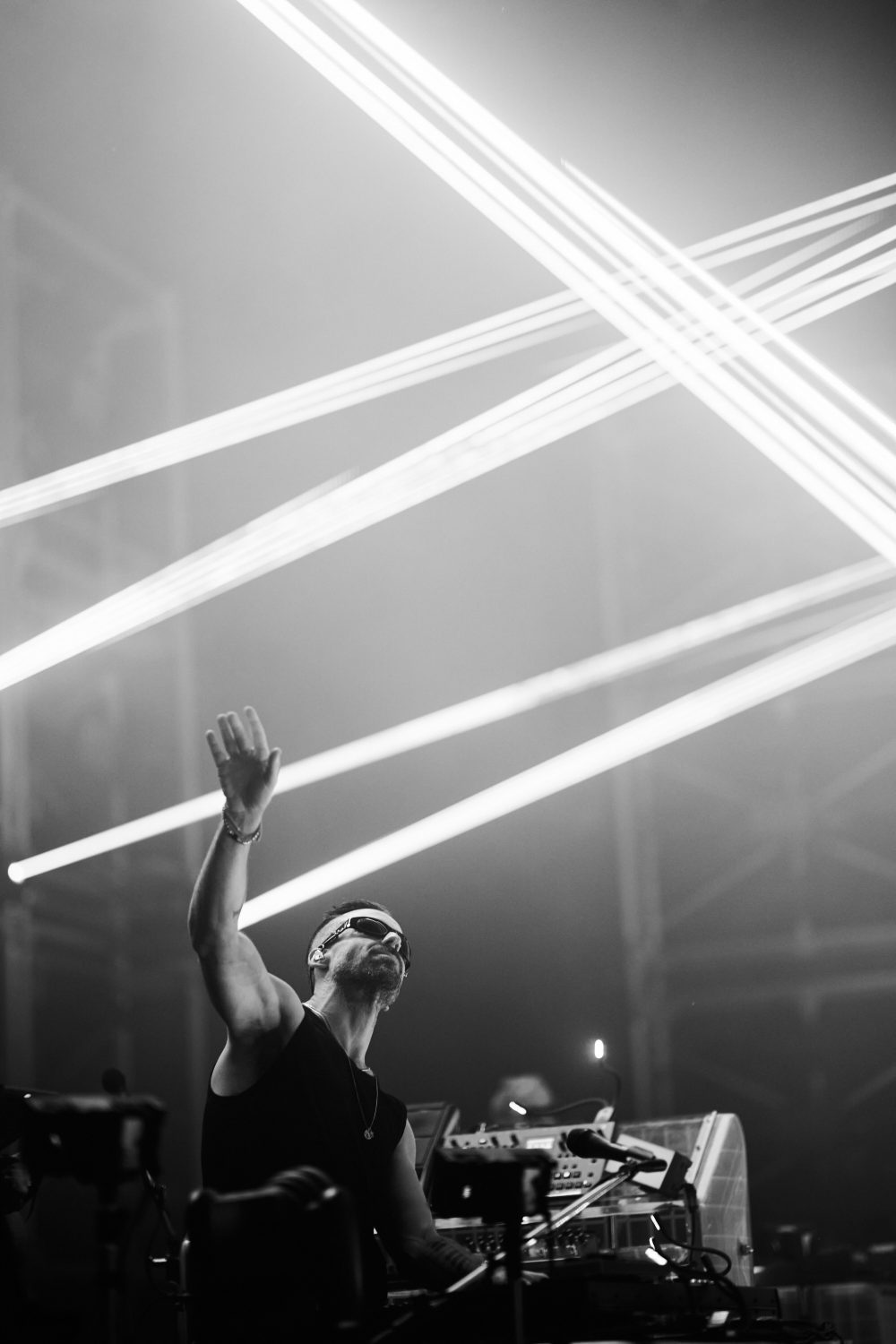
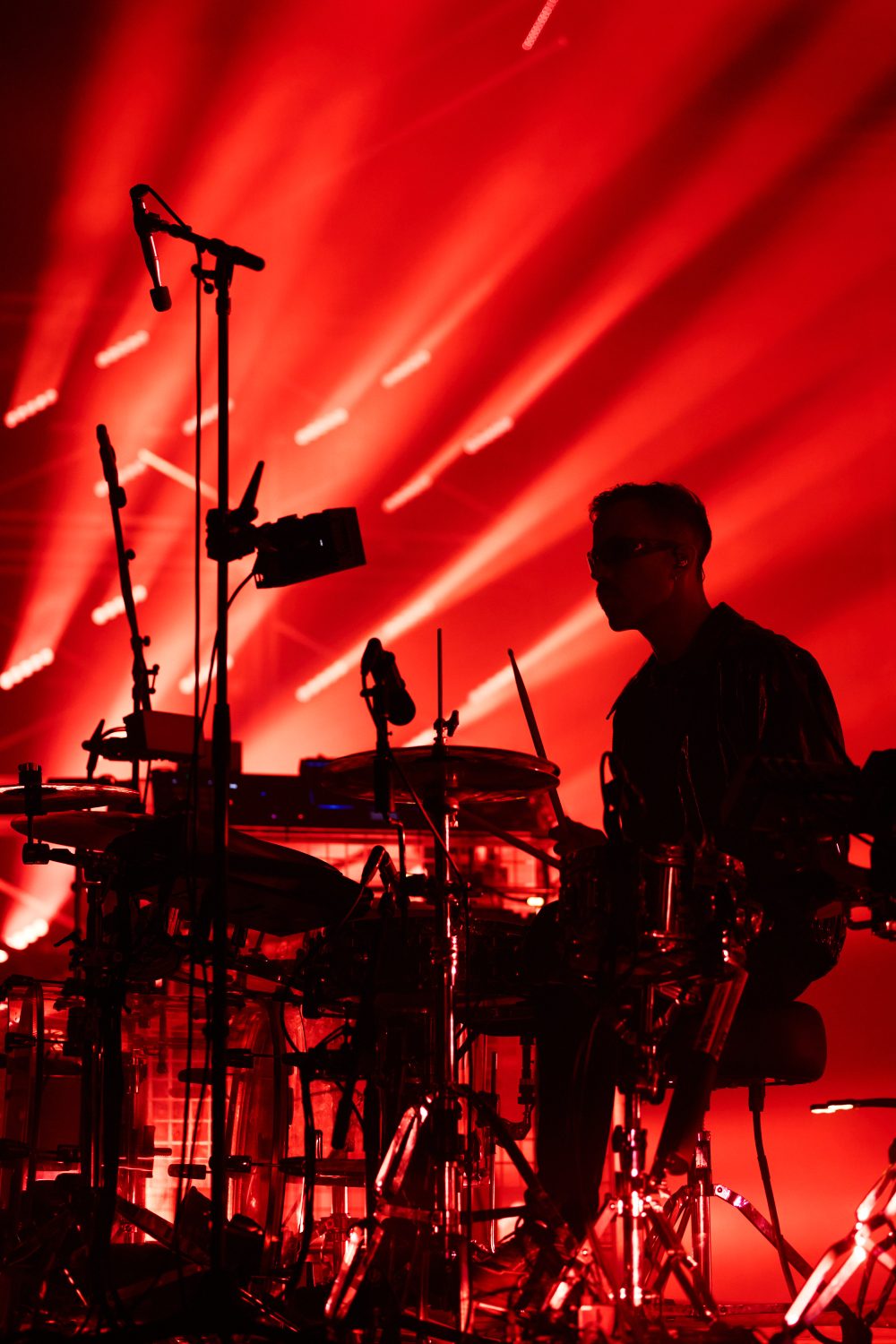
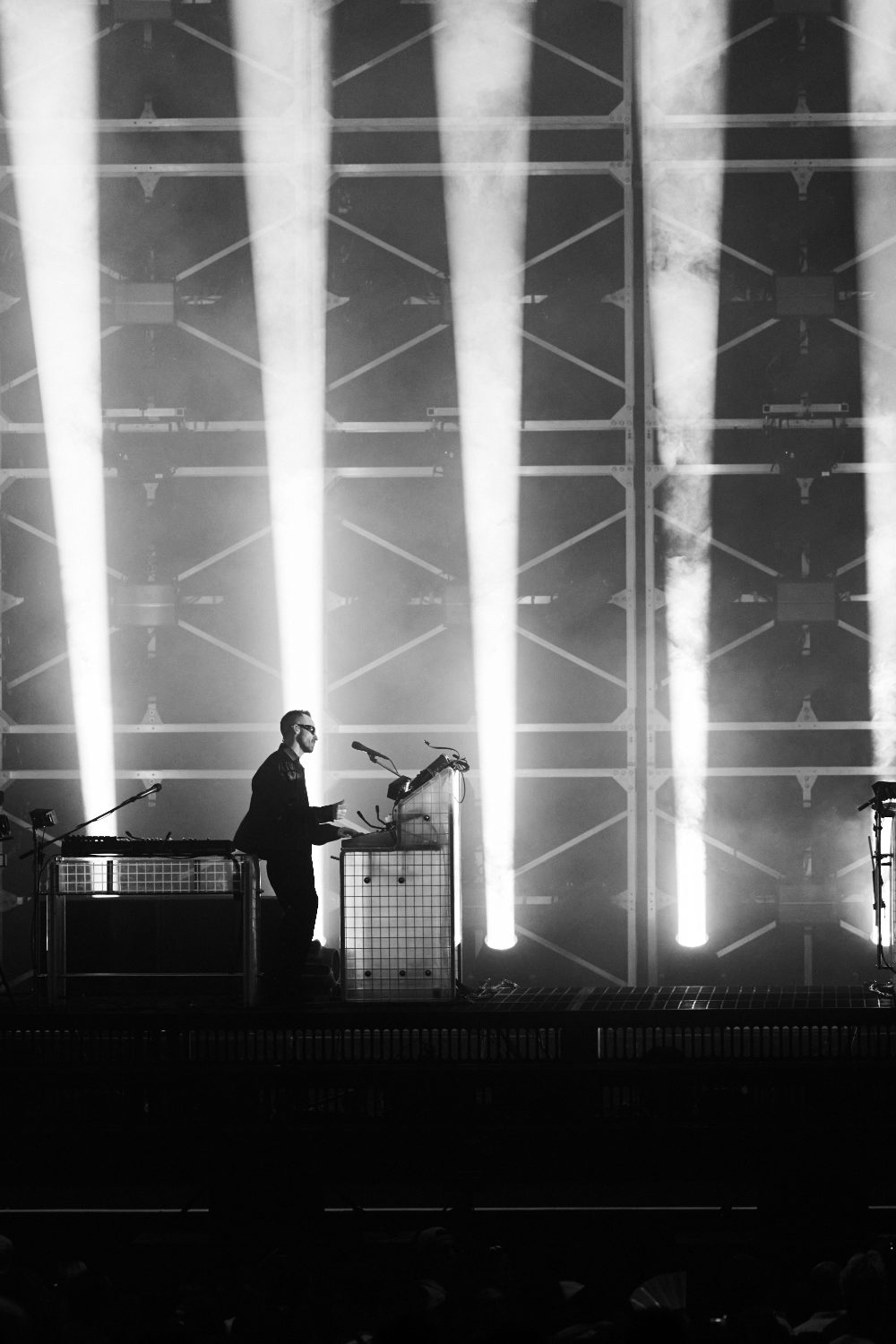
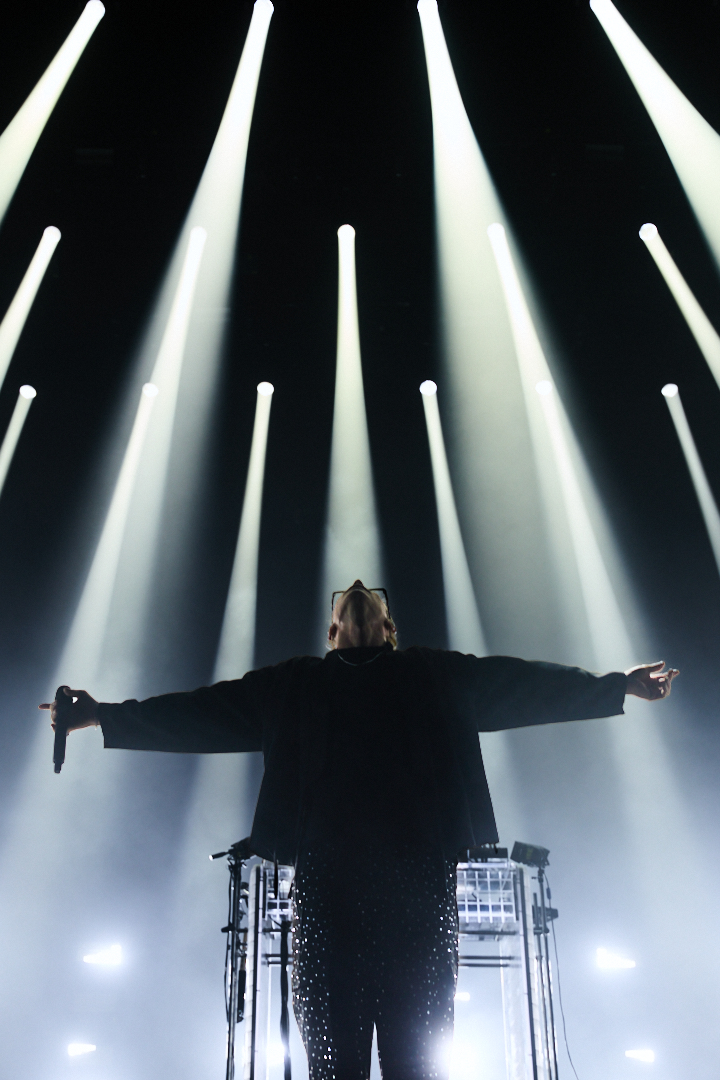
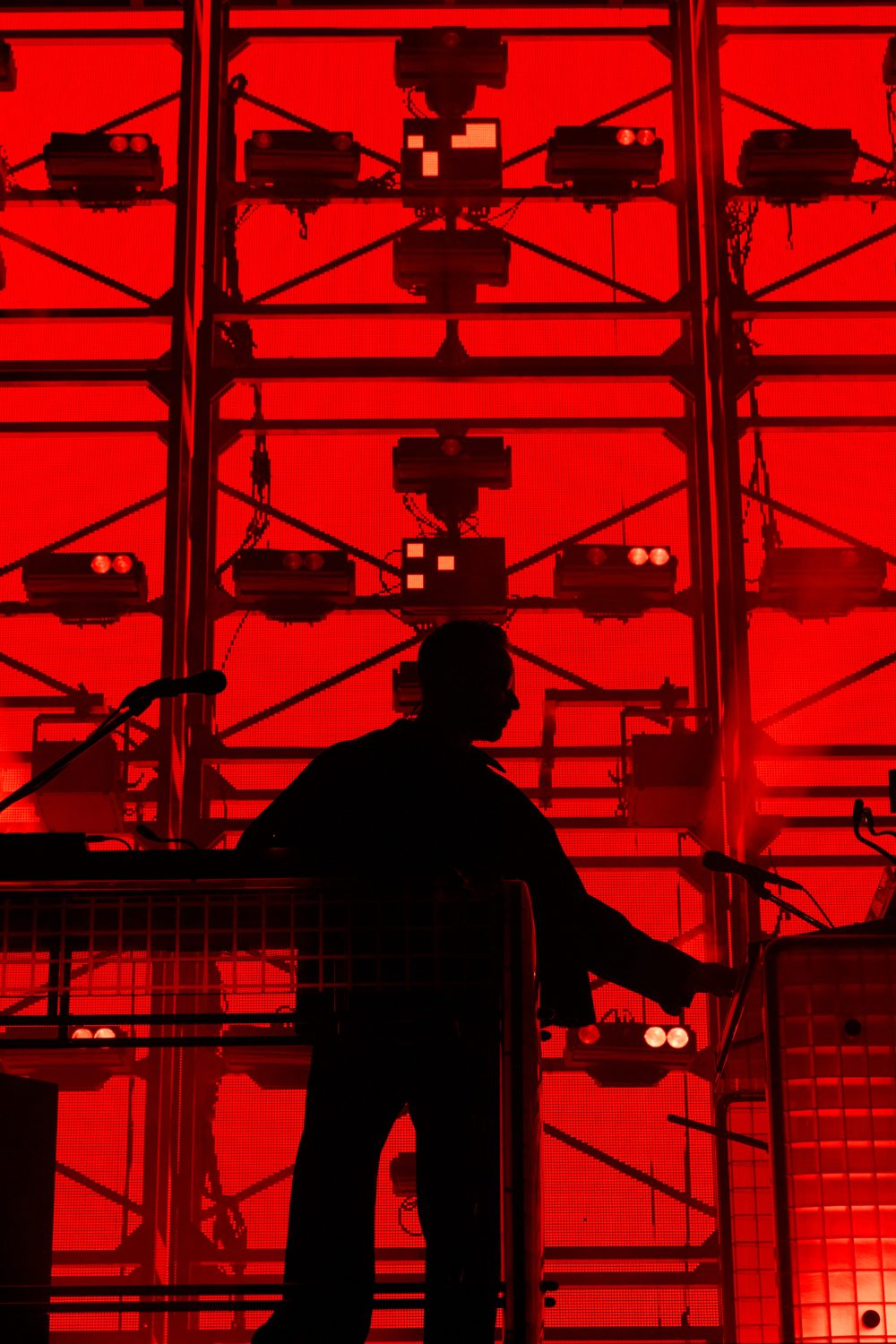
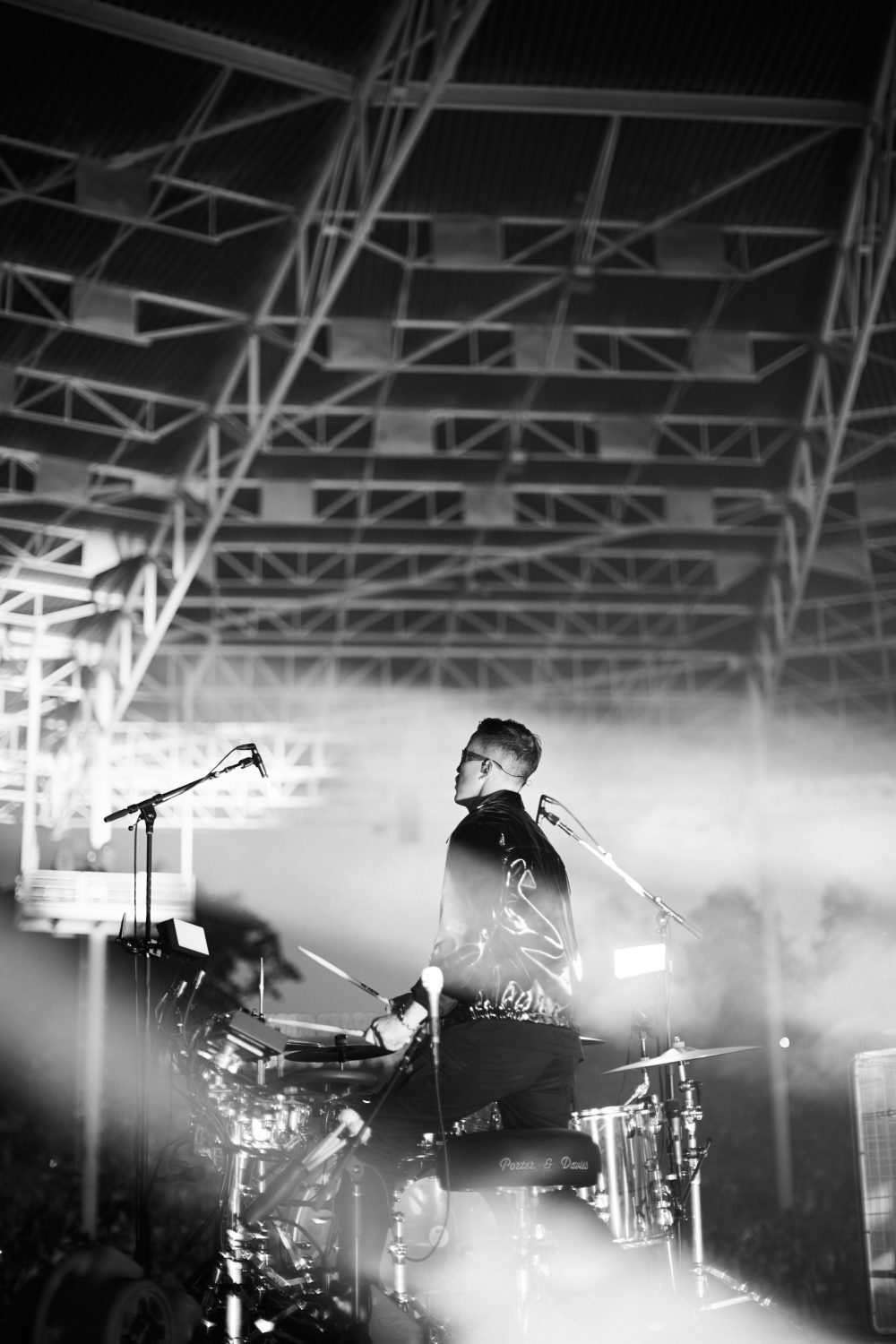
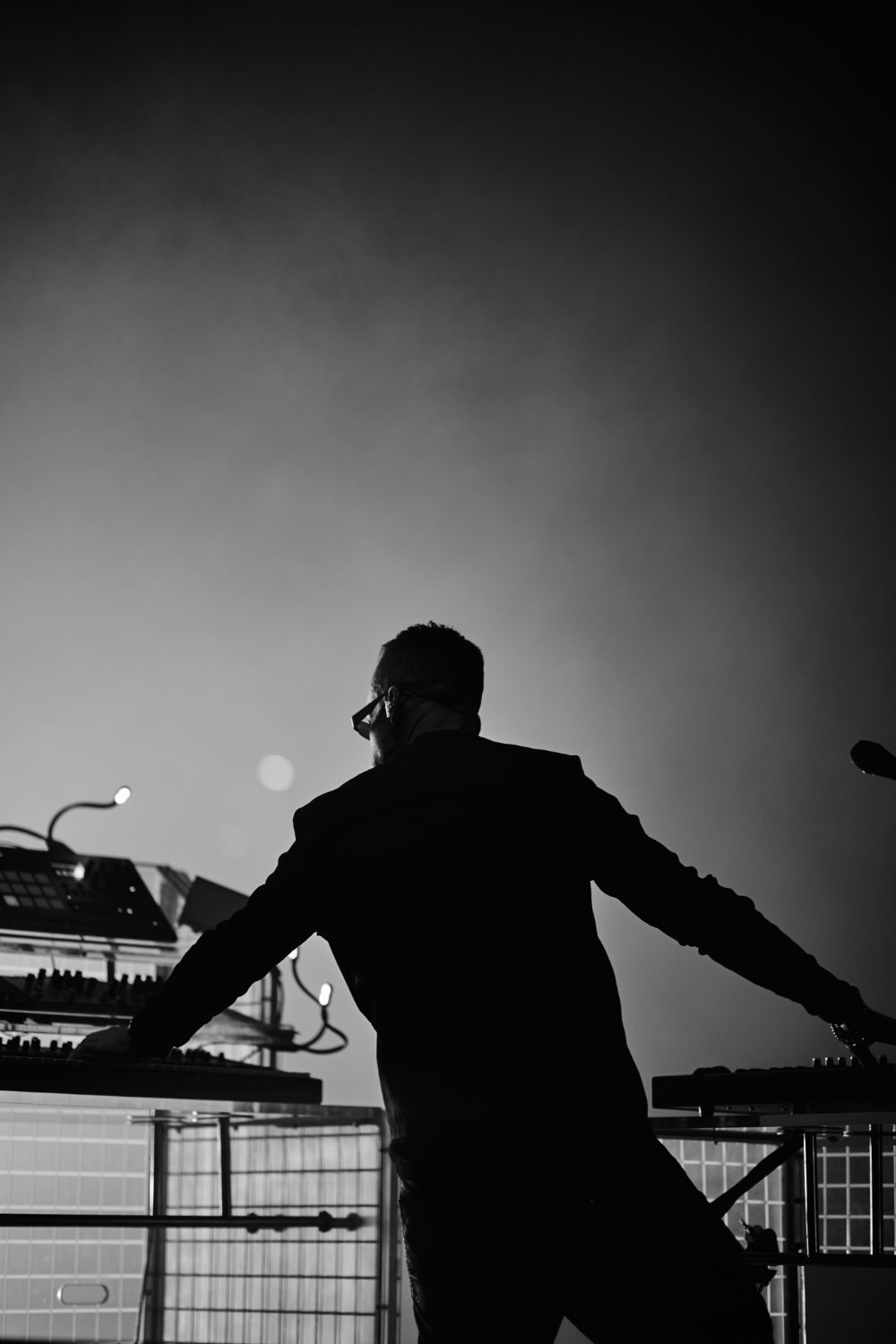
“In the history of the band, when there have been songs that have resonated over time, or when we’ve connected and landed for people, it’s when we listen to our own gut,” James Hunt of RÜFÜS DU SOL told LA Weekly in an interview this week.
Along with Jon George and Tyrone Lindqvist, the trio that make up RÜFÜS DU SOL have become one of the most beloved groups in music in the last decade, the kind of band that gets their album art hung above people’s couches and tatted on forearms, all while not conforming to a genre that gets airplay or fits a Spotify playlist. You can see it both in the devotion of their global fanbase and from their peers — in 2022, they took home the Grammy for Best Dance/Electronic Recording for their song “Alive.”
What has drawn fans to RÜFÜS DU SOL, and what keeps them there, is how their music becomes a soundtrack to the whole spectrum of their human experience. Their music plays at weddings, births, while drifting to sleep, waking up, mourning a relationship, or making a new one in the club. The members revealed that this universality was a driving force when making Inhale / Exhale, their fifth album, which they are touring now.
(Boaz Kroon)
Released in October 2024, Inhale / Exhale is their longest album, and is rife with dualities. It’s their first with two words in the title, and the first in two parts. Duality is the essence of what they are as a band: yes, they make electronic music, but with vocals, strings, drums and synths, not just behind a screen and decks. They fuse the natural with the digital.
Their music comes from the real world. They record sounds around them on their phones — a jackhammer, a tire screech — that then become elements of songs, like they’re Hollywood foley artists.
What results is a sound that is strikingly raw and distinctively theirs. Seamlessly weaving organic elements with vocals that seem to hover in mid-air, a RÜFÜS DU SOL track will build you up with swelling synths at tidal force before dropping you into aching stillness, decisive percussion and solace. The beauty of their dualities is their ability to blend it all back together. Their music is fragile but resolute, deeply complex but relatable, full of longing but also love. After listening to their records, you feel like you’re waking up from a half-remembered dream, warm and with a soft smile on your face.
Southern California has been a throughline of their story. Their early Coachella performances helped expose them to an international audience, and Venice was their home base for years when they got to the States. Maybe fitting for the natural and grounded character of their work, they named their label Rose Avenue after the street in Venice where they rented a house with a studio, and all lived together in what they once described as a “‘Brady Bunch’ situation.” Noting the floral cover of Inhale / Exhale, flowers pop up in people’s lives at important moments, Jon tells us.
Joshua Tree has also been a regular retreat, a place of writing and personal introspection, and where they shot Live in Joshua Tree, a stunning 45-minute live album and film they released at the start of the pandemic that has since racked up over 30 million views on YouTube alone.
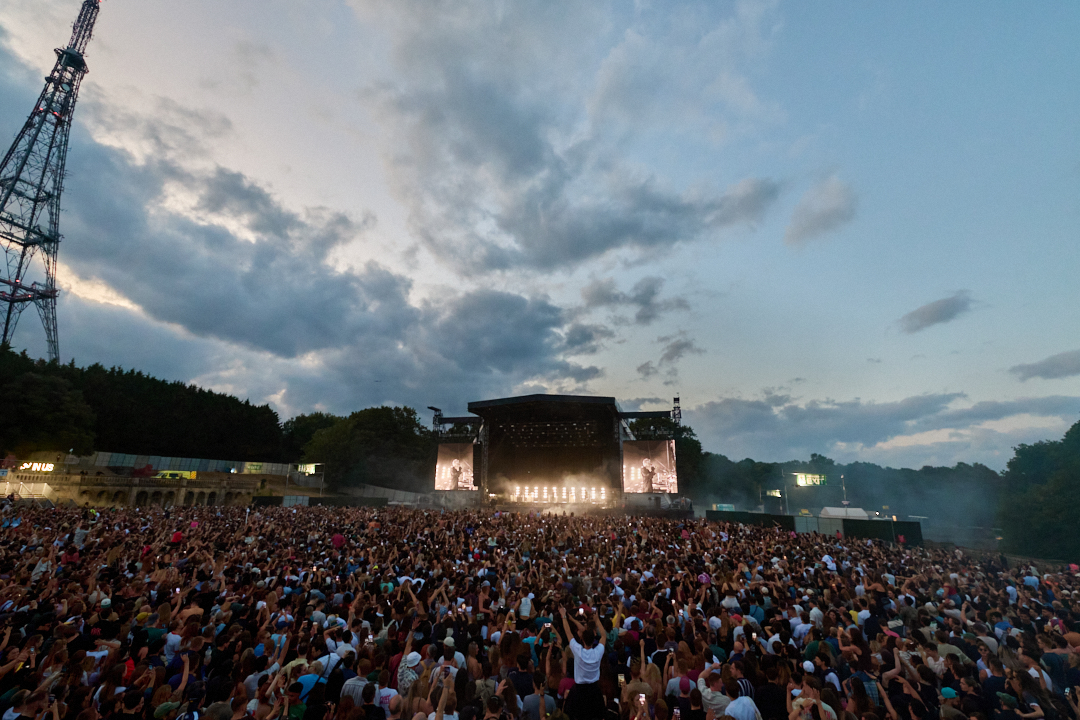
You can measure how much they’re cherished by how many tears their music gets rolling down cheeks, but also from dancing boots on the ground. The Inhale / Exhale World Tour has sold out 30 stadiums in nine countries. That’s over 700,000 tickets sold, 500,000 of them on the first day of sale.
This Saturday, Aug. 16, they will be ending the North American leg of the tour with its biggest show yet, playing (again, fittingly) the Rose Bowl — the first electronic music act to ever do that — where over 57,000 fans will give them their flowers in what will be one of the largest single-headline electronic shows the city has ever seen. They’ll then veg out for a bit in LA before heading home to Australia to close it out.
Below, RÜFÜS DU SOL dive into the creation of the Inhale / Exhale, their connection to SoCal, reveal some fascinating aspects of their visual design, and elaborate on the feeling of loss that comes with growth.
They came up with the name RÜFÜS because, back when they were starting out in 2010, they just wanted to sound like they were anything but Australian. But their story tells us that the more they’ve stuck to who they are, to their gut, the more the fans have stuck with them, playing their albums and videos in rotation in every setting imaginable.
LA WEEKLY: You guys have spent a lot of time here in Southern California, between LA and Joshua Tree. What is it about this place that has sparked creativity for you over the years?
TYRONE: I think initially we got to play Coachella and we also got to support Odesza on a few shows. It was just after we put out our second record, Bloom. We’re really inspired by our environment and we like to put ourselves in new, novel experiences and places. We all unanimously agreed that LA felt exciting. It’s a melting pot of all types of creatives, and we just wanted to see what it was about.
We got a place in Venice on Rose Avenue and had a studio there. We lost ourselves in the music and the city, and made a record that we were really proud of.
Our agent is a lover of Joshua Tree and had done a lot of trips out there, so we went for one Thanksgiving and had a really beautiful experience with friends. It was just really connecting. There was something in that trip that felt special, so we kept going back.
(Boaz Kroon)
We went out and did a writing trip for our fourth record, Surrender, where we bunked up for nine weeks. It was a really cool studio. We absorbed the nothingness that Joshua Tree has to offer, it feels like you’re on Mars.
And for our fifth record, we moved apart. The guys moved to Miami, I moved to San Diego, and we did writing trips — which ended up being three or four in LA anyway, even though we’ve moved away from LA. There’s definitely an affinity with the state, California. It feels similar to Australia for us, like a second or third home, or a first home.
For me, it’s home now. And I know it has been home for us as a unit, too. So it’s a special part of the world.
The last time you guys performed here in LA, it was the DJ set for fire relief in March —
JON: Yeah, we raised a bunch of money. We were rehearsing the new live show that we’re currently touring, and we saw this huge, tragic situation and a way for us to help, so we took a little bit of time out of our rehearsing schedule to go and do the show.
We’ve done it before for Australia when there were wildfires. It’s sad to see the city that you love in distress. Any little bit that we could do to help seemed very, very worth it.
You’re going to be here in LA in a few days. Anything you’re looking forward to doing when you’re not prepping for the big show?
JAMES: I mean, honestly, I’m excited because after the show, I’m going to spend some time there with my girlfriend, maybe for a month. We have a really big community out there. A lot of our team live out there. My parents come to visit to see the show from Australia, so they’ll be out for the week after.
Like Tyrone was saying, I feel like there’s some degree of it being a second or third home or whatever ranking it is. I feel connected to that place, even though me and Jon live in Miami.
TYRONE: Because I live in San Diego, I visit semi-regularly. The cool thing about LA is you get a lot more shows than San Diego does. So I’m going to make the trip up to see Oasis play, two weeks after.
I got to listening to Inhale / Exhale a couple of times this morning. It’s beautiful. It’s super emotional. It’s the longest record you guys have put out. How does it feel to share that project and those really emotional tracks with such a wide audience?
JON: I’ll speak from my own perspective. It’s daunting, and you’re working on this body of work for so long, and you want it to be perfect — you don’t have any regrets. So there’s this big feeling of relief when you put it out. And we try and stick to the values of it being for ourselves and like what we would enjoy.
So I think that in terms of the body of work that we delivered, it was perfect in my mind. It was something that was reflective of the year or two years that we were making it. The influences that we were sort of drawing on, we got to have some fun with the production and we had a lot of fun, actually, in the studio, just jamming and being like little kids in a playground, you know.
(Boaz Kroon)
It’s always a fun experience, but it’s a big experience. It’s a taxing experience. So it was good to be able to be super proud of the product that we delivered.
TYRONE: Yeah, we were really excited about doing something longer, too — having an album that covers more ground, that takes more time.
I think one thing that we’d all spoken about was trying to keep it on the light side. I’m a big lover of light and shade, but it felt refreshing for us coming out of Solace and Surrender, where I feel like we explored a few of the light and dark sides of things. On this one, it feels like we stayed in the hopeful, positive side of the band, which is maybe more reminiscent of Bloom and Atlas, our first two records.
I think we always try to get outside of our comfort zone and stretch ourselves. I think we did that sonically, too, down to the tempos and the beats that we were exploring. And then with the structure of the album by having two arcs in a way — we kind of break it up with “New York” halfway through, kind of like a palate cleanser, a reset. Then you get to go to part two.
We’d even talked about splitting the record into two parts, but we were like — oh, maybe this feels fresh and exciting to just have it as one big package so that people can live with it and consume it over years. And maybe their favorite songs today might not be their favorites in 10 years. It might shift to some other ones. I love those types of records.
What do you hope that listeners take away from the album, or what do fans at the show get out of the tour?
JAMES: Like Jon was saying, I think that we really enjoy making music for ourselves, and that’s usually when the best results have occurred — when we are in our own little bubble, and we’re listening to our own intuition. We’re not listening to an idea of what we think we should be making or anything.
We go down a lot of rabbit holes when we’re writing, especially on this record. We were very prolific, created a lot of material. But I think we were very successful in making things we wanted to make, and some ideas were more successful than others.
But in general, and in the history of the band, when there have been songs that have resonated over time, or when we’ve connected and landed for people, it’s when we listen to our own gut.
(Boaz Kroon)
And so I think we continue to do that, like Ty was saying, this was an opportunity to create a work that was more broad and was a bit more dynamic, even in terms of tempo, silence, you know, beatless tracks. It was a wider playground, which is really cool for the live show because it allows us more tools to create a dynamic experience.
What has astounded us over the years is just seeing how much people take the music we create as this hugely cathartic experience for themselves, or they connect to it in different ways, or it soundtracks weddings, deaths, births, birthdays — just huge life moments. And people come to us with these stories that are really impactful. You see it at the live shows, people are bawling their eyes out to a song. It’s really special.
Talk to me a bit about the visual experience of your music, both through the artwork in the albums and the theatrics and multi-sensory experience of the live show.
JON: We use a creative director, who is coincidentally my brother, for this exact inspiration. And I wish he was here to answer this, because that’s his talent. I think we have the best show we’ve ever had. It’s very forward-thinking with the way that we’re using our camera and cinematography.
If we go back to the album artwork, we always sort of have a visual mood board. So this is a bounce back and forth between my brother, and we found this diffuse floral arrangement. And it seems quite poetic.
Like what James was saying before about how many stories we hear about people having these moments in their lives, that our music sort of affects them. I think we were trying to make a very felt album. And it’s sort of like a way that flowers pop up in people’s lives. Often when it’s like a birth, death, weddings. There’s something very beautiful about the way that we’re able to get those colors and imagery and put them to the music.
TYRONE: “Katzki” [Alex George, Jon’s brother], has been with us since we started and I’m sure it is an extension of him. A really big part of our visual identity is somewhere in between organic, things that are inspired by nature, and things that are somewhat man-made, like analog things and machines. Somewhere in between.
I feel like that’s kind of how our live show exists. We’re a live band, but we’re inspired and we live within electronic music. And yet there’s live elements that are organic, like the drums and the synths and the vocals. So I feel like a lot of our artworks end up being extensions of that, versions of nature. Solace is the giant sand dune. The flowers for a recent one.
JAMES: Even the project file names, like when we’re making ideas, we’ll have a theme per album, and often it’s somewhat related to nature. Like on Solace, it was more space-related, so each song would be like “asteroid” or like “black hole” or something.
And then on Surrender, each would be a mineral or a gem. It’s where we go into the granular details of some kind of natural element, that helps inspire.
TYRONE: Even down to the music videos, like on “Sundream,” it’s a kaleidoscopic image for the whole music video. But how they did it is they shot the music video, and then they made a giant, I think it was nine-feet-long, it might be 12-feet, kaleidoscope.
So it’s these giant mirrors, and they’d be on this pivoting axis thing. And then they had a giant TV screen on the end with the music video, then they shot it again through this thing. You could digitally manipulate a kaleidoscopic image, but the fact that they did it within the camera, there’s just this interesting cross-section of organic and analog and real.
It’s like our “Next To Me” music video as well. It’s an AI-generated music video, but all of the inputted images — it’s nature and natural environments.
That’s an intersection we like to explore, and I feel like that’s been a big driving point for Katzki.
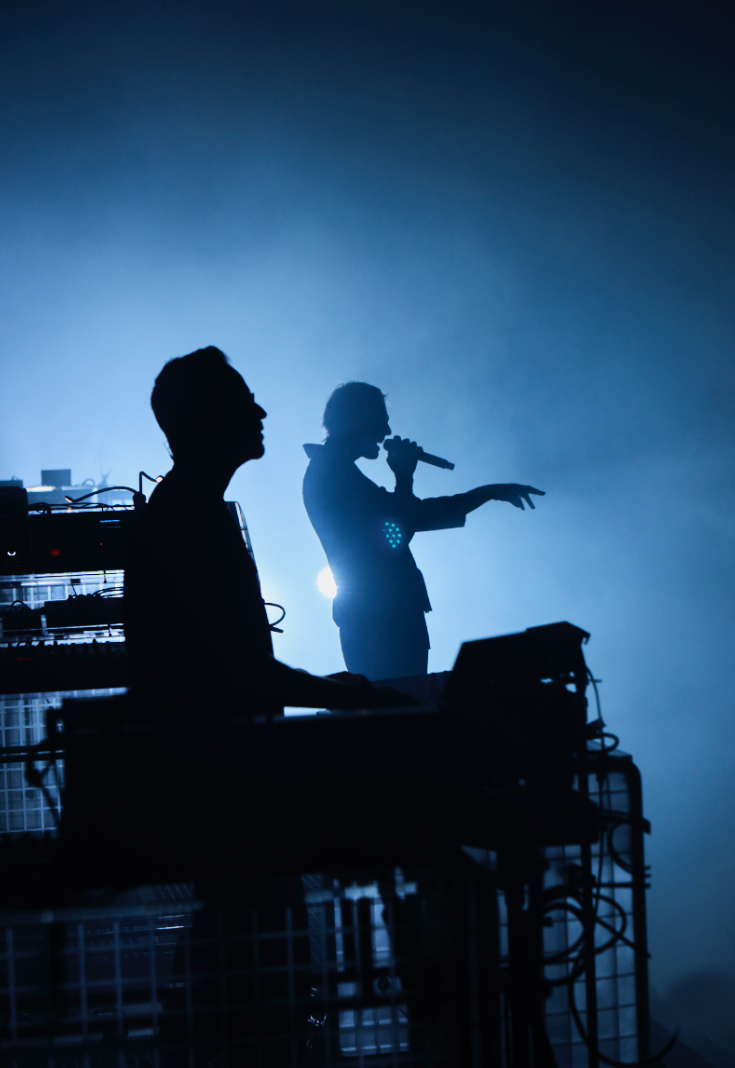
JON: Yeah, I feel like it’s a good time to expose part of the live show where he’s backstage with a bucket of water, and he’s getting the live images from a videographer on stage. And she’s sending that to a screen that has water on top of it. And then he’s hitting the water, and that’s what everyone’s seeing in the audience. It’s tactile texture, practical effects.
We had no idea that was happening until like the third show. It’s crazy.
Speaking of the show — it’s the first headlining electronic show at the Rose Bowl. That’s a humongous, probably one of the most beautiful venues in LA. What can fans expect?
JAMES: We’ve been working on this live show since February. And it was really fun to build a setlist that feels like it does justice to our electronic influences as well as our live influences. And we’ve been dialing that in over the last six months.
So, it’s really cool and daunting in a way that the Rose Bowl is this final apex of the tour. But what’s really cool about that is every choice we’ve made has been iterative towards it being the best show possible.
And on top of that, we are planning some extra spectacles and surprises for that specific show, just because it is such a monumental moment for us. So, yeah, it’ll be a representation of what we do as a project. And it’s going to be very special.
The one complaint I hear from the fans is, “Just one show?” But that probably lends to this whole question of how do you balance this demand to see you guys with you keeping your head together on a long tour.
JON: Well, we try to — we’ve been on tour for six months now. And even this venue that we’re playing now [in Bend, Oregon], it’s important for us to go back to these towns that have been so giving to us.
I remember the last time we played here in Bend, it was a Sunday night. We didn’t have our expectations that high, and it was one of my favorite shows of that tour. And we definitely want to, as we get bigger, make sure that we keep our eyes on the people that have gotten us to this stage.
We have a rule of no more than four shows in a row. We have a rule of no more than six weeks in a row or something like that.
TYRONE: Yeah, it’s like four to five weeks.
JON: We just try to create healthy boundaries for ourselves. And at the same time, try and honor the fans that have gotten us to the place that we’re at.
TYRONE: And it is a hard, delicate balance. I know as a fan of other artists, it’s so exciting to see a band when they’re playing 2,000 to 5,000-cap rooms. It’s intimate enough to be able to enjoy the show, and there’s enough of a show. It’s really sacred and special.
And when those bands graduate to bigger venues, there’s this duality of feeling real joy and gratitude that this act is connecting with a wider group of people, and there is a loss of like, “Ah, fuck. It’s not mine anymore, it’s not this sacred thing anymore.”
And I can definitely see and feel that with our fans that have been with us for a long time, that there’s this grief process of, “Ah, I liked them when it was this.” But I really do trust and believe that the story just shifts somewhat, and the experiences shift, and it makes it more unique and special.
Like to see us play at the Rose Bowl is going to be a first for all of those people, like to see us in an environment that’s that big, and with that many people to feel connected, in a city that is often blue skies and has beautiful sunsets. It’s going to be a very novel, unique experience that hopefully some people will walk away from that going, “Ah, yeah, that’s, they’re my favourite band at this point.”
But yeah, I do feel like it’s understandably a grieving process for some when a band blows up or they start playing stadiums.
(Boaz Kroon)
People have asked me to ask you guys: “You Make Me,” your song with Anyma, is that going to get an official release?
JON: Ah … let’s see! *Laughs*
Haha, okay. Cool. With the tour, you’ve got dates remaining in Australia. Then after that, what’s next? Are we maybe going to get a Miami-flavored album?
JAMES: I guess me and Jon have been living in Miami for two years, but the influences of the album aren’t directly related to the place we’re living, except for Miami has been really great in terms of it has a great electronic music scene. So, you know, picking up influences of club stuff, that is inherently a part of some of the kind of music that we’re referencing in the studio in terms of drum programming and stuff.
So, it’s been good in that way. But at the same time, like I was saying, we have been doing two-week writing trips all over the world. We’re in Ibiza for like two weeks for one of them. We’re in Austin, in LA. So we are pretty mobile in a way. But yeah, after this tour —
JON: — I think we have some announcements to make. Another big year ahead.
JAMES: Exactly. Big things coming.
That’s an exciting tease. One last question — where did the name RÜFÜS come from?
RÜFÜS DU SOL: *Laughter*
JON: We don’t ask that question.
[WRITERS’ NOTE: They’ve been asked this question a lot and are probably sick of it, our bad.]
TYRONE: Honestly, it’s very simple. We’re from Australia and we wanted it to sound like we weren’t from Australia. For whatever reason, that seemed exciting because there was some novelty or something. Us being Australians, going and watching live music, when you would see a name of an artist that seemed foreign, you’d be like, “Ooh, I’m curious. I want to go see them.”
So that was a drawcard for us in that we were like — oh, maybe we could be that band. I think we just wanted something simple, like a friend’s name. And then we added DU SOL. That felt like an extension of ourselves and the music that we’re making. We love sunshine.
JON: It’s ambiguous and sort of was relatable at the same time from many different languages.
TYRONE: Yeah, hard to pinpoint what language it’s from. It’s like, is it German? Is it Spanish? I mean, you know, Spanish doesn’t have umlauts, but “du sol.” Or like, Scando.
JAMES: Yeah, we liked that it was ambiguous or mysterious. You couldn’t be placed specifically. And also, we used to hide ourselves a lot in press shots very early on. We’d be very mysterious and try to be enigmatic.
But obviously, we’re just three dudes from Sydney.
RÜFÜS DU SOL headlines the Rose Bowl this Saturday, Aug. 16. Follow the group on Instagram @rufusdusol and at rufusdusol.com. Interview edited for length and clarity.
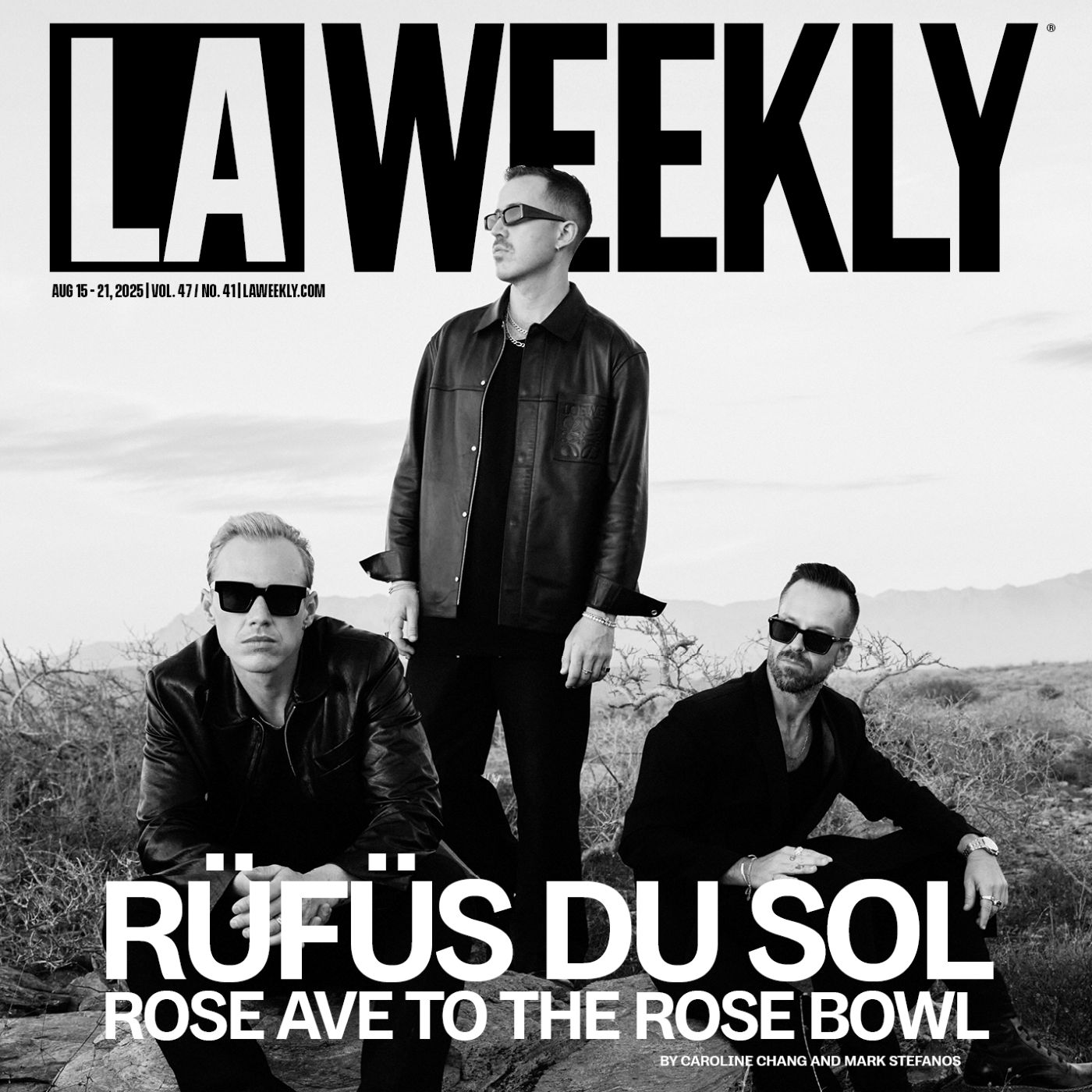
RÜFÜS DU SOL on the August 15, 2025 cover of LA Weekly. (Photo: Boaz Kroon; Cover design: Mark Stefanos)