
 Wyles Daniel
The pianist, music educator and Steinway Teacher Hall of Fame inductee brings an interpretive perspective to “Confession in the EveningBreeze & Farewell letter,” using orchestral arrangement to explore memory, intimacy and emotional distance
For Hua (Melody) Chen, arranging an existing piece of music is not an exercise in replacing what is already there. The more interesting challenge is discovering how a familiar melody can be placed in a new musical environment without losing the qualities that made it recognizable in the first place. That idea shaped Chen’s interpretation of “Confession in the EveningBreeze & Farewell letter” at the closing benefit concert of the 2026 Strongest Voice Concerto Art Festival, held in Tangshan, China, on July 5.
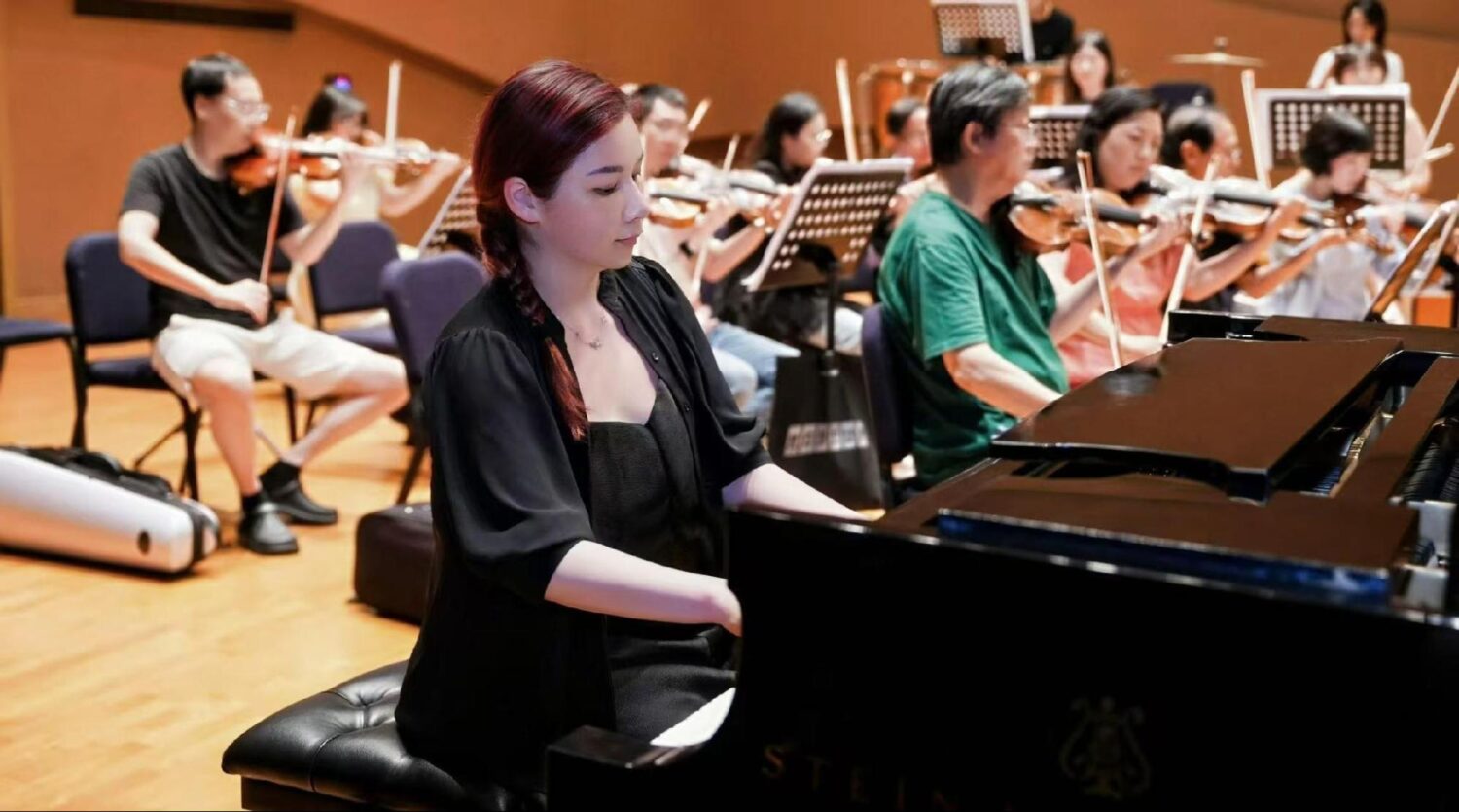
A pianist and music educator recognized by the Steinway Teacher Hall of Fame, Chen approached the existing work through a new arrangement for piano and orchestra. Her contribution was not presented as authorship of the original composition; instead, she focused on interpretation — exploring how piano voicing, orchestral color, dynamics and pacing could reveal different emotional possibilities within the familiar material. The distinction is important to Chen’s artistic approach, which treats arrangement as a conversation with an existing work rather than an attempt to overwrite it.
Her conception of the piece began with imagery. Chen associated the melody with an evening breeze, distant starlight and the tenderness of an early romantic memory. The piano introduces the theme quietly in its upper register, with a restrained touch that leaves space around the melody. The orchestra enters gradually rather than making an immediate dramatic statement, allowing the musical environment to expand around the piano. What begins as something intimate and personal slowly acquires the scale and depth of a larger symphonic landscape.
As the arrangement develops, however, Chen does not allow the music to remain entirely within that initial romantic atmosphere. Changes in texture, dynamics and orchestral weight gradually create emotional distance. The familiar melody is still present, but the perspective shifts from experiencing a memory to reflecting on it. For Chen, that transition is where interpretation becomes most interesting: the notes themselves may remain recognizable, yet their meaning can change because of what has happened around them.
This approach reflects a broader question that has shaped Chen’s work as both a performer and educator: how much of musical meaning is contained in the written material, and how much emerges through interpretation? Classical training provides a performer with tools to explore that question. Changes in register can make a phrase feel more intimate or distant; harmony can introduce tension where the melody itself remains unchanged; orchestration can turn a private musical thought into a sweeping statement, while silence can make even a familiar phrase feel unexpectedly fragile.
For Chen, those tools are a vocabulary rather than a boundary. Bringing contemporary material into a setting for piano and orchestra is not about making it more “classical.” It is about examining what additional emotional dimensions might become available when the material is approached through a different musical language. Her work with “Confession in the EveningBreeze & Farewell letter” reflects that philosophy: the original melody remains the point of recognition, while the arrangement creates a new context in which the audience can hear it.
Chen’s perspective as a music educator adds another layer to that process. Her recognition by the Steinway Teacher Hall of Fame reflects a career that places education alongside performance as a central professional commitment. In teaching, she encourages musicians to move beyond the mechanics of playing accurately and to consider the structure, intention and emotional direction behind what they perform. The same principle is visible in her own interpretations, where technical decisions are made in service of a larger narrative rather than for effect alone.
The setting of the Tangshan performance gave that philosophy a public dimension. The benefit concert drew a capacity audience, filling all 808 seats, and was supported by organizations including the Tangshan Musicians Association, the Symphony Orchestra of Tangshan Song and Dance Theatre, and Poly Theatre. The involvement of professional arts organizations helped create a setting in which musical performance, public access and cultural exchange could intersect.
For Chen, this is also part of what music education can mean outside a classroom. Audiences do not need to know the terminology of orchestration or harmonic analysis to recognize when a piece moves from intimacy toward reflection. They can experience those changes directly. A familiar melody can provide an accessible entry point, while interpretation can invite the listener to notice elements of musical structure and emotional development that may previously have gone unheard.
The performance took place within a wider period of artistic exchange for Strongest Voice, which had previously reached New York, Shanghai and Boston before beginning its 2026 activities in Beijing and continuing to Tangshan. Moving between these different cultural settings underscores an idea that resonates with Chen’s work: while audiences may bring different histories and references into a concert hall, emotional recognition can travel more easily than language.
Chen’s Tangshan interpretation began with music that already existed and that some listeners may already have known. Her contribution was not to claim the melody as something new, but to change the frame around it — to ask what happens when a familiar musical memory is given more space, different colors and a new emotional point of view.
In that sense, originality in performance does not always require creating something from nothing. Sometimes it begins with listening closely to what is already there and finding a thoughtful way for an audience to hear it again.