
 Angelica Burlaza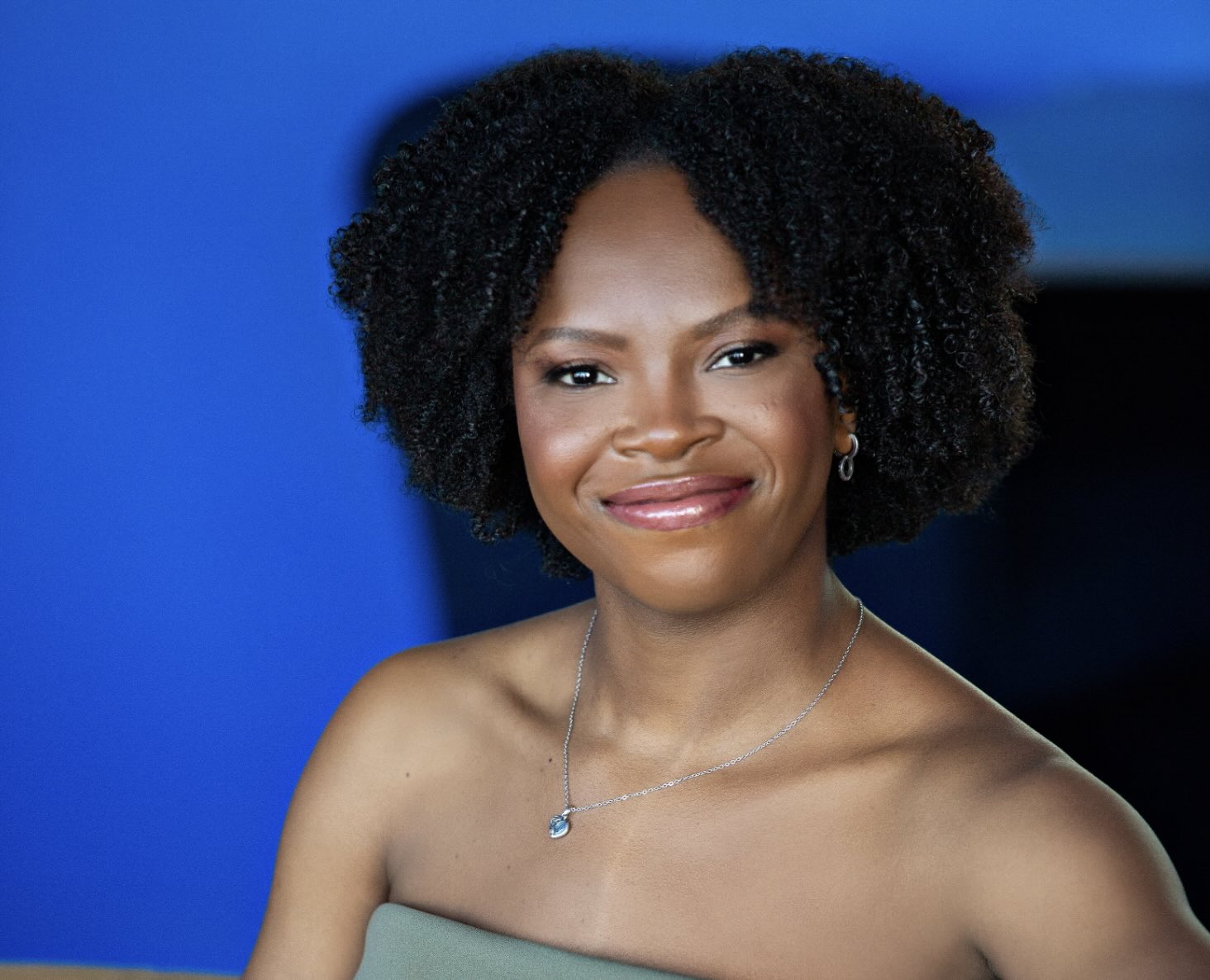
Photo Courtesy of Ogochukwu Ossai
The first time Warwerri lands on a prize judge’s desk, it is just another file in a digital stack, one manuscript among hundreds. Somewhere else, a poetry judge scrolls through a queue and opens House of Ferns, not yet knowing that these pages, quietly intense, rooted in African and diasporic experience, will stay with them long after the reading shifts are over. For Nigerian writer and scholar Ogochukwu Ossai, those private moments of recognition have become public markers of a career that is no longer operating on the margins.
Her name now appears on longlists that readers and insiders actually track: Warwerri, her historical novel, on the 2025 Goldfinch Novel Award longlist, and House of Ferns, her poetry collection, on the 2024 Dzanc Poetry Prize longlist. Both the Goldfinch Novel Award and the Dzanc Poetry Prize are well-known, internationally recognized awards in the literary world of creative writing, awarded by established independent presses with broad reach across the publishing industry. These distinctions sit alongside earlier wins and honors, including the 2019 Equinox Prose and Poetry Contest (poetry), finalist status in the WOW! Women on Writing Winter 2024 Flash Fiction Contest, and a longlisting for the 2023 Voyage Anthology 2 contest. Across genres, her work keeps surfacing in spaces where the competition is fierce, and the margin for error is thin.
Prize longlists can look modest on the page, but inside the process, they are anything but casual. Panels of experienced literary professionals who serve as readers and judges move through hundreds to thousands of national and international submissions in multiple rounds, scoring, arguing, and rereading. Most manuscripts do not make it past the early culls. For example, as is evident in the selection criteria for the internationally recognized 2025 Goldfinch Novel Award, when a project reaches the longlist, it means industry professionals and qualified judges who constantly read have determined that the work exemplifies excellence in craft and originality and belongs in a small circle of work worth watching. “I am always aware that my work is entering spaces where my histories have not always been visible,” Ossai says. “So when a panel reads deeply enough to meet the work on its own terms, that recognition means a great deal.”
Inside The Longlist Machine
From the outside, awards can feel like black boxes. Inside, they operate through structured, merit-based evaluation processes and look more like endurance tests—for writers and for judges. National novel and poetry prizes, such as the Goldfinch Novel Award, tend to attract submissions from across the world, often numbering in the high hundreds. First readers scan for basic craft, voice, and momentum. The manuscripts that survive move to judges who push further: is the structure sound, is the language doing real work, does this book linger, or does it fade as soon as you close the file?
That is the terrain where Warwerri and House of Ferns have held their ground. Longlisting as the top 16 out of 456 submissions for the Goldfinch Novel Award signals that Warwerri cleared several rounds of reading against a crowded field of full-length manuscripts. Longlisting for the Dzanc Poetry Prize carries similar weight in a genre where judges must assess not just individual poems but the cohesion and emotional arc of an entire collection. In both cases, Ossai’s work has been separated from the mass of entries and placed in a select group that industry watchers and nationally respected literary critics treat as a discovery list exemplifying excellence among a broad field of entrants.
For a Nigerian writer based in Atlanta, working at the intersection of speculative, historical, and contemporary fiction, that separation matters. It tells publishers, agents, and peers that her voice does not just stand out in smaller niche spaces; it holds its own in broad, international competitions where every manuscript is vying for limited attention.
What The Judges Are Hearing In The Work
Ossai’s writing makes that attention make sense. Her fiction and poetry delve into human psychology, moral ambiguity, grief, and trauma, often centering marginalized characters navigating identity in worlds that tilt between chaos and calm. In Warwerri, she threads Nigerian history and postcolonial memory into a narrative that feels researched and haunted at once, treating the past not as backdrop but as a living force pressing against the present. In House of Ferns, her poems move through intimate emotional landscapes while keeping one eye on the historic and political forces that shape private pain.
Prize juries tend to respond to that combination: technical control, thematic depth, and a point of view that feels both specific and widely resonant. These awards were not granted for participation but for demonstrated distinction in a competitive field of authors, both national and international. They are not “issue” books; they are stories and poems that carry their politics in the bones of the characters, in the myths they inherit, in the silences they break. “Awards do not create the work,” Ossai says, “but they can create corridors where the work travels further and reaches readers who might otherwise never know it exists.”
Her earlier recognitions reinforce that pattern. Winning the Equinox contest, placing as a finalist with WOW! Women on Writing and being longlisted for Voyage Anthology 2 marked moments when anonymous readers and judges stopped, paid attention, and decided her pages should move forward. Add in fellowships and scholarships from places like the Anaphora Literary Arts Residency, the Fine Arts Work Center in Provincetown (Hatty Fitts Walker Scholarship), The Poetry Project, and Idyllwild Arts Writers Week, and a picture emerges: when gatekeepers at different stages of the literary world have to choose, they keep choosing her.
Beyond The Prize Lists: Classrooms, Editorial Rooms, And Reach
The public metrics are only part of the story. Ossai’s influence also runs through the places where decisions about other people’s work get made. At Texas Tech University, she taught undergraduate English and writing for three years, mentoring students who were often writing themselves seriously into existence for the first time. As a fiction mentor for the AWP Writer-to-Writer Mentorship Program, she works closely with emerging authors, many of them carrying the same questions about identity, migration, and language that animate her own books.
Then there is the editorial side. As managing editor of Iron Horse Literary Review, a nationally recognized literary magazine, Ossai helped set editorial direction, evaluated submissions, and supported the production of each issue. That role put her at the center of a constant stream of manuscripts, demanding the same kind of discernment awards judging requires. Only this time, she was among those deciding which writers would get a platform.
Her presence in those roles gives her awards added weight. When she tells a young writer from Lagos, Atlanta, or Los Angeles that their story about ghosts, war, or migration can compete at the highest levels, she can point to her own track record as proof. The longlists for Warwerri and House of Ferns become not just personal milestones but evidence she can hold up in a workshop or mentorship session, a way of saying: the doors are not sealed shut.
The Quiet Reach Of Recognition
Ossai’s resumé succinctly frames her: a Nigerian fiction writer based in Atlanta whose work explores identity, trauma, and postcolonial memory. Behind that short bio is a career built on slow accumulation; contest by contest, fellowship by fellowship, class by class. The recognition she has earned creates a feedback loop. Prizes and fellowships give her time, resources, and visibility. That visibility feeds into teaching and editorial roles. Those roles, in turn, influence which stories and voices will enter the next round of prizes and fellowships.
“Literature carries our ghosts and our possibilities,” she says. “When more of us are present on the page, more of us get to imagine a life beyond survival.” For readers tracing where the next generation of boundary-pushing writers is coming from, the metric is not just how many lists a name appears on. It is what those lists enable: who gets invited into the room next, whose manuscripts start to arrive in those same crowded judging queues, and which stories, once overlooked, suddenly feel impossible to ignore.