
 Kalyn Corrigan
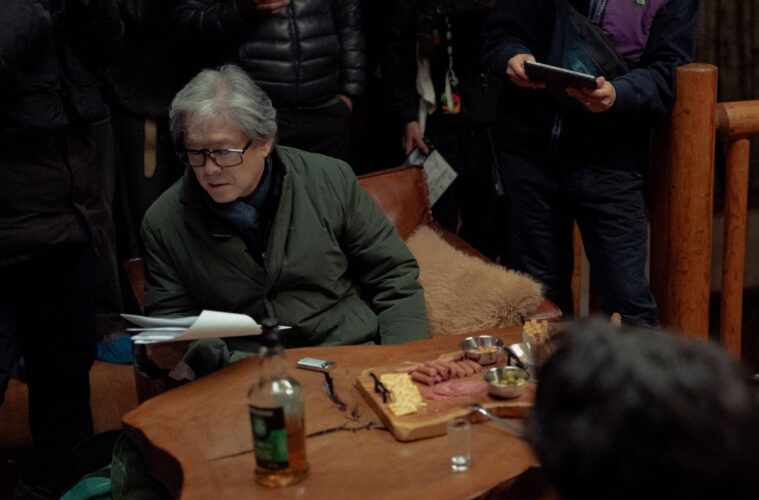
In order to understand cinema, one must merely study the expansive resume of renowned filmmaker Park Chan-wook. Massively influential to countless auteurs, the South Korean trailblazer who helmed such crucial titles as Stoker, The Handmaiden, the Cannes Grand Prix-winning masterpiece Oldboy, and the Oscar-shortlisted Decision to Leave, is known for his jaw-droppingly pristine visuals, his seamless narrative flow, and the effortless nature with which he blends the macabre and the comical. His latest feature No Other Choice is in many ways his magnum opus.
Starring Lee Byung-hun as Man-su, a loyal employee and well-to-do manager at the manufacturing company ‘Solar Paper’ for well over two decades, an eerily familiar feeling emanates early on in the film when this hardworking patriarch is abruptly dismissed from his position. Apparently, his company has been swallowed up by a bigger American company, and in the name of corporate downsizing, Man-su is just the latest employee to be placed on the chopping block. Despite his best efforts, Man-su fails to find another substantial line of work, and as the months drone on, he watches helplessly as the family he supports suffers the ripples of such a massive financial shake-up.
“Man-su actually starts off pretty well,” director Park tells me in Korean. “He feels like a neighbor we might know, or our family, or even ourselves. He generally seems like a good person. But then, he’s suddenly fired from a job that he’s had for 25 years, and naturally, we feel very bad for him. At this point, it’s very easy for us to be emotionally invested in this character, and to root for him — but as the story progresses, we watch him gradually cross into the threshold that we don’t want him to go into.”
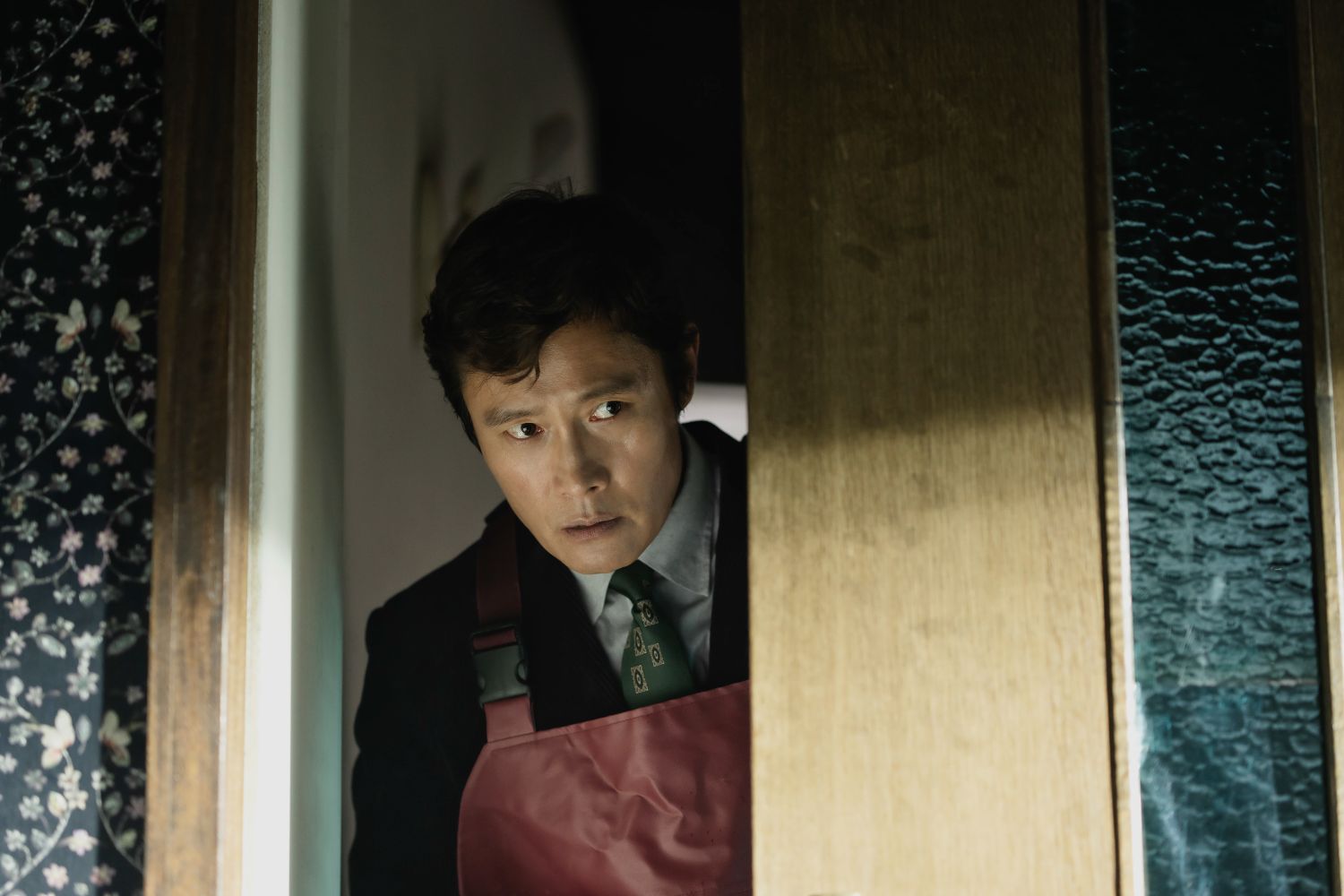
Lee Byung-hun as Man-su in “No Other Choice” (Courtesy of NEON)
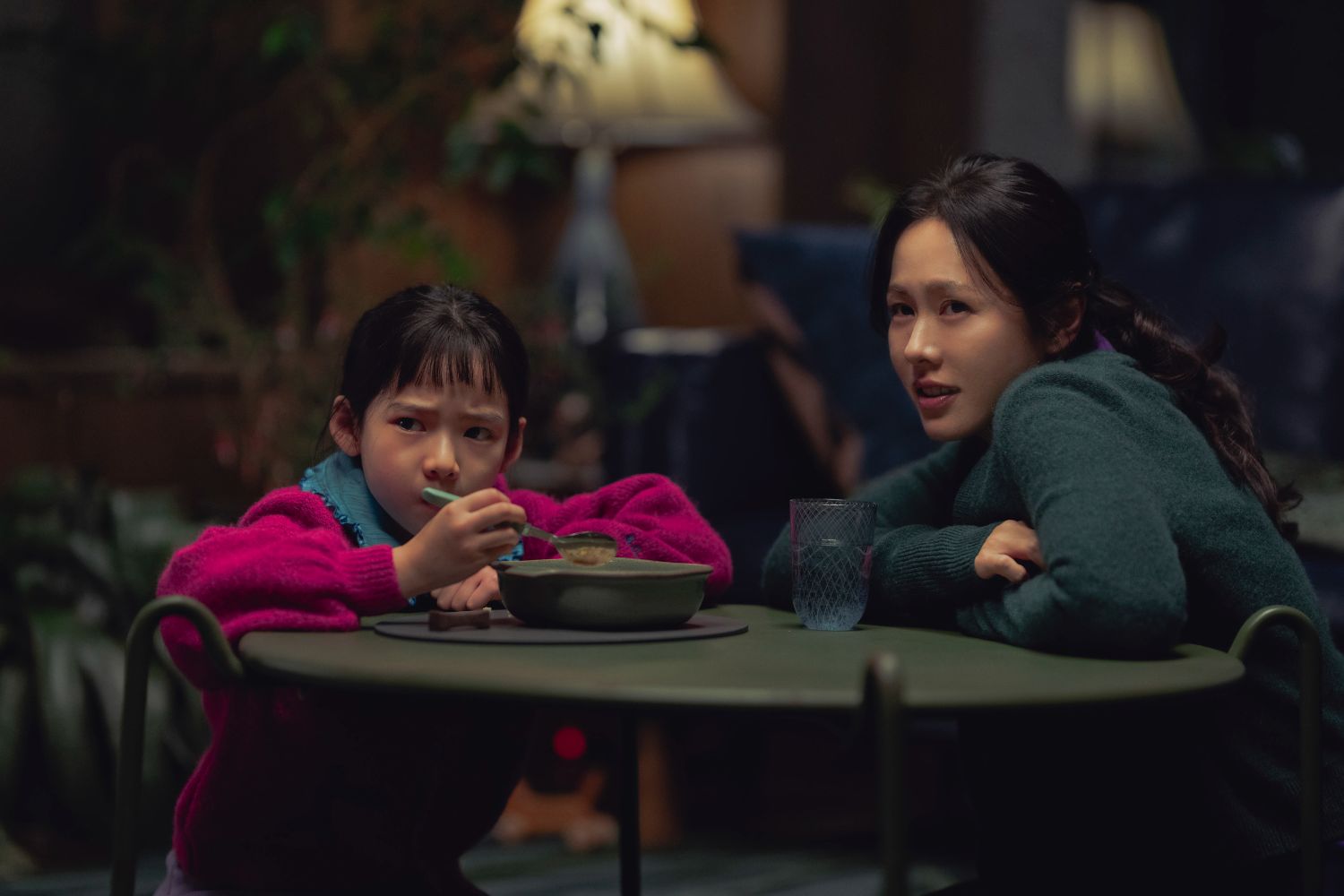
Canceling Netflix and cutting back on red meat is one thing, but once Man-su can no longer afford to feed the family’s golden retrievers, the look in his daughter Ri-one’s (So Yul Choi) eyes as her dogs are whisked away to their new home awakens something dark from deep within the recesses of his mind, like a dull toothache at the basin of the brain.
When his wife Miri (Son Ye-Jin) takes on part-time work as a dental hygienist and starts nuzzling up to her handsome new boss, Man-su’s urge to remedy his perceived shortcomings overwhelms him. The ache evolves from a nagging pang into an explosive desperation to do whatever it takes to realign his familial unit and regain the title of the stable provider once more, even if it means stamping out the competition.
By posting a fake recruitment ad in a paper industry trade magazine for a position at his fabricated ‘Red Pepper Paper Company’, Man-su discovers a way to draw out all of his unemployed peers from the shadows, get their resumes mailed directly to him, learn first-hand who’s the cream of the crop, and promptly eliminate them from the race. Then, after he hacks his way back into the job market, he’ll finally be the only qualified candidate left standing.
In order to justify his atrocities, Man-su tells himself repeatedly that he has no other choice. Eventually, the mantra becomes a chant that echoes like a self-soothing salve.

(Courtesy of NEON)
“Gradually, [Man-su] begins to suspect his wife, because he thinks his wife is cheating on him,” Park says. “We also find out about his alcohol problem in the past, and how he had also abused his child in the past, as well. In addition to that, we see how he approaches his third victim. He comes off as this very well-planned, thought-out killer, and uses a very violent method to take care of this body as well. And we begin to doubt whether he actually is a good person. This really tests how much can the audience agree and continue to support this man?”
As the film so eloquently proves, people will do anything to bridge the gap of dissonance between our beliefs and the actions that we actually take. “Testing the audience and making them doubt themselves has always been my goal with the film. Through that process, it gives the opportunity for the audience to reflect on themselves, as well. ‘How much can I like this man?’ And, ‘how far does he have to go for me to continue forgiving such a person?’ That process of self-doubt was something that I had intended.”
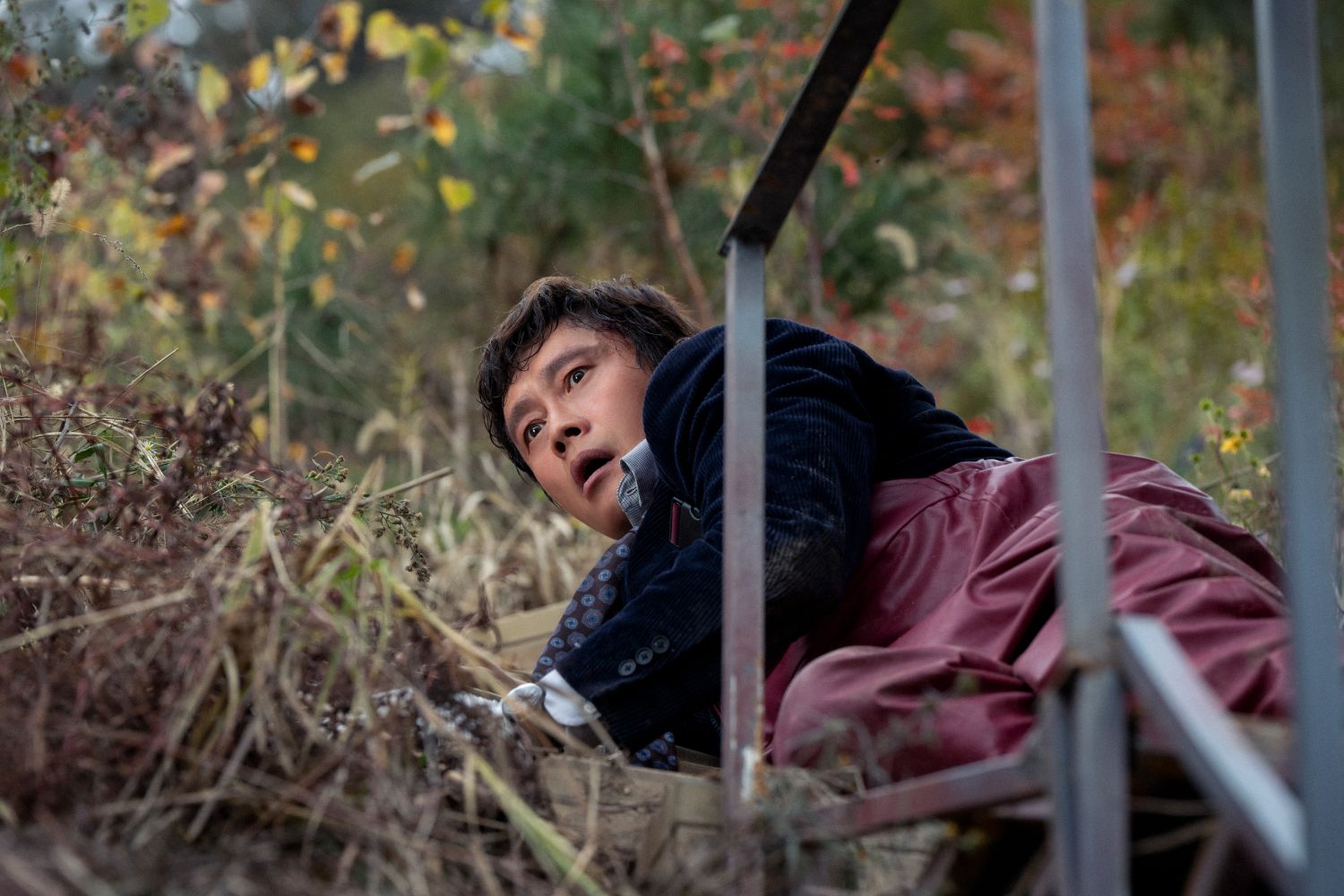
One by one, Man-su strikes down his competitors, but not without his blunders. Less experienced with violence than the average serial killer, he winds up making a lot of mistakes, and the results are uproariously hilarious. Losing his gun, running out of gas in the midst of fleeing a crime scene, falling prey to forest snakes — while simultaneously, his loving wife attempts to video call him incessantly — these are the beats of a top-tier old-school situational comedy that just so happen to take place within the confines of a dramatic thriller. All of these amateur hour hiccups make Man-su’s plight appear all the more relatable, even as his actions grow increasingly irredeemable.
“An important principle that I had said to myself in advance is that the laughter that the audience gets from this movie can’t be cynical,” explains Park. “This laughter has to be connected to how much the audience sympathizes for Man-su. So, rather than cynical laughter, I was looking more for a warmer and a sadder kind of laughter.”
Inspired by the works of Émile Zola and Franz Kafka, Park’s beautifully strung-together storylines are often more reminiscent of literary works than cinema. Given this, it comes as no surprise that the source material for his latest endeavor is originally derived from a bestselling book by a famous ‘90s noir author — The Ax by Donald E. Westlake. Director Park, who also co-wrote the screenplay, keeps the same basic plot structure as the 1997 thriller novel, but leans into his natural instinct for sharp, biting satire.
(Courtesy of NEON)
“I smirked a few times while I was reading the book, and that’s what I particularly enjoyed about it,” he remembers. “But after reading it, I had this prediction that I can make it even funnier than the novel. I wanted to draw from the potential in that book and really pull out these emotional extreme situations. So, I wanted to create Man-su in a way where the more pitiful he seems, the funnier he seems to the audience, and to really emphasize how foolish his decisions were, and how hapless the execution of those decisions are. Those two things combined really strengthened the comedy of the story.”
The book was previously adapted into film in 2005 by Costa-Gavras, to whom No Other Choice is dedicated. Park has been in the process of adapting Westlake’s work for twenty years, initially intending the film to be set in America, with Don McKellar onboard, Park’s previous collaborator on The Sympathiser. However, despite his acclaim, his track record for delivering a polished product, and the plethora of awards slowly taking over his home, even a filmmaker of Park’s caliber struggled to obtain financing for his new feature in Hollywood.
“The reason why I didn’t give up on developing this project is because I wanted an opportunity to portray societal issues, but not in a manner where it felt like a pamphlet,” says Park. “Not propaganda, or not me trying to make a strong argument through my words, but portraying a societal issue that feels very much inherently connected to the characters, to the internal world of the characters, and the desires of that individual character, which is why this was an ideal story for me.”
(Courtesy of NEON)
Even as the years piled on, and Park tackled and completed several other entries in his body of work, the director never gave up on his passion project. In his heart, he knew he had an evergreen message about the threat of capitalism, the inevitability of AI dismantling the workforce, and the increasingly worrying sentiment that people’s sense of self-worth can only be determined by the status of their job title.
“I think the timeliness of the story and the subject matter increased the longer I developed it,” reflects the filmmaker. “So at first, this was supposed to be an American film, and it’s based on an American novel that was written many years ago, and I was surprised at how relevant it felt to a Korean person like me at the time. But with the passage of time, I think, regardless of what time of the year it was, or what country people are from, whenever I would tell them the short version of the plot, people would always respond with something like, ‘Oh, that sounds like a very timely story,’ and ‘That sounds very relevant to our country right now.’”
The brilliance of Park’s prowess lies in his ability to craft a zany, hyperbolic absurdist fantasy that is somehow still wholly relatable for most moviegoers. Although the dissolution of Man-su’s once reliable paper company acts as a placeholder for the dilemmas facing virtually every other corporation in the world right now, perhaps the most striking parallel one can draw is the comparison to the destruction of the once glamorous and thriving studios of Hollywood. The scarcity mindset has always plagued the citizens of Los Angeles, but with the advancement of artificial intelligence slowly replacing writers, actors, and even directors, viewers can’t help but notice the glaring similarities in Park’s latest poke at society.
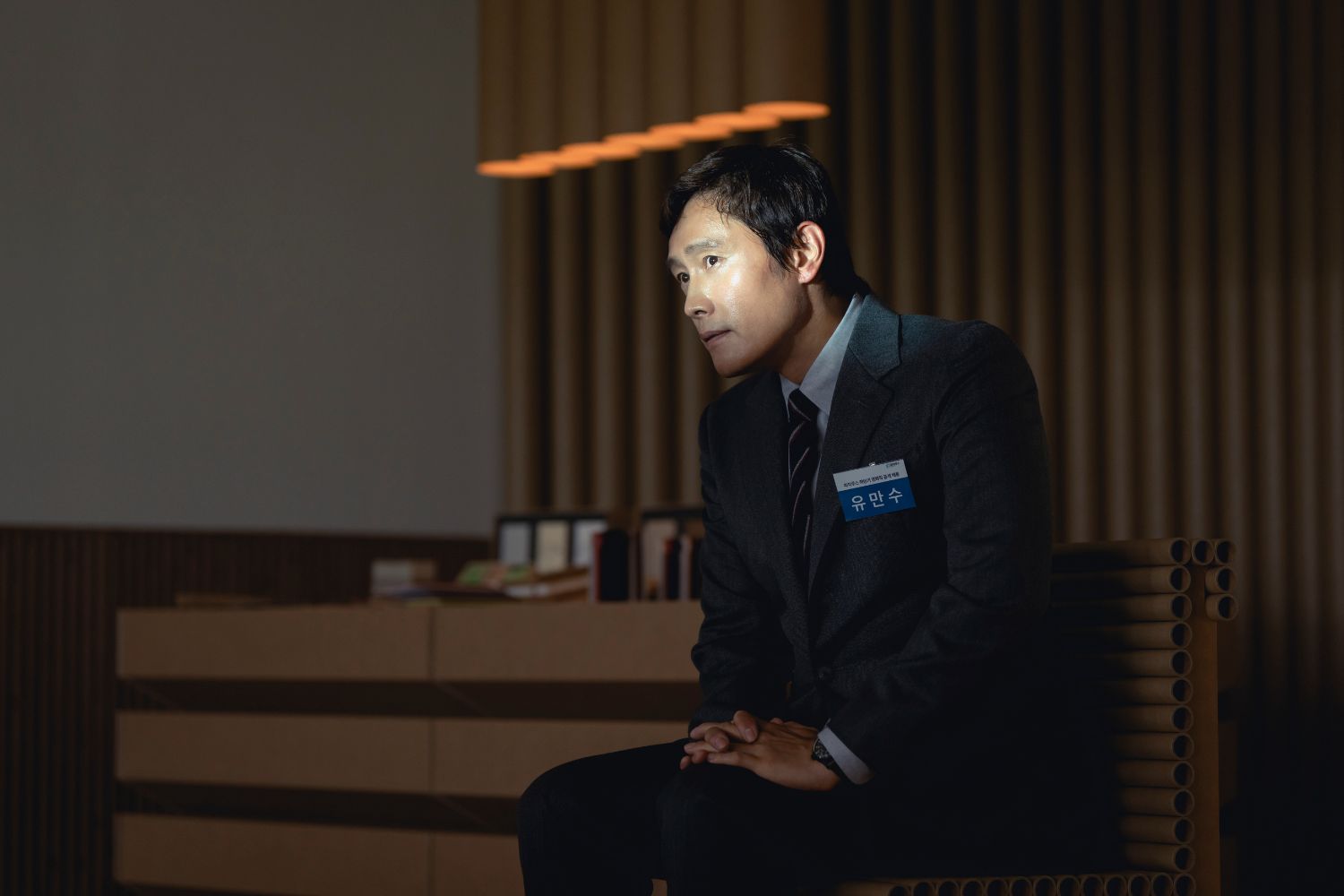
(Courtesy of NEON)
“Paper and film feel very different on the surface, so I never imagined that I would be able to empathize with the characters in the novel when I was initially reading it,” Park recalls. “But I was surprised to find myself actually greatly empathizing with the characters in the story, because for work that others consider very easy or unimportant, there are people in that industry who basically consider it their entire life. So in that sense, I think paper and film are similar. Normal people might not think film is too precious. It’s just a source of entertainment that wastes your time for two hours. But to every filmmaker, they consider it their entire life.”
Park continues, “I think there’s another similarity between film and paper, which is that usually when we use paper, we don’t consider it that important. We crumple it up, and we rip it up, and throw it out. But there are precious kinds of paper that we do value, like bills or paper for passports. This is called specialty paper. Similarly, I think most films, people don’t really consider that important. They might just watch it and then turn it off in the middle and leave. But like with papers that are used for bills, there are some other films that are more respected and precious than others.”
Upon inquiry of his own perceived competition, and asked which filmmakers he might feel compelled to knock off in order to safely secure his spot in the industry, Park playfully replies, “I don’t think I need to eliminate my competitors, because the filmmakers that I often compare myself to and feel inferior to have all passed away today.”
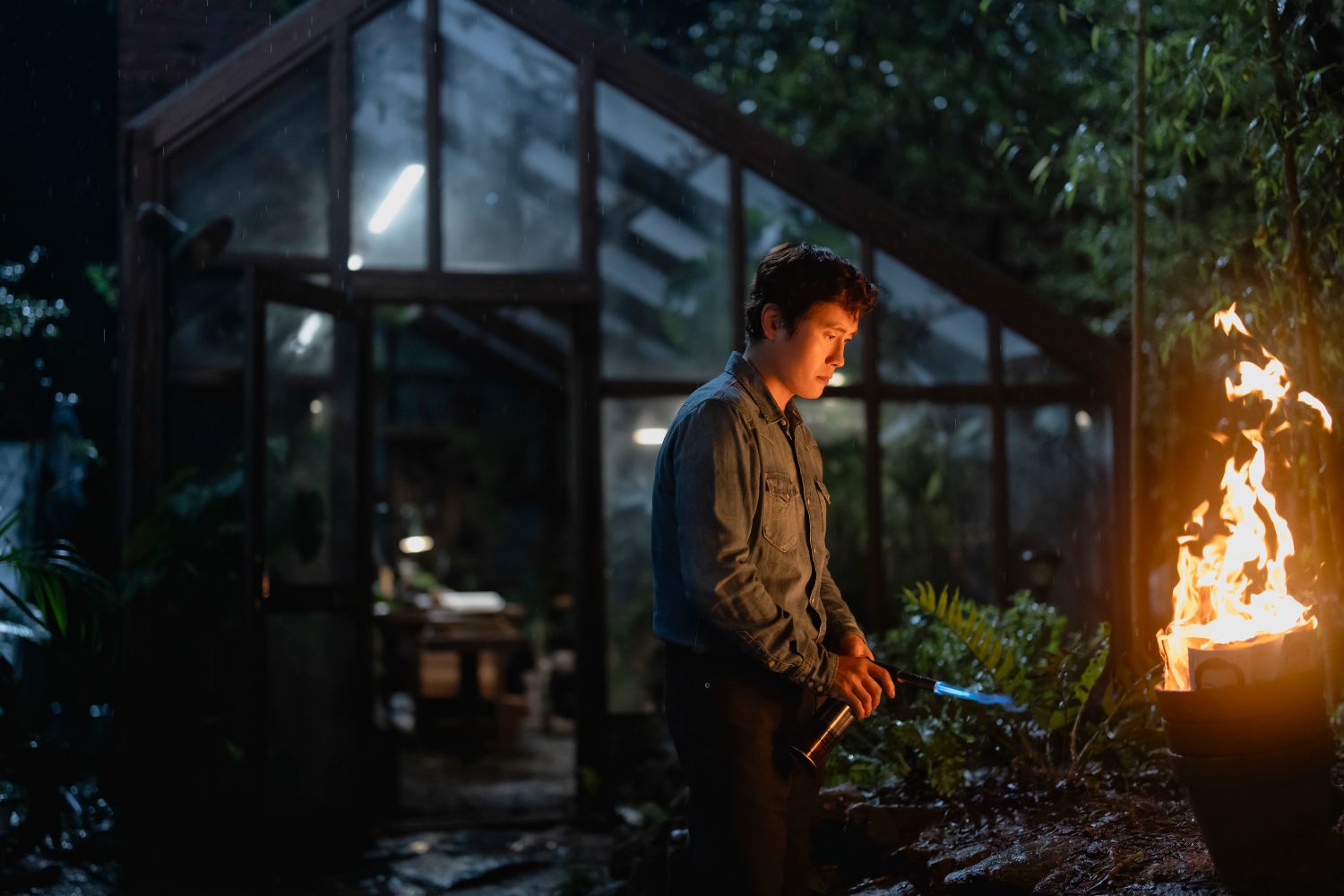
(Courtesy of NEON)
When financing from America fell through, director Park pivoted to making No Other Choice a Korean film. Luckily, this allowed the master to reunite with his old friend and star Lee Byung-hun, with whom he worked previously on his breakthrough hit, the legal-thriller-meets-buddy-comedy Joint Security Area (2000), which won the Grand Bell Award, the Korean equivalent of the Academy Awards.
“I think many people outside of Korea mistakenly believe that JSA was my first feature, but I actually had two movies before JSA, which were complete flops,” Park states bluntly. “And similarly, Lee Byung-hun was a TV star in Korea, but he was rarely ever seen on the big screen, or ever given the opportunities. So, it was almost like for JSA, these two people filled with anxiety had met for this movie, and we approached this movie very nervously.”
Park rarely mentions his first two films, The Moon Is…The Sun’s Dream (1992) and Trio (1997). In a way, JSA is more like his directorial debut, since it’s the first film that officially put him on the map, and cemented his unique filmmaking style, while also marking Lee’s transition from TV to films. Coming back to work together again twenty-five years later, with each artist at the height of their powers, really represents a full circle moment for this incendiary duo.
“JSA set history with its tremendous box office success at the time,” says Park. “After JSA, we both had very successful careers, so reuniting with him for No Other Choice, I think working on this, we were much more relaxed, and we have more time and energy to care for other people. We were also able to see the bigger picture, rather than just focusing on the details. So all throughout the shoot it, was a very enjoyable time. We would just share jokes, and it felt very relaxed and nice.”
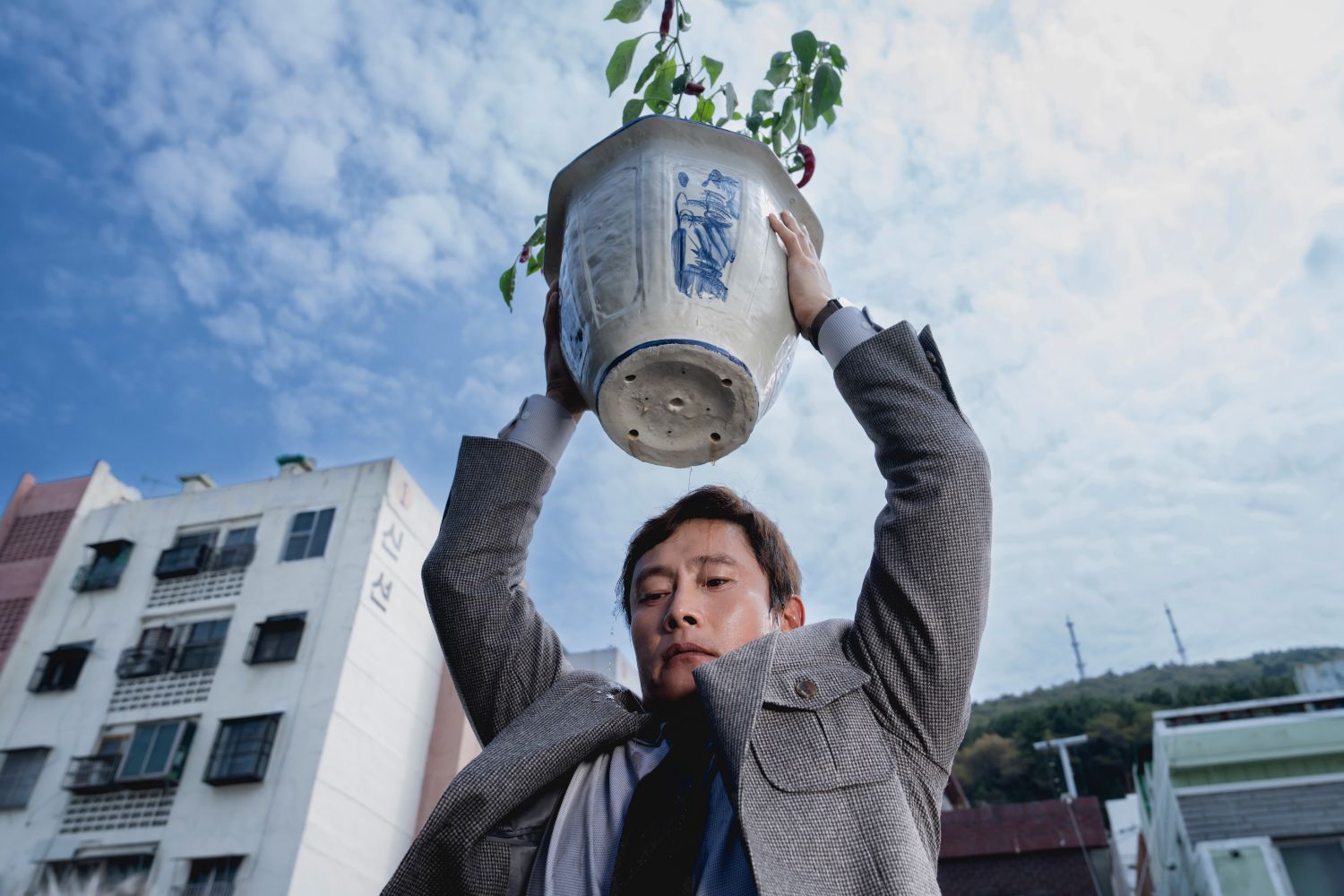
(Courtesy of NEON)
Of course, casting Lee wasn’t the only benefit to shooting the film in Korea. It also gave director Park the chance to murder a man like a bonsai plant.
Midway through the film, Man-su struggles with the disposal of one of his victims, unable to bring himself to break up the body with a gas-powered chainsaw. Sitting in his beloved greenhouse, he turns to his favorite hobby for inspiration: gardening. Using the same tools he typically wields to tame an unruly bonsai plant, he wraps up the body like foliage, secures it with wire, and buries the monstrosity in the front yard underneath an apple tree.
“I think I most appreciated being able to use bonsai in the film, because if we had an American protagonist, bonsai would have been too unique of a hobby,” he relays. “It was only because it was a Korean film that I was able to incorporate that into the story. And Man-su’s love for plants wasn’t just a hobby for this character. We were able to further cinematically utilize it throughout the movie in many ways.”
With a knowing smile, director Park adds cheerily, “I especially appreciated that because I didn’t want to take care of the dead body by slicing it up with a chainsaw. It felt too cliché for me. So, that’s why using that Bonsai idea in that moment was especially precious for me.”
“No Other Choice” is in theaters now.
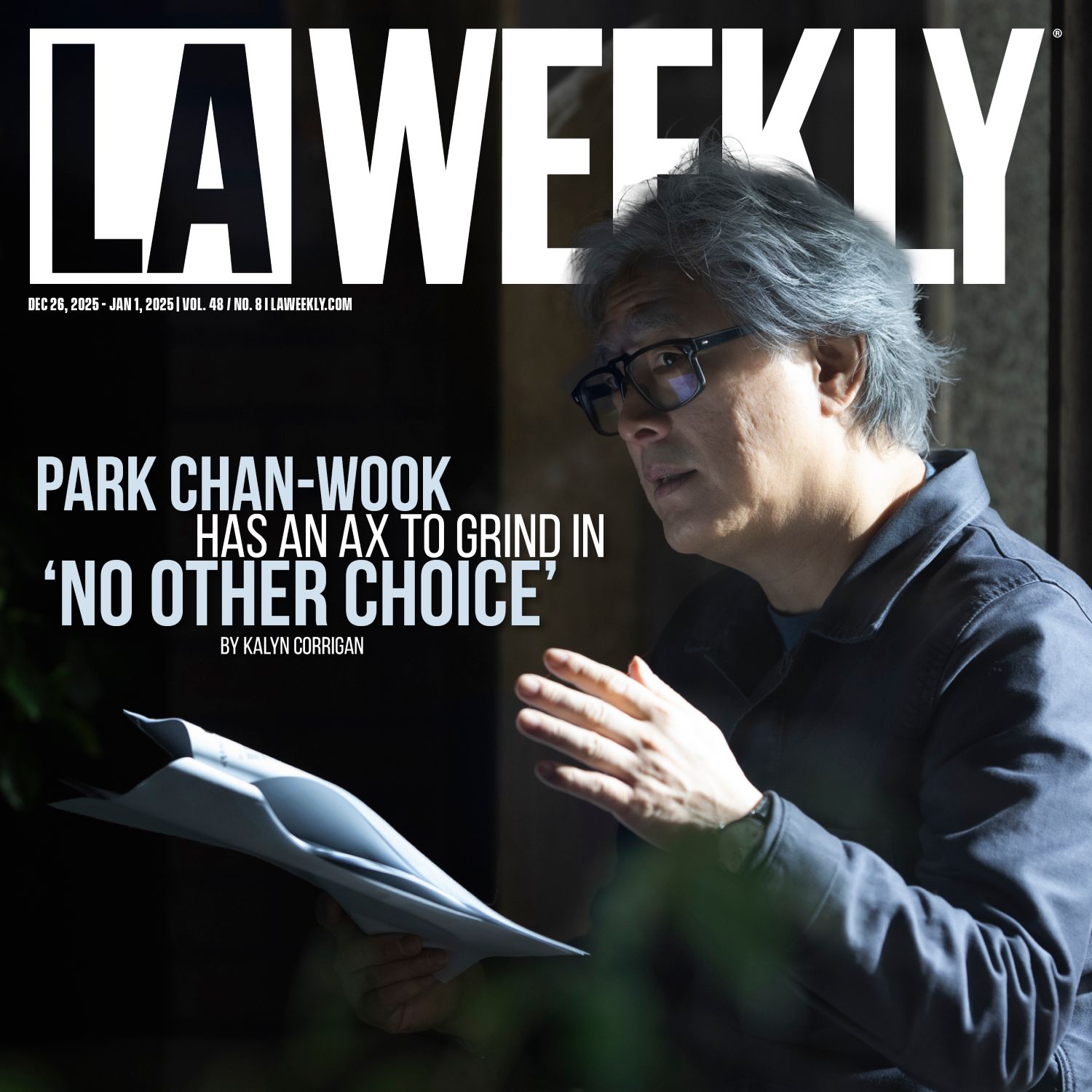
Park Chan-wook on the Dec. 25, 2025 cover of LA Weekly (Photo: Courtesy of NEON; cover design: Mark Stefanos)