
 Nia Bowers

Photo Courtesy: Pavlo Boychenko
What makes someone turn off Netflix and seek experiences in the real world? For Denis Pogorelko, Founder and Creative Director of Human Body, it starts with curiosity. His immersive space invites visitors to explore human anatomy through giant organ models, interactive installations, and virtual reality.
With more than a decade in entertainment, Pogorelko discusses turning spectacle into learning, launching during wartime, and taking his project abroad.
Denis, You Have Launched Projects Across Eastern Europe For More Than A Decade. How Have Visitors’ Expectations Changed?
Today, theme parks and exhibitions compete with one another and with Netflix, TikTok, YouTube, and video games. To persuade someone to leave home, you need to offer an experience worth going out for. Ten years ago, a beautiful exhibition or unusual installation could be enough. Today, visitors increasingly want an active role. They want to explore, experiment, and see how a space responds to them. This changed our approach. We began creating figures that move, respond to voices, and interact with visitors.
We recognized that the novelty of technology wears off quickly; what sticks with visitors is how the exhibit makes them feel, and what it helps them discover.
Which Projects Best Reflect That Approach?
Among our previous projects are Lantern Park and World of Giants, both developed around immersive installations and interactive experiences.
Lantern Park features large-scale light installations handcrafted using 10 kilometers of natural silk, 50,000 lanterns, and LED lighting. Its fantasy world of elves, fairies, and dragons has welcomed visitors across Ukraine, Turkey, and the Baltic states.
World of Giants features animatronic giants, trolls, and mythical creatures up to five meters tall. They move and speak in the voices of well-known personalities, so visitors interact with a character, not just a motionless figure on display.
Human Body was our next step, combining spectacle with an opportunity to learn about ourselves.
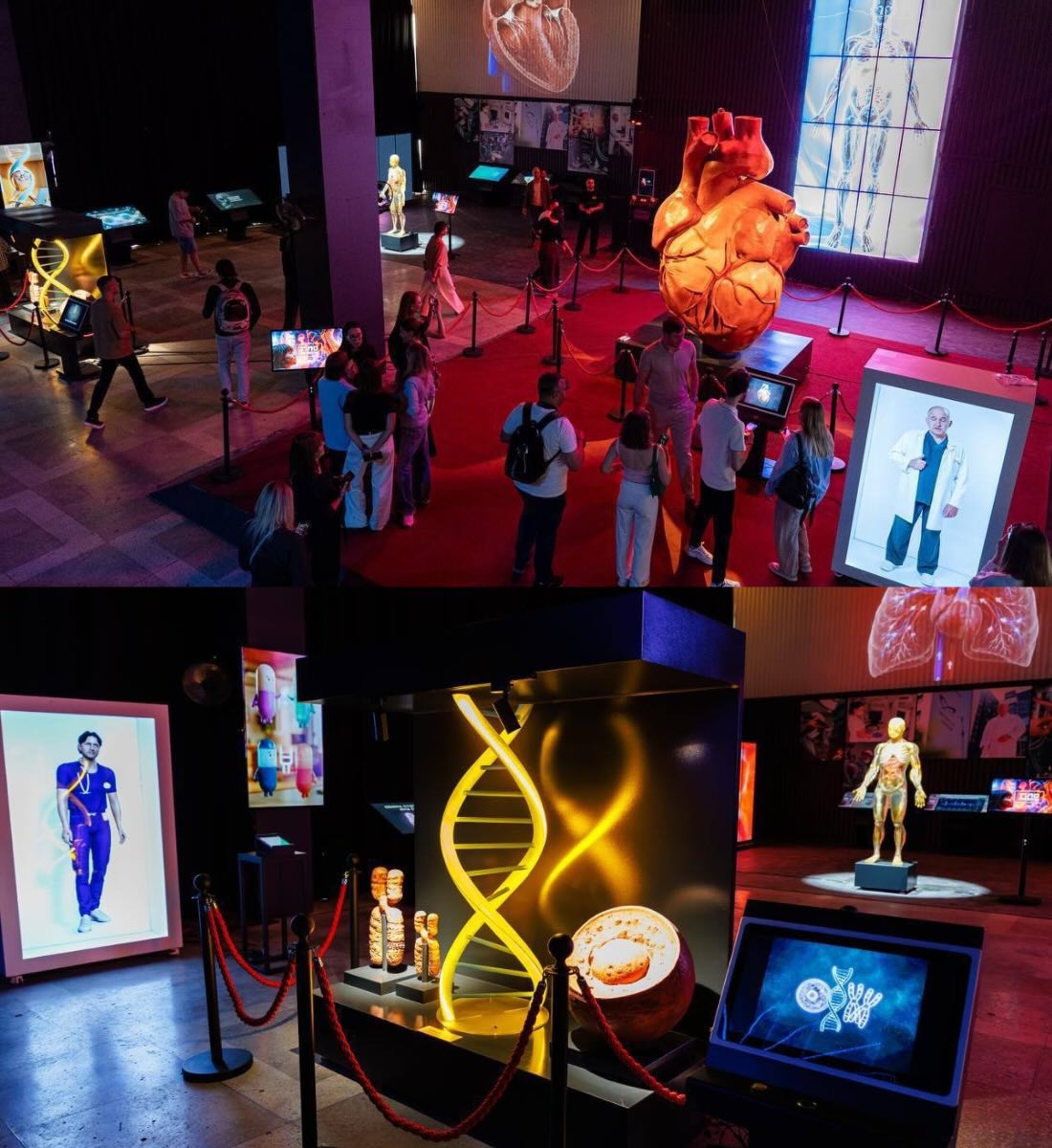
Photo Courtesy: Dmytro Yehorov
Tell Us More About Your New Project, Human Body. Why Did You Choose This Subject, And How Did You Turn It Into An Immersive Experience?
We started with a simple question: “What if visitors could walk through the human body from the inside?” The subject connects with everyone, but making it accessible and engaging was a creative challenge.
The result is a space spanning more than 5,000 square meters. Visitors encounter a three-meter-tall beating heart, breathing lungs, DNA tree, and interactive esophagus tunnel. Holograms, sound installations, and AI avatars of well-known personalities complement the experience.
Each zone includes sensory tests, logic games, and educational activities. The journey takes approximately 60–90 minutes and incorporates more than 100 pieces of interactive elements, including touchscreens, multimedia panels, and VR equipment.
One inspiration was CORPUS in the Netherlands. We were interested in its combination of a walk-through journey, technology, and educational content, which we adapted for our audience.
How Do You Keep Spectacle From Overshadowing Education?
For us, “edutainment” means using curiosity to help people understand a subject.
A giant beating heart attracts attention with its scale. The next step is explaining how it works and letting visitors explore for themselves. The information must be accessible for visitors without a medical background, while remaining scientifically accurate. To achieve this, our creative team works alongside medical and scientific specialists, including experts from medical institutes and universities.
The “wow” factor is only the beginning. If visitors leave asking new questions about their bodies, we have extended their curiosity beyond the exhibition.
How Are The Exhibits Created, And What Does A Project Like This Cost?
This is our most ambitious project in ten years, with a budget of approximately $1 million. The largest expense is producing interactive animatronic figures that move, respond to visitors, and withstand continuous use. The giant beating heart and oversized head have been the most expensive installations.
We begin with digital modeling, then create physical components using methods like 3D printing. One of the hardest stages is bringing an exhibit to life by coordinating mechanics, sensors, sound, and software.
Visitors see an organ moving or an installation responding to their voice. Behind that moment is the work of specialists across several disciplines. Most large exhibits are built abroad by international studios and manufacturers.

Photo Courtesy: Pavlo Boychenko
Why Launch In Ukraine During The War?
The war has shown us how strong the public’s need for positive emotions remains. Spending time with loved ones, laughing, being surprised, and learning together can offer a brief break from our daily worries.
From outside Ukraine, visiting an entertainment space during wartime may seem difficult to understand, but life continues, and people need moments that give them the strength to keep going. This is why we continue our work.
Wartime conditions also directly affect operations. We suspend activities during air raid alerts and account for those interruptions in visitor arrangements and planning. Despite these limitations, we are seeing a demand for experiences that people can share with their loved ones.
What Comes Next For Human Body?
We plan to take Human Body on an international tour, including the United States, and we are working on adapting it for American audiences.
American visitors are familiar with large-scale entertainment, which presents an exciting creative challenge. We hope to engage them through spectacle, interactive technology, and a relevant subject for everyone.
Adapting the project means considering how local audiences will connect with its content, while preserving the curiosity at its center. Technology is a tool; the experience depends on what visitors discover through it.
Our goal remains the same: for visitors to leave with vivid memories and new knowledge about themselves. This combination is where I see Human Body’s international potential.