
 Will Jones
After four decades on sets in Europe and the United States, and three seasons coaching contestants on Scandinavian television, the French session stylist has a clear view of how the trade is learned.
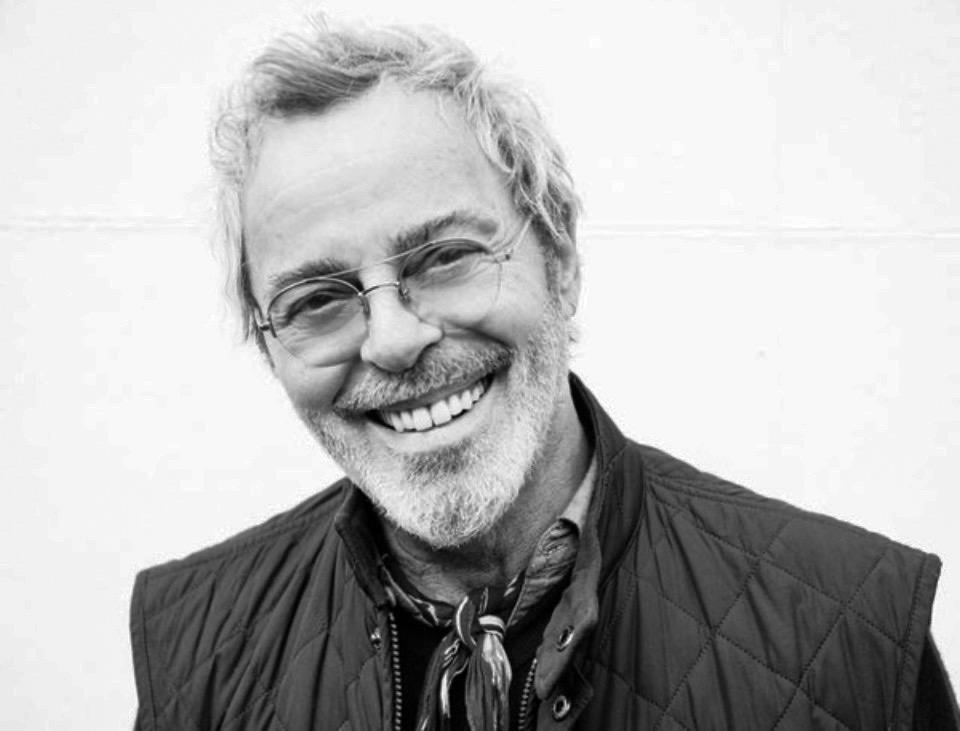
Hervé Claude Bernard gives young hairstylists advice that asks for patience at the start of a career. Take the role that teaches you the most, he tells them, even when another one pays more reliably. “It’s not a job, it’s an apprenticeship, so choose excellence over security,” he said in a 2022 interview with Jones Road.
He has the career to back it. Bernard has worked as a session hairstylist since the 1980s, first in Paris, Milan, Munich, and London, and since 1996 in New York and Los Angeles, on magazines, advertising, runway shows, film and television, and music tours. His advice to the stylists coming up behind him follows the route he took himself.
How He Learned
Bernard studied at La Sorbonne University in Paris while attending a special effects makeup school. When he graduated, he took the junior route, working as an assistant on film productions, before deciding that fashion suited him better.
He moved across to fashion and spent the 1980s and 1990s working on shoots in four European fashion capitals. The pattern of those years, starting under someone else’s direction and earning the next booking from the last one, is the model he now recommends.
His instruction to newcomers is specific. Assist people whose work you admire, he tells them, and stay eager to learn throughout your career, long after the assisting years are over.
He has passed knowledge on in print as well. During his European years, he wrote and edited a beauty column for the German edition of L’Officiel, the one part of his career spent explaining the work to readers outside the studio.
Talent and Training
Bernard is direct about where ability comes from. “Talent is nature AND nurture!” he said. The nurture, in his telling, comes from the years of assisting.
He also tells them to trust what they have. Asked what he would say to his younger self, he answered, “Believe in the talent you know you have. Take creative risks.” Training and confidence, in his account, belong together, and a young stylist needs both.
Coaching on Camera
Bernard’s most public mentoring role came on television. Between 2005 and 2006, the Scandinavian edition of the Top Model franchise ran for three seasons on Viasat’s TV3 in Denmark, Norway, and Sweden, with contestants from all three countries competing together for one title. The show was the Nordic version of Tyra Banks’ America’s Next Top Model.
The first season was set in New York in 2005, the second in Paris, and the third in Milan, with Georgianna Robertson hosting the first and Cynthia Garrett the second and third.
Bernard held a leading role across all three seasons as a coach to the models and as a judge on the panel. The contestants were young people at the very start of their careers, and his job was to coach them through the work and then assess it, three seasons running, in front of audiences in three countries. The show aired in Denmark, Norway, and Sweden at the same time, and the second season, shot in Paris, shows him at work with the contestants.
What He Teaches About Hair
His technical advice is short and consistent. “Whether it’s up or down, long or short, don’t work against your hair’s nature!” he said. He expands on it as a working principle. “Nature, in most cases, does things well, and letting your hair be as close to its own nature as possible will end up fitting you best.”
He learned that on his own head first. His hair grew half straight and half curly, and he would spend around 20 minutes blow-drying it into order, until he cut it short and switched to caps and hats. “My biggest challenge used to be my unruly hair!” he said. Bernard prefers styling that is quick and instinctive. He was drawn to fashion in the first place by the chance to make real women look beautiful, with looks that still work once they leave the set.
He is also open about his tools. Asked for his five essentials, he named products from five companies: Jones Road’s Universal Hair Balm, Davines OI Oil, Oribe Imperméable Anti-Humidity Spray, L’Oréal Elnett Satin Extra Strong Hold, and Moroccan Oil Root Boost. Any assistant starting out could build the same kit.
The Security That Comes Later
The advice to choose excellence over security has a second half that his own career shows. Bernard’s agency in New York has represented him since 1996, and retailers including Saks, Macy’s, Bloomingdale’s, and Banana Republic kept him on their shoots for years. Bobbi Brown has booked him for more than a decade. The security came, and it came from the quality of the work and the relationships it built.
He had a model for that himself. Bernard has named Brown as his own inspiration, and admires that she built her business while holding to her principles. Her example, he said, showed him that “one can be successful and have authentic principles!” He took that lesson from someone further along in the trade, which is the relationship he recommends to anyone starting out.
That is the order he wants young stylists to understand. Learn under the best people available, take creative risks, and treat every job as part of the apprenticeship. Steady clients follow from a reputation, and a reputation follows from the work.
What Cool Means
Asked once what cool means, Bernard answered with a description of experience, and of knowing yourself well enough to know what suits you. “To me it means real and authentic, which entails some maturity, some experience of the human condition, combined with a childlike curiosity and playfulness.” The style icon he named was the French model and music producer Caroline de Maigret.
It is the same pairing he asks of young stylists: the experience that comes from years of assisting and the curiosity to keep learning after them.