
 Will Jones
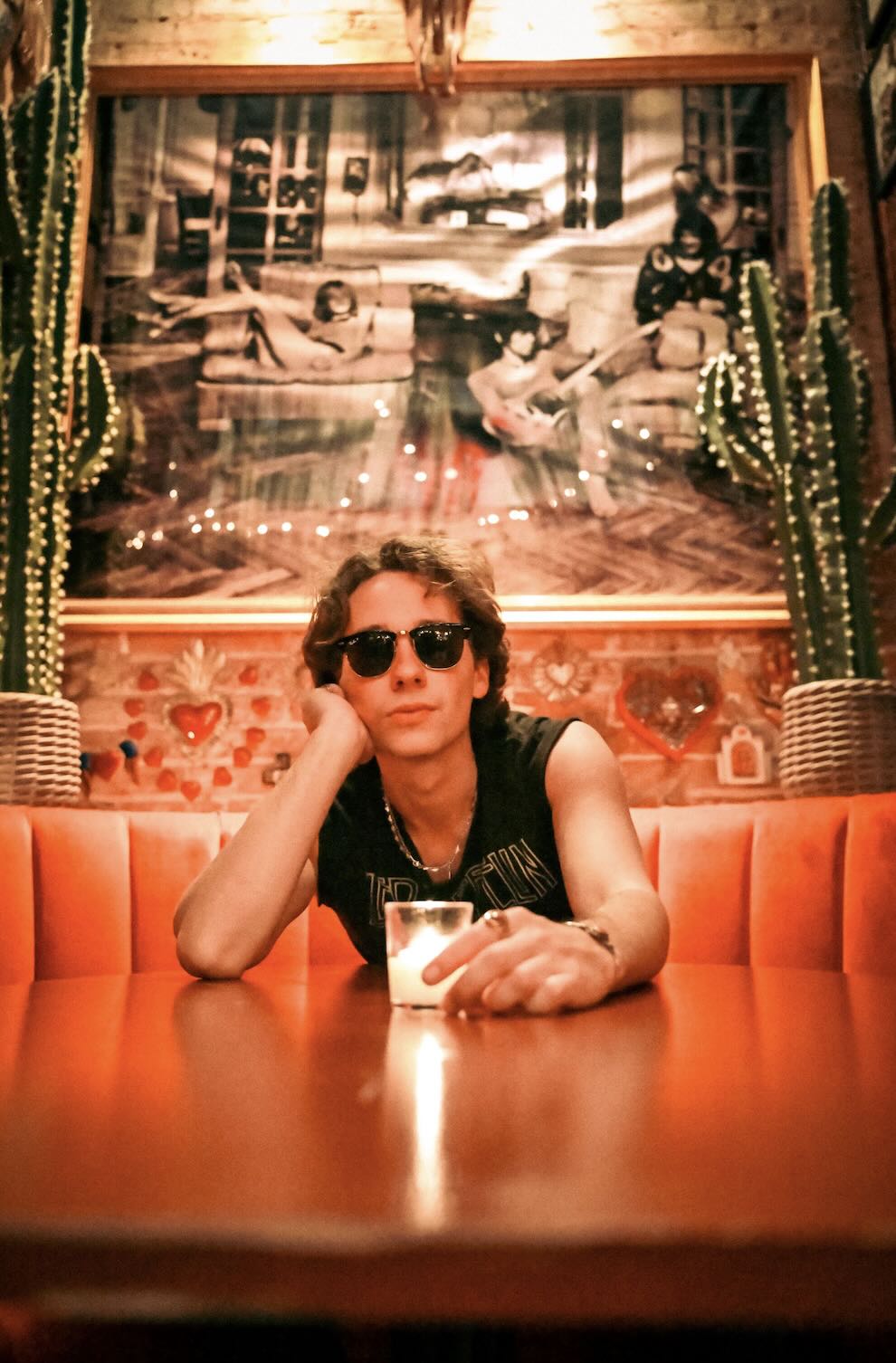
Raised on skateboarding, Zeppelin and the beautiful chaos of live music, the 25-year-old Illinois-born singer and guitarist is part of a new generation rejecting the idea that rock’s best days are behind it. His mission is less about nostalgia than something far more personal: making people feel alive.
There is something wonderfully out of step with the times about James Bruner.
In an era when music can be made on a laptop, careers launched through a 15-second video and performances polished to near perfection, the 25-year-old singer and guitarist from Springfield, Illinois, is chasing something considerably less controlled.
Sweat. Volume. Distortion. A guitar turned up loud enough to feel in your chest. The kind of live performance where things might go gloriously wrong.
<iframe data-testid=”embed-iframe” style=”border-radius:12px” src=”https://open.spotify.com/embed/album/1KYG3OgTGjObvtW2cYd6gU?utm_source=generator&si=3112e1f73a9b405d” width=”100%” height=”352″ frameBorder=”0″ allowfullscreen=”” allow=”autoplay; clipboard-write; encrypted-media; fullscreen; picture-in-picture” loading=”lazy”></iframe>
And, perhaps most importantly, the kind of connection that happens when an audience stops looking at its phones and starts losing its mind.
Bruner is part of a generation of young musicians who grew up being told, directly or indirectly, that rock and roll belonged to another era. That the great frontmen had already come and gone. That guitars were no longer the center of popular culture.
He never really bought it.
Instead, he found himself drawn to the artists who seemed larger than life: Led Zeppelin, Black Sabbath, David Bowie, Iggy Pop, Lenny Kravitz and Jet. Musicians who weren’t simply performing songs but creating entire worlds around them.
For Bruner, rock and roll wasn’t something to study in retrospect.
It was something he wanted to live.
And with his debut album, Can’t Keep Wanting You, and years of relentless touring behind him, he’s beginning to build a career around that conviction.
A Kid From Illinois Who Found Himself in the Noise
Bruner didn’t grow up in the center of the music industry.
He grew up in Springfield, Illinois, where his introduction to rock and roll came through an unlikely source: skateboarding.
As a teenager, he spent hours watching skate videos and absorbing their soundtracks, discovering a musical universe that felt radically different from what many of his classmates were listening to.
There was Black Sabbath. There was Bowie. There was the unmistakable swagger of classic rock and the confrontational energy of punk.
It wasn’t just the sound that appealed to him.
It was the attitude.
Skateboarding and rock and roll shared a certain philosophy: individuality mattered. Taking risks mattered. Falling down was part of learning how to do something extraordinary.
By 15, Bruner had picked up a guitar.
He had already been singing since childhood, but the instrument opened up another possibility. He wasn’t interested in becoming a vocalist who simply stood in front of a band.
He wanted to be the whole thing: the singer, the guitarist, the songwriter, the frontman.
He wanted the freedom to make as much noise as he needed.
That desire eventually took him out of Illinois and into Nashville, where he began developing his own songs and finding musicians who shared his instincts.
He had no interest in following the expected route simply because it was the sensible one.
For Bruner, the prospect of spending his life wondering what might have happened if he’d pursued music was more frightening than the uncertainty of actually doing it.
The Art of Losing Control
Watch Bruner onstage and it becomes immediately clear that restraint isn’t his defining characteristic.
He moves with the restless energy of someone who seems physically incapable of standing still. His voice can shift from a melodic, almost vulnerable delivery into a full-throated scream. His guitar playing carries the influence of the musicians who first captured his imagination, but his performances have a rawness that belongs to the present.
There are echoes of Mick Jagger’s swagger, Robert Plant’s vocal abandon and the unfiltered electricity of Jet.
But Bruner’s appeal isn’t simply that he reminds audiences of someone else.
It’s that he seems to believe, with every fiber of his being, that a rock show should be an experience rather than a presentation.
His wardrobe can be as expressive as his music: velvet pants, high heels, makeup and whatever else feels right for the occasion. Some of those pieces have even come from his mother’s clothing collection.
It’s playful, flamboyant and entirely uninterested in conventional ideas about how a young male rock musician is supposed to look.
That sense of freedom is central to his appeal.
In a music industry that often rewards predictability, Bruner seems happiest when he’s pushing himself somewhere uncomfortable.
And over the past several years, he’s had plenty of opportunities to test that philosophy.
He has toured across the United States, the United Kingdom and Europe, sharing stages with The Struts, Barns Courtney, Orianthi, Those Damn Crows and other artists who understand the importance of a live rock audience.
He has performed at venues including London’s Roundhouse, Paris’ Bataclan and New York’s Irving Plaza.
Those experiences have helped shape an artist who understands that a great performance cannot always be rehearsed into existence.
Sometimes you have to trust the moment.
Sometimes you have to let go.
Why Rock and Roll Still Matters
It’s tempting to describe Bruner as part of a rock revival.
But that phrase suggests the music disappeared somewhere along the way.
It didn’t.
What changed was the industry’s relationship with it.
Rock stopped being the automatic center of youth culture. Pop, hip-hop and electronic music reshaped the charts. Social media transformed the way artists found audiences. And for a generation raised on streaming platforms, musical identities became more fluid than ever.
Bruner grew up inside that world.
He isn’t rejecting contemporary music because he doesn’t understand it. He’s choosing rock because of what it gives him that he hasn’t found anywhere else.
The physicality. The rebellion. The permission to be excessive, emotional, loud, strange and completely yourself.
For a kid growing up in Illinois who didn’t necessarily identify with what everyone around him was listening to, those qualities were more than entertainment.
They were a form of belonging.
That experience sits at the heart of his music today.
Beneath the guitar riffs, the theatrical performances and the swagger is a young songwriter who remembers what it felt like to find refuge in someone else’s songs.
And he wants to give that feeling back.
There is something particularly relevant about that ambition now, when so much of modern life is experienced through screens and algorithms.
Rock and roll, at its best, is stubbornly physical.
It demands a room full of people.
It asks them to feel something together.
And it reminds them that not every meaningful experience can be reduced to a number on a streaming platform.
A Record About Wanting More
Bruner’s debut album, Can’t Keep Wanting You, released in September 2026, is both an introduction to the artist he has become and a tribute to the music that made him.
Created with producer Shane Weisman, the record draws from the muscular guitar work of classic rock, the melodic immediacy of pop and the theatrical ambition of artists who never saw a reason to choose between the two.
There is desire here, and frustration, and vulnerability.
There is also a young musician figuring out what it means to want something badly enough to build your life around it.
On “It’s Too Late,” Bruner pushes his voice into a higher register, exploring a falsetto that reveals another dimension of his musical personality.
Elsewhere, the album moves between explosive, guitar-driven arrangements and more emotionally exposed moments.
Songs like “Take It or Leave It” and “Getaway” explore the complicated relationship between life on the road and the emotional world waiting beyond it.
For Bruner, touring has become more than a professional obligation.
It’s where he feels most at home.
There is an inherent contradiction in that life: the constant movement, the uncertainty, the exhaustion, the emotional comedown when a show ends and the crowd disappears.
But there is also the extraordinary privilege of spending your nights doing the thing you once dreamed about.
Bruner understands both sides.
And that tension gives his songwriting a humanity that can sometimes be obscured by the sheer force of his performances.
The music is loud.
The feelings underneath it are real.
The Next Generation Doesn’t Need Permission
Perhaps the most interesting thing about Bruner is that he doesn’t seem particularly concerned with whether rock and roll is fashionable.
He’s not waiting for an industry executive to announce that guitars are back.
He’s already playing them.
He has built his career the old-fashioned way, through songwriting, touring, opening slots, long drives, small rooms and the gradual accumulation of an audience that believes in what he’s doing.
His earlier single “Big Shot” surpassed half a million Spotify streams, and his music has earned attention from rock institutions including Kerrang!, Classic Rock and Planet Rock Radio.
But those accomplishments are less interesting than the larger picture.
Bruner belongs to a generation that has access to virtually every era of recorded music at once. For him, a song from 1971 isn’t necessarily any less immediate than something released yesterday.
The past isn’t a museum.
It’s a collection of possibilities.
And that may be why his music feels less like an attempt to recreate classic rock than an effort to continue a conversation that never really ended.
He takes the elements that moved him as a teenager and puts them through the experience of being a young man in 2026.
The result is music that owes an obvious debt to its predecessors without being defined entirely by them.
He isn’t trying to become Robert Plant or Mick Jagger.
He’s trying to discover what being James Bruner can mean.
The Beautiful Risk of Being Yourself
There is a moment in every young artist’s career when admiration has to give way to identity.
It’s no longer enough to love the musicians who inspired you.
Eventually, you have to become someone worth listening to in your own right.
Bruner is living through that transition.
He has the influences. He has the ambition. He has the live experience. And with his debut album, he has begun defining the musical world he wants to occupy.
What remains is the unpredictable part.
The audiences he hasn’t met. The songs he hasn’t written. The stages he hasn’t walked onto yet.
He has spoken about wanting bigger shows, more touring and more opportunities to create. But there is something refreshing about the simplicity of that ambition.
He wants to make music.
He wants to play it loudly.
And he wants the people listening to feel the same freedom he felt when he first discovered rock and roll through a skateboard video in Illinois.
Maybe that’s what the next chapter of rock music actually looks like.
Not a calculated revival. Not a marketing campaign built around nostalgia. Not another debate about whether guitars still matter.
Just a young man walking onto a stage, plugging in his guitar and believing that what happens next could change somebody’s life.
Because once upon a time, somebody else’s music changed his.
And he’s been chasing that feeling ever since.