
 Mark Stefanos





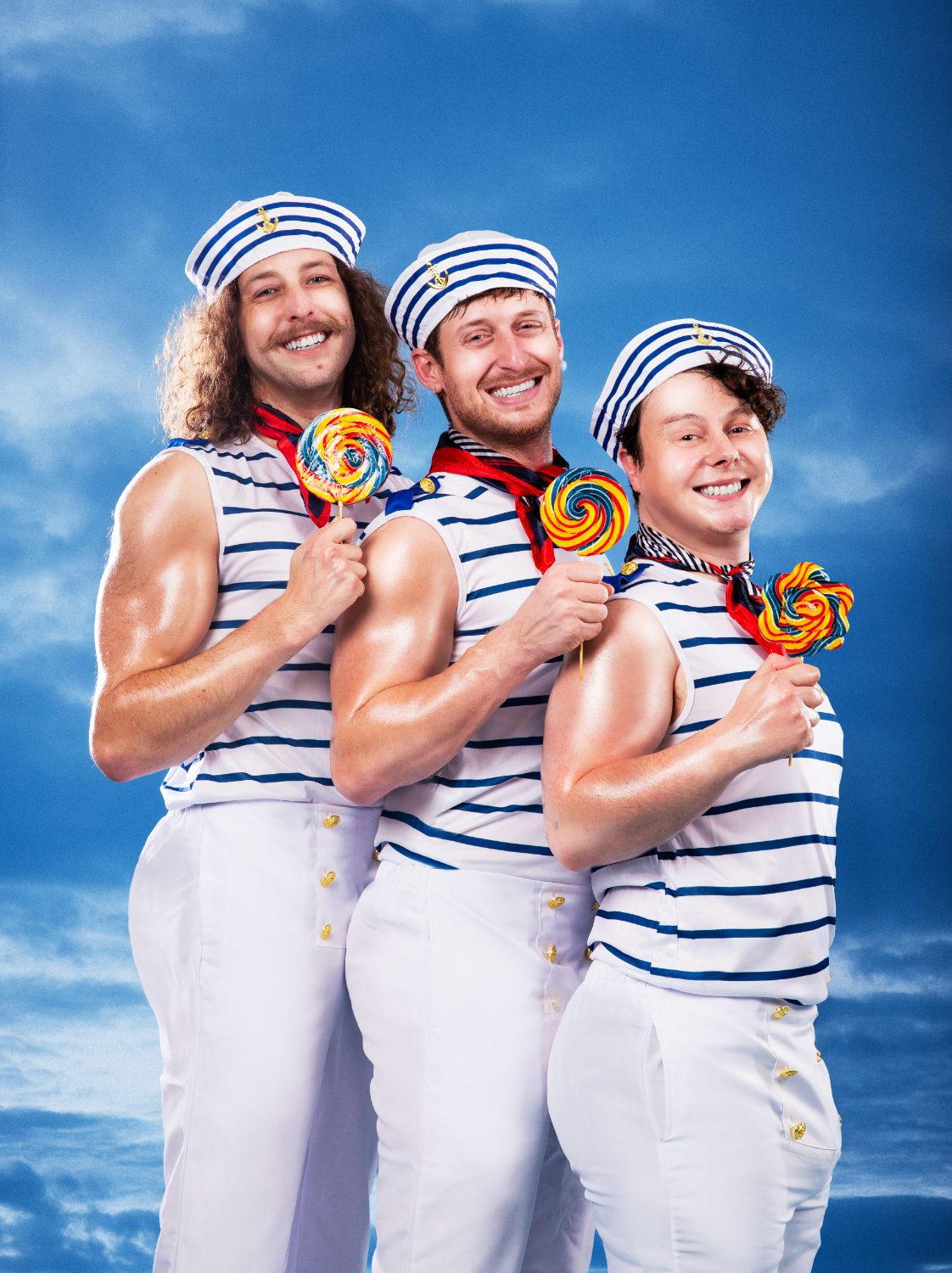

The night Zach Zucker delivered the final cut of Stamptown to Netflix, he was standing on a street in Étampes, roughly an hour south of Paris. The French town is where he learned clowning and where the company eventually found its name — étampe, a stamp. Neil Patrick Harris and his husband were finishing a two-week course at École Philippe Gaulier nearby, and he was there with Jonny Woolley and Dylan Woodley, his creative partners of more than 10 years.
“That was the start of one of the best months of my life,” he told me earlier this week.
The special premiered August 25. It was taped over three nights at the Montalbán in Hollywood during Netflix Is a Joke Fest, with Rachel Lee Goldenberg directing and Harris appearing as a guest. It’s hilarious, daring, horny and at times both profound and deviant levels of stupid. It features a variety of acts including some of the biggest names in clown and comedy, and if it feels like it’s about four hours of comedy jammed into 59 minutes, it’s because it is — two-plus hours per night dramatically edited down.
The debut arrived as the show turned ten. In an interview for Netflix is a Joke Fest earlier this year, both Robbie Praw, head of standup and comedy formats at Netflix, and Tracey Pakosta, who heads scripted comedy, singled out Stamptown as the festival must-see out of the hundreds of A-list acts.
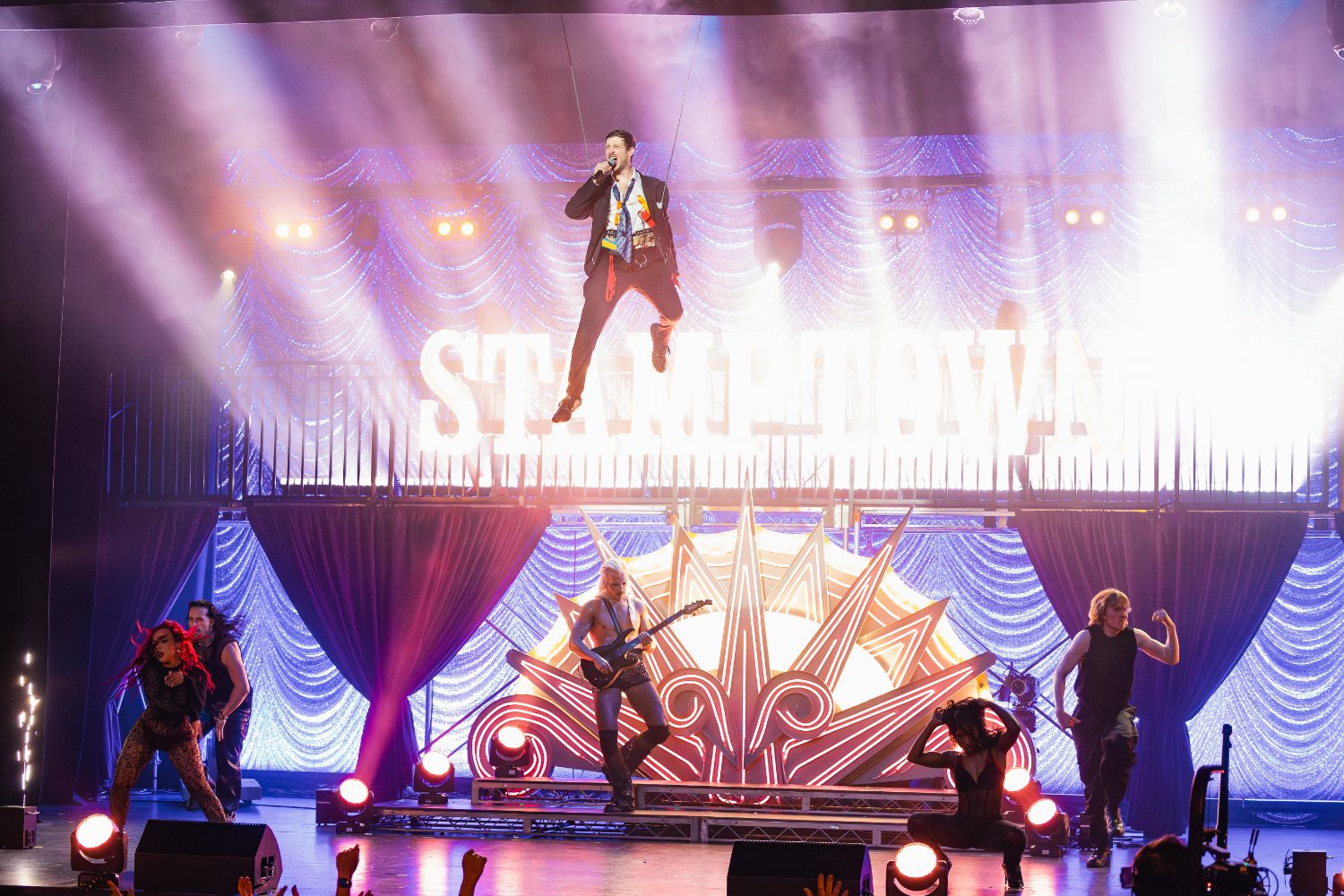
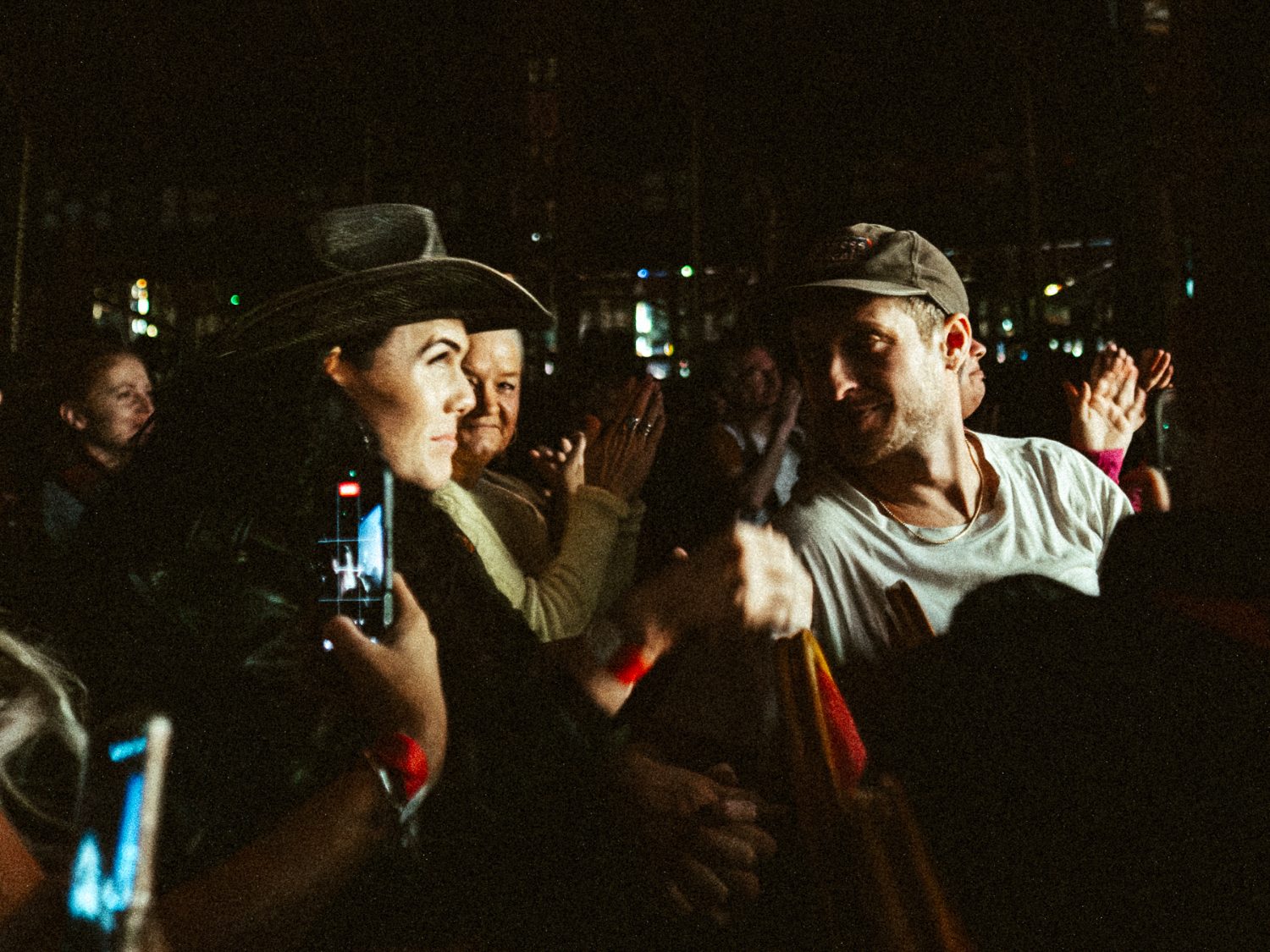
“Stamptown” live taping in Hollywood. (Photo: Van Corona @vancorona)
Zucker had arrived in Los Angeles at 18 with no degree and a conviction the city needed to see him. The early work was unpaid and unglamorous: internships at UCB, iO and Sacha Baron Cohen’s Four By Two Films, toilets cleaned for class time, stages painted.
“I was an unfunny 18-to-20-year-old, terrible actor, improviser who no one wanted to work with,” he says. “And at Gaulier, no one wanted to work with me either, and Viggo (Venn, a longtime collaborator featured in the special) was the only other person going to Edinburgh. So it was me and him.”
Zucker now has four Edinburgh Comedy Award nominations as a producer. He won the Comedian’s Comedian Award at the 2020 Chortle Awards, was a Vulture “Top Comics You Should and Will Know” in 2023, and his “Jack Tucker” show was a New York Times Critic’s Pick in 2024. In April, the filmed “Jack Tucker” solo hour went up for free on YouTube. With Zach & Viggo, he’s picked up high honors at Brighton, Adelaide, and Edinburgh Fringe.
I spoke with Zucker, Woolley and Woodley over video from Edinburgh two days after their 10th Fringe run ended. They were gathered around a coffee table under a slight haze of smoke, spinning the laptop around as they constantly jumped into one another’s sentences. The conversation seemed to derail every four minutes or so.
Zucker eventually calculated the ratio himself: “You let us fuck around for, I’d say 8% of it, and then you get 92% honesty.” The ratio matters because the previous time a national publication profiled him, he says, about 8% is what made it into print.
Woolley and Woodley met in high school because their surnames put their lockers side by side. Woolley directs Zucker’s live productions and performs Stamptown’s sound effects by hand, treating them almost like another instrument. Woodley handles the company’s editing and animation and eventually moved onto the stage himself. For much of their adult lives, the three have lived together on the road, sharing floors, couches and beds while moving through other countries.
LA Weekly: What did the first show look like?
Woolley: We did it in the basement of a gay bar in Edinburgh, CC Blooms. At first we were performing to like zero to three people a day. The guys were flyering in their suits for hours. And there were credit card shills on the street who were trying to get people to sign up for credit cards. Everyone’s crossing the street to get away from them. These guys are clowning in the fucking crosswalk.
Zucker: Viggo’s getting fake hit by cars.
Woolley: Then the burlesque community put us on this variety show at the Tron Kirk, which is a converted church venue. And there we were able to perform to like 250 people a night. And then the show started filling up.
LA Weekly: Can you explain the division of labor between the three of you?
Zucker: It all blends. We all do a little bit of everything. We have areas of expertise, but that doesn’t quite encapsulate it. Jonny is a great graphic designer. Dylan is an amazing director and animator.
Woolley: Dylan edits everything. I’ve directed all of Zach’s live shows. Zach creates these things and allows us to build off of them. And we all just riff together and do good shit.
Zucker: And if it makes us all laugh, usually we know there’s a good chance it’s pretty funny.

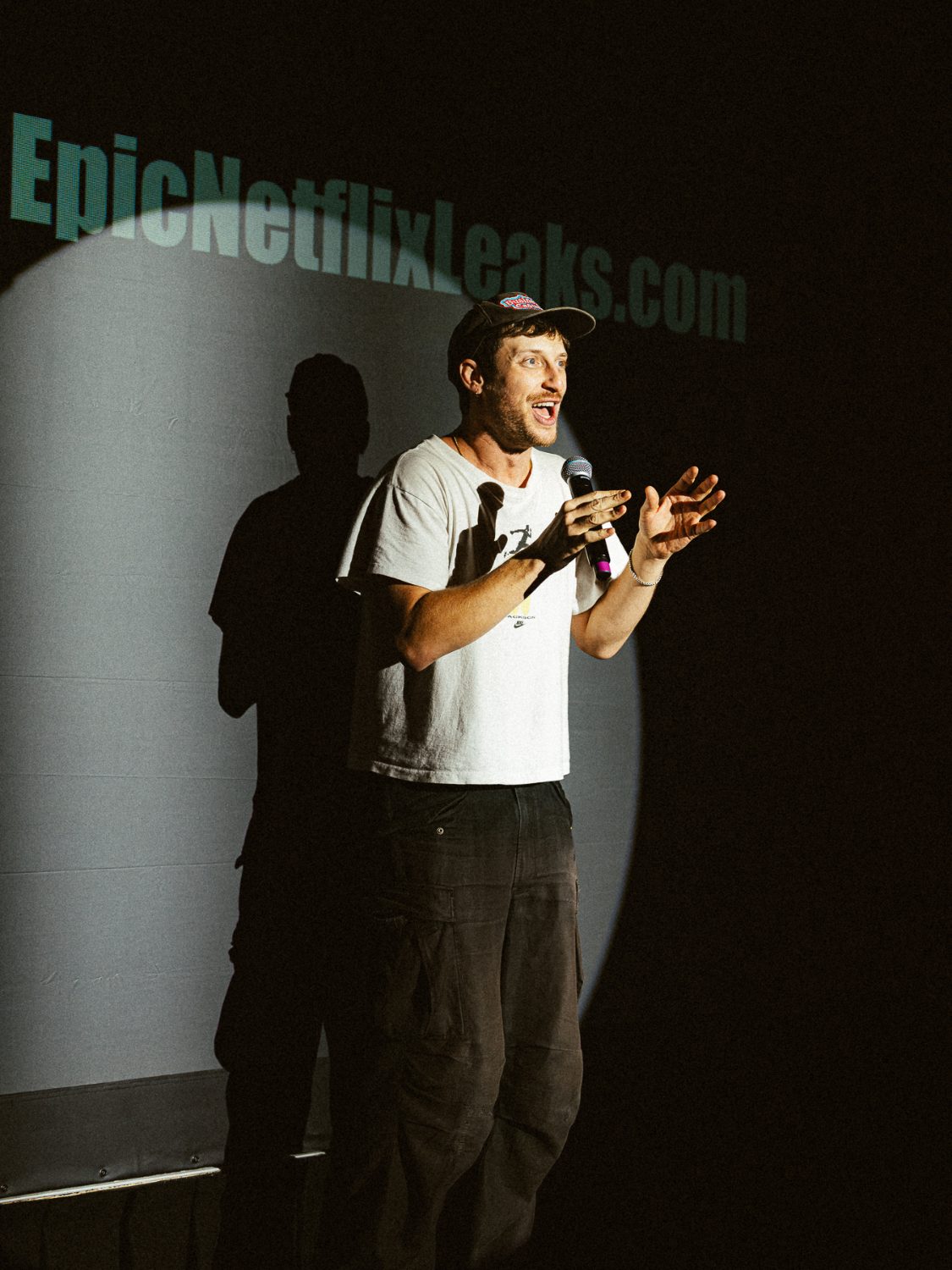
“Stamptown” live taping in Hollywood. (Photo: Van Corona @vancorona)
Another thing they have constructed is a kind of ladder. Zucker describes Stamptown as having a farm system, with Miles Calderon providing perhaps the clearest example. Calderon first appeared as an extra in one of Woodley’s animations.
Woolley: He worked his way up the ranks from starting off as a stagehand. We get him to do backflips as a stagehand on the show, which would blow people’s minds. He broke his nose falling down some stairs at the Elysian, and got kicked in the nuts on stage. In the purple morph suit — can’t see anything with the morph suit over his eyes, falls down the stairs, broke his nose.
Zucker: His mom was there.
Woolley: This Fringe, we got him to do his main clown character, Mr. Cardboard. I’ve never seen such an instant hit in years. The audience just as a whole agrees, okay, I don’t know anything about this guy, but I love him.
Zucker: He sold out his full run. He got extra shows, was moved to a bigger space. And then I got him a run at Soho Theatre. I’m not taking any money from him. I just love him and I support him. It’s as fulfilling to me to do a good show as it is to see my friends succeed.
LA Weekly: Where does that come from?
Zucker: The people above us — not all of them, but a few of them — shut the door on us as we were trying to come in. And it was what we learned from those people, to never do that to the people coming after us. No need to shut the door on you on the way out. Keep it open. Bring your friends up.
Woodley is perhaps the strongest illustration of that philosophy sitting beside Zucker on the couch. Before becoming a performer, he was an animator who had never appeared onstage. Eight years ago, he stepped in for Venn with no notice.
Zucker: He went on for 108 minutes, didn’t even flub a single joke the entire night. And now Dylan is a roller-skating aerialist saxophonist circus performer. He’s the only roller-skating saxophonist aerialist I’ve ever heard of in my life. That’s my best friend. I got to watch this shit happen.

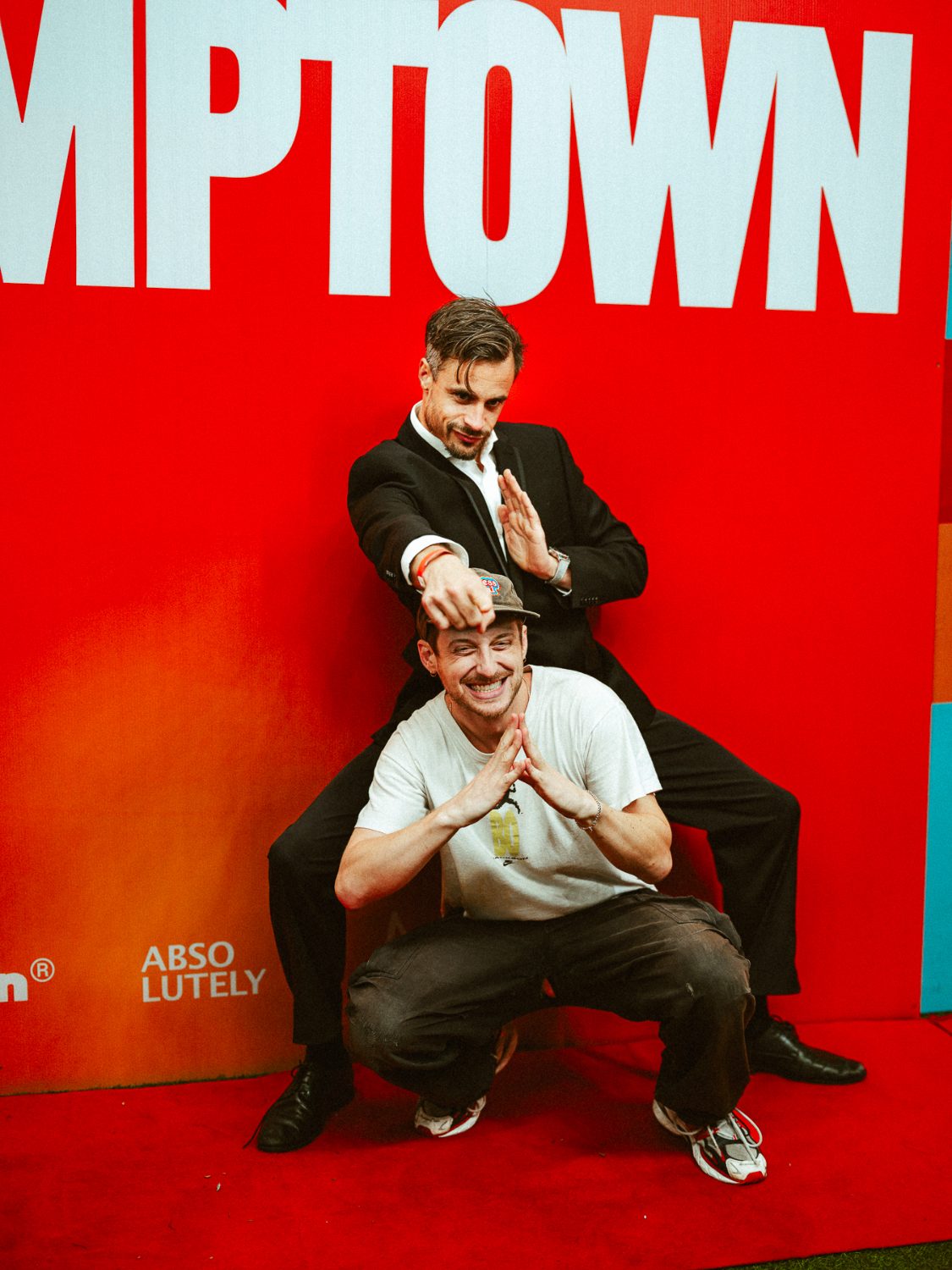
Dylan Woodley performs at the “Stamptown” live taping in Hollywood. (Photo: Van Corona @vancorona)
Chad Damiani, known widely as LA’s Clown Boss, has insight on how the machine actually works. His route into clowning began in professional wrestling as a writer and announcer, before a screenwriting career where scripts were sold but movies were never made. After many long years in the improv scene, he found clown and became one of the founding members of The Murge, an ensemble led by former Cirque du Soleil performer John Gilkey.
He now runs Clown Zoo and hosts Stand Up and Clown at the Elysian, where he live-directs working stand-ups through their first attempts at clowning. He hosts a popular podcast and he’s the LA teacher a lot of younger clowns meet first.
He first encountered Zucker shortly after the younger performer arrived in LA
“He was just like this child that was kind of doing shows with us. It was Zach and Carl Tart [who’s now an SNL writer, recent star of NBC’s Grand Crew, and longtime improv virtuoso] — a couple of really charismatic, fearless young people who were amongst the adults with seeming absolute ease. And I was like, oh, that would not have been me.”
Then, around the same period in the mid-2010s, each experienced an event that redirected his relationship to performance.
“He went to Gaulier, met Viggo, got introduced to clown,” Damiani says. “And I went through a very different thing, where my partner got sick and passed away. They’re so different, it’s crazy. But they’re connected in the sense that both of us never could see comedy the same way again. He went and saw all the freedom and possibility. And for me, I went through this grief and this tragic thing — but that also made me realize that I wasn’t really connecting in the way that I wanted in comedy.”
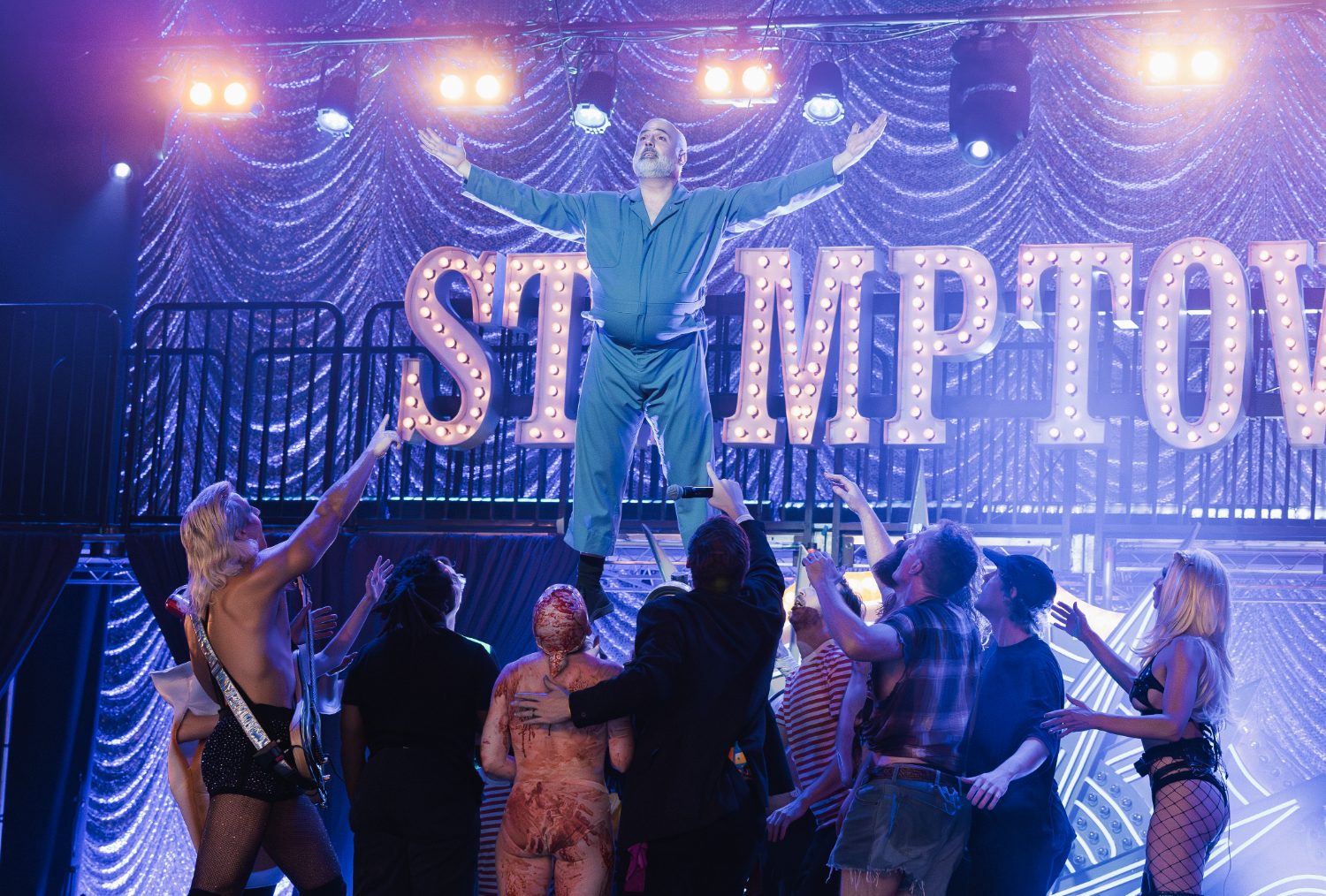
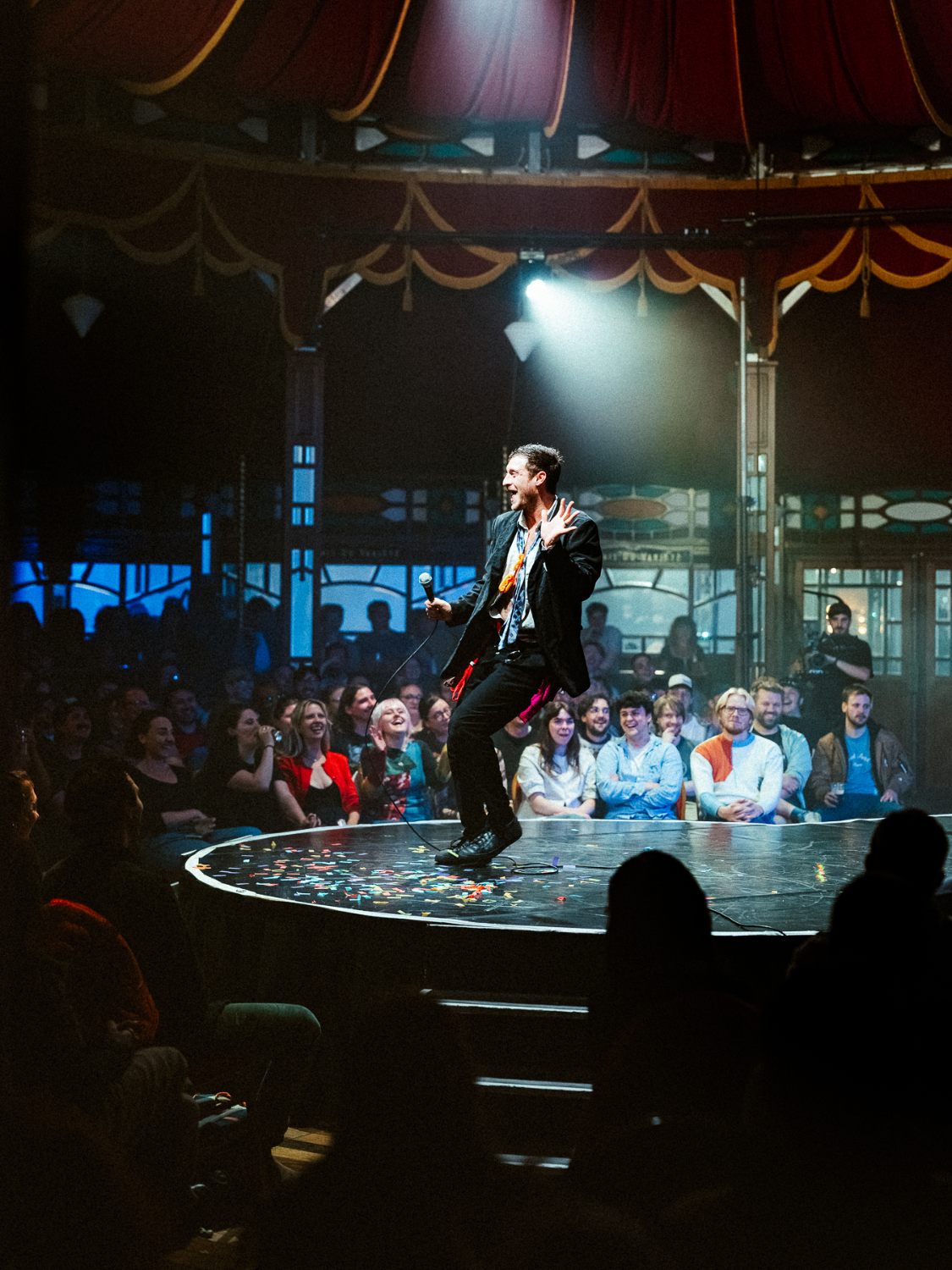
Chad Damiani performs at the “Stamptown” live taping in Hollywood. (Photo: Van Corona @vancorona)
Damiani discovered the Idiot Workshop, John Gilkey’s school, at a point when very few people knew about it. “Gilkey was the only teacher and it felt like Fight Club,” he says. “It felt very much like this was a thing no one knew about.”
Then Zucker returned from France. “It wasn’t that no one went to Gaulier before Zach. Of course people did,” Damiani says. “But I can’t think of anyone in my circle who came back being like, I’ve seen the light. People would go on a lark, or it would just be part of their journey. But Zach came back and was like, oh — I think I know what we all need to do.”
Damiani has been involved with Stamptown nearly from the beginning. By his estimate, he has originated more one-off characters for the show than anyone else. He worked as both a producer and writer on the Netflix special. The character he ultimately performed in the special came together because the Montalbán’s balcony made his usual character impossible to stage. A Billie Eilish song playing during the drive home supplied the next piece of the idea: a janitor who spends an entire show waiting for his opportunity to perform. And when he does, it’s an incredibly beautiful crowd pleaser. Damiani eventually called Zucker with the concept.
But there was an addendum: “I was like, oh — we have to kill me,” he says. “That’s a beautiful idea to have a beautiful ending. But we have to kill me. That’s what makes it a Stamptown bit.”
Onstage, Stamptown can resemble total anarchy. Behind the curtain, its operation is more like a football game where Zucker and the performers call plays in backstage huddles that can last only 13 seconds.

“Stamptown” in Edinburgh (Photo: Jacinta Oaten)
“I feel like an offensive coordinator, like a quarterback backstage all the time,” Zucker says. “Okay, Ruben, once this act’s over, I’m going to give it up for Jisita. As soon as I say the J in Jisita, you’re up the steps, dropping the stool. You leave, Simon, you come up and pick it up. Dylan comes crashing in. Stefan scares someone in the crowd. Jonny hits Mr. Cardboard one more time. Next act. And then of course we never get it right. But we know where we are, because we have a plan.”
Woolley: “It feels like chaos, but every one of us knows exactly where we’re going next. So it’s really hard to fail.”
The possibility of failure is central to the show’s construction. When Woodley first played saxophone in the show, he hadn’t prepared the reed.
Woodley: I come on stage, we start playing, and just nothing comes out. Absolutely nothing. Ended up being way funnier.
Zucker: So what does this guy do? He trips, slips, and falls off the stage like eight feet to the ground, and then goes, got it. Gets back up, falls again, tosses his thing, knocks over a trash can, which triggers five other people to run out. And they’re throwing the saxophone at each other, up to the aerialist in the ceiling. We don’t know this, but we all have those instincts and we all trust each other.
For Damiani, that trust matters more than a performer’s pedigree.
“Most clown shows — while there are absolutely moments of discovery and room to play — they don’t come anywhere close to being as daring as Stamptown,” he says. “We have bits that work, we have jokes that work, but we’re willing to go on a 25-minute side quest.” He points to the sketch with the duo BriTANick that closes the special. “There’s been probably 120 versions of it. Those tapings were the first time we’d ever done it the same way three times. And even those three were slightly different.”
His distinction is sharp: “Classic clown sees itself more as an exercise in theater where you rehearse for three months. But Stamptown, you pay real money and you see performers taking real risks every single night.”
Courtney Pauroso is the proof that a finished act can live in that weather. She came up through the Groundlings Sunday Company and physical work with Synetic Theater in D.C., then the solo shows Gutterplum and Vanessa 5000 — Edinburgh runs, a Dropout special, a spot on Vulture’s 2024 “Comedians You Should and Will Know.” Vanessa, the sex robot character she does in Stamptown, has become the special’s most-shared clip.
Pauroso: The Lyric Hyperion was the original hub pre-Elysian where clowns were doing stuff. I met Zach around there. There was a while where Natalie (Palamides) and I were working a lot of duo bits. We had one we were doing for a while where she was an abusive dolphin trainer and I was a dolphin that eventually took my power back. And it involved — she would buy a real fish from the grocery store, and she was teasing me with it, and I would beat her with this fish. We did it in Edinburgh, in Stamptown. And Natalie had been walking around with the fish for way too many hours. It was so smelly. And we upset a bunch of vegans in the front row. And my parents were there. It was so crazy. But that was a fun bit.
Stamptown has always been a fun wild show where people can try stuff. I’ve known Zach for so long, who really grew it from this little thing into the clown phenomenon that it is today.

Courtney Pauroso performs at the “Stamptown” live taping in Hollywood. (Photo: Van Corona @vancorona)
LA Weekly: Vanessa is an hour on its own. What’s it like to do like a sliver of that for the show?
Pauroso: Vanessa has always been a nice 10-minute act as well. I had the 10-minute act down before I expanded it into the hour. I cut it down to like seven minutes, and they definitely had to cut it even more for the special.
For the taping I had to make it more controlled than it normally is, because we had to make sure we got what we needed. I never got JFL characters or any of that shit, but I got to go with Stamptown, and it was so much better for me. There can be a little bit of polish and it’s still madness.
LA Weekly: You’re now married and have a baby. How has that impacted the work and how you perform?
Pauroso: I’m a body person. Being pregnant and breastfeeding was inspiring to me. I did the 10-minute act all throughout my pregnancy and postpartum. I had to cross that point of I’m going to get a laugh now on entering, because you can definitely tell I’m pregnant. A normal audience is not used to seeing a pretty naked pregnant woman. Maybe it’s a bit easy, but it’s powerful to just be like, yeah, look at me.
And then I realized that I could squirt breast milk pretty far, so I tried to work that into the bit. I’m going to have to learn how to get back into clown mode when I’m making new material, because now I’m having to be stable and face my shame. But I hope I find new layers with that.

“Stamptown” Netflix premier in Edinburgh (Photo: Jacinta Oaten)
In May, Vulture published a census of LA clown and quoted Zucker saying he personally rejected the scene, that it “sucks,” and that people coming out of Damiani’s classes “are like menaces to this art form.” He says the published version didn’t include the hour and a half he spent praising people in the same rooms, and the spirit of his point, which was, in essence, a dose of tough love designed to uplift. “That broke my heart. It caused genuine rifts between me and my friends, which has been really difficult and upsetting to navigate,” he says.
Here is the larger point:
Zucker: The greatest liberation of my life was realizing that LA isn’t the be-all end-all. You can make it anywhere, especially now with the internet, especially with live performance. But it doesn’t then mean you have to go, boo LA, fuck LA. It’s so easy to do that. Everybody shits on Los Angeles. But LA is still awesome. You still have the time of your life there and there’s nothing like it.
LA Weekly: So what’s missing?
Zucker: One of my favorite things about LA is everybody moves there because they think they’re the greatest thing that ever existed, myself included. I moved there being like, the world has to see me. And so what you miss out on is an audience full of just people who want to see shows. You miss out on just punters.
Woodley: They really lose that in creator-minded cities, where everyone is watching things through the lens of, “how can this inspire me to make my thing?”—
Zucker: —Or “what would I be doing?” I’m guilty of it too. In LA, people love to clap and whoop and holler. And it’s like, hey, it can be quiet for a second. I actually would prefer it was, because I wrote this so that it goes down.
Woolley: With clown as a form, on a base level, the relationship between the audience and the performer is directly affecting what’s happening on stage. In order to do that, you have to have an audience that is reacting honestly to you. They’re not giving you laughs where you haven’t earned them. If you’re doing something that’s not funny, in clown, that’s going to send you down a direction of continuing to do something that’s not funny.
… In any local community of artists, an orthodoxy will develop. There will become an orthodoxy or style to what people in a certain place create at large. I think one of the things that has made us successful is being nomads, going to different places and making sure we never fell into a single orthodoxy.
Zucker: This is the thing I felt got cut out of the previous conversation: You always applaud and support people for the attempt. Everybody deserves 100% space and praise. I have base-level respect and love, and I commend your vulnerability to take this swing. That’s the soil of this.
Now, if I’m going to speak to you as the artist, I feel I owe you an obligation and a duty to tell you when it’s not working. When you’re only exposed to what you’re exposed to, and you don’t have the reference for other ways this can be done, people champion so hard the attempt that you forget about the content. It’s the worst thing to tell somebody that something isn’t good. It sucks to tell your friends something’s not working. But it’s worse to lie to them.
And that’s also why it hurts so much to be “at odds” with these people. Because it’s like, dog, I love y’all. We are people who have been thrown out and been looking for our own place everywhere. And we just want to share this and celebrate and have fun with y’all.

“Stamptown” in Edinburgh (Photo: Jacinta Oaten)
Damiani was one of the first people Zucker contacted after the story appeared. His response then remains essentially the same.
Damiani: When I saw quotes where he was talking about my students, I’m like, that’s just a dumb thing he said. I don’t care. I thought it was funny. Honestly, I use that quote sometimes on posters. The idea that I’m creating these monsters that are ruining art — that’s one of the best things I’ve ever heard. I love it.
I love Zach like a little brother. That’s why he’s a great performer — he kind of lives in the moment of what he’s feeling. He loves being loved, which is not something that comes natural to all clowns. Because he’s so open to be loved, he is more easily wounded. There is no malice. A clown doesn’t have the right answers or solutions. They have the best intentions.
If I did have a criticism of Zach, it’s that he literally is the figurehead of the best international clown variety show in the world. For whatever small little niche Stamptown fits in, it is the standard. And now he’s surrounded by the very best people doing the most imaginative stuff, and it can be easy to forget how bad we all were. He sees it as the impresario of Stamptown, and not as a clown who was there once himself. As charming as those two are — you don’t think Zach and Viggo took a hot dump on stage once or a thousand times in the earliest days?
The question of whether Gaulier training creates a separate camp from the LA lineage also looks different to Damiani. He sees a continuum.
Damiani: It’s a spectrum. Zach, Natalie, Courtney, myself — we end up drawing from both polar points. Gaulier is theatrical whimsy. LA is more of a feralness — Lord of the Flies. If you take that sense of whimsy and that sense of risk and you land somewhere in the middle, you’re in great shape. Someone who purely thinks that what they learned at Gaulier is the be-all end-all, without the experience of actually doing shows and finding themselves — to me, they feel self-indulgent. Just the way clowns in LA can feel self-indulgent when they’re ripping their clothes off and climbing through the audience.
Pauroso kind of chuckles at the premise of the question.
Pauroso: I never went to Gaulier. I kind of took one class and was like, yeah, I’m a clown. It’s a scene and people are going to have their opinions. There’s clowns in Philly and there’s clowns in New York. There’s clowns everywhere.
I think in any form, you have to risk being bad. And it’s okay to be bad. And sometimes you are bad. Foundational to the work is to really take it to heart that sometimes you suck. And that’s okay.
If you’re halfway plugged into the comedy scene, you know that clown was already the Hot New Thing of this decade, with big spreads like the one in Vulture, plus LAist, LA Times, LA Times 404, Tablet, and LA Weekly. Then, as the comedy literati would timeline it, footage emerged late last year of Heated Rivalry heartthrob Connor Storrie honing his performance chops in LA clown. For your correspondent, the question becomes: are you really a journalist worth your salt if you haven’t submerged yourself in five hours of LA’s clown scene like a Maru Coffee Hunter S. Thompson?
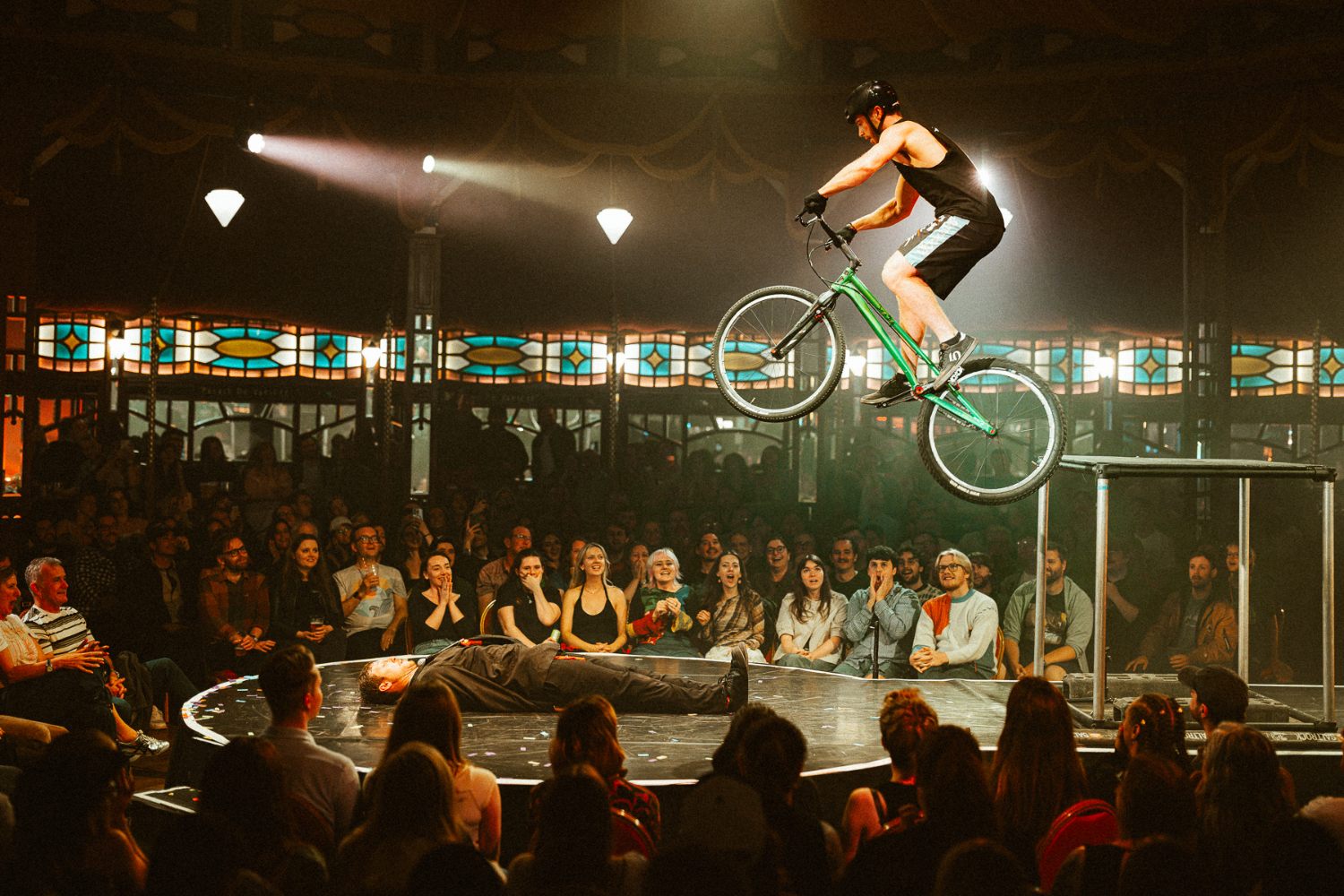
“Stamptown” in Edinburgh (Photo: Jacinta Oaten)
And another lingering question in light of Stamptown on Netflix: if clown is having a boom moment like improv had in the early-aughts, does that mean it’s doomed to the same bust cycle that resulted in improv’s decline? These days it’s almost like you can’t take a dang clown drop-in without competing for stage time with trend chasers, lookie-loos and Anderson Cooper on assignment. What happens when what was once a niche increasingly trickles into civilian society?
Clown’s core tenets might just keep it safe from improv’s precarious fate. Where improv is a hierarchy that requires infrastructure and control, the clown scene is ad-hoc and champions failure and embrace of the unknown — and, at least for now, rejects the pyramid scheme-feel of the VC-owned improv world.
These clown luminaries weren’t too worried about it when asked. Instead they maintain a joyous outlook and emphasize the hug.
Damiani: It’s sort of the curse of greatness. The plague of popularity. We can never forget that our first job is care. We want to bring people in and give them this great experience. Now, like an amusement park, we also want them to have moments where they’re genuinely nervous, where they’re well past their comfort. That’s the fun of it.
I acknowledge the first-timers and let them know the game. It’s not a win if they’re nervous or feel like they regret buying the ticket. We never want to feel that we’re coercing an audience into playing along.
Pauroso: I get a kick out of it. I remember when I started doing it, I’d be like, well, I’m doing this thing called clown. It still does get that response. But I’m excited that people are discovering it, because it meant so much to me. I found it at this time in my life where I really needed it. I would make fun of a person that was like, “clown saved my life!” — and yet secretly I’m like, clown saved my life.
When something blows up, people are going to start hating on it. All the drama, all the noise around it, is just hilarious to me. I’m excited to see what the next wave is.

“Stamptown” live taping in Hollywood. (Photo: Van Corona @vancorona)
With Zucker, forget the bust — he sees there’s still plenty of room for growth. The conversation goes to the work he sees abroad. The previous night, he had watched aerial pole artist Donna Carnow perform a piece that she and her partner had spent three and a half years developing.
Zucker: All of us were weeping at the end of this thing. You just see so much put into this physical precision of dance, acro, music, circus. Our whole philosophy was always: travel the world, get loose and get wild and develop in Australia, get really good in Europe and the UK, and then come back to America and show them what they’re missing.
That led to a more practical question for the crew.
LA Weekly: What do you tell a comic in Los Angeles who feels stuck in their creative space?
Woodley: Give up. Get back into the labor market. There’s a shortage.
*laughs*
Woolley: AI is on the rise, and clowns and comedians are the first out.
No — I would say scrape as much money together as you can, try to find a producer or self-produce, and go do a Fringe. That’s where you’re going to see the most eye-opening stuff, where you’re going to meet people who are similarly creatively minded.
Zucker: And if you don’t have the ability to leave — start your own night. Start your own community. You can do it. If we can do it, anyone can do it.
Woolley: Even terrible stuff that you hate will still influence you. Some of the best shows I’ve ever seen are awful, and I saw them at the Fringe, and they were defining to me — because it forces you to reckon with, damn, why did I really not like that? You develop your style in opposition to that.
That same philosophy helped produce Zucker’s alter-ego, Jack Tucker, a character emerged from bad open mics. He has a final bit of advice.
Zucker: Be nice to everybody. It’s an easier way to live, and you never know where other people are going to end up. And try to connect with people you don’t think you can connect with, because it’ll surprise you. It’ll surprise you often.
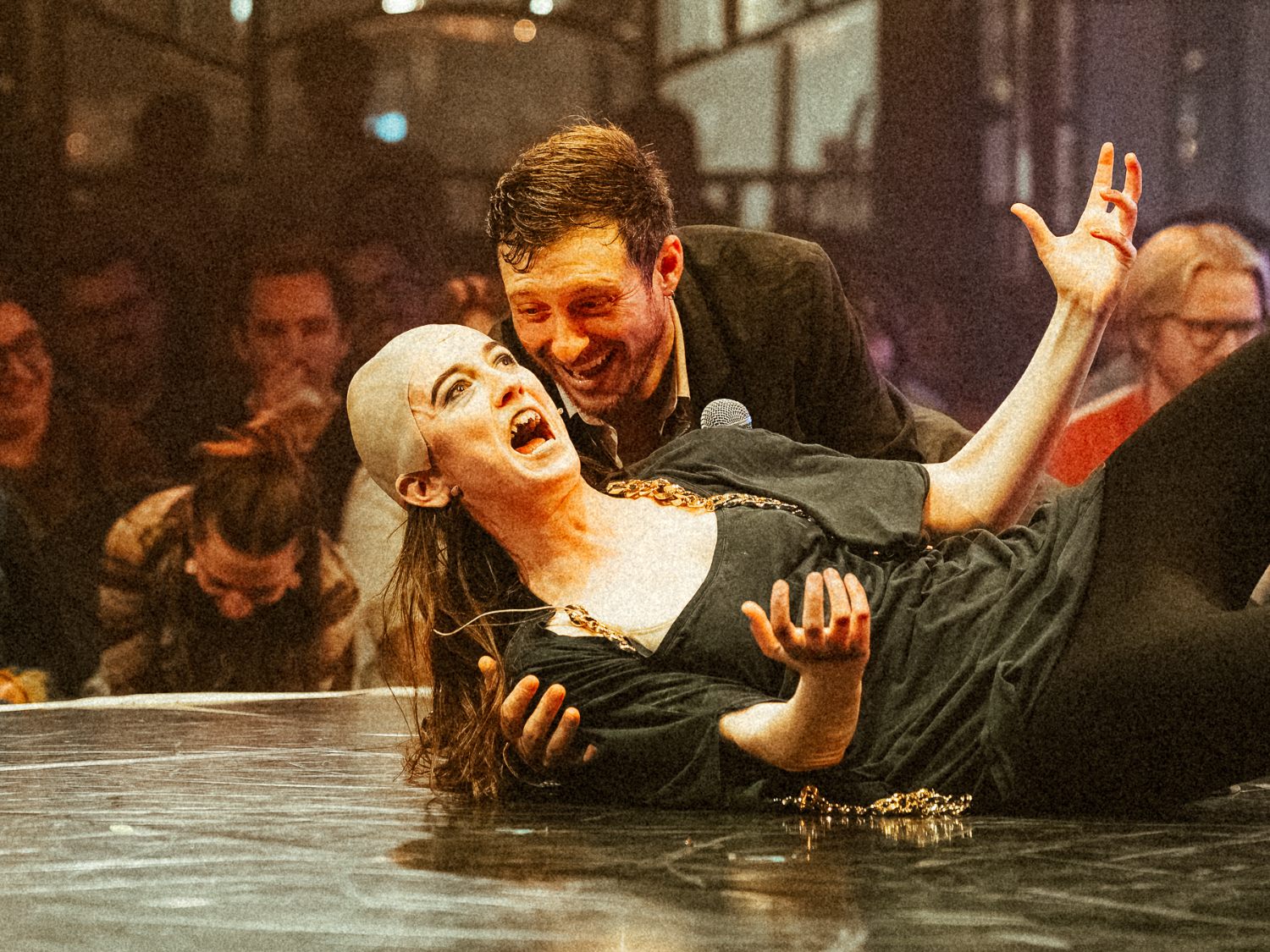
“Stamptown” in Edinburgh (Photo: Jacinta Oaten)
Los Angeles still has a claim on Zucker. During the pandemic he worked at CORE’s operation at Dodger Stadium, Sean Penn’s disaster-relief nonprofit, as basically the resident clown. He has said it was among the hardest and most rewarding stretches of his life.
“I got to work with community and make people happy, and make it fun for the folks working there putting their lives on the line.” Then-Mayor Eric Garcetti mentioned Zucker on television more than once. Zucker’s response to the former mayor now is simple: “I miss you, dog.”
What happens to Stamptown now remains deliberately unresolved. And, you guessed it, uncertainty is the way forward.
Woodley: We came up with a philosophy while editing the special, thinking of what comes after all of this. And we realized we were getting ahead of ourselves. We won’t know until this comes out and we see how it lands. The philosophy is just: the meal will reveal itself.
Zucker: When you’re trying to reveal the meal, you’re the most powerless person in the world, going, “Do it now, reveal the meal.” If you’re barking at the meal to come out, you’re not going to get a meal.
Their ambitions include additional specials and television. Woodley would like to make a horror movie. There is also a more immediate goal: turning Stamptown from a banner that gathers people together into an actual company that can employ them. Despite all the headlines, they’re still basically broke.
Zucker: I am the literal only employee of Stamptown. We all have ephemeral ownership of this thing. We have tried to receive funding many times to give both of them legitimate ownership.
My dream is to be able to make an offer so that Leisha and our other buddy Kasim and all of us could have a job full-time producing all of our shows, and combine forces. And we’re also desperate for resources to be able to prepare more. We just need someone to give us the money. Give us money.
Woolley: Put this in the headline: Give us money.
Damiani, who turns 55 next year, has reached a similar point of rejecting the idea that a creative life needs a predetermined endpoint.
“When I used to be a screenwriter, everything was about ‘how do I get to this far-off destination,’” he says. “And honestly, I don’t have one anymore. I don’t need Hollywood to say they’re ready for my close-up. I’m not stuck serving my career — whatever you consider my career, or the way I make money, serves the artist. That’s it.”
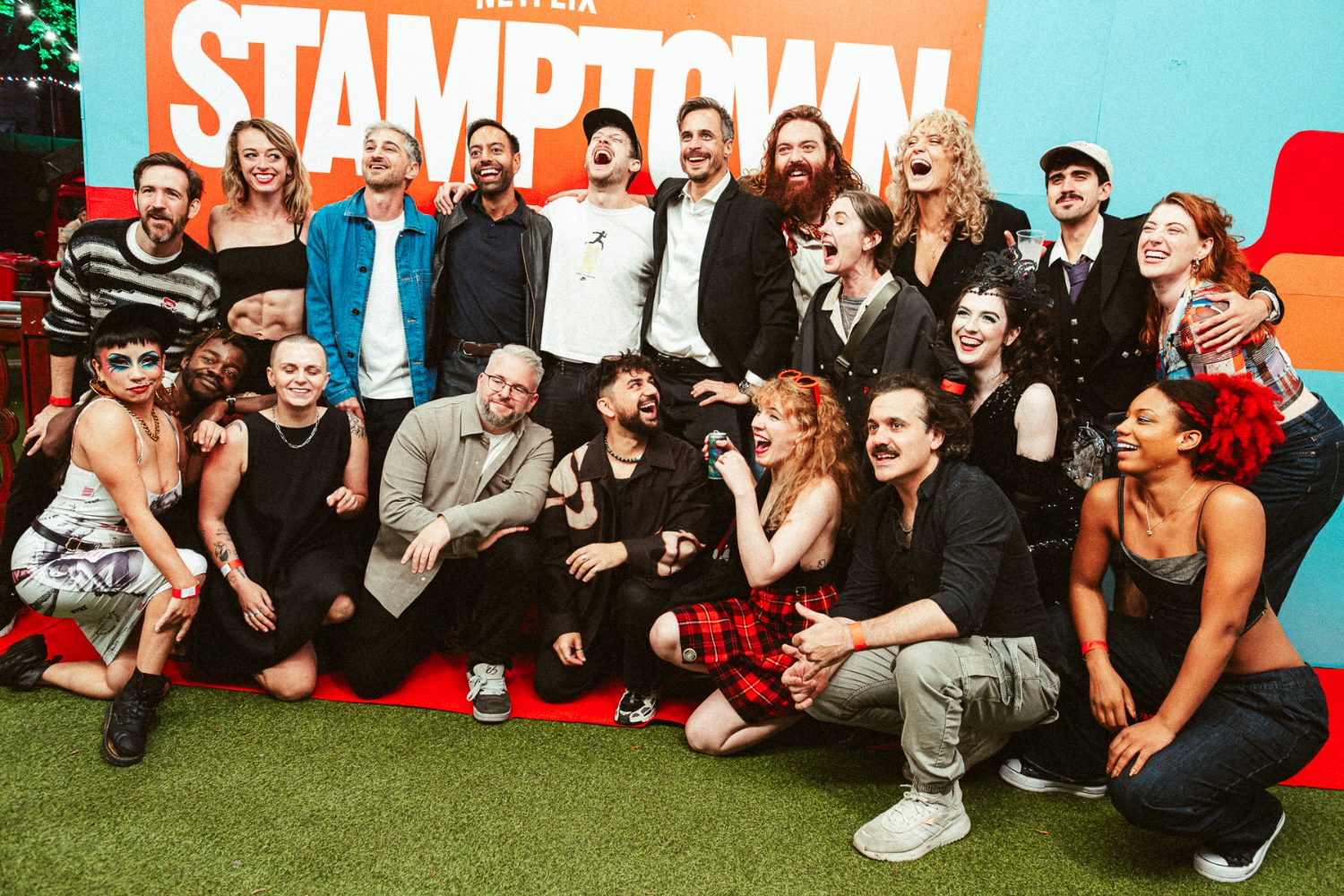
“Stamptown” Netflix premier in Edinburgh (Photo: Jacinta Oaten)
Pauroso is more candid about the uncertainty success can bring. She came to Los Angeles hoping to become an actress, moved into comedy and describes her discovery of clowning as a happy accident.
“It is exciting that the larger industry is starting to pay attention to us,” she says. “And then you’re like, oh — maybe I actually can get all these things that I came out here for. But I do wonder if the success almost takes you away from the clown spirit. I hope not.”
She remembers an early class when she unexpectedly killed in front of the room. Her teacher, Dr. Brown (Phil Burgers), noticed something in her performance. “He was like, ‘Look at her. She’s so broken, dude. She’s so broken,’” she recalls. “And I was like, ‘Oh, it’s a good thing. Oh, I can harness this.’”
She has since come to regard that brokenness as part of what made the work funny. “I’ve probably been my funniest when I’m the most broken-down loser. I think I’ll never be as funny as I was when I was so desperate, making my first show. That was pure. Things are going pretty well for me. I hope I can still do this.”
For Zucker, the measure of Stamptown’s success reaches beyond what happens after the Netflix special.
“The front-of-house people who started with us are now the programmers. The programmers are at other venues and they’re the producers. Our other friends are running the sites and building the sites,” he says. “Every single one of these people played a part in this. This is all of our win.”
The show became something larger than the performance itself. “We all have good relationships with our family, but I struggled for a little bit, and this was my chosen family,” he says. “To have these people here feel like they really see you, and you have a place where you can be yourself fully uninhibited and you’re loved and seen and supported — if we can have anything to do at all with carrying that torch and passing that on, that’s it. Obviously we want more specials and more opportunities. But to be revered amongst this community is top notch.”
He was still in Edinburgh when he said it, two days after the Fringe ended. He was hoarse, coughing and preparing to pack.
“This has been the hardest thing we’ve ever done in our lives,” he says. “But this has been the greatest week of my entire life. I’m just walking around crying all the time because I’m so happy.”
Follow Zach Zucker on Instagram @zach_zucker, Jonny Woolley @jonnywoolley, Dylan Woodley @dylanwoodley, Courtney Pauroso @courtneypauroso, Chad Damiani @thechaddamiani, and Stamptown @stamptown.
Stamptown is streaming on Netflix. Jack Tucker: Comedy Standup Hour is on the Stamptown YouTube channel.
Chad Damiani hosts Stand Up and Clown at the Elysian Theatre. Courtney Pauroso’s Vanessa 5000 is on Dropout.

(L-R) Dylan Woodley, Zach Zucker and Jonny Woolley on the September 4, 2026, cover of LA Weekly (Photo: Dylan Woodley; cover design: Mark Stefanos)