
 Jon Stojan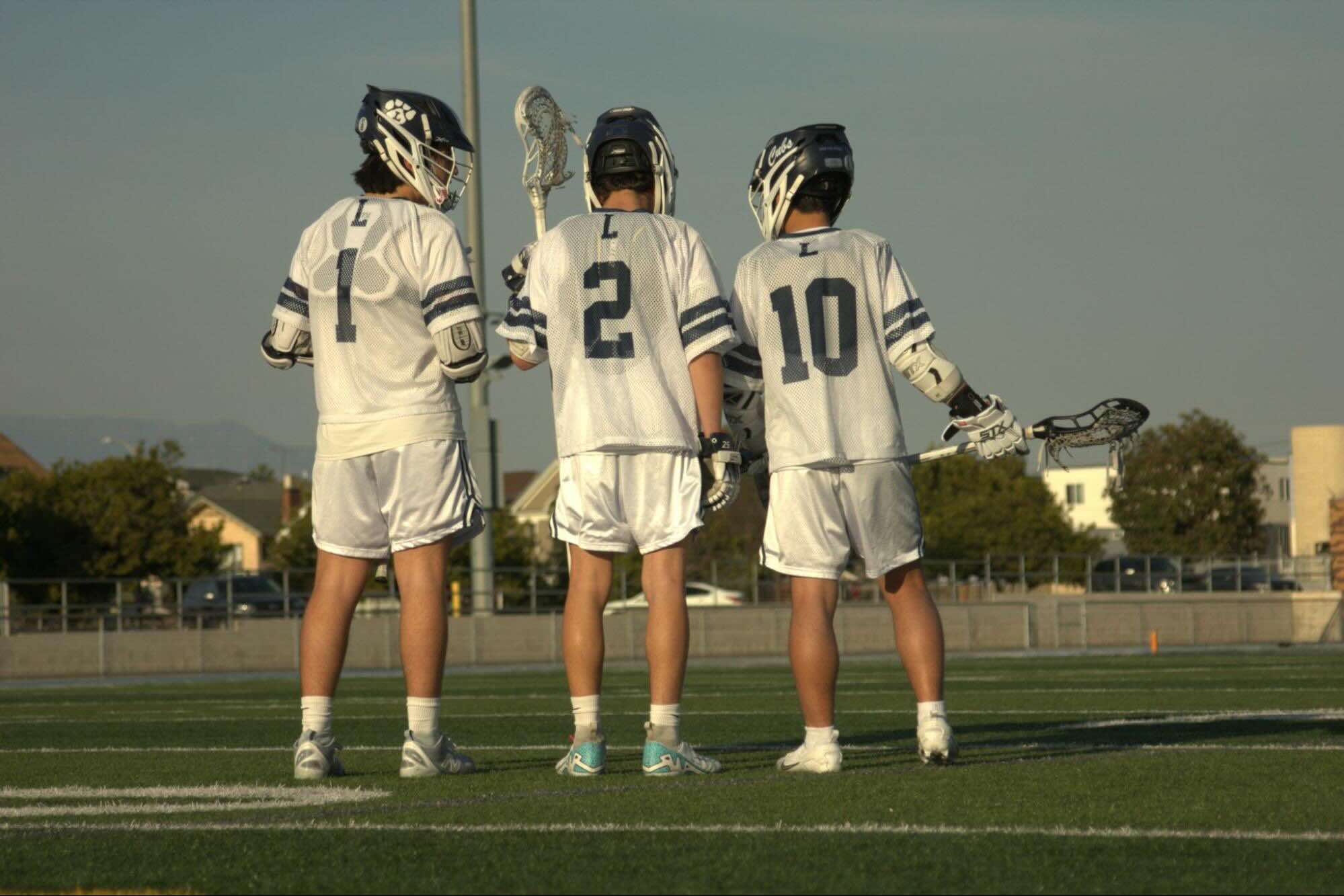
Pictured Above (left to right): Andreas Flores-Freihube, Vince Campagna, and Reagan Lantin at Loyola High School. Photo credit: Jake Bryant.
After one hot, intense lacrosse practice, Reagan Lantin thought he was just sore.
A few days later, his arms still would not move. They were so stiff that his brother joked he looked like a bodybuilder. Reagan kept insisting it was normal soreness, but his mother, who had experienced rhabdomyolysis before, knew the signs. She urged him to go to urgent care. Reagan was admitted to the hospital and spent five days on IV fluids while doctors worked to bring his levels down.
For Reagan, a 16-year-old student-athlete from Burbank, California, the physical pain was only one part of the experience. The harder part came later, when he had to return to the same workouts, the same field, and the same sport that had sent him to the hospital.
“I couldn’t really trust my body anymore,” he says. “I had to kind of relearn how to play.”
Reagan had always been mentally confident as an athlete. The injury shattered that confidence, and rebuilding it became harder than rebuilding his body. Before games, he found himself visualizing, breathing, and trying to get his head back into the right place. He wanted to play again, but he was scared of ending up back in the hospital.
A school trainer helped him work through a three-month plan. Coaches checked in. Teammates practiced with him and filled him in on what he had missed. His parents kept him motivated. Still, the decision to keep going had to become personal.
“I felt like I owed it to myself,” Reagan says. “For me to go through all that hospital stuff and years of training, it would kind of be sad if I just quit.”
The moment he felt fully back came at Sandstorm, a large lacrosse tournament held near the Coachella grounds. Reagan, an attackman, was subbed in midway through a game. On a face-off, his teammate carried the ball upfield and drew a defender, leaving Reagan open on the right side. He caught the pass and shot. The ball went in.
At the same time, he got hit. Their knees collided, and for a moment, he feared he was hurt again. Then his teammates helped him up, the game continued, and something shifted.
“That’s when I kind of gained my confidence back,” he says. “I knew the training had paid off.”
He later became team captain and earned MVP honors that season, but the more lasting result of the injury may be GameReady, the mental performance app he is developing for student-athletes.
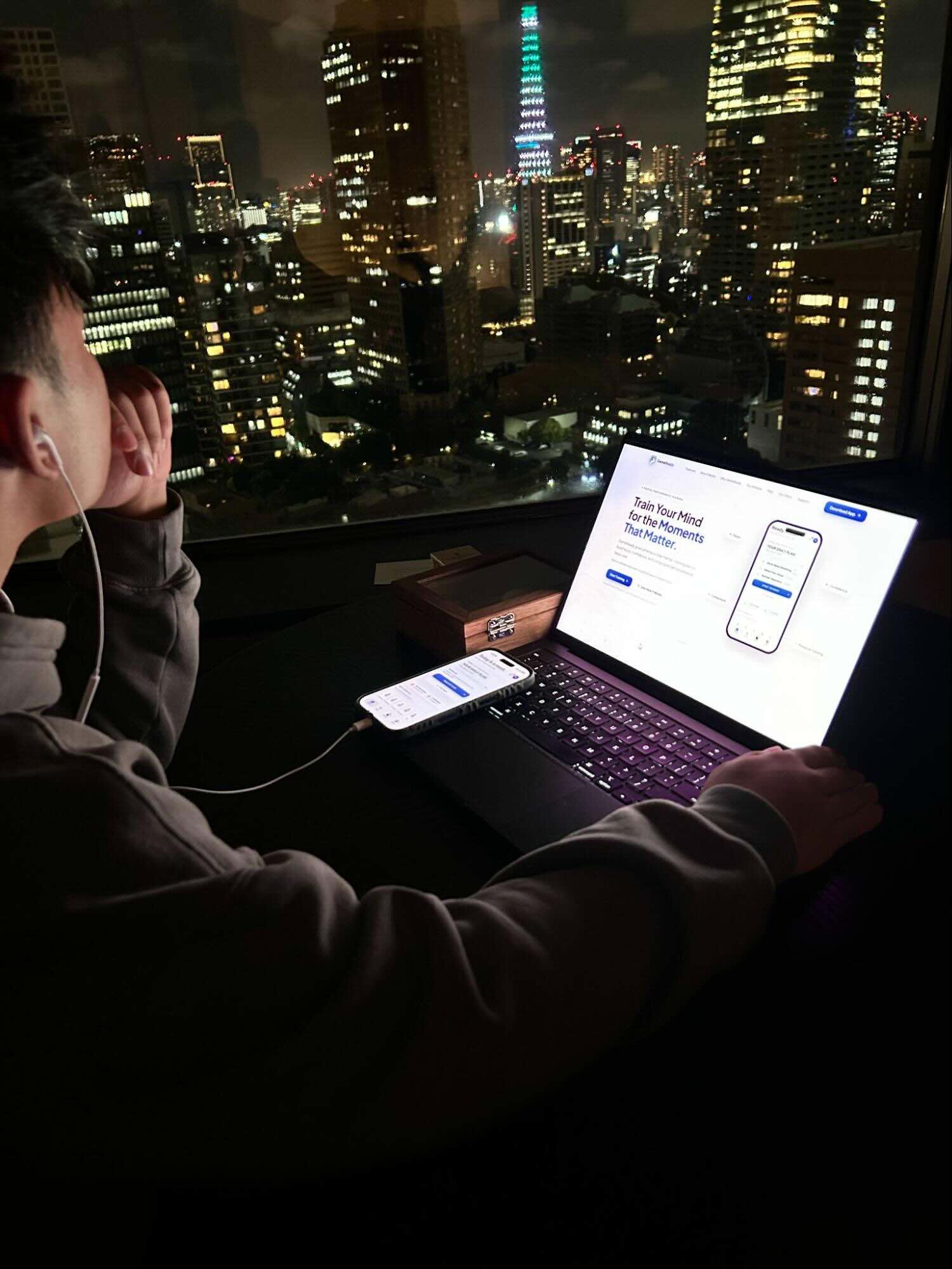
Photo Courtesy: Reagan Lantin
The idea began during a USC Pre-College entrepreneurship class in his sophomore year of high school, when students were asked to develop a business idea tied to something personal. While others imagined products they could sell, Reagan knew he wanted to build something digital. He thought back to lacrosse, recovery, pressure, and the question that stayed with him: What could have helped me then?
GameReady is his answer. The app is designed as what Reagan calls a “mental coach,” with tools for breathing exercises, visualization, focus drills, goal setting, mood tracking, and pressure-related tasks. He imagines a high school athlete opening it before practice, after a mistake, during a stressful week, or while trying to rebuild confidence after an injury.
What makes the project more than a pitch is that Reagan has been building it himself. He has worked in SwiftUI, used AI coding tools, studied app designs, gathered feedback from friends, and refined the user experience with Dr. Julie Bollich, a serial app developer.
The hardest part has not always been the coding. It has been getting the app to feel right. Reagan says he spent hours revising the interface, changing colors, adjusting layouts, and sometimes scrapping whole designs because they did not match the version he saw in his head. The breathing exercise section, one of the simplest features in theory, became one of the hardest to perfect.
“I kept complicating it for myself,” he says. Then he laughs at the irony: “Maybe I needed a breathing exercise right there.”
That instinct to revise is familiar to him. In his AP 2D Art portfolio, Reagan explored revealing and concealing through digital zippers, sewing, tearing, cracks, and cyanotype. The work earned him a Scholastic Gold Key, Silver Key, Honorable Mention, first place in Youth Art Month, and a display at the Riverside Art Museum. It was art about what lies beneath the surface. GameReady, in a different form, is about the same thing.
Athletes are often judged by what can be seen: speed, strength, goals, and wins. Reagan is interested in what lies beneath: stress, hesitation, confidence, fear, and recovery. He plans to study psychology in college to better understand human behavior and apply those learnings through technology, design, sports, and media.
GameReady has now launched on the App Store. For young athletes, the app acts as a mental guru, equipping them with the toolkit they need to conquer the field. A toolkit Reagan has painstakingly built from a specific memory: a young athlete in a hospital bed, waiting to return to the game, and realizing that recovery is not only physical.
“I’m doing it to help others,” Reagan says, “not go through the process I went through.”