
 Nia Bowers
The boundary between physical environments, television broadcasts, and spatial digital interfaces is rapidly dissolving. For decades, human-computer interaction was governed by static, two-dimensional layouts. Today, flat layouts lack the engagement needed to capture modern audiences, and complex ideas are difficult to communicate without dynamic context. To bridge this gap, modern visual systems require sophisticated motion design to translate complex data into instant, intuitive understanding.
At the vanguard of this design paradigm shift is Po-En “Brandon” Wang, an internationally recognized 2D/3D Motion Designer. Operating at the intersection of cinematic visual narratives, dimensional motion systems, and spatial user experiences, Wang treats movement as a spatial language. He has solved critical visual bottlenecks across a diverse spectrum of media: translating complex, abstract design philosophies into award-winning digital films, transforming passive sports broadcasts into active interactive entertainment, demystifying intricate retail hardware in seconds for mass-market consumers, and defining the visual and spatial rules for next-generation spatial computing.

Exposing Abstract Ideas: Award-Winning Films for the Ken-Tsai Lee Design Lab
The foundation of Wang’s motion philosophy was built on making abstract concepts instantly legible. Between November 2019 and April 2021, Wang served as the Lead 2D/3D Motion Designer and Film Director for the Ken-Tsai Lee Design Lab in Taipei. While the Lab authored physical exhibitions, these assets were geographically locked, making them difficult for international award juries in New York and London to fully comprehend. Wang designed and directed official promotional case study films, using motion, virtual camera movements, and dimensional transitions to translate physical exhibitions into high-impact, 1-minute visual narratives.
For the Bauhaus 100: Manifest of Practice in Taiwan exhibition, Wang animated static architectural grids in After Effects. His cinematic film condensed a complex physical gallery into a high-speed explanation that busy award committees could instantly understand. This work swept selective, peer-reviewed international panels, earning the studio the 99th ADC Awards Silver Cube in Brand/Communication Design in 2020. Out of over 10,000 global entries from 59 countries, only 160 Silver Cubes were awarded worldwide, placing Wang’s work in the top 1.5% of all submissions. The project was further honored as a Red Dot Award Winnerin 2020 and garnered two 99th ADC Merit Awards.
Wang’s visual direction for the D&AD Exhibition in Taiwan in 2022 secured the prestigious 2022 Red Dot Award: Best of the Bestin Brand Promotion. Serving as Film Director, Wang crafted a 3D visual metaphor merging D&AD’s iconic octagonal pencils with rendered slices of Taiwanese fruits. This project also won a 101st ADC Awards Bronze Cube and a 101st ADC Merit Award.
Live Broadcasting: Locking In Sports Audiences Through Digital Character
As traditional television formats adapt to compete with interactive digital media, broadcasters must transform passive viewing into active experiences. Wang transitioned his motion design to address this challenge, collaborating with major entertainment brands to redefine broadcast sports and drive viewer retention.
From July to September 2024, Wang operated as an Animator for Nickelodeon’s marketing department. Using Cinema 4D and After Effects, he designed modular 3D character assets for the Dora the Explorer reboot. These assets proved so robust that Nickelodeon integrated them permanently into their broadcast library, continuously repurposing them for flagship programs like NFL Slimetime.
This pipeline bridged directly into his tenure at virtual production studio Silver Spoon (November 2024 to August 2025). Here, Wang executed 3D motion graphics and character layouts for the Emmy-nominated Nickelodeon NFL Wild Card Game 2025 on CBS Sports and Nickelodeon. Because Wang had designed the original character animations at Nickelodeon, he dynamically composited these 3D assets (along with SpongeBob SquarePants) into live physical sports environments. By hand-crafting props and animating character performances in Cinema 4D to integrate flawlessly with stadium footage, Wang’s assets locked younger audiences into a broadcast that earned Sports Emmy nominations for Outstanding Live Event and Outstanding Graphic Design.
Solving Spatial Interaction: Driving the Product Conversation at Google
Today, the most complex canvas for functional motion design is wearable spatial computing, where interfaces must live natively within the physical world. Since August 2025, Wang has operated as a 2D/3D Motion Designer at Google in New York, actively driving spatial user experiences for Android XR. At Google, Wang’s motion designs serve as the definitive visual prototypes that align engineers, PMs, and executive leadership on how virtual elements should behave in three dimensions.
A primary example of Wang’s technical contribution is co-building “Glimmer,” the foundational visual motion language for glasses-based user interfaces. Lightweight smart glasses present extreme display constraints, making traditional opaque backdrops highly inefficient. To ensure legibility without draining the hardware’s battery, Wang designed “Glimmer” motion to utilize subtle light movements and micro-animations instead of heavy, static layouts, allowing users to read text comfortably under any real-world lighting condition.
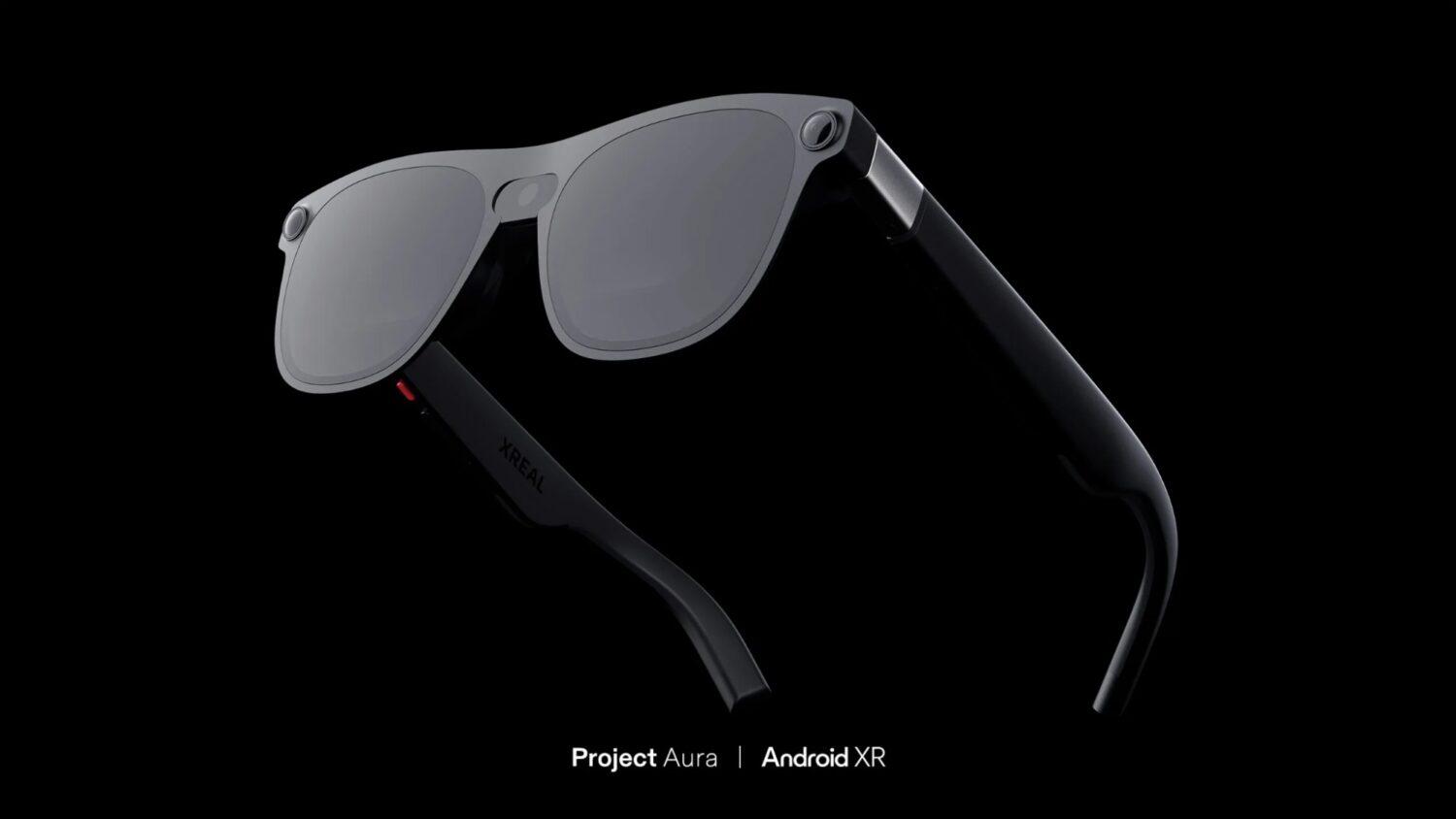
Wang also designed the motion physics and spatial tracking rules for the “following behavior” on XREAL Aura smart glasses running on Android XR. This behavior places the digital screen directly in the user’s line of sight, smoothly following head movements with realistic damping, allowing users to scale the window down and multitask effortlessly. This breakthrough interaction model was highlighted by premier technology reviewer Marques Brownlee (MKBHD) as the device’s standout, favorite interface feature. To streamline implementation, he also leveraged Google Veo and Gemini to generate high-fidelity motion mockups and coded prototypes, streamlining engineering handoffs.
In an industry demanding constant innovation, Brandon Wang has proven that 2D/3D motion design is not merely aesthetic—it is a vital, functional vocabulary that translates complex ideas into immediate understanding, aligns world-class product teams, and seamlessly integrates technology into the human experience.