
 Will Jones
Music carries unique cultural memories and aesthetic wisdom. For Ling Liao, it is both a lifelong artistic pursuit and a powerful medium for cross-cultural dialogue. A vocalist, seasoned university educator and emerging music education researcher, she balances teaching, research and public performance. Her work reflects her teaching philosophy, commitment to community performance and vision for inclusive music education.

Interviewer: To start, could you tell us about your musical journey. What first drew you to music, and how did your career take shape?
Ling Liao: Music has captivated me from an early age. I was drawn to the expressive power of the human voice, and that fascination grew into a deep commitment to both singing and teaching. Before I began my doctoral journey in the United States, I spent fourteen years working as a full-time university assistant professor and undergraduate thesis advisor in China. I held long-term teaching appointments at Hubei Normal University, with concurrent part-time instructors at Central China Normal University. I also served as a visiting scholar and visiting professor at Vassar College from 2017 to 2018, introducing Chinese folk song to American students. Throughout those years, I never separated performance from teaching. I kept performing professionally while building my teaching practice. My decision to pursue a Ph.D. grew from my many years of teaching in higher education in China. During my doctoral studies in the United States, my research intuition led me to consider how non-Western music could be more meaningfully integrated into formal music curricula. I then turned to the literature and found substantial room for further research in this area. Drawing on both my experience learning and teaching music in China and my performance experiences in local communities in the United States, I realized that my combined perspective as an educator and performer could make a meaningful contribution to this area of research. This direction also aligns closely with the American Choral Directors Association’s emphasis on world musics and cultures, repertoire diversity, and cross-cultural engagement.At ASU, I work as a teaching assistant, lead independent courses and continue performing for local communities. Every stage of my journey has reinforced one core belief: teaching and artistic performance are inseparable parts of who I am.
Interviewer: Your practice includes teaching Western and American vocal and choral repertoire at ASU and sharing Chinese folk and folk-derived choral music via community performance. How do you see your role bridging these different musical traditions?
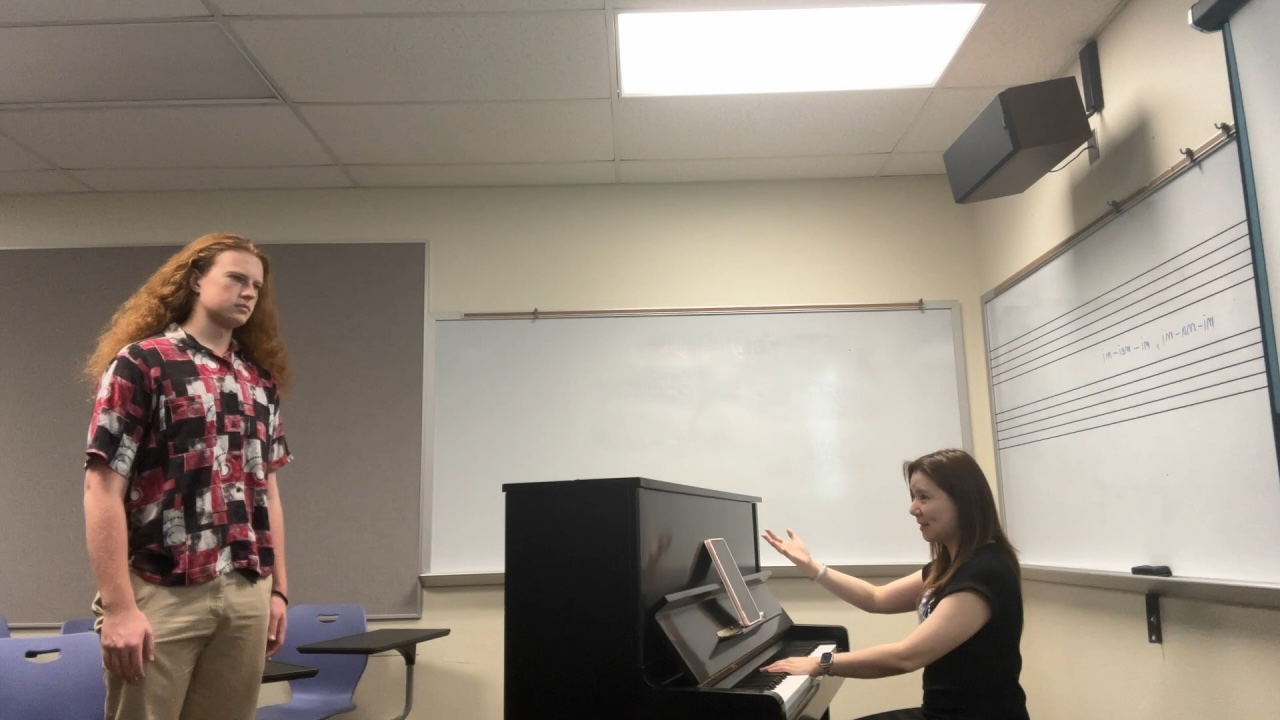
Ling Liao: I see myself as a bridge-builder and a guide rather than framing one musical tradition as the standard. The ASU courses I teach, including Voice/Choral Lab, Dance, Music and Meaning, and Children, Creativity, Arts, follow the established curriculum focused on Western and American vocal and choral repertoire. In these classrooms, I support students to understand each musical tradition on its own terms, with its unique vocal techniques, aesthetic logic, cultural narratives and educational value. Chinese folk songs and folk-derived choral repertoire, by contrast, come alive through my community performances and public outreach. Through this two-pronged practice, I push back against the Western-centric framework that still prevails in many music education spaces. I aim to help students grow into thoughtful, flexible artist-educators who can engage with diverse music traditions with respect and curiosity.
Interviewer: You have performed Chinese folk songs for audiences in Arizona, New York, Washington D.C., and beyond. In your view, what role does performance play in music education and in connecting with communities?
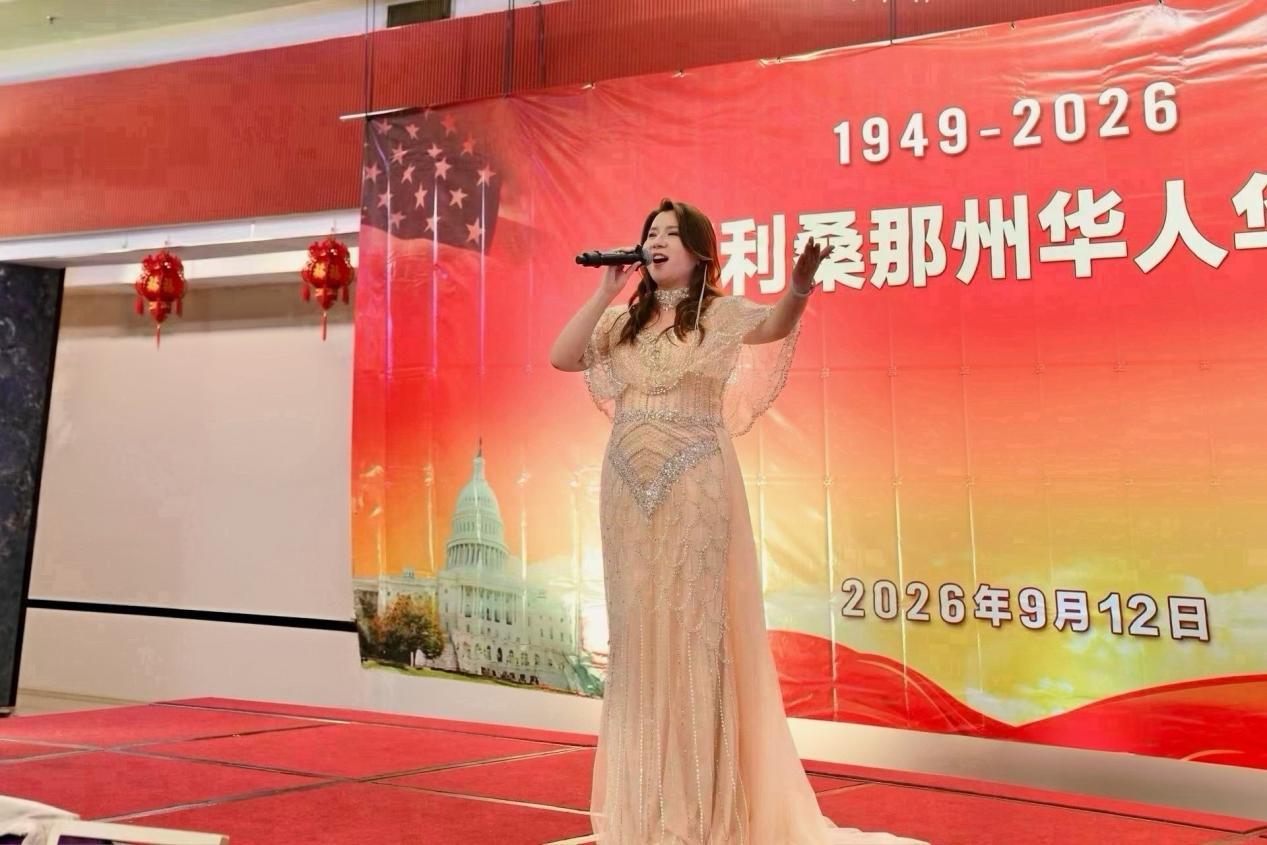
Ling Liao: For me, performance is an extension of music education. A concert stage is an open classroom, one that reaches people who may never enroll in a formal music course. In 2018, I was invited to perform at Asia Society New York, one of the United States’ prominent institutions dedicated to Asian arts and cultural exchange, where I presented Chinese folk songs Dragon Boat Tune and Good Days. That experience deepened my understanding of how live performance can foster cross-cultural dialogue. Many audience members come to these gatherings with little prior exposure to Chinese folk music. When I sing, I am not merely demonstrating vocal technique; I am conveying the unique cultural narratives and aesthetic sensibilities embedded in these musical works. Performance removes many of the barriers that separate different cultural traditions. It invites audiences to engage through listening before words are needed, sparks curiosity, and makes diverse music education broadly accessible to the public.
Interviewer: Your students have won recognition across different vocal categories, including Western classical singing. What does that breadth of achievement mean to you as an educator?
Ling Liao: This breadth of student achievement is meaningful proof that my cross-cultural teaching philosophy works. Many people assume an educator must specialize in either Western classical or Chinese folk vocal music, but my experience shows that students can learn multiple traditions with integrity when instruction is rooted in respect for each style. When my students earn awards in Western classical vocal competitions and also succeed in Chinese folk and international multicultural contests, it tells me they are gaining transferable musical skills and a flexible artistic mindset. These honors are not just trophies for my students. They validate that learners can move between musical traditions without sacrificing authenticity. It is my greatest reward as a teacher to watch them grow into versatile musicians who can thrive in different artistic spaces.
Interviewer: Looking to the future, what are your plans—both in your doctoral research at ASU and beyond? And what advice would you give to young people who hope to pursue music education, as you have?
Ling Liao: At ASU, my primary research currently focuses on the history of vocal music education in American normal schools. From a historical perspective, I examine how vocal music teaching developed within traditional normal-school systems and the factors that contributed to its heyday. My second area of research examines female court music education in ancient China, and this work was accepted for presentation at the 2026 International Society for Music Education (ISME) World Conference. Moving forward, I plan to extend my research beyond historical studies to contemporary vocal and choral education in the United States, while developing culturally diverse choral education as a significant area of my long-term research agenda. I am particularly interested in how musical traditions from different cultures can inform choral teaching, learning, and teacher preparation. My background in Chinese folk song performance, together with my experience in music education in both China and the United States, provides a distinctive foundation for this work. Within this broader area, I am especially interested in exploring how Chinese musical traditions can enrich music teaching and learning in the United States and in developing culturally and musically informed curricula, pedagogical approaches, and educational resources for North American choral educators.
My advice for young music educators is this: stay curious, and respect every musical tradition you teach. Do not reduce global music to a cultural novelty. Take time to learn its aesthetics, history and inner logic. Keep performing alongside your teaching if you can—your artistic practice will continuously enrich your classroom work. Music education is not only about passing on technique; it is about nurturing listeners and artists who can meet the world’s diverse musical voices with openness.
Ling Liao’s work as a performer-educator reminds us that music education thrives on openness and cross-cultural listening. Moving forward, she will keep weaving together teaching, research and performance to create more inclusive spaces for music from all corners of the world.