
 Will Jones
Discover how Fatima De Leon Koolmees founded The Grounding Co., bringing therapeutic sand art, tactile meditation and creative wellness into everyday life.

Fatima De Leon Koolmees, founder of The Grounding Co. Photo credit: Fatima De Leon Koolmees.
There is a trail at Torrey Pines that ends in steps down to the sand at low tide. Fatima De Leon Koolmees would hike that trail to practice being present, then stay for an extra hour, drawing in the sand with her music on and letting her thoughts come and go.
Eventually, the tide would come in and wash her drawing away. That practice, art made to disappear, became the inspiration for The Grounding Co., the therapeutic art brand she built alongside her executive career.
“Every time, it felt like the lesson was to let go, to release.”
She reflects on what the experience taught her: “What we make, our relationships, our feelings, even yesterday, they all change. You can’t preserve any of it, but you can be grateful for it while it’s there.”
She couldn’t get to a beach every day with her schedule, so she began looking for a way to practice at home. “And I figured if I needed it this badly, someone else probably does too.”
From Always-On to Present
Fatima has spent nearly two decades in operations and executive leadership. Today, she is VP of Tech, Marketing & Business Strategy at Rack Store. But alongside her business career, she has always been creative. She was offered a creative writing scholarship when she was younger, but pursued business to survive.
“Feels like ages ago,” she says.
For a long time, business took priority. By 2025, she was working at a pace that left almost no room for her creative side, and she was burning out. The Grounding Co. grew out of her search for a way back to creativity and a more present way of living.
For someone discovering the brand for the first time, Fatima describes it this way:
“If you’re discovering us for the first time, it’s a practice of breath, touch, and sand that centers on presence and play.”
The problem she hopes to address is one many people will recognize. As Fatima explains, “Most of us spend all day deciding, performing, and getting pulled in a million directions, and we almost never get time that asks nothing from us.”
The transformation isn’t about fixing everything or achieving another goal. It’s about stepping away from the pressure to perform and allowing yourself time to simply be present.
“The transformation isn’t a fix. It’s moving from always-on to present, and from trying to get it right to simply playing.”
Through tactile meditation and therapeutic sand art workshops across Los Angeles and Orange County, Fatima is bringing that philosophy to others. The company is also preparing to introduce stillwork., its first collection of at-home tactile art tools.
Why Sand, and Why Now?
Fatima sees the appeal of hands-on practices as a response to a world that rarely switches off.
“We’re living in a time of unprecedented access to everything happening around the world and even in space. It’s the kind of thing people used to only imagine in science fiction, and with AI, we’re moving toward a future faster than we can even fathom. But our minds haven’t evolved in step with all that information, and so much of what we’re exposed to is out of our hands to control or change. That brings a real sense of helplessness and anxiety, on top of everything people are already handling in their own lives.”
Her answer is to bring attention back to what is immediately in front of us.
“I think that’s why people are craving experiences they can hold in their hands. What we have the most direct agency over is what’s in front of us. This practice asks you to be present with exactly that.”
The practice itself is deliberately uncomplicated. Participants move through breathwork, tactile meditation and sand art, using the materials in front of them as an invitation to slow down.
“During the breathwork, the tactile meditation, and the sand practice, everything is in that tray. It’s a muscle you’re building, so you can bring that same presence to every task, instead of being pulled in a million different directions.”
For Fatima, the goal is not to escape everyday responsibilities, but to develop a way of returning to them with greater presence and attention.
A Practice You Can Bring Home
The stillwork. Sand Practice Kit, scheduled to debut in late November, brings the workshop experience into the home. Designed to make getting started easy, it includes guide cards, a sand tray and tools, five colors of sand with refill bags, a journal and pen, and a glass jar with a cork lid.
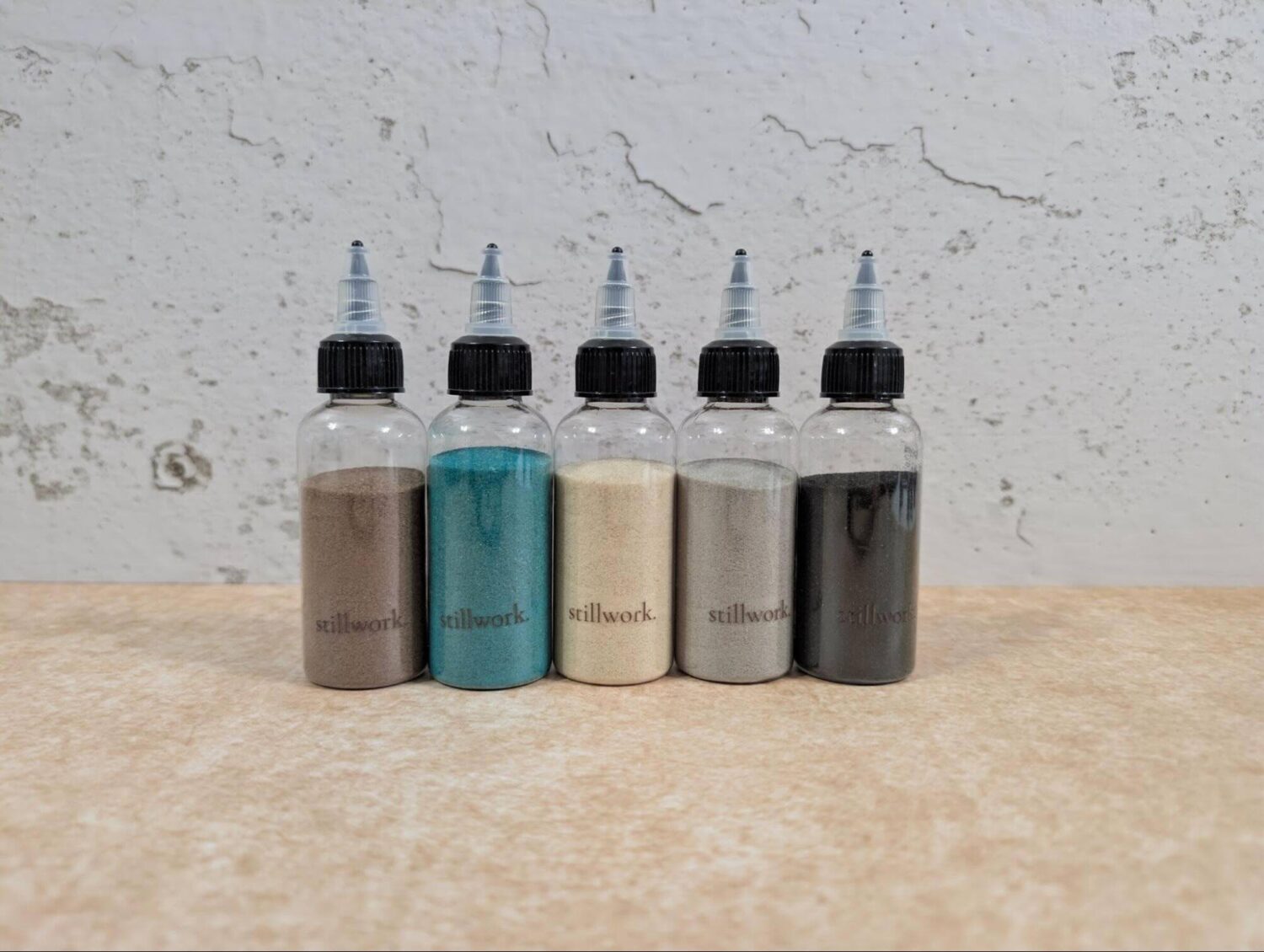
The stillwork. sand color collections. Photo credit: Fatima De Leon Koolmees.
Fatima developed the kit from her own practice rather than starting with a product concept and building an experience around it.
“My practice grew out of hiking, then drawing in the sand at the beach, then exploring ephemeral art: art that isn’t meant to last. At home, I’d put my headphones on and work in the sand with whatever I was feeling, sad, angry, or peaceful, and let it move through me and into the art.”
The kit includes bowls for water and dirt, an invitation to bring in a leaf from a houseplant or outdoors, and an hour of original 432 Hz music accessible through a QR code, with versions for speakers and headphones.
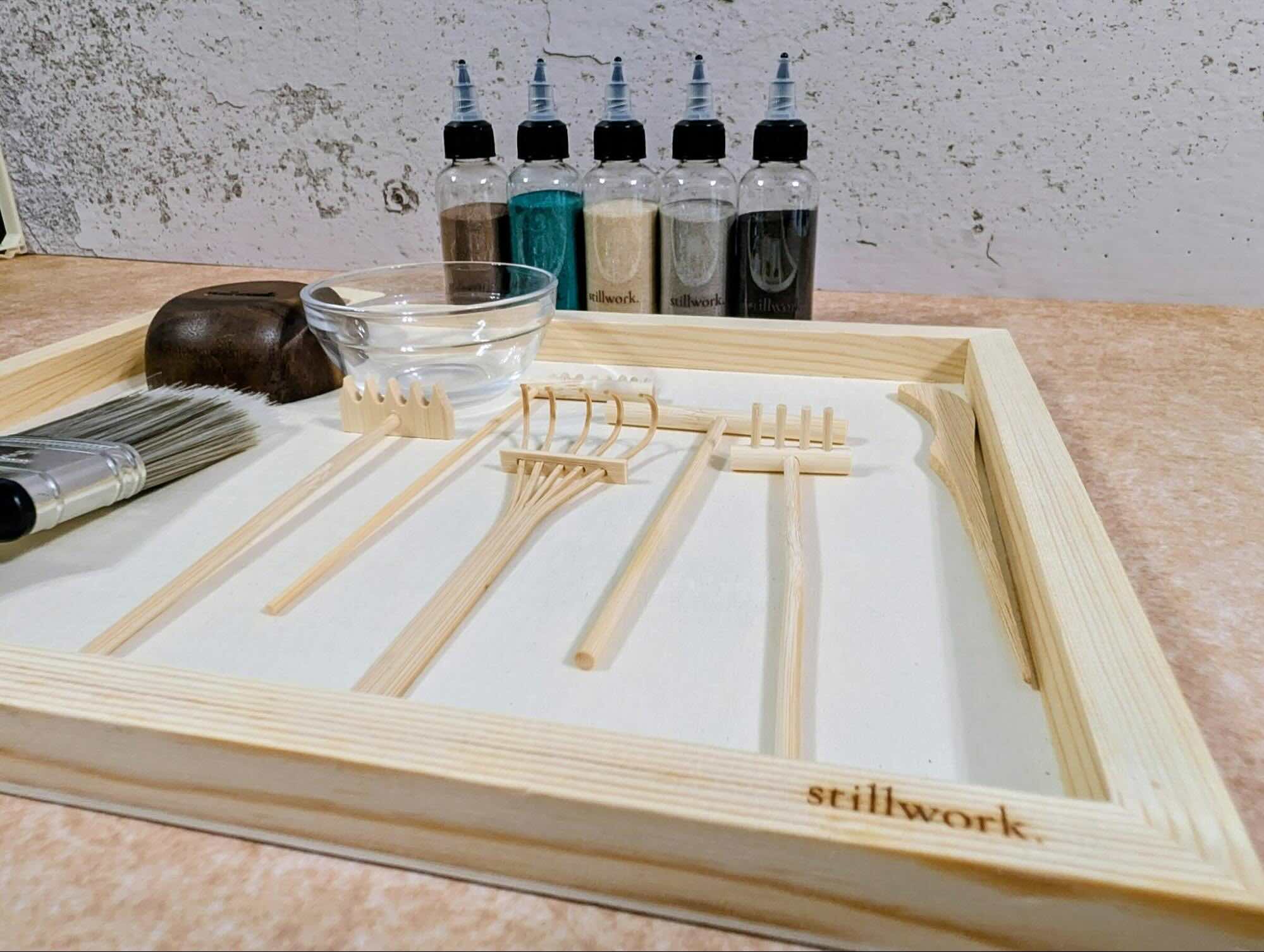
The stillwork. Sand Practice Kit. Photo credit: Fatima De Leon Koolmees.
“Everything in the kit comes from what I actually use. There’s an hour of original music because music has always been part of my practice. There are bowls for dirt and water so you can ground yourself before you begin. And there’s the jar, so even though the art doesn’t stay, the practice adds up.”
Users can choose from four coordinated color collections: Earth, Ember, Tide or Dusk.
“I put colors together so the colors work in harmony with each other.”
A session moves from breathwork to tactile meditation and then into the sand practice. It can be as structured or as brief as the user needs.
“A full session can run an hour to an hour and a half, but any length counts. Some days I do half an hour and go straight into the sand. It’s about what you as an individual need, not what the rules say.”
At the end, users pour the sand from their tray into the included glass jar. Rather than preserving each individual design, they gradually build up layers representing the sessions they’ve completed. The artwork disappears, but the jar becomes a record of the practice over time.
Just before the New Year, the company plans to introduce a separate stillwork. affirmation deck. Each card will feature a mantra on the front and a short reflection on the back.
The timing is intentional. The end of the year often brings a rush of holidays, deadlines and year-end obligations, just as people begin thinking about the year ahead. Fatima wanted stillwork. to arrive before the pressure of New Year’s resolutions begins.
“Habits and rituals stick better when you’ve already found your rhythm, instead of trying to build one under the pressure of a resolution.”
No Rules, Just Presence
The practice is similar to a traditional desktop Zen garden, but Fatima sees an important distinction.
“Most people know those little desktop zen gardens with the tiny rake and the perfect lines. stillwork. is like a zen garden with no rules. There’s color, texture, dirt, and water, and there’s no correct pattern to get right.”
Rather than focusing on neat patterns or a finished piece of artwork, stillwork. encourages people to explore the materials and enjoy the experience without worrying about getting it right.
“A lot of creative wellness offerings are built around a finished piece to take home or a skill to master. Ours is built around the experience itself.”
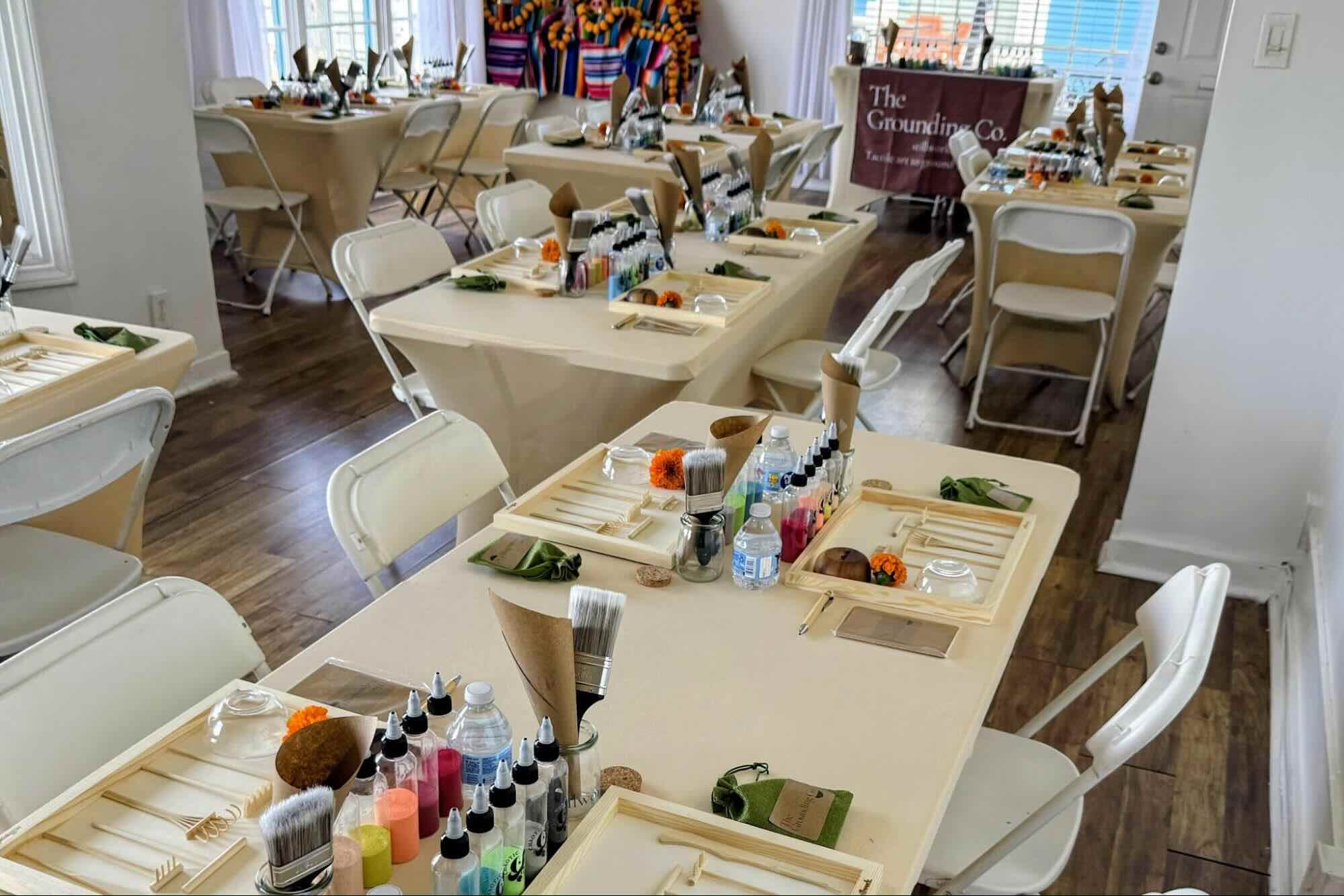
A stillwork. workshop, prepared for guests. Photo: Monica Lara (@glimpsesofyourlife).
Fatima saw the potential of that approach at her very first workshop, although she admits she wasn’t sure whether something that had helped her would resonate with other people.
“At our very first workshop, I’ll admit I had a bit of imposter syndrome. This practice worked for me, but I didn’t know if it would work for anyone else.”
One participant came in visibly emotional, in tears. As she moved through the practice, Fatima watched her change from grief toward a sense of peace and happiness.
“Afterward she told me she felt pride and joy in what she’d made, so much that she wished she could keep her piece instead of sweeping it away. That’s when I knew there was something to this.”
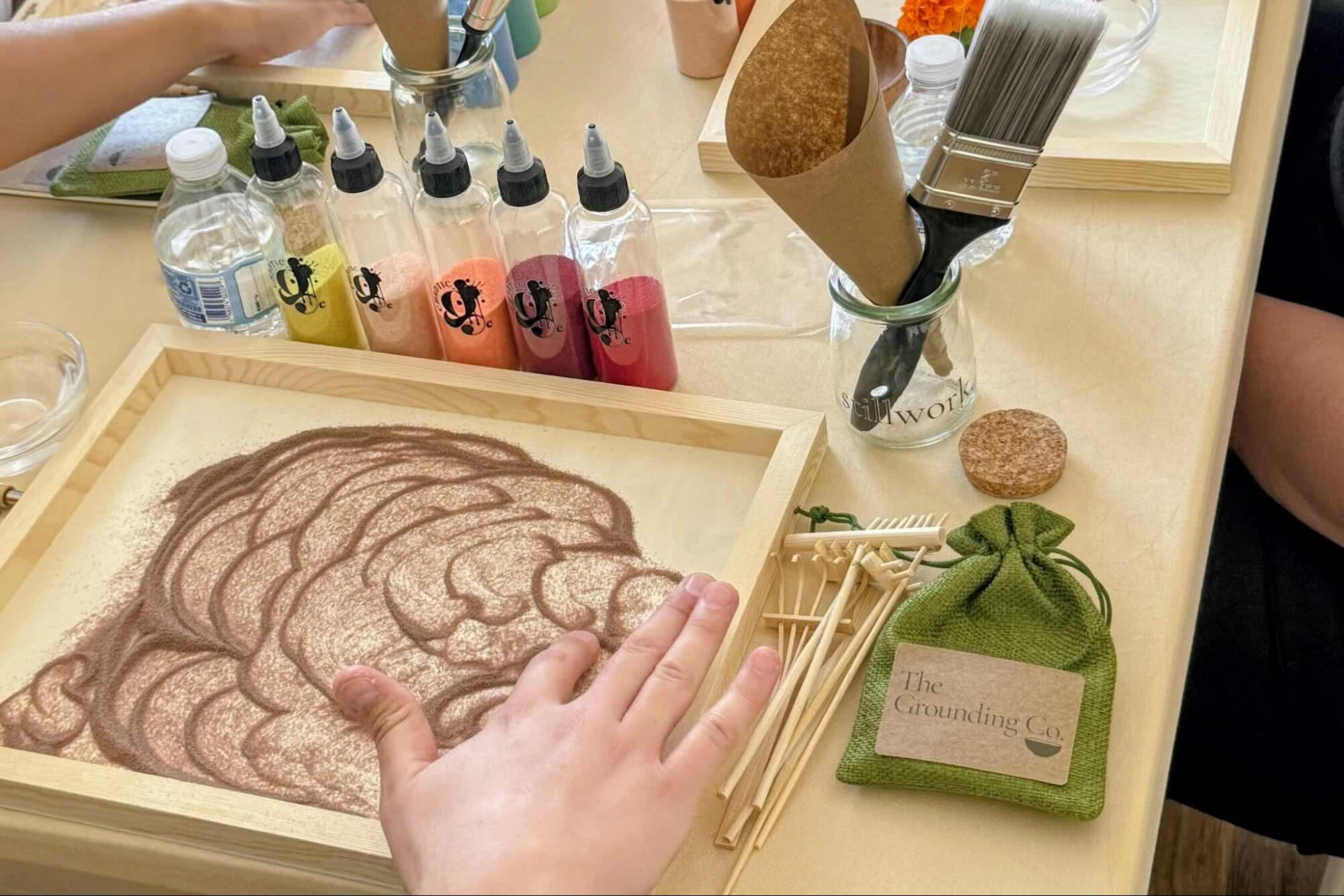
Guests drawing in the sand at a stillwork. workshop. Photo: Monica Lara (@glimpsesofyourlife).
Fatima wants people to feel present and give themselves permission to play without worrying about what the experience should mean or produce.
“I want people to feel present, and to give themselves permission to play without needing it to mean anything or turn into anything. There’s no right way to do it. Whatever you’re feeling when you sit down, whether that’s sad, restless, peaceful, or nothing at all, gets to move through you and into the sand.”
Who It’s For
Fatima sees two particularly natural audiences for stillwork.: busy people who need a manageable way to pause, and overthinkers who struggle to quiet their minds at the end of the day.
“This is for people who are a lot like me. They have a million things to get to, and they need a starting point that doesn’t ask for precision but presence. They need a few minutes to come down from fight-or-flight mode and a little playtime, but they can’t just abandon their responsibilities, because those matter to them too, this is real life and we can’t just drop our responsibilities. For them, I recommend practicing first thing in the morning.”
For those who find their minds racing at night, she offers another suggestion.
“It’s also for the overthinkers whose minds won’t quiet down at the end of the day (also me). That’s people over-processing something unfinished, or carrying a loss, who need a reprieve from the noise, even if it’s just for an hour. For them, I recommend practicing at night.”
Fatima also sees a role for the tools in professional settings. She is certified in therapeutic arts, but is careful to distinguish her work from clinical practice.
“I’m not a clinician, and I’m not ever going to claim to be. I’m a student and practitioner of this work, and I built The Grounding Co. by combining the structure I’ve learned in business with the presence I found through art. That’s also why I partner with licensed practitioners, so people can go deeper when they need to.”
She sees licensed art therapists, holistic wellness facilitators and other practitioners as important partners who can incorporate tactile art tools into their work. The company is also open to wholesale partnerships with wellness boutiques, gift shops and studios.
Interested practitioners and retailers can contact [email protected].
Building What Comes Next
Beyond The Grounding Co., Fatima has illustrated and published Swallow Your Teeth, a memoir in poems by Matthew Elliott, and is executive producing an independent short film centered on Picaresca Café in Boyle Heights, directed and shot by Gabriel Rauch.
Her professional background includes leadership across retail, distribution and manufacturing, as well as early work supporting organizations serving adults with developmental disabilities and mental illness.
“That work shaped how I think about care, structure, and dignity.”
Over the next few years, Fatima hopes to expand The Grounding Co. into a broader collection of tactile art tools for people practicing at home and professionals who guide others. She would also like to see licensed therapists and holistic wellness practitioners using the tools to support people who want to incorporate art into their own therapeutic practice.
“The sand kit is just the beginning.”
Ultimately, Fatima wants the brand to give people room to discover what they need without prescribing how they should feel.
“It’s a big hope, but I hope everyone who encounters The Grounding Co. feels opened up, and that they receive whatever it is they’ve needed from the practice. That will look different for every person, and it should. Our internal responses are the best compass we each have. I’m not here to tell anyone what they’re supposed to feel. I just want to give them the space and the tools to discover themselves.”
Find out more information by visiting www.thegroundingco.com or following The Grounding Co. on Instagram (instagram.com/thegroundingco.us) and LinkedIn (linkedin.com/company/thegroundingco).