
 Wyles Daniel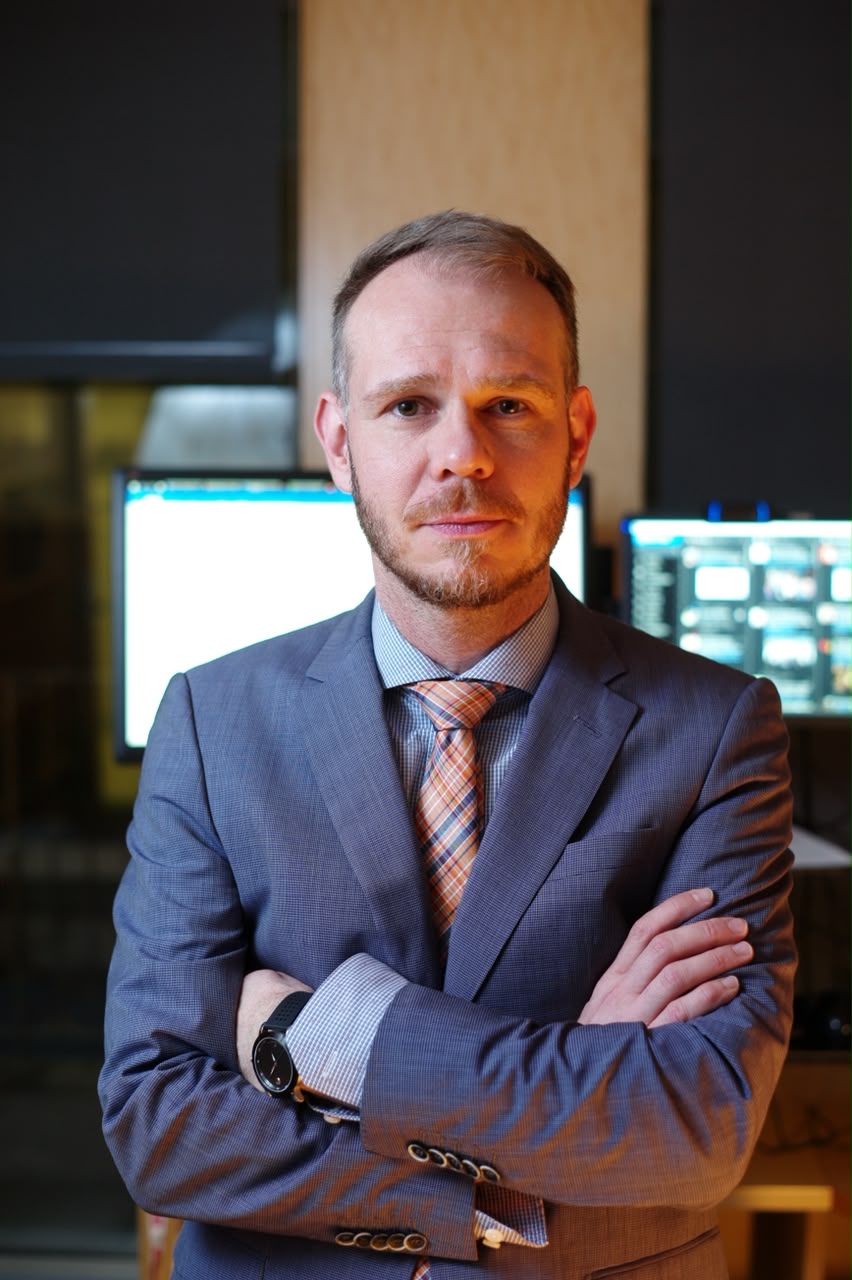
Dietram Scheufele has tracked how Americans and their government handled nanotechnology, CRISPR, and lab-grown brain tissue. AI, he argues, is repeating the pattern, and this time the stakes are higher.
Ask Americans what they want from artificial intelligence and the answer is surprisingly consistent. In a 2024 review of fifteen national surveys conducted over four years, published in Science and Public Policy, Dietram A. Scheufele and his collaborators found that the public is cautiously optimistic about specific uses, such as AI that screens for skin cancer, and deeply uneasy about the rest. Americans, the authors wrote, “generally call for more regulation and government oversight,” and most “emphasize the importance of addressing societal concerns such as racial bias and inequities before the widespread implementation of AI.”
Ask what the federal government has done about it and the answer is shorter. Congress has passed no comprehensive AI law. In 2025 the Senate rejected a proposed moratorium on state AI rules, and in December of that year the White House issued an executive order creating a litigation task force to challenge state AI laws and directing the Commerce Department to explore withholding broadband funding from states whose rules it considered burdensome. The result, halfway through 2026, is a patchwork of more than a hundred state statutes, most of them narrow, and a federal government that has largely opted out.
For Scheufele, one of the most cited researchers in the world on how the public makes sense of new technology, none of this is new. He has watched the same movie three times.
The public isn’t one thing
Scheufele’s AI work starts from a premise that sounds obvious and is routinely ignored in Washington and Silicon Valley alike: there is no such thing as “the public.”
In a 2022 study in Computers in Human Behavior, Scheufele and his collaborators surveyed 2,700 Americans and found not one public but five, ranging from a third who believe AI’s risks outweigh its benefits to a large ambivalent bloc that sees both as high. The groups differed in what news they consumed and in who they were. Members of minority communities, the people most likely to bear the costs of biased systems, were overrepresented in the segments that had thought least about the technology. AI, the authors noted, was still relatively unpoliticized, which made the moment “opportune” for an inclusive public conversation. That window has been closing ever since.
A related study by Scheufele and his collaborators in Journalism & Mass Communication Quarterly in 2025 traced how media use, political ideology, and trust in institutions shape emerging attitudes toward AI, and found that opinions about a technology most people have never used were already being sorted along the familiar partisan lines that hardened around vaccines and climate.
Scheufele’s larger argument is that responsible innovation is not a slogan but a set of choices about who gets asked, and when. Those choices are being made right now, mostly by default.
Nano, CRISPR, brain organoids: the same story three times
What makes Scheufele unusual among the scholars now weighing in on AI is that he has studied, in real time and with the same tools, every major emerging technology of the past quarter century as it moved from the lab into public view.
He started with nanotechnology in the mid-2000s, when the federal government was pouring billions into the National Nanotechnology Initiative and worrying, openly, that the public would react the way Europeans had reacted to genetically modified food. The surveys Scheufele and his collaborators published in Nature Nanotechnology found that scientists and the public worried about entirely different risks, and that Americans’ attitudes toward nano were shaped less by what they knew than by their religious and moral commitments, a finding that held up across the United States and Europe. The lesson, which he would repeat for two decades, was that information alone does not move public opinion, and that regulators who assume it does are planning for a public that does not exist.
Then came CRISPR. In 2017, Scheufele and his collaborators published in Science the first comprehensive survey of American attitudes toward human genome editing. Two-thirds of Americans supported editing to treat disease; only a quarter approved of heritable enhancement. But the striking finding was the one thing the religious and the secular, the informed and the uninformed, agreed on: that this was a decision the public should be part of. “The public may be split,” Scheufele said at the time, “but they are united in the idea that this is an issue that requires public involvement.” A year later a Chinese scientist announced the birth of the first gene-edited babies, and the conversation the public had asked for was overtaken by events. Scheufele and his collaborators returned to the question in the Proceedings of the National Academy of Sciences in 2021 with a review of what actually works in public engagement on CRISPR, and what, despite decades of good intentions, does not.
The third case is the strangest. Human brain organoids, clusters of neural tissue grown from stem cells that can now be embedded in robotic bodies or wired to computer chips, raise questions that would have sounded like science fiction a decade ago. When the National Academies convened a committee in 2021 to examine the science, ethics, and governance of neural organoids and chimeras, Scheufele was among the experts asked to brief it, and the committee’s report concluded that the United States “currently lacks robust mechanisms for facilitating this public engagement.” In 2025, Scheufele and his collaborators published in Science Communication one of the first studies of how Americans form opinions about brain organoids, and found the same early-stage pattern he had documented for nano and CRISPR: political ideology and religiosity shaping moral judgments before any facts are considered, with deference to science the main counterweight.
Nano, CRISPR, organoids, AI. Each time, the technology arrived faster than the institutions meant to govern it. Each time, the public said it wanted to be consulted. And each time, the consultation either came too late or did not come at all.
Talking to people, not at them
Scheufele’s position is not that the public should vote on technical standards, and it is not the deficit-model fantasy that if scientists just explained things more clearly, everyone would come around. His work has spent as much time dismantling that idea as any in the field.
Two of the most cited papers he and his collaborators have written, “Science audiences, misinformation, and fake news” in PNAS in 2019 and “How not to lose the COVID-19 communication war” in Issues in Science and Technology in April 2020, make the same point from different directions: audiences are not empty vessels, they bring values and identities to every message, and communication that ignores those values does not merely fail but backfires. A 2023 study by Scheufele and his collaborators in the journal Vaccine found what the authors called “collateral damage” from debunking mRNA vaccine misinformation: correcting false claims could reduce trust in accurate information alongside the false. Scheufele served as vice-chair of the National Academies committee that produced Communicating Science Effectively: A Research Agenda in 2017, and he was inaugural co-chair of the Academies’ Standing Committee on Advancing Science Communication, roles in which he pushed the field toward treating engagement as an empirical question rather than a public relations exercise.
What he argues for instead is engagement in good faith, which means three things. It means starting early, before the science is settled, when public input can still shape what gets built; as he put it after the 2017 CRISPR study, “the time to have the discussions is now, before the science is fully ready.” It means honesty about uncertainty and about who benefits, because publics can tell when they are being managed rather than consulted. And it means actually listening, which requires knowing which publics one is talking to, a point he made in a 2018 essay in Environmental Communication titled, pointedly, “Beyond the choir?”
That, in the end, is the through line of Scheufele’s career: that a democracy cannot outsource decisions about the technologies reshaping it to the people building them, and that the alternative is not a referendum but a conversation, one that begins before the product ships and continues after the first mistakes.
AI is the test case now. The surveys say Americans want guardrails and want a say. The federal government has, so far, declined to provide either. Scheufele has spent twenty-five years documenting what happens when that gap goes unaddressed, and the record does not suggest it closes on its own.
Dietram Scheufele was featured in USA Weekly, Medical Herald, Los Angeles Reporter, and MedWorld News.