
 Nia Bowers
For Stafford Schlitt, Co-Founder and COO of the AI platform Flik, the shift happening in creative technology isn’t just about better tools, it’s about breaking Hollywood’s long-standing production gatekeeping model entirely.
“Most AI apps give you a piece of something. A clip, an image, a track, and then you figure out the rest. Flik gives you the finished product,” Schlitt says.
That distinction, he argues, is what separates Flik from the growing ecosystem of generative tools flooding the market. On Flik, creators aren’t stitching outputs together across platforms, they’re producing complete, structured works from start to finish.
“We’ve got creators on the platform right now making full films, series, music videos, all the way through to a final cut,” he says. “The difference isn’t a feature list, it’s whether you get a part or a product.”
For Schlitt, the stakes are particularly visible in how content is actually being used. He points to a base of creators and YouTube channels already running full production workflows inside the platform.
“Our biggest customer cohort is creators and YouTube channels running real content operations on this. They’re making things people actually watch,” he says.
Hollywood’s production system, rebuilt
Schlitt frames Hollywood’s traditional model as one defined by scale and gatekeeping, crews, budgets, approvals, and greenlights concentrated among a small group of decision-makers.
“For a hundred years, making something in this town meant a crew, a lot, a budget, and somebody’s greenlight. We built the thing that replaces all of that,” he says. “The only part that’s still hard is having something worth saying.”
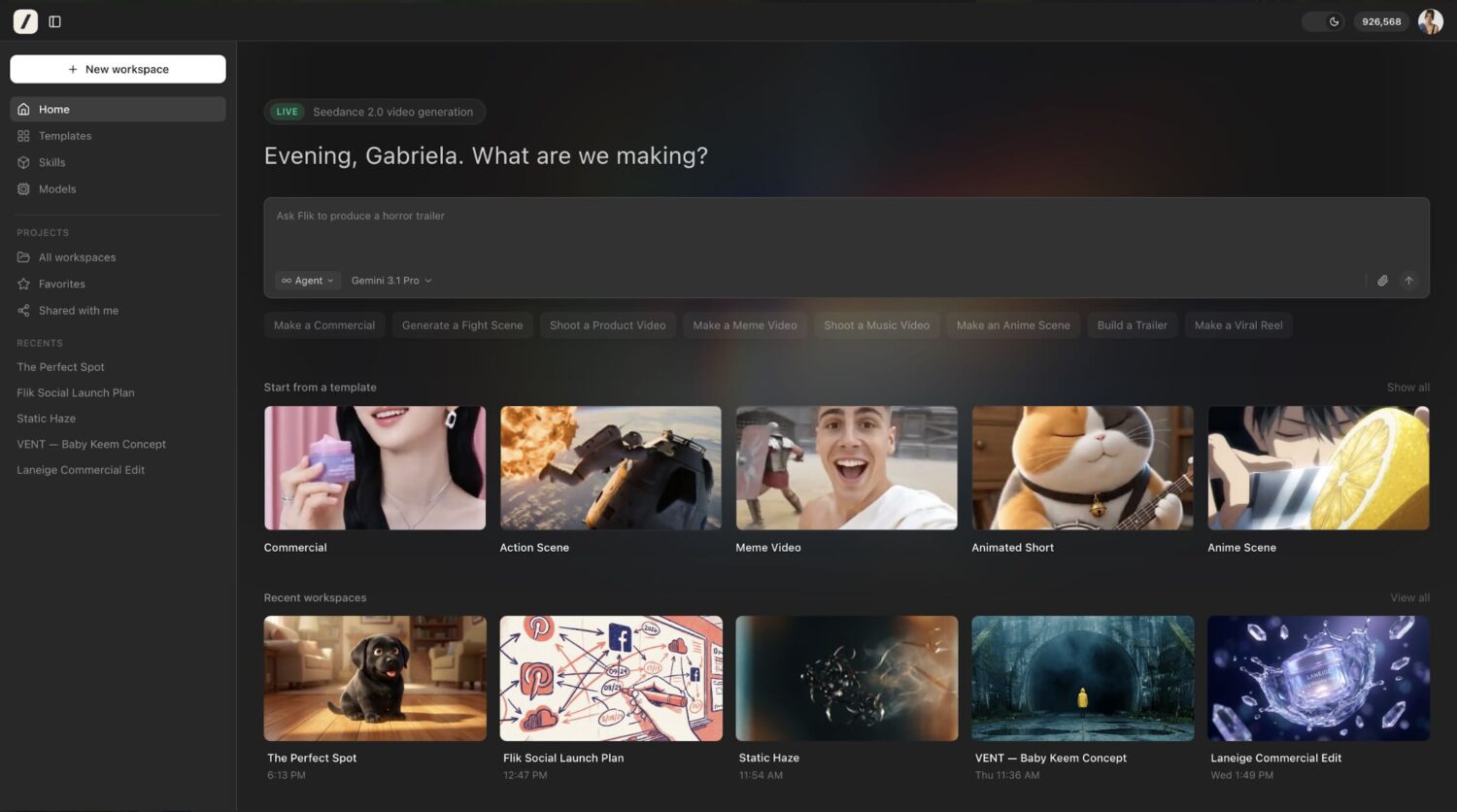
Instead of fragmented creative tools, Flik is designed to function as a single continuous production system.
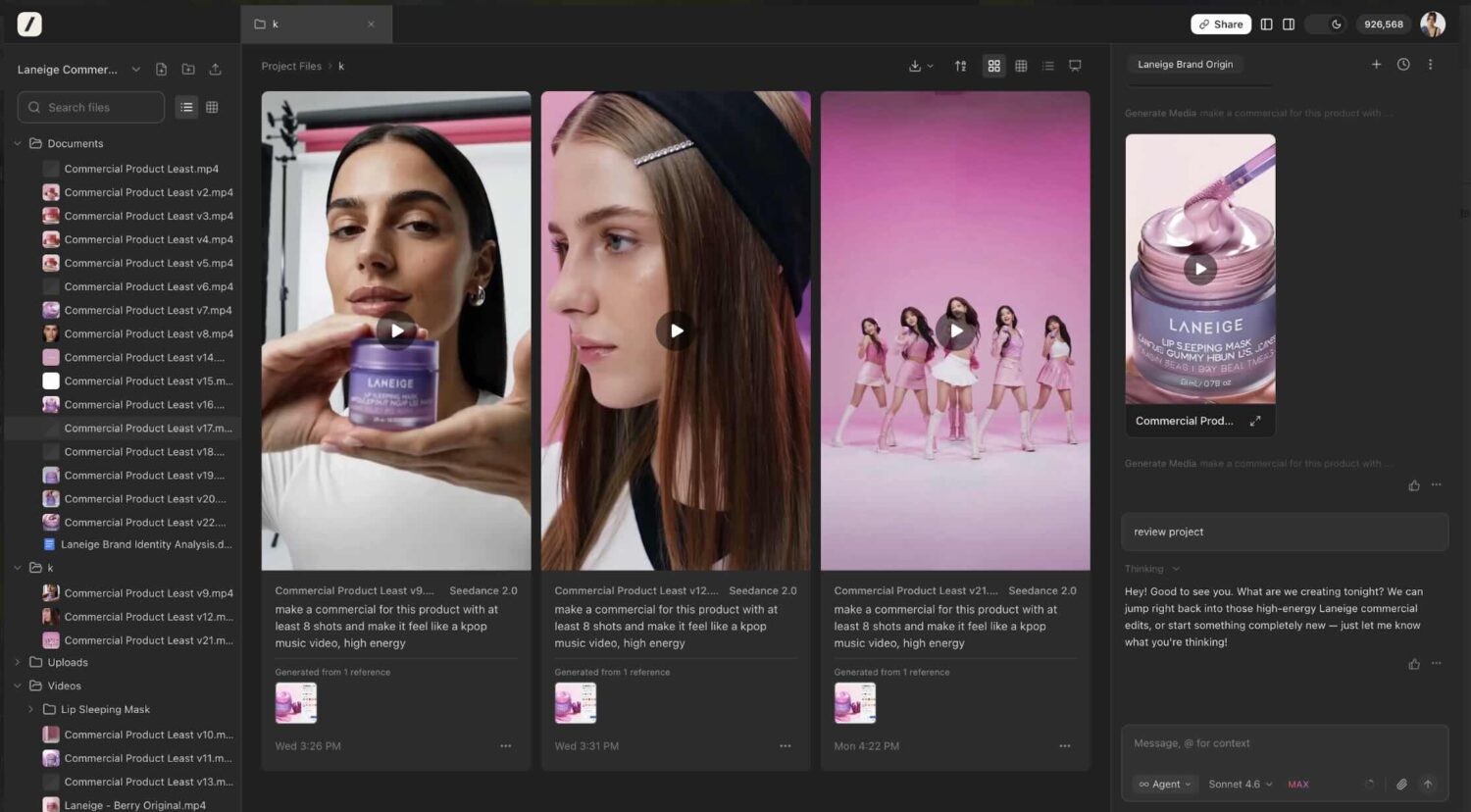
“You start with an idea. The system breaks it into every step a real production takes, in order: script, characters, shots, score, edit,” Schlitt explains.
Everything stays connected throughout the process.
“It’s one project, not five disconnected tools,” he says. “Your characters and your world stay consistent the whole way through because the workspace remembers everything.”
Under the hood, the platform routes different parts of production to specialized AI models, but users don’t manage that complexity.
“You direct, it produces, and you get a finished cut you can still go in and adjust,” he says.
Built as the technology caught up
Flik’s development timeline reflects how quickly the underlying AI stack evolved.
“About two years with a team of roughly ten,” Schlitt says. “The honest part is that it wasn’t buildable until recently.”
“The technology to actually pull this off only existed in the last 18 months,” he adds.
Once AI systems became capable of handling full end-to-end production workflows, the company moved quickly.
“When the tech caught up, we shipped,” he says.
What AI means for Hollywood’s economics
For Schlitt, the most significant impact of AI won’t be incremental, it will be economic.
“The problem in this town is that production got so expensive and so risk-averse that a tiny group of people decide which stories get made,” he says.
That system, he argues, leaves a vast number of stories behind.
“Great scripts sit on shelves for years and whole communities never see themselves on screen,” he says.
Flik’s goal, he says, is to collapse the cost barrier that determines what gets made.
“What we’re doing is dropping the cost of production by orders of magnitude, so a story doesn’t have to clear a hundred-million-dollar bar to exist,” Schlitt says. “That’s a second lane, where the stories that never penciled out finally get made.”
Schlitt sees AI as expanding opportunities for creators, not replacing them.
“This isn’t about replacing anyone,” he says. “There’s a whole tier of stories that never got made because the economics didn’t work, and we make the economics work.”
Instead, he says, it shifts who gets to participate.
“The gatekeeping layer that decided whose work got a shot is what changes. The artists don’t disappear, they finally get to make the things they could never get funded.”
From screenplay to production in one step
For writers, Schlitt says the role of the screenplay doesn’t disappear, but it changes position in the process.
“You still need the story. That’s always been the hard part and it still is,” he says.
“What changes is that the screenplay isn’t the finish line anymore. Now you write it and you go make it.”
In his view, Flik removes the financial barrier that once made scripts the end of the road for most creators.
“The screenplay doesn’t go away. It’s still where the story gets built,” he says. “But it used to be the ceiling for most writers… Flik turns it back into what it was supposed to be: step one. Write it, then make it.”
Growing With a Lean Team
Based in Laurel Canyon, Flik operates with a team of just 13 people, a scale Schlitt says reflects the company’s core philosophy.
“That’s the whole point of the thesis,” he says. “A team this size can now produce what used to take thousands.”
The company has raised funding from A.Capital, SV Angel, Y Combinator, and others, and is continuing to grow.
“Right now we’re heads down on growth, Schlitt says.”
He also says Flik has drawn interest from Hollywood studios.
Early adoption and engagement
After opening access, Flik moved from a 50,000-person waitlist into paid subscriptions.
“Revenue is up, users are up, active monthly creators are skyrocketing and they are generating thousands of hours of content each month,” Schlitt says.
But the metric that matters most is engagement.
“The number I care about most is the 18-minute average session,” he says. “When someone spends that kind of time in a session, they’re making something real. That’s the whole game for us.”