
 Michele Stueven
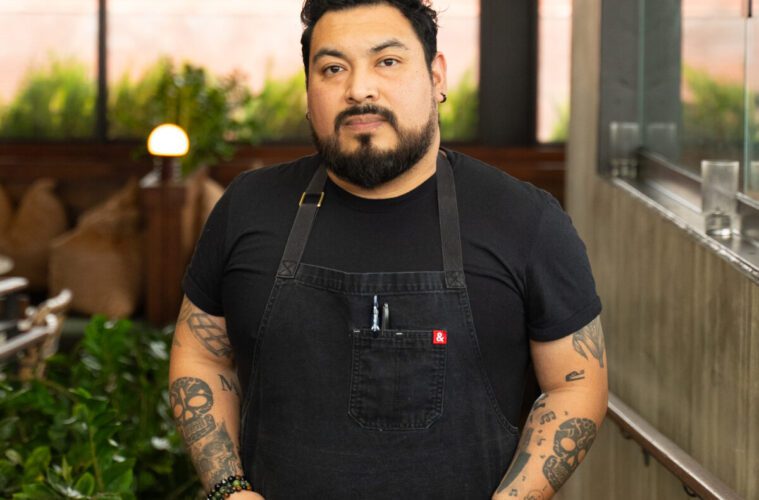
If anyone is the culinary poster child of Hispanic Heritage, it’s Alan Sanz, Executive Chef of Mírate in Los Feliz and sister concept Daisy Margarita Bar in Sherman Oaks.
Born and raised in Mexico City to a family with roots in Oaxaca, Michoacán, and Argentina, Sanz’s career has taken him from culinary school in Buenos Aires to kitchens in France, Spain, and Chile. In 2013, he earned his degree in Culinary and Pastry Arts from the Instituto Superior Mariano Moreno in Buenos Aires, Argentina. He then pursued additional diplomas in coffee, tea, beer, wine, and chocolate. He went on to intern at distinguished kitchens across Latin America and Europe, including Pujol (CDMX), Boragó in Chile, Mugaritz in Spain, and Epicure in France.
Sanz then led kitchen operations at Maizano in Costa Mesa, Porch & Swing in Irvine, and both Gracias Madre locations in West Hollywood and Newport Beach.
From all those travels and experiences, the most important thing he learned was a new respect and appreciation for his own native Mexico.
“I’m from Mexico City and my grandfather is from Oaxaca,” Sanz tells LA Weekly. “I had normalized a lot of things. But when I went out of the country, I realized that all those other countries didn’t have the ingredients or the microclimates that Mexico has. All of our native ingredients and the animals we have are at our doorstep in the backyard. The other thing I realized was that all the social and cultural aspects that center around the food in Mexico weren’t celebrated the way we did elsewhere. Like the Day of the Dead. No ofrendas or special food. The holidays were different. I realized I had to give more respect and importance to my culture. The history of Mexico wouldn’t be the same without those specific things happening around the table. Leaving my country opened my eyes and made me feel proud of what we have there.”
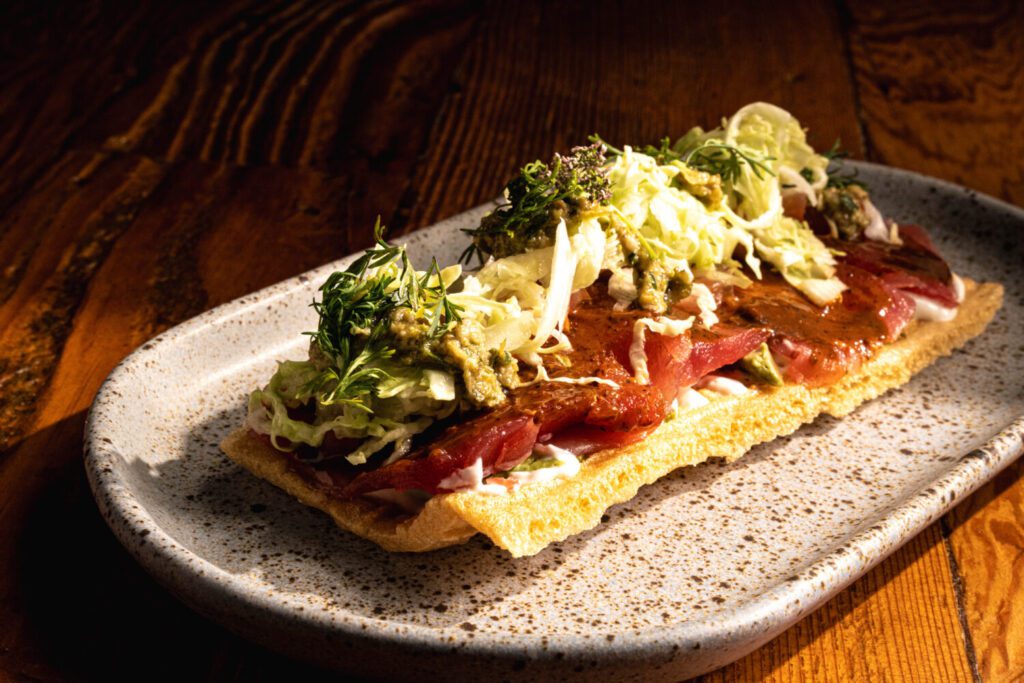
Chicharron de Parque (Matt Egan)
Those formative experiences laid the foundation for his innovative approach to cooking, blending deeply rooted, traditional techniques with a contemporary culinary vision. Sanz channels that global perspective into modern interpretations of his personal Mexican food memories.
“There are still a lot of ingredients like different herbs, spices, and chilis you can’t find here readily,” he says. “The way they butcher the animals here is different, so you really need to establish a good relationship with your meat vendor. Those little things make a big difference in the gastronomy. We try to substitute similar things, but in the end, it’s not the same. You can’t find bitter oranges like in the Yucatan, or the same pork cut, so it’s hard to make a proper cochinita pibil here.”
One of the dishes on the Mírate menu is Taco de Cochito, inspired by the late-night streets of Oaxaca, where artists, musicians, chefs, and locals gather for tacos and conversation. It features roasted pork, honey fig truffle, salsa verde cruda, and chicharrón crumble on a corn tortilla, honoring the city’s taqueria culture.
Because transporting Mexican ingredients into Los Angeles can be costly and suffer quality, Sanz makes use of local products using traditional techniques.
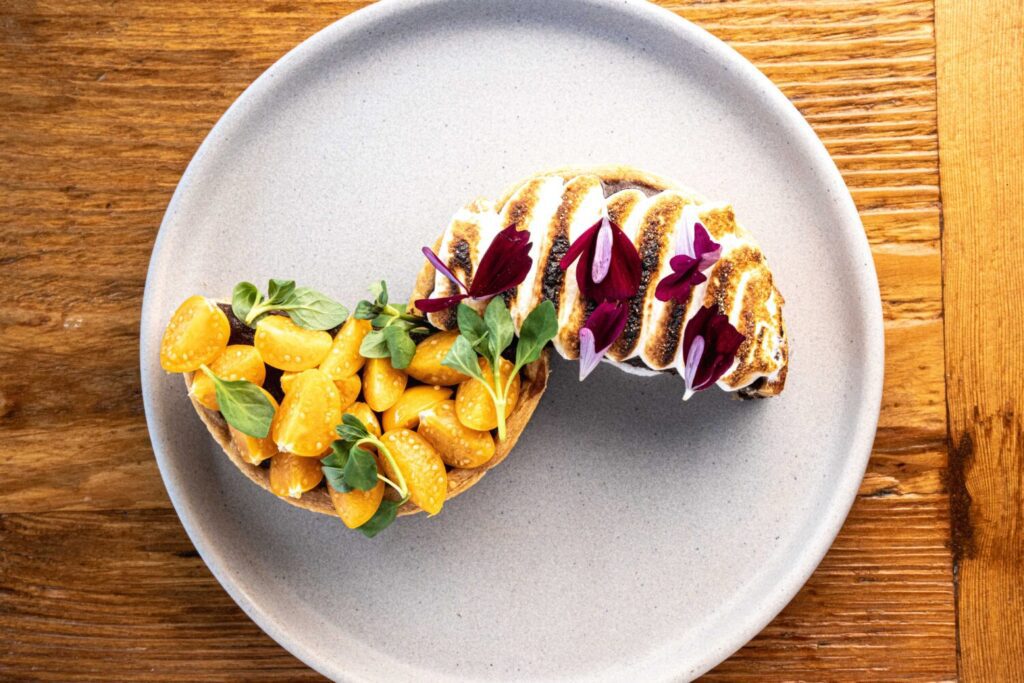
Oaxacan chocolate tart (Matt Egan)
“I have a mole blanco, which is rare to find,” he says. “You have to follow a certain process for it to be a true mole. I added grapes, white chocolate, cauliflower, plantains, and fresh habaneros. It’s a contemporary interpretation of what mole is to me, with ingredients I can find here more easily than making a mole negro. We serve it with maitake mushrooms. It’s still attached to heritage and traditions in a contemporary way. Bringing those ingredients from Mexico isn’t always the best way to go, because they lose freshness, and it gets a lot more expensive.”
A special at Sanz’s Northern Mexico-inspired cantina, Daisy, is Chicharrón del Parque, a nod to his childhood visits to La Michoacana ice cream and snack shops. Typically layered with sour cream, avocado, tomato, cabbage, pickled pork skin, cheese, and Valentina sauce, his version features cured fresh tuna in place of pork skin. There’s a raw bar with oysters, tuna, and kampachi from Ensenada and lots of margaritas.

Daisy Cantina (Kort Havens)
“Back in the day in Mexico, you’d go to a cantina to drink and they’d bring you food for free, in the hopes that you won’t get that drunk and will keep ordering drinks,” says the professional cooking competition judge. “It would start with a little guacamole and by the time you were on your fifth round of drinks, they’d bring out the pork shanks.”
Sanz, who says he didn’t find the kitchen, the kitchen found him, wrestles with the same struggles others are facing in the restaurant industry right now. It’s a hard and demanding job, both physically and mentally. The kitchen helps give him consistency and discipline. It’s the only place where he can be focused and happy for more than ten hours.
“One of the challenges we are finding in the kitchen right now is the motivation,” he says. “People are discouraged from going out. Immigrants are the backbone of this industry, and they don’t go to their jobs happy anymore. That camaraderie is missing. Workers aren’t as creative because they’re thinking of other things and losing focus on the important and fun parts of this business. These are rough times, and people are scared. We don’t know if staff are going to come to work tomorrow or not, and we have to try and figure out at the last minute how to cover them. Talented people should be able to build their lives here. The responsible people who go to work every day and want to learn more, we can be a school for them. They can build a career, but we need tools to make that happen. Part of a chef’s job is the training process and teaching people how to grow. It’s not just about making delicious food and growing a business. The human part is very important.”

Chef Alan Sanz on the October 31, 2025 cover of LA Weekly (Photo: Robert Campbell; cover design: Mark Stefanos)