
 Brianna Kamienski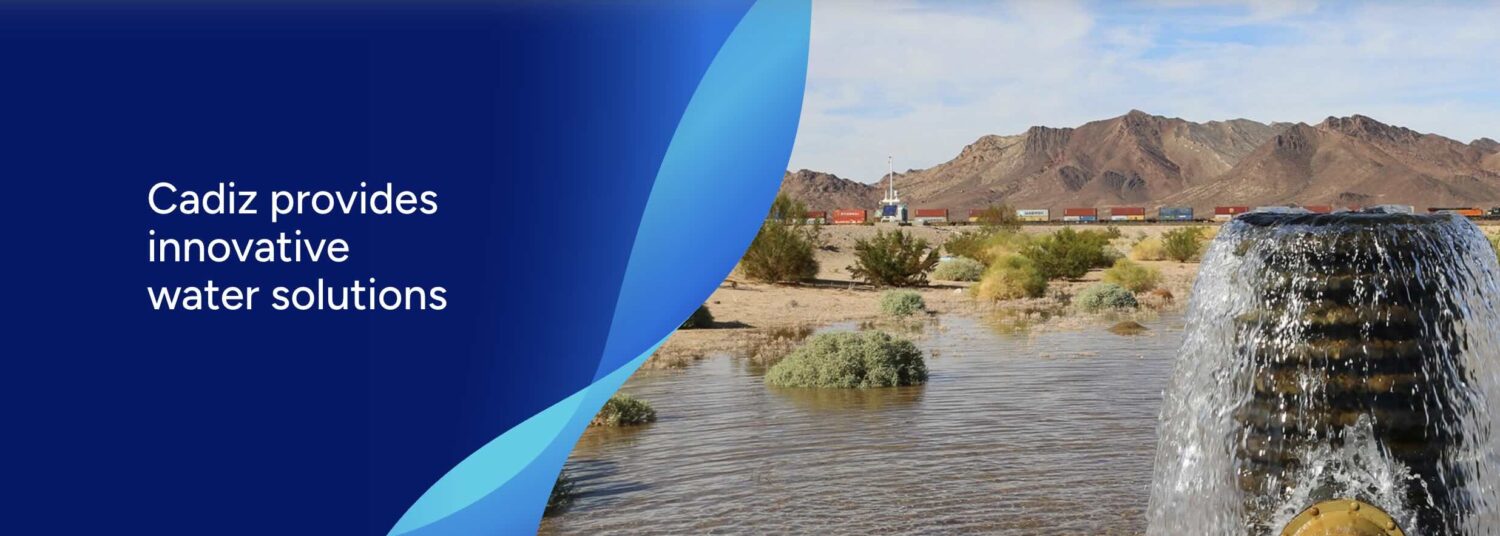
Image Credit: Cadiz
Drought is not new to California and the American Southwest. For centuries, this region has weathered cycles of dry years, each one leaving communities, farms, and ecosystems struggling. With a mixed 2025 water year, the Southwest (including California and Nevada) expect to enter 2026 with caution. Drought is expected to not only persist, but intensify, especially in Southern California and the Lower Colorado River Basin significantly impacting reservoirs. Scientists warn this cycle may not end anytime soon—it could extend well into the next century.
In this context, water is not just a resource – it’s survival. Yet for many, the human right to clean, affordable water remains out of reach. Geography and wealth too often determine who has access. Cadiz Inc., an innovative water solutions company, has a different vision: a future where water is accessible to everyone and delivered sustainably for generations to come.
The Cadiz story begins in the 1980s, when NASA satellite imagery revealed something extraordinary beneath the Mojave Desert—a vast aquifer on the outskirts of Cadiz, California. What began as a discovery soon became a mission. Cadiz Inc. first secured permits in the 1990s to capture groundwater from the Mojave Desert aquifer for agriculture. The effort later evolved into the now, Mojave Groundwater Bank, where it holds water rights and an estimated 2.5 million acre-feet of water supply potential. It later initiated the acquisition of a 220-mile natural gas pipeline that stretches from the Cadiz Ranch to Bakersfield and now plans to repurposes it for water conveyance. It is the first known project to convert fossil fuel pipelines to transport water, creating critical infrastructure to move water across the Southwest.
As CEO Susan Kennedy explains:
“We’re not just talking about pipes and pumps; we’re talking about a new way of thinking about water as a shared, sustainable resource.” — [Pix11, 2025]
Redefining What Water Access Means
Cadiz’s mission is simple yet ambitious: redefine water access in the American Southwest. To do this, the company focuses on five core innovations which include, storing water before it evaporates, expanding reliable supplies to communities in need, transporting water through modernized infrastructure, treating water to remove harmful contaminants and, reimagining water management for long-term sustainability.
These solutions are more than engineering feats—they are lifelines. For farmers, they preserve crops. For cities, they keep taps running. For families, they safeguard a basic human right. Providing water to drought-plagued areas is essential to human life and agricultural health.
“Groundwater storage is the key to surviving future droughts and securing long-term supply,” Cadiz leadership emphasizes [West Hollywood Weekly, 2025]
Reshaping the Water Landscape
Cadiz knows that no single company can solve water scarcity alone. That’s why collaboration is central to its mission. Public agencies, private enterprises, and community organizations are all part of the effort.
As the Company has shared on its website:
“We are partners in water equity, promoting human access to clean water through partnerships that leverage supply, storage, pipeline, and treatment solutions, cutting-edge innovation, and industry-leading standards of environmental stewardship.”
Together, these partnerships have created a powerful framework for sustainable water security—one that has the potential to reshape the water landscape of the entire American Southwest for decades to come.