
 Daniel de Castellane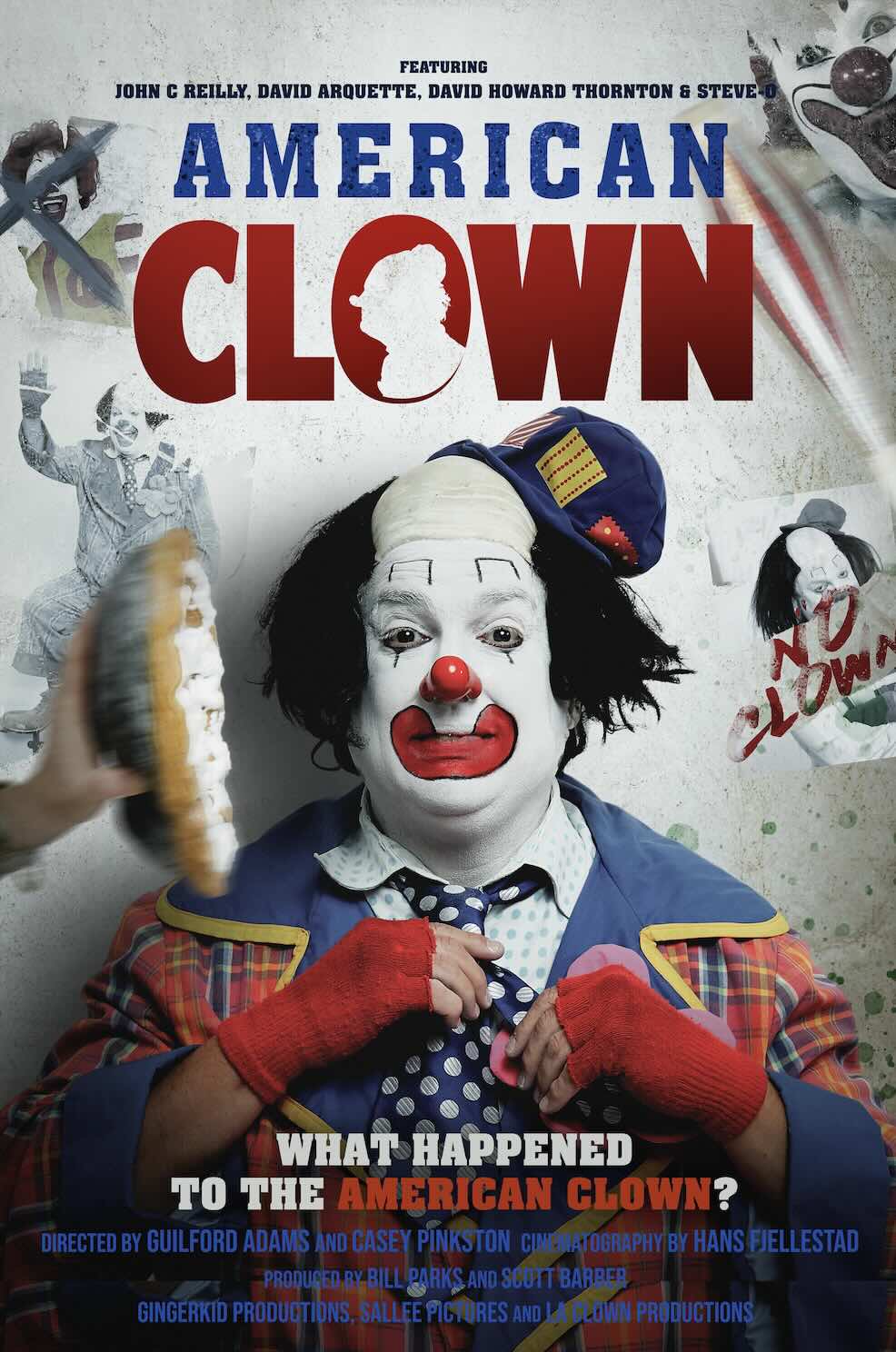
A 91-minute documentary about working clowns sounds like a tough sell, even to someone who spent their childhood glued to Bozo reruns. But Guilford Adams and Casey Pinkston’s “American Clown,” which premiered at the Newport Beach Film Festival before rolling out on streaming platforms, defies every expectation about what a film on this subject could be. What begins as a portrait of a struggling art form becomes something far more resonant: a meditation on authenticity, vulnerability, and what it means to dedicate your life to an increasingly misunderstood profession.
The timing feels uncannily prescient. As Adams notes in the post-screening Q&A, the nearly decade-long production (filming began in 2017) captured the profession’s institutional collapse in real time. Ringling Bros. and Barnum & Bailey Circus shuttered after 146 years. McDonald’s quietly dismantled its Ronald McDonald program, which once employed hundreds of regional Ronalds worldwide. The 2016 “creepy clown” phenomenon poisoned public perception just as horror films—from the “Terrifier” franchise to countless imitators—appropriated clown imagery for cheap scares. One performer recalls the immediate fallout: “It caused a lot of my friends to lose a lot of work for a while. And they’ve done nothing wrong.”
Adams, himself a working clown, serves as both director and de facto guide through this disappearing world. A former McDonald’s Ronald with two kids and rent to pay, Adams found himself navigating the profession’s collapse firsthand. The termination of the Ronald program in 2017 became the catalyst for making the film—a way to document what was disappearing in real time. “That was a clown death, man,” one colleague observes about the industry’s contraction. “The love fell away.”
But “American Clown” resists easy nostalgia. Instead, Adams and Pinkston (who share directing credit, with Pinkston’s editorial work proving essential to wrangling nearly a decade of footage into coherent narrative) probe deeper questions about performance, identity, and the peculiar philosophy that drives people to this work. The film’s most compelling thread isn’t about institutions or economics—it’s about the psychological and emotional calculus of choosing to be perpetually vulnerable in front of strangers.
“Failing is unthinkable to some people, but in clowning, that is a big thing,” one performer explains. “We get ourselves into trouble and try to get ourselves out of trouble.” This embrace of failure as method, even as virtue, runs counter to virtually every other performance discipline. Where actors seek believability and musicians chase perfection, clowns traffic in authentic imperfection. They’re professional fuck-ups, and the work demands they find that funny.
The film’s most provocative observation comes when discussing clowning’s relationship to power. “What is the opposite of power?” one interviewee asks. “I would argue that the opposite of power in some ways is the clown. Its function in society is often to poke fun at or to sort of diminish power. Notice that in dictatorships, comedians are banned. Power can’t tolerate comedy.” The film doesn’t belabor this point—Adams emphasized in the Q&A that the film is “apolitical”—but the observation lingers, especially given the current political moment. In an era of performative authenticity and carefully curated online personas, clowns insist on something radical: that status is bullshit, that we’re all equal, that you don’t have to earn your worth.
Adams and Pinkston cast their net wide, capturing birthday party entertainers, rodeo clowns absorbing terrifying physical punishment (one has had his skull fractured twice, his back broken three times), avant-garde performers stripping away traditional makeup in favor of what one calls “authentic connection,” and medical clowns working in children’s hospitals. The latter sequences, featuring the legendary Bill Irwin and others, provide the film’s most moving moments. Irwin recounts how medical clowns accompanied his daughter through seven surgeries: “Two of those years, they had to change the operation to a different date because they weren’t working.”
Wellington Nogueira, a Brazilian medical clown, articulates what might be the film’s thesis: “I went from an audience of thousands to an audience of one. Treat one person with as much respect, joy, celebration, love and generosity as you would a thousand.” In hospital hierarchies—from administration to doctors to nurses to patients—children sit at the very bottom. The clown’s arrival inverts that structure, restoring agency to the powerless.
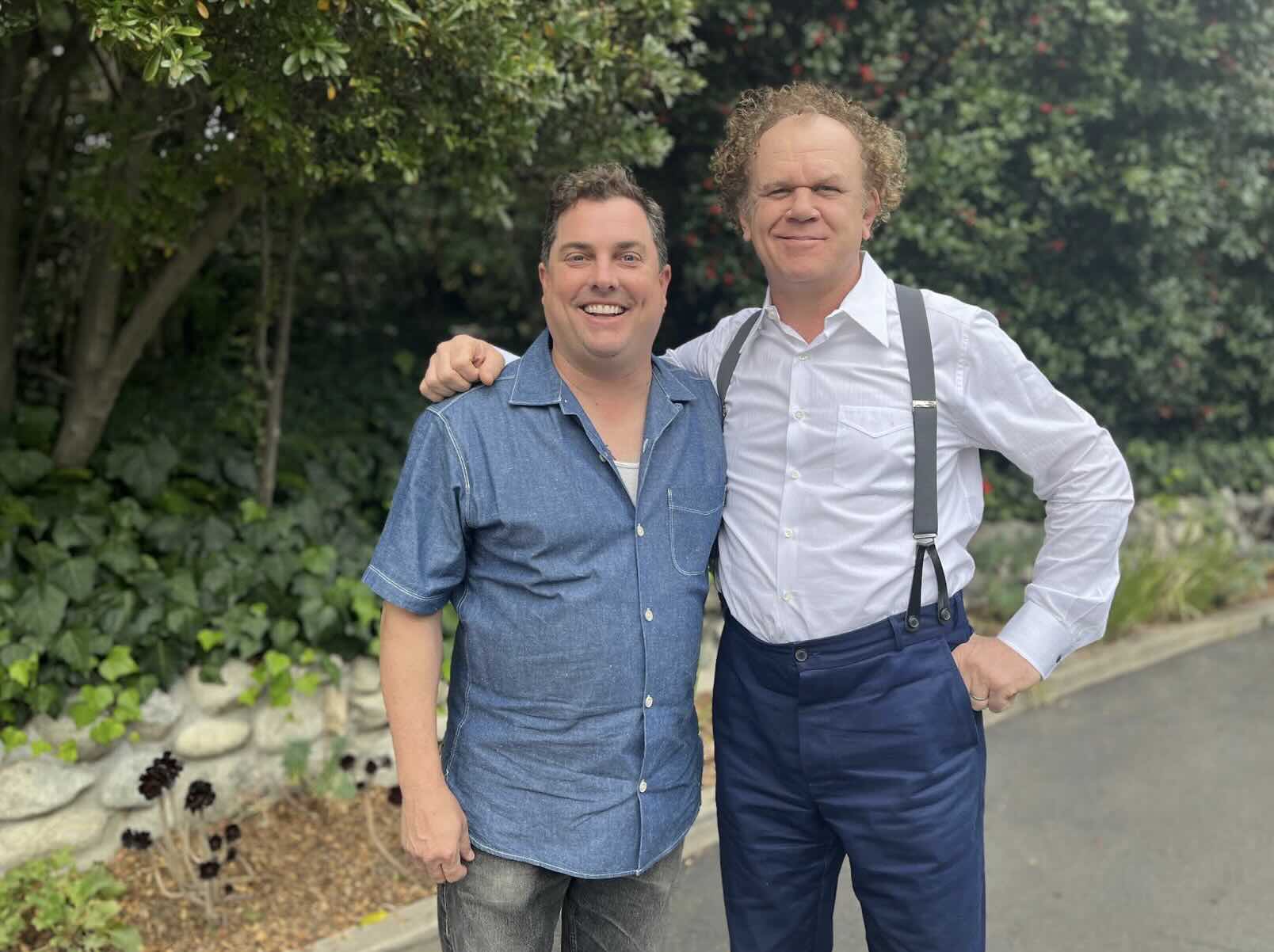
The celebrity interviews (John C. Reilly, David Arquette, Steve-O) function less as name-drops than as testament to clowning’s reach and influence. David Thornton, who portrays the sadistic Art the Clown in the “Terrifier” films, appears to acknowledge the tension his character has created: “I’ve gotten messages from some professional clowns, like, ‘How dare you do this to the craft?'” His response—”That was Gacy. That gave you guys a bad name”—doesn’t entirely hold water, but the film doesn’t press the point. Instead, it lets working clowns articulate their own frustration. “Underneath that makeup there’s people who have jobs and careers and families that relied on that. From this made up hatred, it cost people jobs.”
Pinkston’s editing deserves particular recognition for finding narrative clarity in what could have been an overwhelming amount of material. As producer Jason Sallee noted in the Q&A, Pinkston’s first cut immediately captured the film’s essence—no small feat given the sprawling subject matter and nearly decade-long production. The film moves fluidly between intimate confessions, archival footage, performance clips, and cultural commentary without feeling scattered or didactic.
The film’s most interesting formal choice involves letting performers explain how clowning is evolving away from traditional signifiers. Several have abandoned makeup entirely, arguing that clowning is “a state of mind” rather than a costume. “The only thing we need is a smile and eyes. You don’t need makeup to be a clown,” one insists. This stripping away of artifice reflects a broader cultural shift toward authenticity, even as it raises questions about what makes someone a clown if they’re not wearing the uniform. One performer puts it plainly: “If you asked me in the beginning of my career, I would probably say that you needed a wig, a nose, and shoes. Now, as I’ve stripped myself of all these things and I’m still doing the work, I see it through a different lens.”
That tension—between tradition and evolution, between institutional structures and individual artistry—animates much of the film. Adams seems caught between mourning what’s been lost and advocating for what might come next. At one point, a performer suggests: “We’re stripping away from the large arena shows and going back to little traveling vaudeville stages. That’s what’s interesting and that’s what’s missing in our society. People find it unique. Like, oh, wow, you’re actually engaging me. I haven’t had that.” The sentiment carries an edge of desperation, as if convincing themselves this contraction is actually an opportunity.
Yet there’s genuine optimism here too. David Arquette, who purchased the rights to revive Bozo, speaks about wanting to “bring back some light to the dark world.” The Bindlestiff Family Cirkus pivoted during COVID to create a live online variety show that paid artists when “nobody else was paying anybody anything.” Medical clowning continues to expand through organizations like Healthy Humor. A new generation of performers is discovering clowning as a form of secular service. “The world has become so absurd and hard to understand,” one young clown reflects. “I feel like young people are going back to clowning because there’s a healing kind of mission to it.”
The film closes with a simple assertion: “No matter how hard you try, you’re never going to kill the clown. It’s not going to happen. We may have to get rid of the baggy pants. We may have to adjust here or there, but you couldn’t live without it. You got to laugh. You have to laugh.” It’s both defiant and a bit desperate—the rallying cry of a profession that’s been battered but refuses to disappear.
As the Newport Beach Film Festival programmer Marco observed following the screening, “I don’t know if there’s ever been as complete a film about clowns ever made.” It’s an accurate assessment. Adams and Pinkston have created something that works both as cultural archaeology—documenting a profession at a critical inflection point—and as something more elusive: a genuine exploration of why certain people are drawn to make fools of themselves for others’ benefit. In an age of ironic detachment and performative authenticity, that might be the most subversive act of all.
“American Clown” is now available on major streaming platforms including Amazon Prime Video, Apple TV, and iTunes.
Film Details: Directors: Guilford Adams, Casey Pinkston Runtime: 91 minutes Year: 2025 Producers: Jason Sallee, Guilford Adams, Scott Barber, Bill Parks Editor: Casey Pinkston Featuring: Bill Irwin, John C. Reilly, David Arquette, Steve-O, and numerous working professional clowns