
 Michele Stueven
Ten years ago, Priti Chowdhury and Jules Leib bought a four-acre slope in the Hollywood Hills with grand plans of subdividing the lot and developing two imposing homes on the property that once belonged to Billy Joel and has sprawling postcard-worthy views from the Hollywood sign to downtown Los Angeles. It was dubbed Mulholland Estate.
It took two years to get a driveway approved on the property that stretches all the way down to the Cahuenga Pass. They looked at each other and said hell no. It was time to come up with another idea.
Across the freeway up in the hills under the Hollywood sign is a little private vineyard called Hollywood Classic Wines, that they would stare at every morning and evening since day one.
“We looked at each other and said, why don’t we do what that guy does?” Leib told LA Weekly recently at a brunch at his Mulholland Estate farm celebrating Farmworker Justice. “Twenty-four hours later my wife says, ‘You suck at farming; you’ve never farmed a day in your life. There’s no way we are risking a bunch of vines down this hill; you’ll kill them all.’ So she found agave, and that’s where the spirit started.”
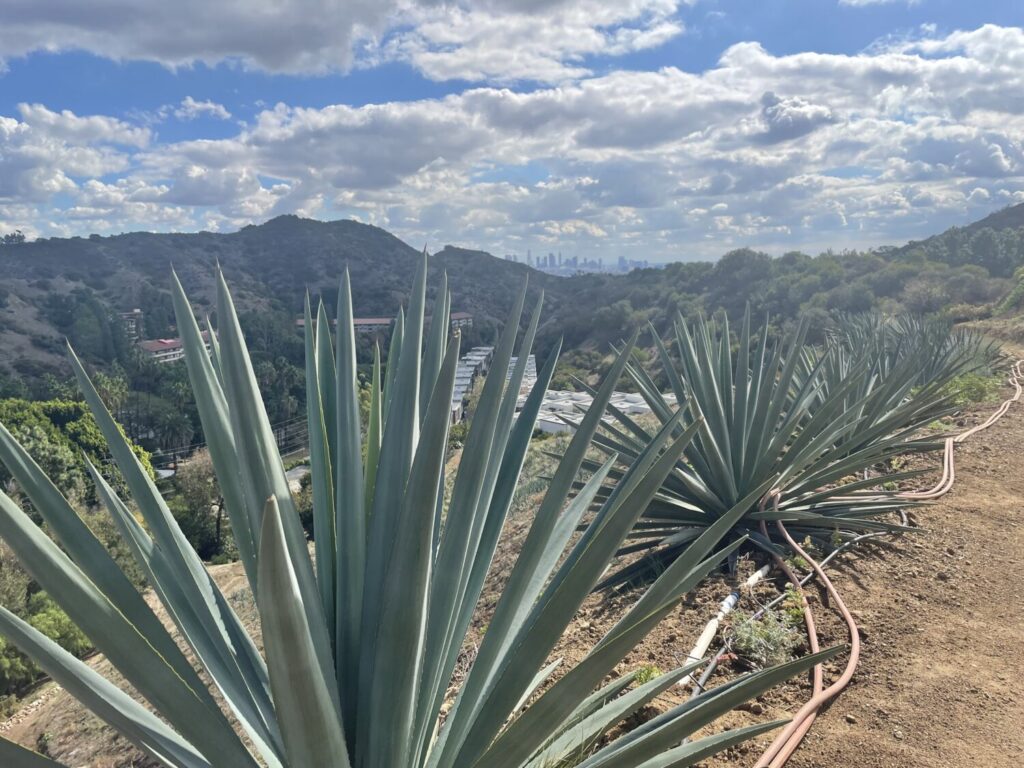
Mulholland Estate farm (Michele Stueven)
They walked 1,000 plants all the way across the slope and dragged a 500-foot-long hose from the house all the way to the corner of the property to hand water.
They now have about 6,000 agave plants as well as 6,000 dahlia tubers that they sell in bouquets at a small shop at the Original Farmers Market and a vertical grow farm that provides 30 chefs and restaurants with microgreens, including Monsieur Marcel Gourmet Market, Bistro & Seafood Market.
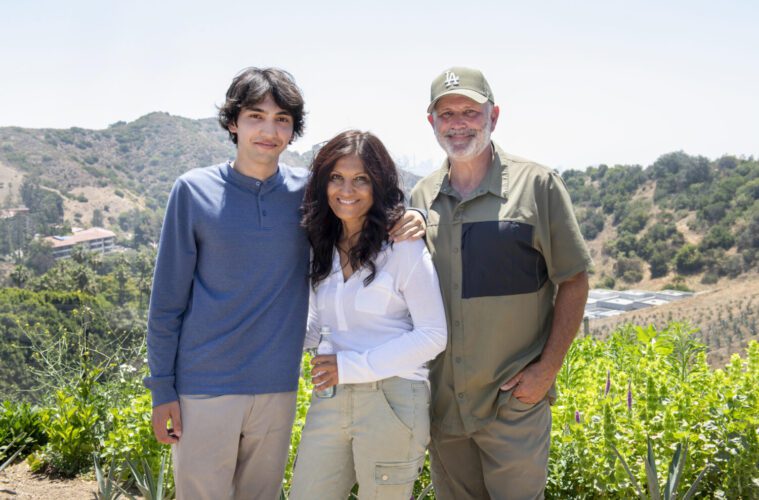
“We never intended to do this,” said Leib. “I can’t even imagine what it would be like to have a big farm. We don’t have restrooms outside; our seven full-time workers just come into the house. My wife Priti is the visionary on the flowers, I’m the microgreens guy, and my 19-year-old son Julian is a full-time UCLA student graduating in a couple of months. He’s very involved with the farm in the business and operational side. We all started at the bottom of this hill where there are now about 6,000 agave plants.”
In 2028, they will be the first to release Los Angeles’ first local agave spirits and are preparing to open the world’s first live-cut, 100 percent microgreens salad bar near The Grove.
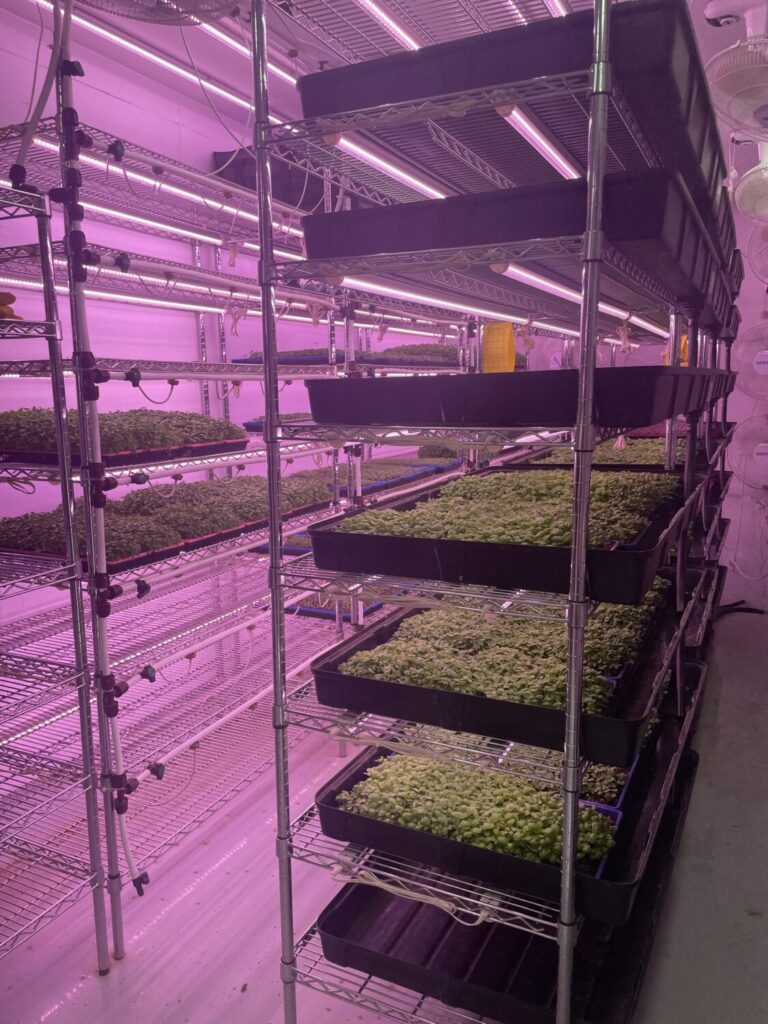
Vertical microgreen farm (Michele Stueven)
“I’ve learned from some of the people at Farmworker Justice that if you listen, and use your two ears as opposed to your one mouth wisely, you’ll learn some things from other people who have done some hard work and continue to face headwinds,” said Leib.
One of those people is the organization’s CEO Ron Estrada, who joined the brunch with his team from Washington, D.C. to help bring awareness to the living and working conditions of the 2.4 million farmworkers in the United States that they represent.
“The message here really is that as our nation’s food system is becoming more fragile, it’s largely due to an unstable workforce,” Estrada told LA Weekly. “We are here to re-educate and amplify the message of the critical role the farmworkers play. Without them planting, tending, and harvesting, we not only run the risk of not having food in our grocery stores, but there is also a health component to this. Right now, 60 percent of our fruits are imported, and nearly 50 percent of our vegetables are imported. Back in the day, when my father was a farm worker with my uncles in Colusa and Hemet, it was less than 10 percent.”
Estrada says Farm workers are viewed as a commodity in today’s media, if not invisible. The average age for workers is 58, with only nine percent under 35, and Farmworker Justice wants to take them out of the shadows.
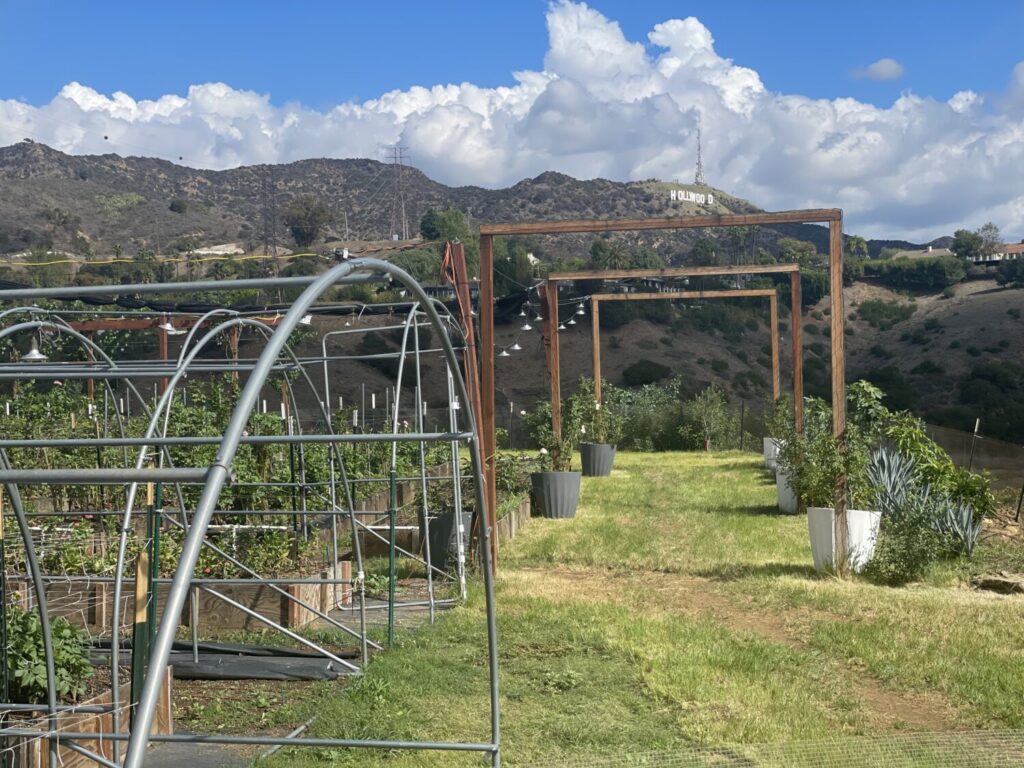
Dahlias above the Cahuenga Pass (Michele Stueven)
“This is a skilled position,” he says. “Their eyes and hands provide us with a keen eye that can spot fungus, pests, and organisms. They’ve been doing this for generations and are experts at this.”
The team’s goal is to bring everyone to the table – people from the restaurant industry, distribution sector, farmers, and growers – and talk about real solutions for not only a sustainable workforce, but how to continue to sustain our healthy food source.
“Our food system is made up of farmers, growers, manufacturers, processors, distributors, retailers, food service and consumers,” says Estrada. “Farm workers are at the top. If something happens to them, it impacts the entire system. Restaurants begin to shut down. So what do we do? Fall back on fast food? We stop eating healthy, and it becomes a health issue. There’s a serious trickle-down effect. Contrary to popular belief, every meal doesn’t begin at the grocery store. It begins with the farm worker. If you ate today, thank the farm worker.”
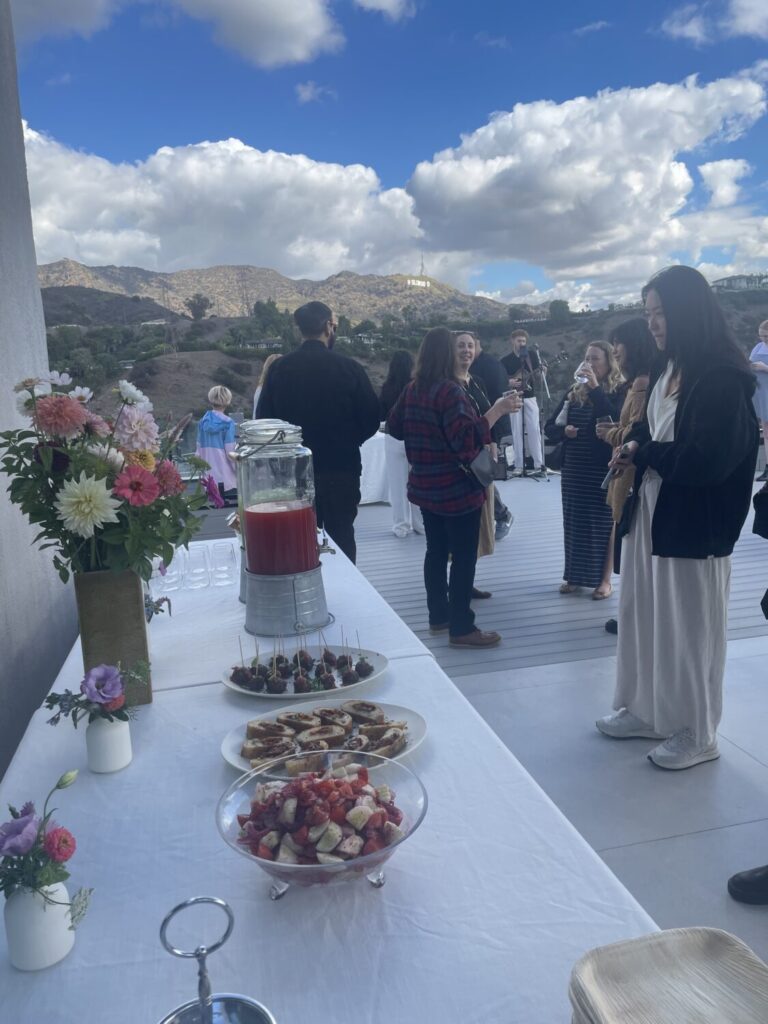
Brunch at Mulholland Estate (Michele Stueven)