
 Mark Stefanos
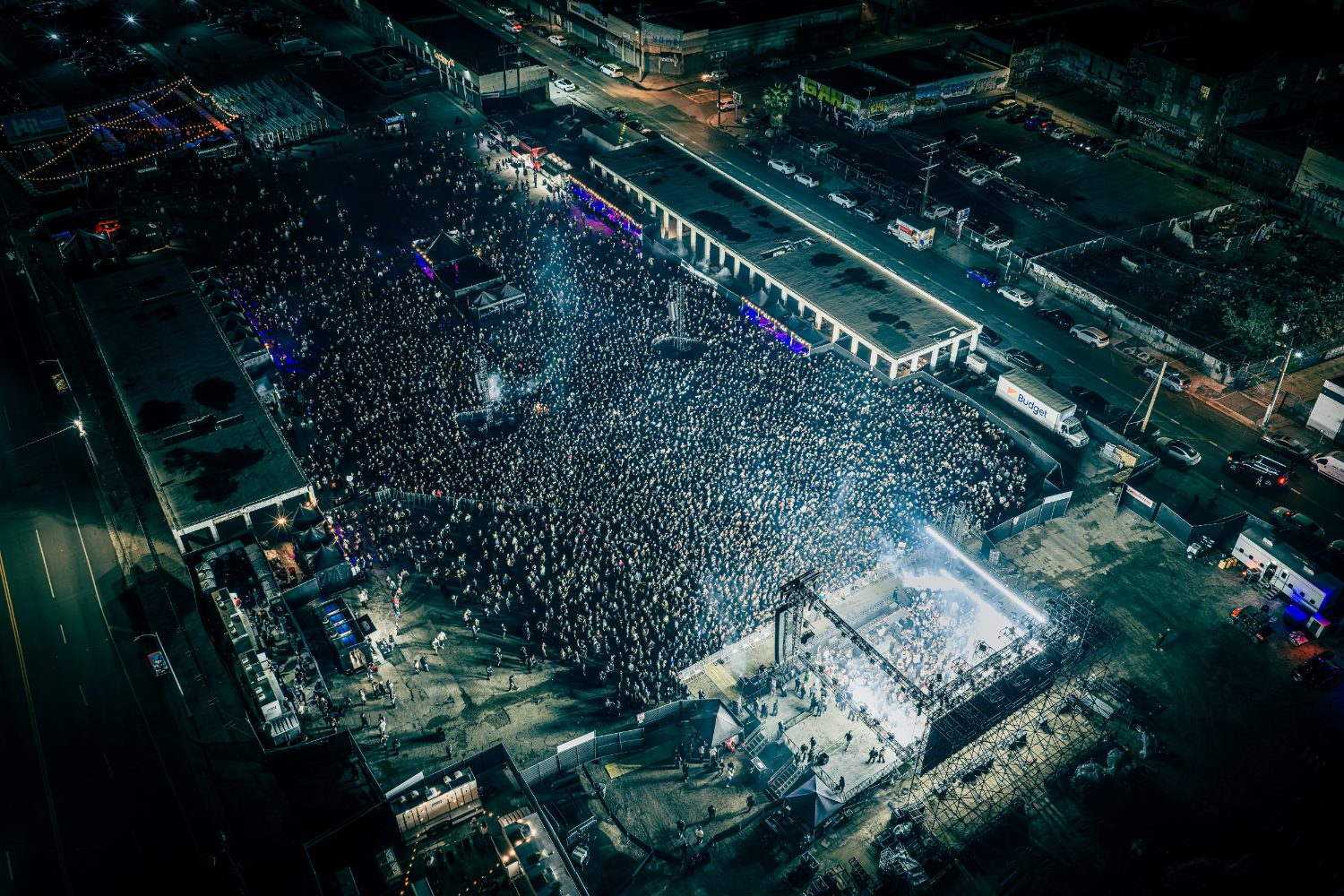
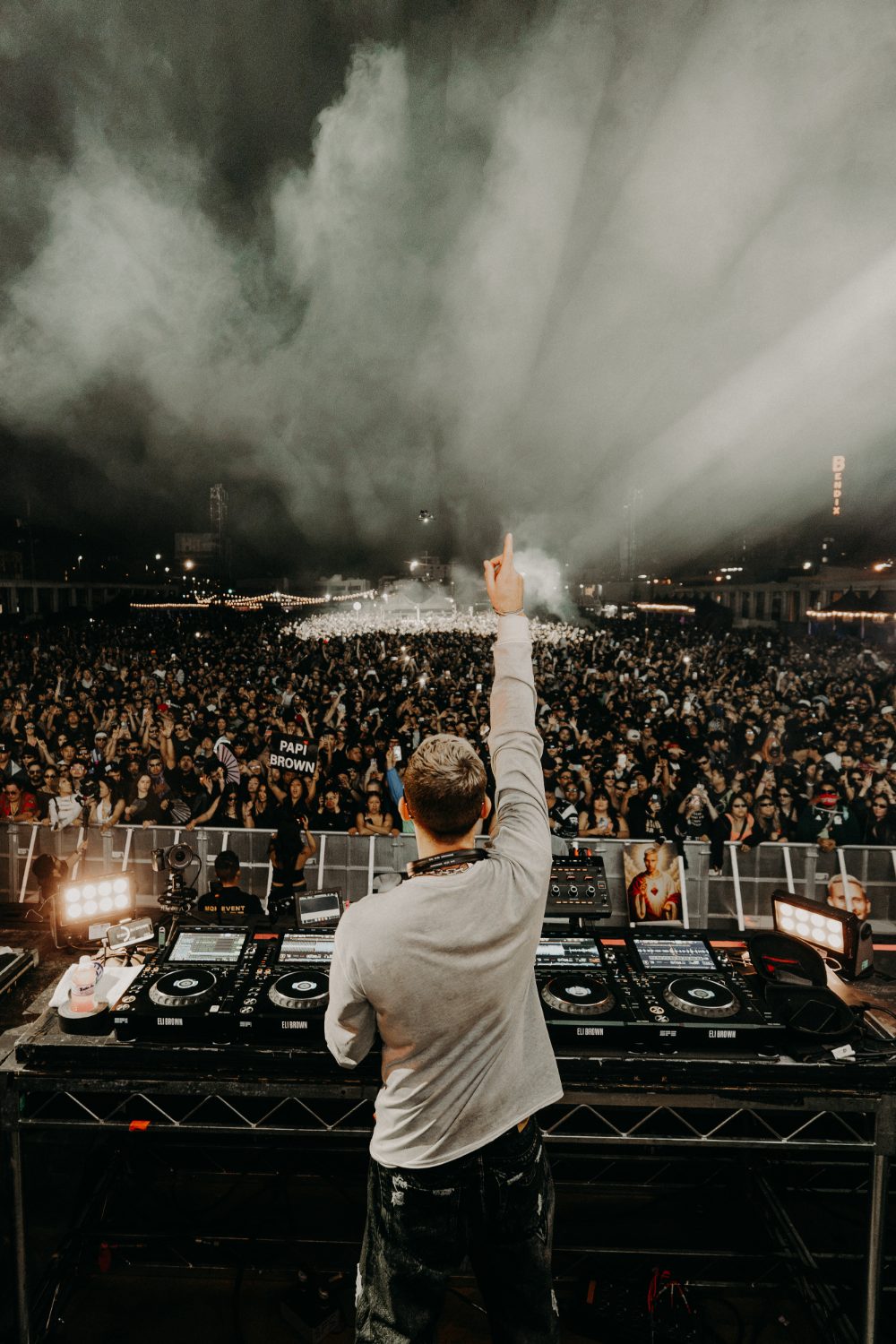

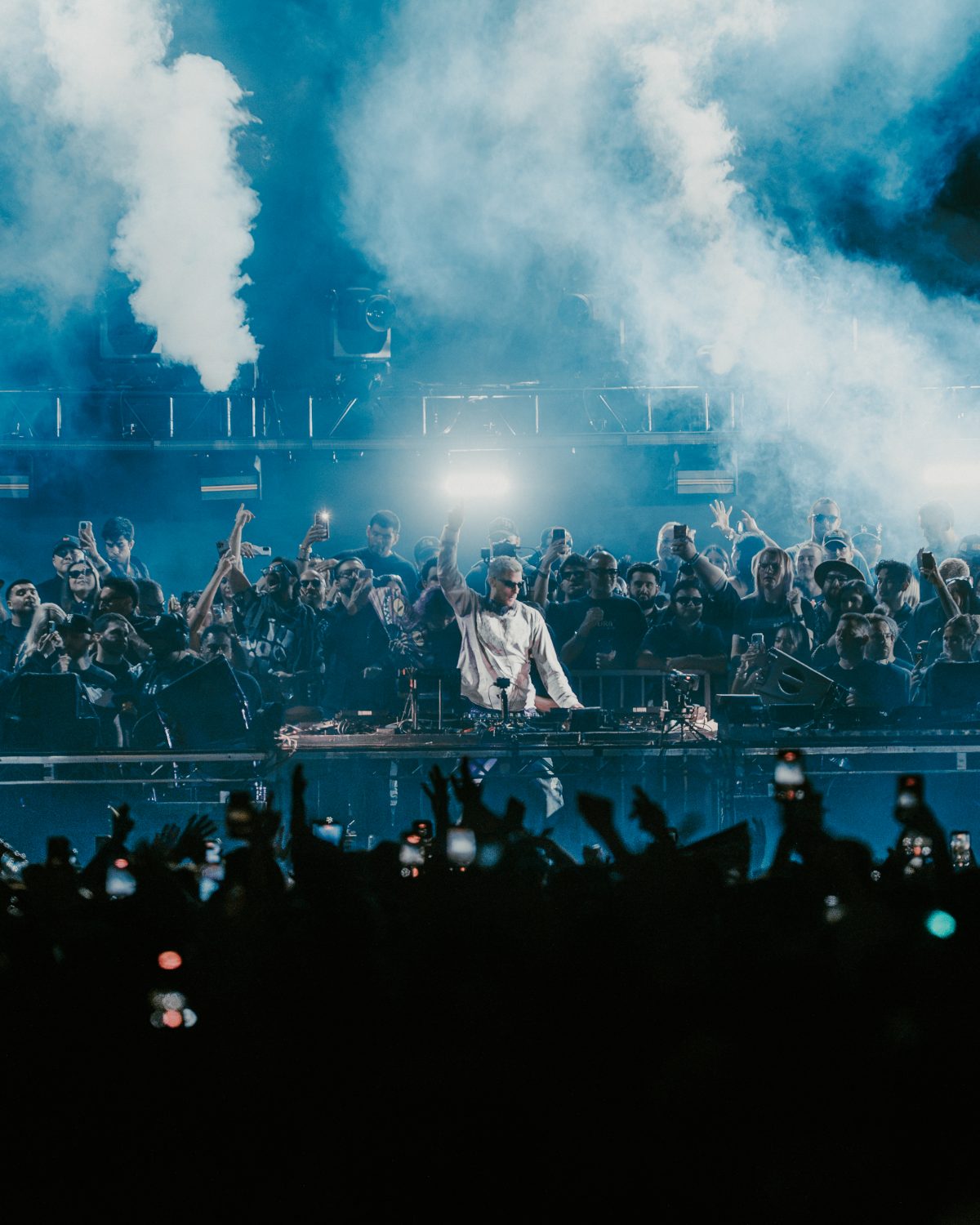
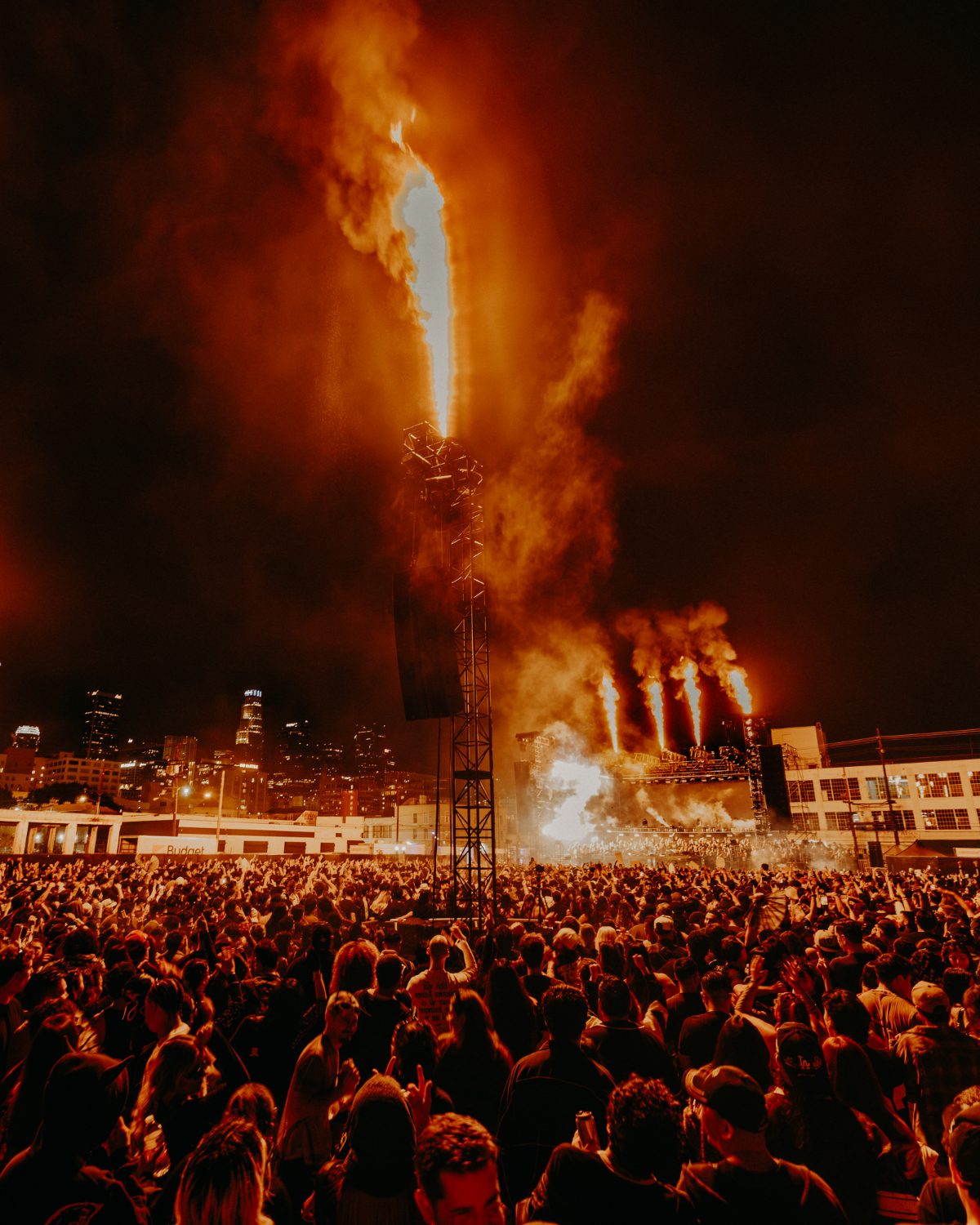
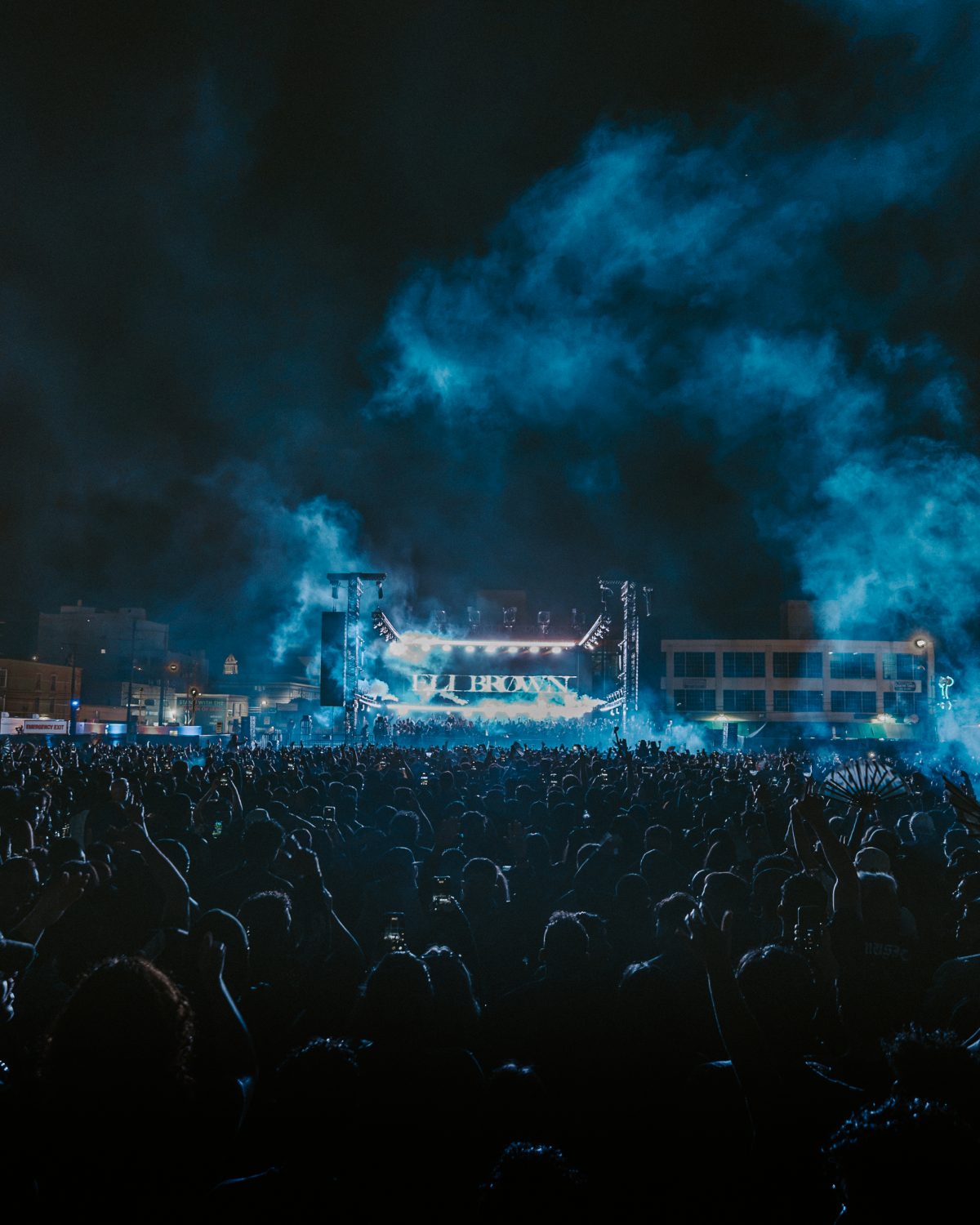
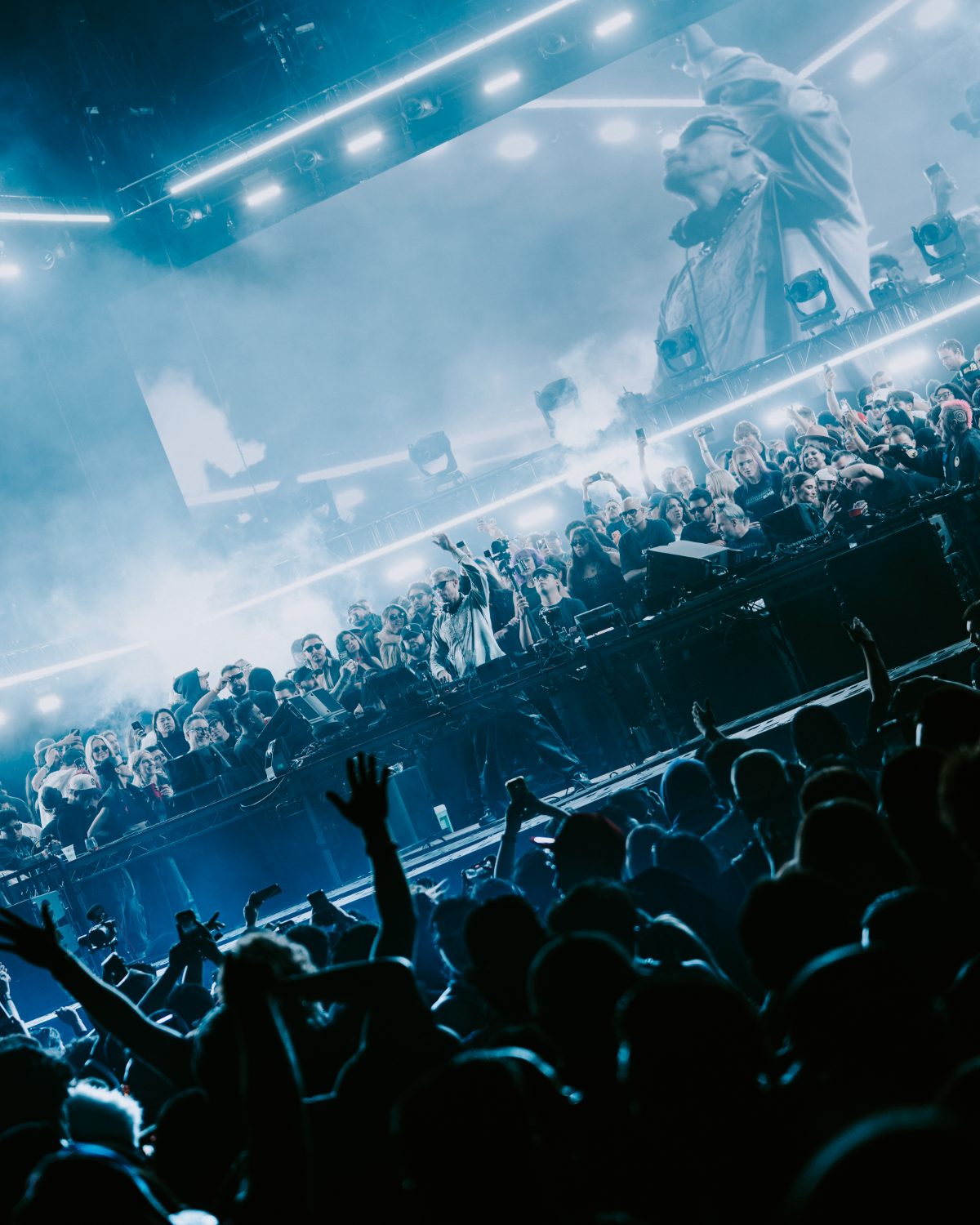
Somewhere inside City Market on Saturday, Nov. 14, a 74-year-old man from Bristol, England, was having the time of his life. His son was the reason 10,000 people had filled the historic produce market in Downtown LA’s Fashion District. Eli Brown had released his debut album Panic Attack the day before, and the Insomniac/Factory 93 show was the biggest headline date of his career: a three-hour set with the city skyline looming behind the stage and raw concrete tunnels running along the venue. The floor remained packed throughout, people happy to bump shoulders as they danced the entire set.
When Brown works with promoters to scope a venue, he gives them the intended feel. “We want it to feel gritty, grimy, because it goes with the music,” he says during a call from Bristol the day before Thanksgiving. The Insomniac team had shown him around City Market in daylight, and the Blade Runner aesthetic sold it. “They’ve got these concrete tunnels down the side that give it a real gritty energy to it.”
The scale of the event still seems to take him aback. “Never in my wildest dreams did I think I would be playing a show to 10,000 people, particularly a few years ago,” he says. “I come from playing in dingy nightclubs to 500 people in my local town” — the same place he immersed himself in electronic music as an underage teen. His father had made the trip across the Atlantic for the show. “He had the time of his life,” Brown says. “He’s totally blown away.”
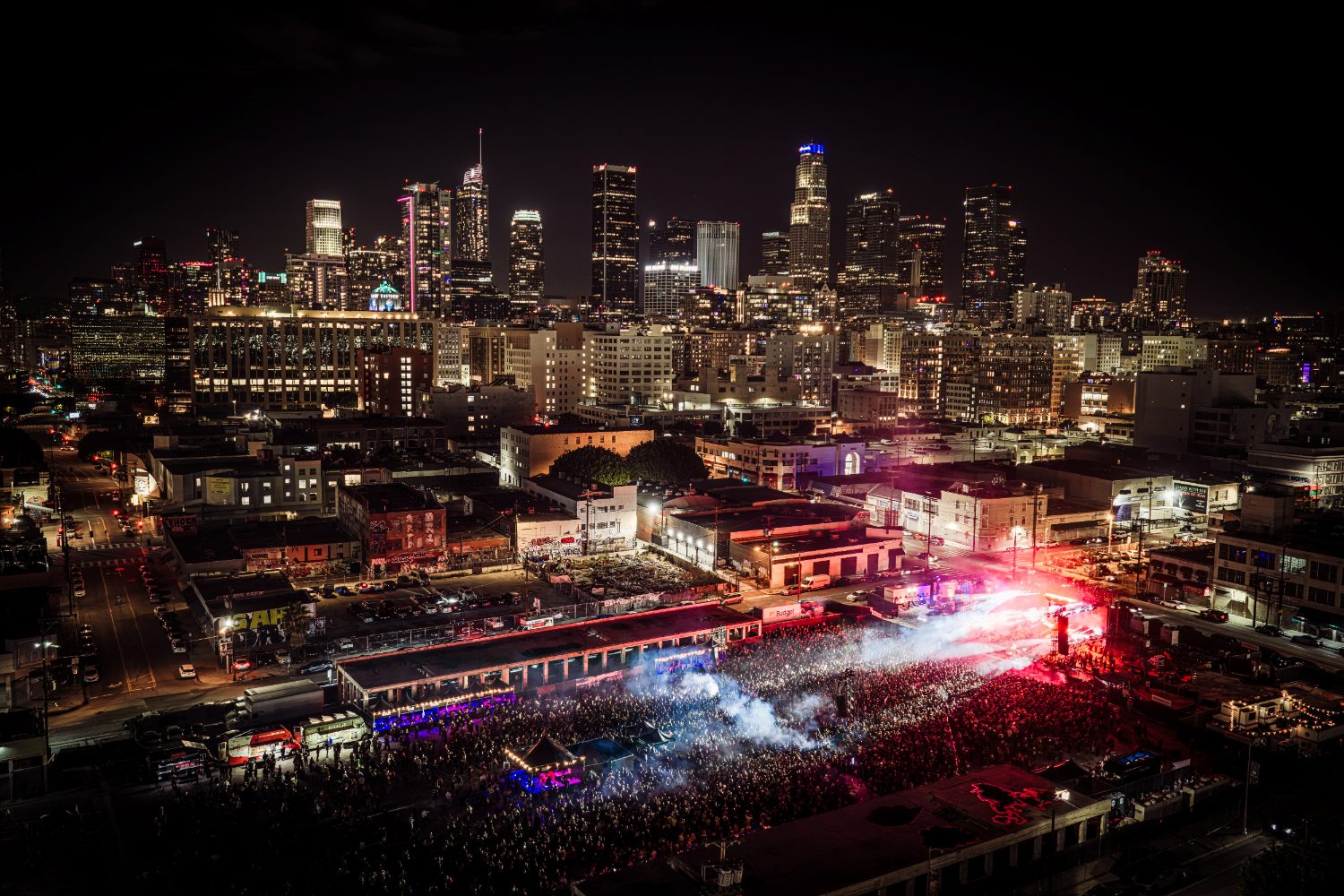
Eli Brown at City Market, DTLA, Nov. 14, 2026. (Photo: Logan Rouse @lzr_fpv)
Brown has been making dance music for roughly two decades under three different names. He came up in drum & bass, first as Xample and later as one half of Loadstar. In 2016, he started from scratch as Eli Brown, an unknown name in tech house. He has since become one of the more prominent acts in peak-time techno, with Coachella, Ultra and EDC among the festivals on his resume.
Panic Attack is his first album as Eli Brown: 14 tracks on Insomniac Records that fold the jungle, drum & bass and trance influences of his teenage years into the techno he plays today. It also represents a more personal introduction to his audience. For years, he had kept his work deliberately enigmatic. “I always used to write in code,” he says. “It was very mysterious, my project, but I’ve wanted to shed that.”
The common thread, from Bristol’s roughest venues to a concrete market in downtown Los Angeles, is the rave itself. Brown has a particular vision of what that word means: a dark room, your mates beside you, nobody looking at their phone and nothing demanding your attention until Monday.
LA has been building toward City Market for some time. Brown has played most of the spots both indoors and outdoors — from 1720, Sound, Shrine, to HARD and Skyline earlier this year, not to mention a blockbuster Saturday closeout to the Yuma at Coachella 2025.
“The fans there seem to have really got behind me,” he says. “Out of all the cities I play, I think it’s probably where my biggest fan base is. And the numbers from the show would probably back that up.”
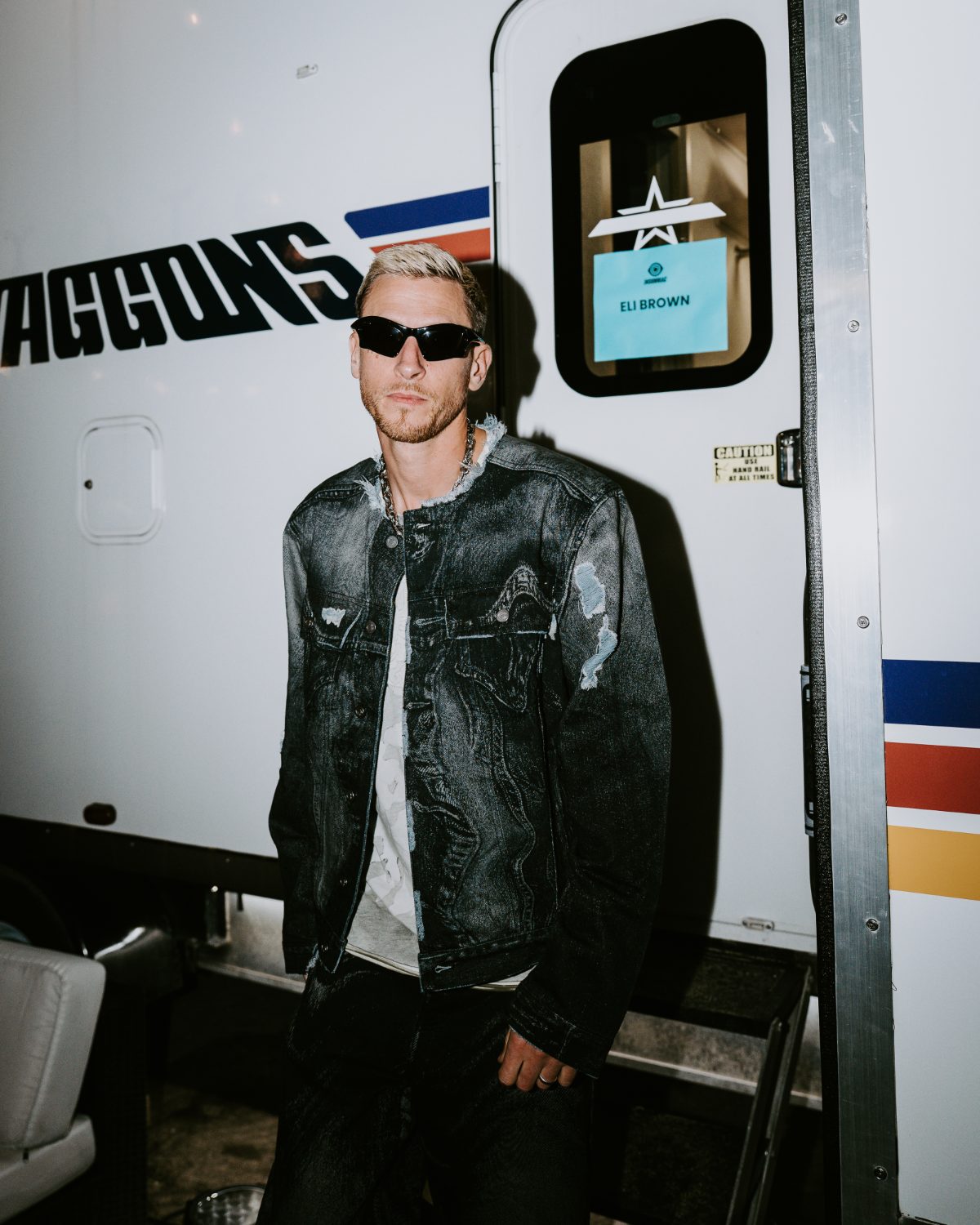
Eli Brown at City Market, DTLA, Nov. 14, 2026. (Photo: Elena Cassady @cassadycreations)
A significant part of that crowd is Latino. Spend time near the front at one of his LA sets and you’ll hear a chorus of fans singing the hooks. Brown admits the connection caught him somewhat off guard. “I feel like I’ve got a strong Latin fan base, bizarrely, being an English guy,” he says.
He’s not the first UK musician who has found a fanbase among LA’s Latinos. They famously have a long and deep connection with Morrissey and The Smiths, who hail from Manchester, another non-London English creative hub. LA is filled with dedicated Moz nights. I asked a Mexican friend why the Morissey love: “We love to cry.”
At last weekend’s show, I asked a Latino Eli Brown faithful the same question. He pulled down his chunky sunnies, looked me dead in the eye and told me succinctly: “Whatchu mean? He goes HARD!”
Then almost magically on cue, Brown started playing his 2023 hit “Diamonds On My Mind” — the dude yells “Let’s gooo” then his crew bursted into a rowdy dance circle chanting its epic lines “I just got a check / Fuck it, I could get it back…”
There’s something about these Englishmen that rouses deep emotions, not just among LA Latinos, but across colors and classes, always on the grind. Seemingly, a personal connection is brewing. Brown believes showing more of his personality has helped bring fans closer together, even at an event as large as City Market. “Even though that event was massive, 10,000 people, I feel like we’re starting to create a real community feeling within Eli Brown fans,” he says. “I get messages. People meet each other at raves who go on their own, and then they travel to other raves to come and see me with these people that they’ve met.” It wasn’t something he had anticipated. “When I embarked on this, I didn’t ever envisage that happening,” he says.
Over the past couple of years, he has incorporated Latin rhythms into peak-time techno on tracks such as “Me Gusta” and “Papi,” teaming up with rapper and vocalist GeezLy to bring the sounds together. The experiment has brought him to stages across Latin America. His Me Gusta tour included Costa Rica, Chile, Peru and Argentina, and he has played sets stretching beyond eight hours at Lost Beach Club in Ecuador.
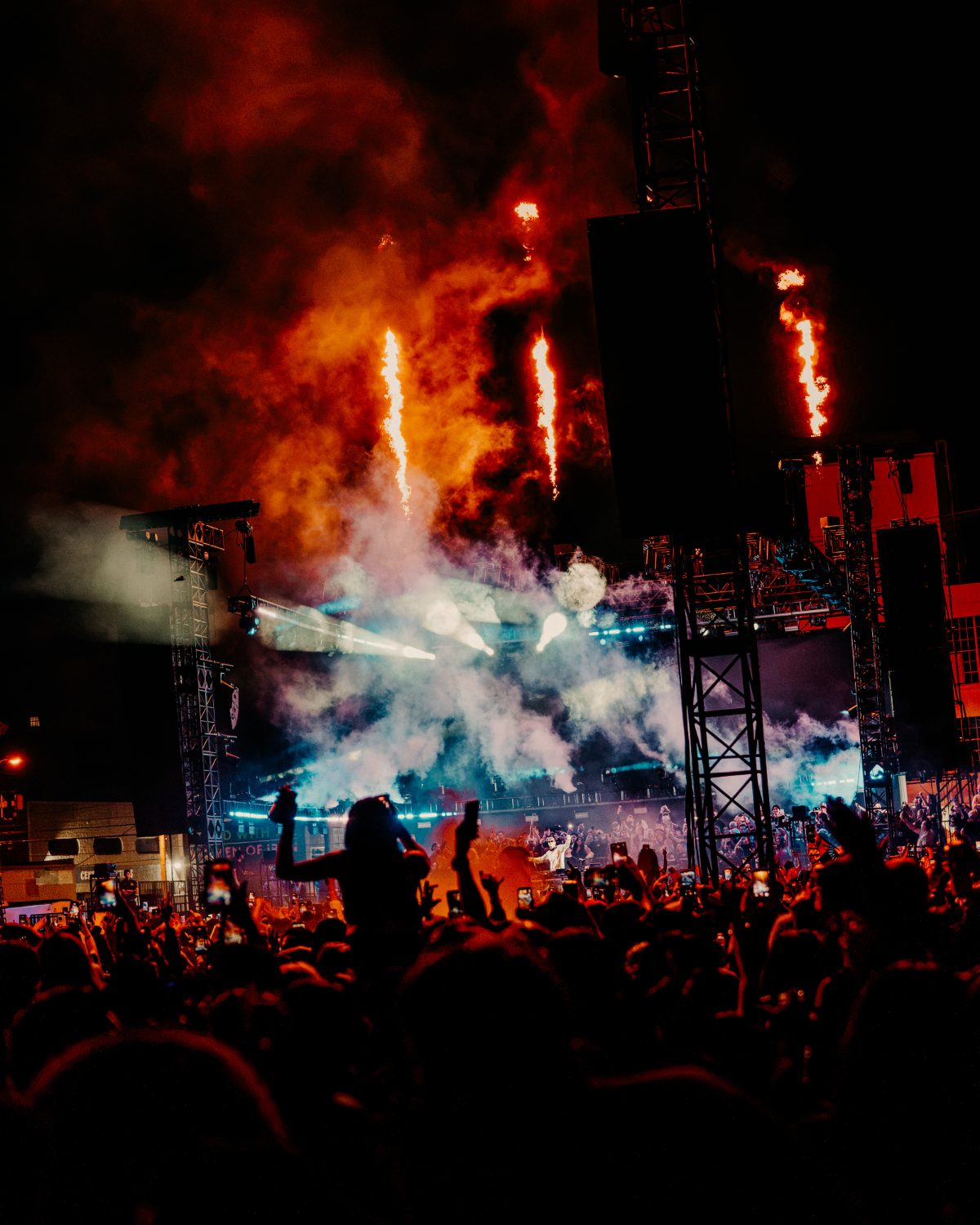
Eli Brown at City Market, DTLA, Nov. 14, 2026. (Photo: Elena Cassady @cassadycreations)
“In Argentina and generally in South America, you play really late and you tend to play quite long sets,” he says. “You tend to start at three, finish at six, seven.” This weekend, he’ll return to Chile for two shows, his final dates before New Year’s Eve back in SoCal at Proper NYE.
“California ravers are pretty up for it and pretty open-minded as well,” he says. “They’re almost spoiled for choice with so many events.” He thinks they’ve connected with his place between tech house and techno. “That’s a bit of my unique selling point,” he says. “I sit somewhere between the two.”
Brown spent years happily releasing singles, but an album needed to have a purpose. “When I embarked on doing an album, I wanted there to have a bit of a story behind it,” he says. “The best place I can show people my personality is through my music, really, and my performances.”
“Coming out of COVID, I was much more considered a techno act as opposed to a tech house act,” he says. Tracks such as “Be the One” and “Diamonds” in 2023 helped establish that direction. He had been considering an album ever since, but didn’t feel ready until about a year ago. Reintroducing the breakbeats and basslines of his drum & bass past still carried some risk. “That’s always the danger with expanding your sound,” he says. “How far do you go? Will you put people off by doing things like drum and bass again? But I felt my audience now is ready to hear and see a bit more of who I am, really.”
He went with his instincts, as he usually does in the studio. “I try not to be too influenced from what I feel other people will think of it,” he says. “My music is very personal to me. If it gets me dancing around the studio, then I feel like that’s a good sign.”
He also wanted to work fast, giving himself about 12 months to complete it. Before writing anything, he put together a moodboard-like folder of samples, sounds and references that would act as the album’s sonic palette. From there, he wrote at a brisk pace, hoping to give the record a cohesive feel, “like a point in time, almost.”
He approached the sequencing much like he would a DJ set, with one major difference. The title track, a rush of trance-tinged euphoria, opens the album. In a club, he’d typically hold it back for the closing moments. “But I just love the emotion of that song so much,” he says. The record starts at a high energy level, settles into a plateau in the middle and builds toward a more euphoric finish. “Which is pretty much how I would construct a DJ set.”
Several tracks grab the atmosphere he was trying to create. “Things like ‘Panic Attack’ and ‘Surround Me’ and ‘Do It Again’ really encapsulate that vibe of the lights come on, you’re at a party or a festival and you want to hug your mates,” he says. “That’s that warm hug that I wanted to create on the album,” especially “as the album crescendos towards the end.”
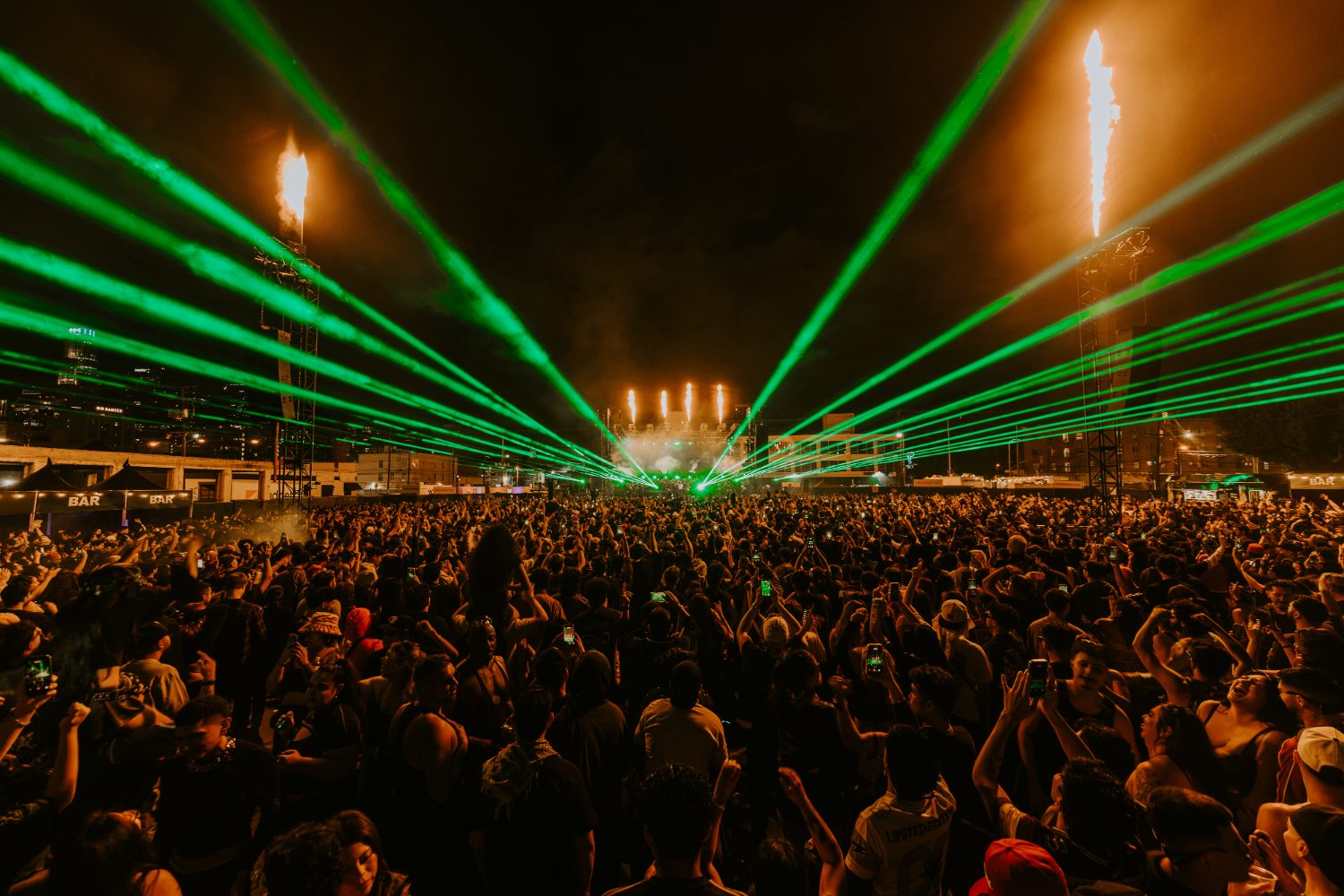
Eli Brown at City Market, DTLA, Nov. 14, 2026. (Photo: Elena Cassady @cassadycreations)
The collaborators bring him back to his Bristol roots. Dimension, a longtime friend from his drum & bass days, joins him on “Frequency,” which opens in techno territory before shifting into drum & bass. Dimension already makes what Brown calls “fast techno” with four-on-the-floor kicks, so the styles came together without much trouble. “It worked out quite easily, to be honest,” he says. For “Badman Riddim,” he brought in U.K. drum & bass MC IRAH. “I wanted to use someone who was a predominant vocalist in the drum and bass scene and see if I could merge that with techno,” he says.
Other tracks pushed him into unfamiliar territory. On “Damaged,” he used piano on an Eli Brown record for the first time. “You always have question marks about putting yourself out there,” he says. “For me, it was a big one.” He has long wrestled with how much emotion to bring into his productions. “How can I make this emotional, but without being cheesy? That’s the balance I’m always trying to make.”
The title draws from the dance floor, too. He has described a panic attack as a form of release in its own right, and says the opening track’s lyrics are about “getting lost in a rave and using music and rave as a release.” The album’s visuals hit that feeling home.
“Music over the years has been a massive escapism for me. That’s where Panic Attack comes in, and where the artwork of being underwater comes in,” he says.
That desire to escape is also behind his gentle encouragement for crowds to put their phones away. He doesn’t want to police the audience, though. “I’m not one of those people who’s strict — put a sticker on your phone, we’re going to deny you the opportunity of capturing stuff for your mates,” he says. Instead, his team shares a Dropbox folder of footage from the event with fans who sign up, giving them a way to revisit the night without having to record every drop themselves.
The concrete at City Market brought Brown back to Bristol. The port city’s former warehouses, factories and crane yards are increasingly finding new life as venues. A few nights before our call, he caught Skepta at the Prospect Building, a 3,000-capacity warehouse. Brown still lives in Bristol and appreciates its small-city character. “You go into the city center for a meal or to do some shopping, you always bump into someone,” he says. “It’s not one of those cities that has lots of glitzy bottle-service clubs,” he says. “It’s very music-orientated and very grungy, much like the downtown LA scenario.”
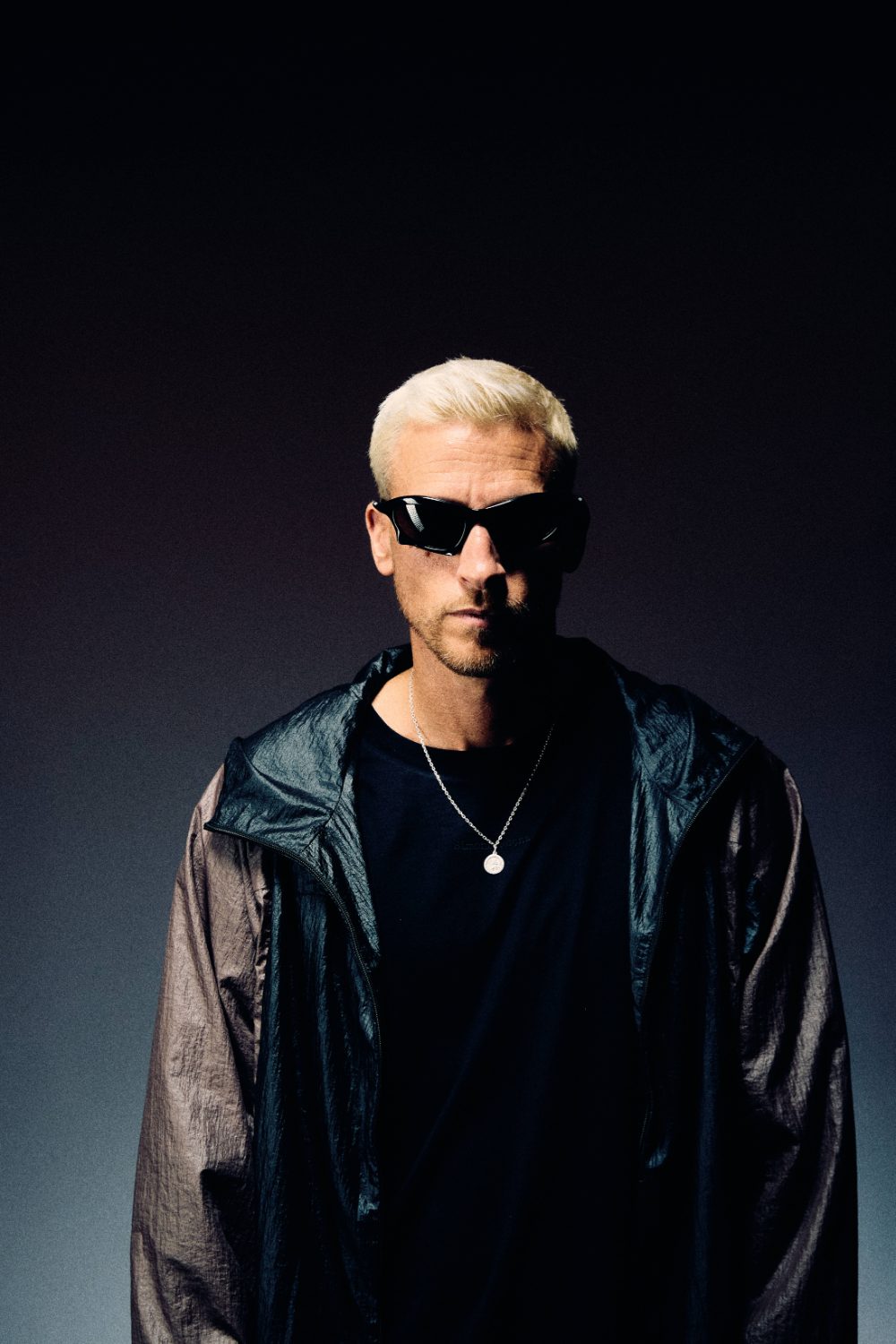
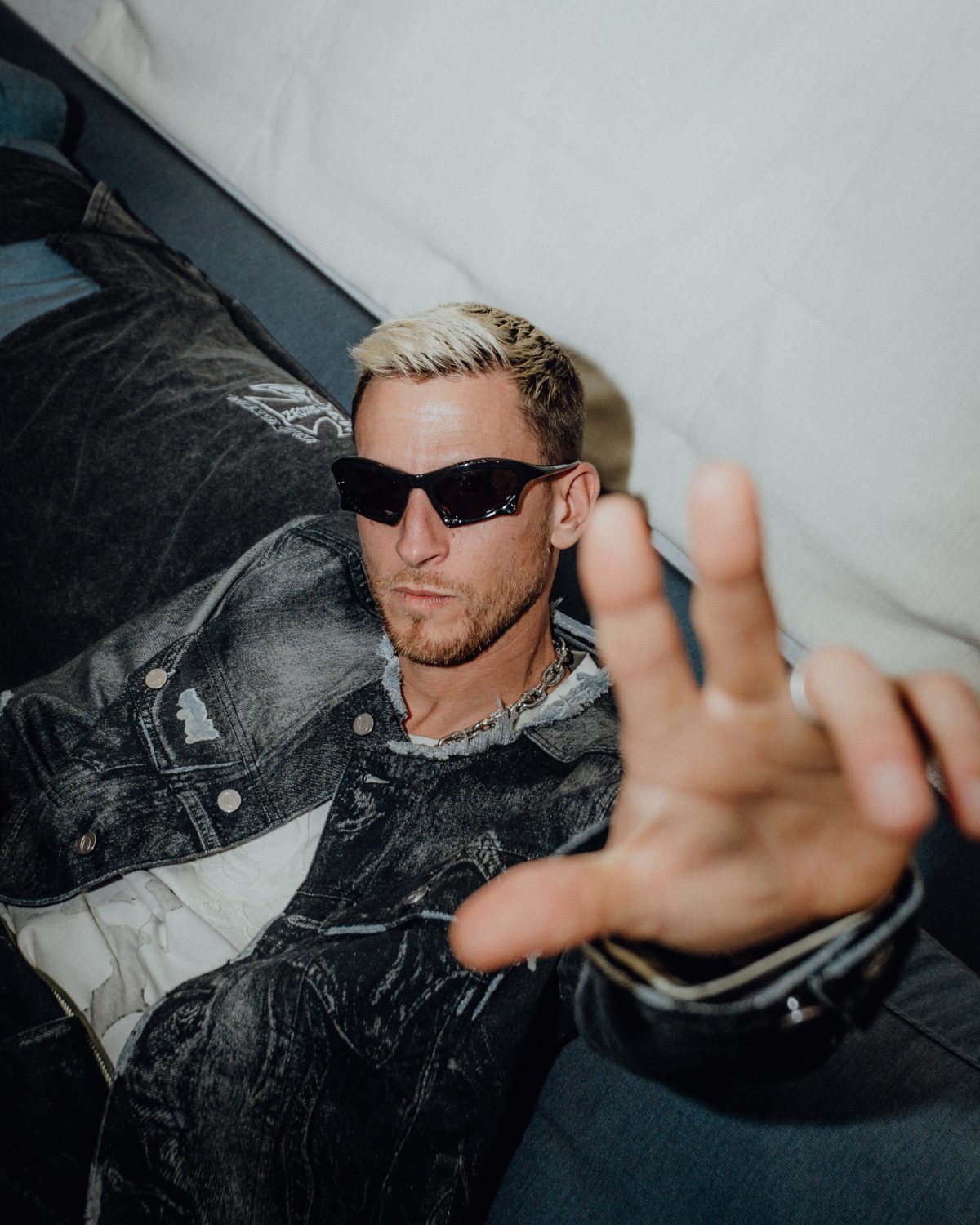
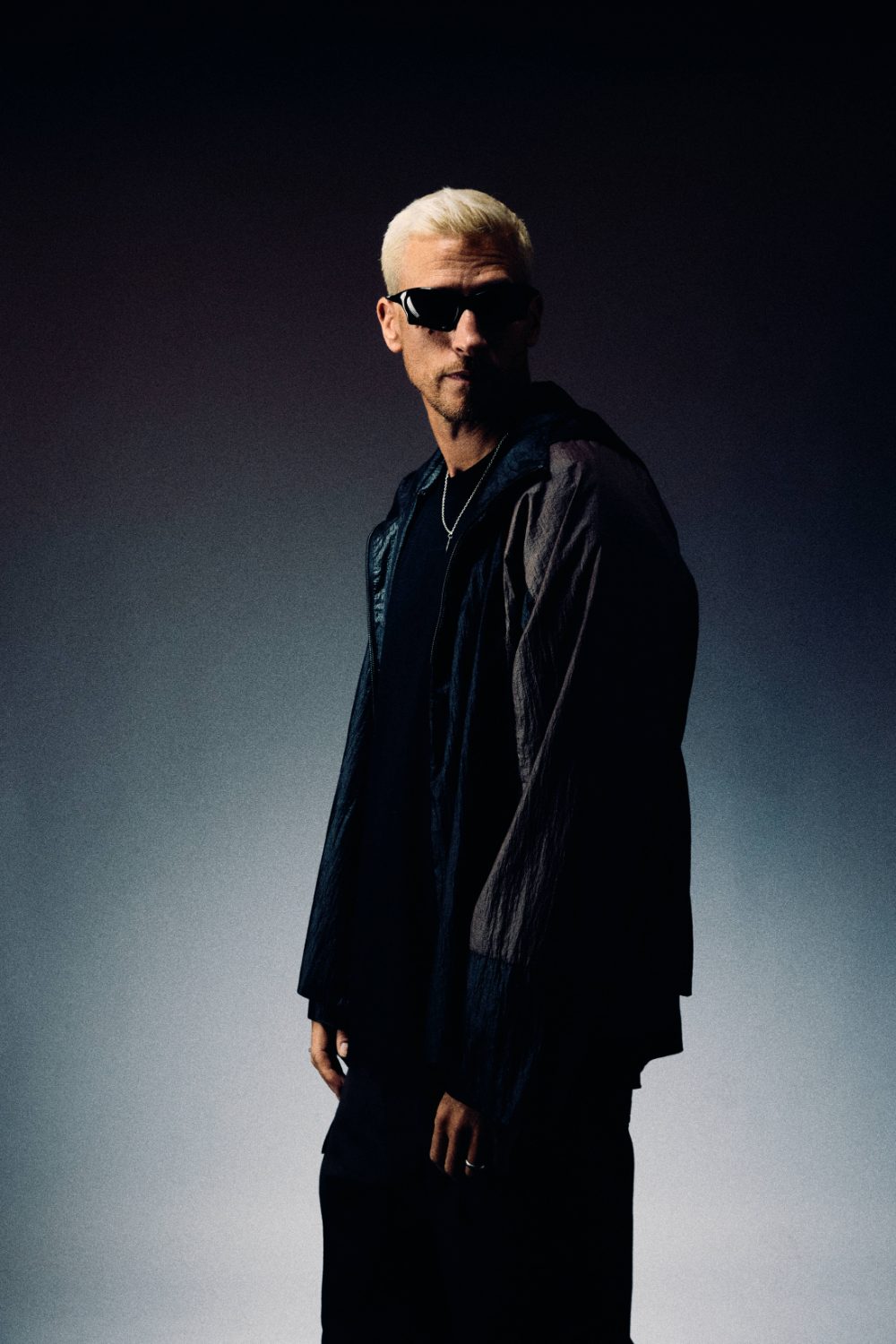
Eli Brown (Courtesy of the artist)
His first rave tapes came from his older sister, who would bring home cassettes of drum & bass and jungle sets. His first raves, however, had a more immediate party-focus motivation.
“I first started raving because I wanted to go out drinking and clubbing when I was underage,” he says. “In Bristol, the only electronic music clubs were the gritty, grungy venues that were cropping up in the rougher area of town, and they would let us in.” Those nights changed everything for him. “I owe the Bristol rave scene a lot,” he says.
In Brown’s account, Massive Attack and Portishead helped pave the way to jungle and drum & bass. “It’s a port, so it has a big Caribbean community here, and their influences from sound system and reggae culture have been brought into drum and bass,” he says. “It’s been a real melting pot of sounds.”
What he remembers most about those nights is the feeling of leaving everything behind. Finish work at 5 p.m. on a Friday, head to the club and forget about the rest of the world. “All your cares are gone for the weekend. It’s something that I didn’t really have, phones and outside influences, when I was raving,” he says. “And that’s why it was so great.”
He built a career around that feeling, then found himself having to start over. As Xample, he signed to Andy C’s RAM Records, and later released two albums on the label as half of Loadstar. By 2015, he had become disillusioned with music and was sending out CVs in search of a regular job.
Then came the reset. In 2016, he made a house track and sent it to Skream without telling him who he was, hoping to get an honest opinion without his previous work influencing the response. Skream signed it. Within four years, Calvin Harris had brought him into his Love Regenerator project. Brown had also started his own label, Arcane, which passed 100 releases this year.
These days, he sees the sunrise differently. “I stopped drinking about two years ago, actually, this weekend,” Brown says. “I’ve always been going to the gym and running, but it’s definitely ramped up since I gave up alcohol.” He now works out three to four times a week and runs three times a week, wherever he happens to be. He says “the beauty of running for me is that I can do it anywhere in the world. All I need is my running trainers.”
His favorite runs tend to come after his longest sets, especially the South American shows that end around six or seven in the morning. “It’s like this new superpower that I have, now I’m not drinking and going back to the hotel feeling like I need to crash and sleep all this off.”
That Bristol kid would catch the sunrise while walking home from the club — now he runs toward it. “Not drawing the curtains, panicking because I need to go to sleep. It’s more like, wow, this is beautiful. It’s a new part of the day.”
Keeping a schedule that rarely strays too far from Bristol time helps. “I tend to just stay on English time,” he says, which often means sleeping from midafternoon until around 1 a.m. A run at 6 a.m. is therefore less unusual than it might sound. Wherever he travels, he also seeks out a local sauna and cold plunge. “That always never fails to get me going,” he says.
He began sharing his runs on social media, and fans soon started asking to join him. “It’s just caught on, and people have been asking me to do these organized runs whenever I’m in cities,” he says. He has since organized Run Club events in Miami and San Francisco. On the morning of the City Market show, he led another in Santa Monica. He had arrived the day before. “It made sense to do something on the Saturday morning,” he says, “and the turnout was great.”
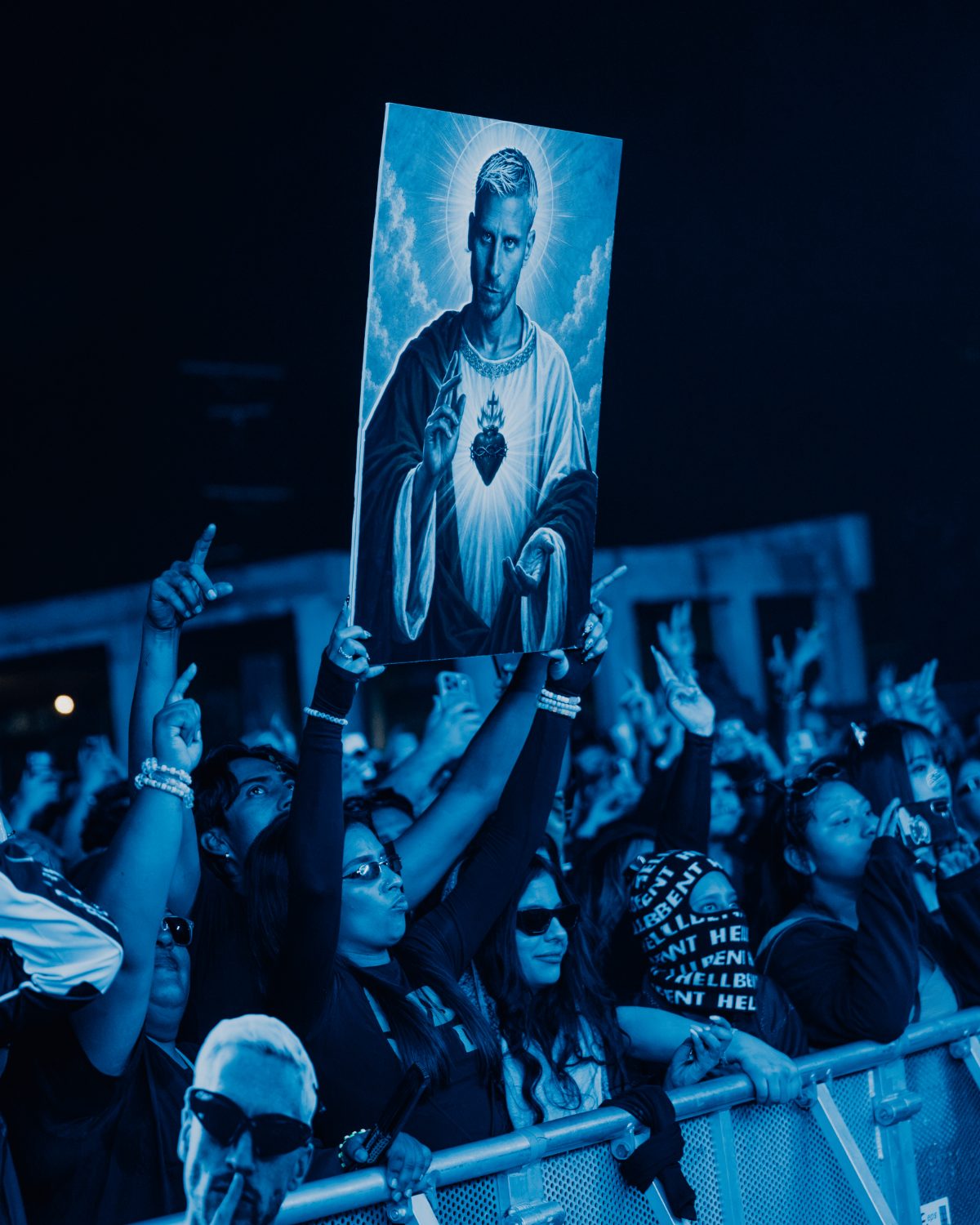
Eli Brown at City Market, DTLA, Nov. 14, 2026. (Photo: Elena Cassady @cassadycreations)
Despite Bristol’s deep influence on his music, Brown doesn’t play his hometown very often. He performs in the U.K. around twice a year and returns to Bristol perhaps once every two years. Drum & bass remains the dominant sound there.
“The type of music I do is not super popular here,” he says. “It’s like every 14 to 21-year-old in Bristol, it’s a rite of passage that you have to be into drum and bass. And my eldest son is just starting to go through that.”
Brown has three children, ages 14, 12 and 10. His oldest has been asking for tickets to drum & bass raves. “And I’m like, you’re a bit too young for that,” Brown says. Still, he’s happy to see his son developing an interest in music. “He started to make music himself, which I find really cool. I like the fact he’s into jungle and drum and bass. That’s what my roots are.”
“He actually prefers all my old music than my new music,” Brown says. “My parents were less supportive of me getting out raving and doing music, to be honest with you,” he says. “But yeah, I’m all for it with him. 100%.”
His parents have obviously come around. “They’ve gone full circle,” he says. His father now attends a show every year or two. He joined him for Brooklyn Storehouse in New York last year. Brown figures someone from his father’s generation needs to experience a rave firsthand to understand it. “To bring him to a show so that he can see it, feel it, gives him a great insight. And I think he really enjoys it now. And he’s super proud.”
After Chile, Brown plans to spend most of December and January at home making music. A collaboration with a major artist he can’t yet name is scheduled to arrive on Arcane in January, followed by remixes and new material in the spring. “I’m addicted to making songs,” he says. “I’ll probably write enough music in the next month or six weeks to last me the year.”
Ask him what Panic Attack is meant to capture, and he returns to Bristol, to the feeling of a night coming to an end.
“The lights are on, you’re walking up the road, the sun’s coming up and you’re hugging your mates. You’ve had the best night of your life.”
Follow Eli Brown on Instagram @elibrownbeats.
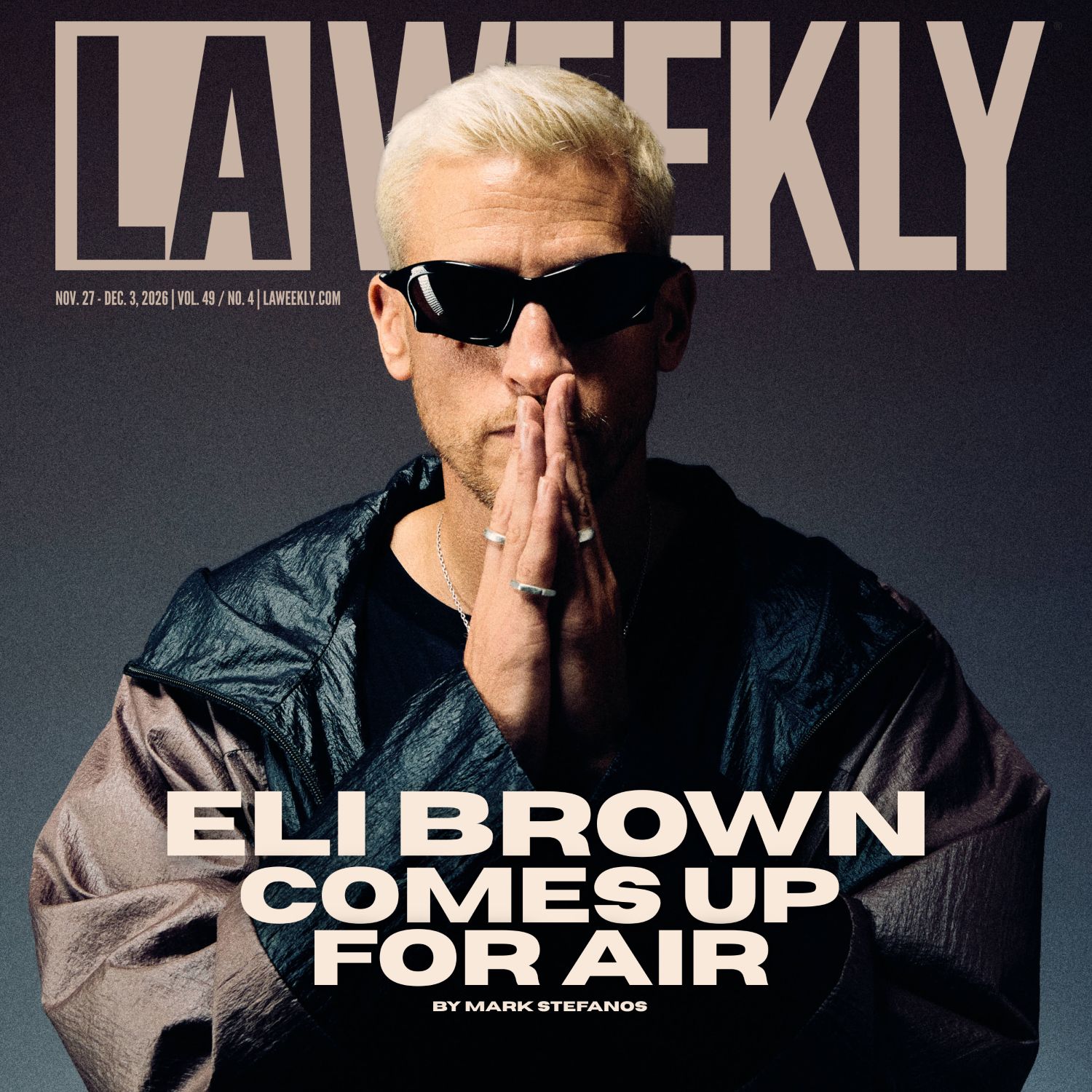
Eli Brown on the Nov. 27, 2026, cover of LA Weekly (Photo: Courtesy of Eli Brown; cover design: Mark Stefanos)