
 Nia Bowers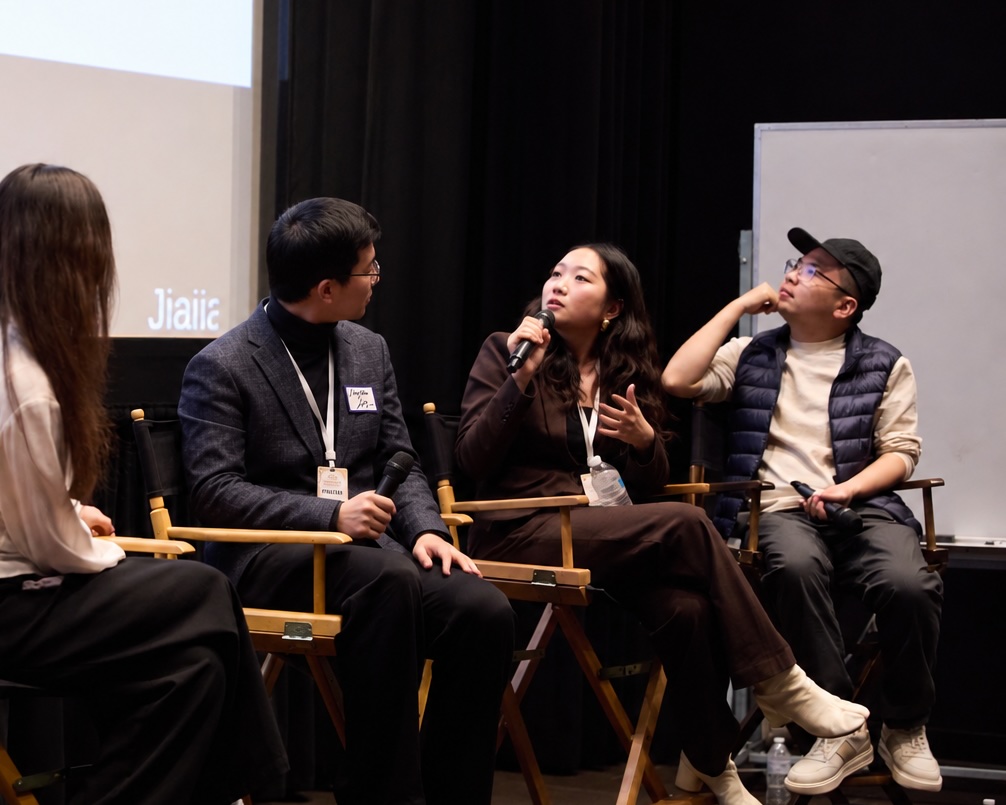
The China–U.S. producer behind the award-winning independent feature Rumors in the Cornfield discusses balancing creative ambition with production realities, and why she believes live action and AI will increasingly work side by side.
While shooting the independent feature Rumors in the Cornfield in rural Henan, producer Zimeng Cui kept running into the same problem: the director needed wheat rolling in waves at sunset, but the right wind would not come.
With the film’s limited budget ruling out wind machines and the schedule unable to stop indefinitely, Cui reorganized the production. She divided the crew, leaving a small camera unit on standby at the wheat field while filming continued elsewhere. On days when the forecast looked promising, actors and key crew members were kept within reach of the location. If the wind arrived, they could move quickly.
“The job was to protect the director’s vision without letting the whole production stand still,” Cui says.
That balancing act sits at the center of Cui’s approach to producing: understanding what a story requires, then finding a way to achieve it within the realities of budget, schedule and production. It is an approach she has developed through work across China and the United States, and one that now informs her growing practice at the intersection of live-action filmmaking and artificial intelligence.
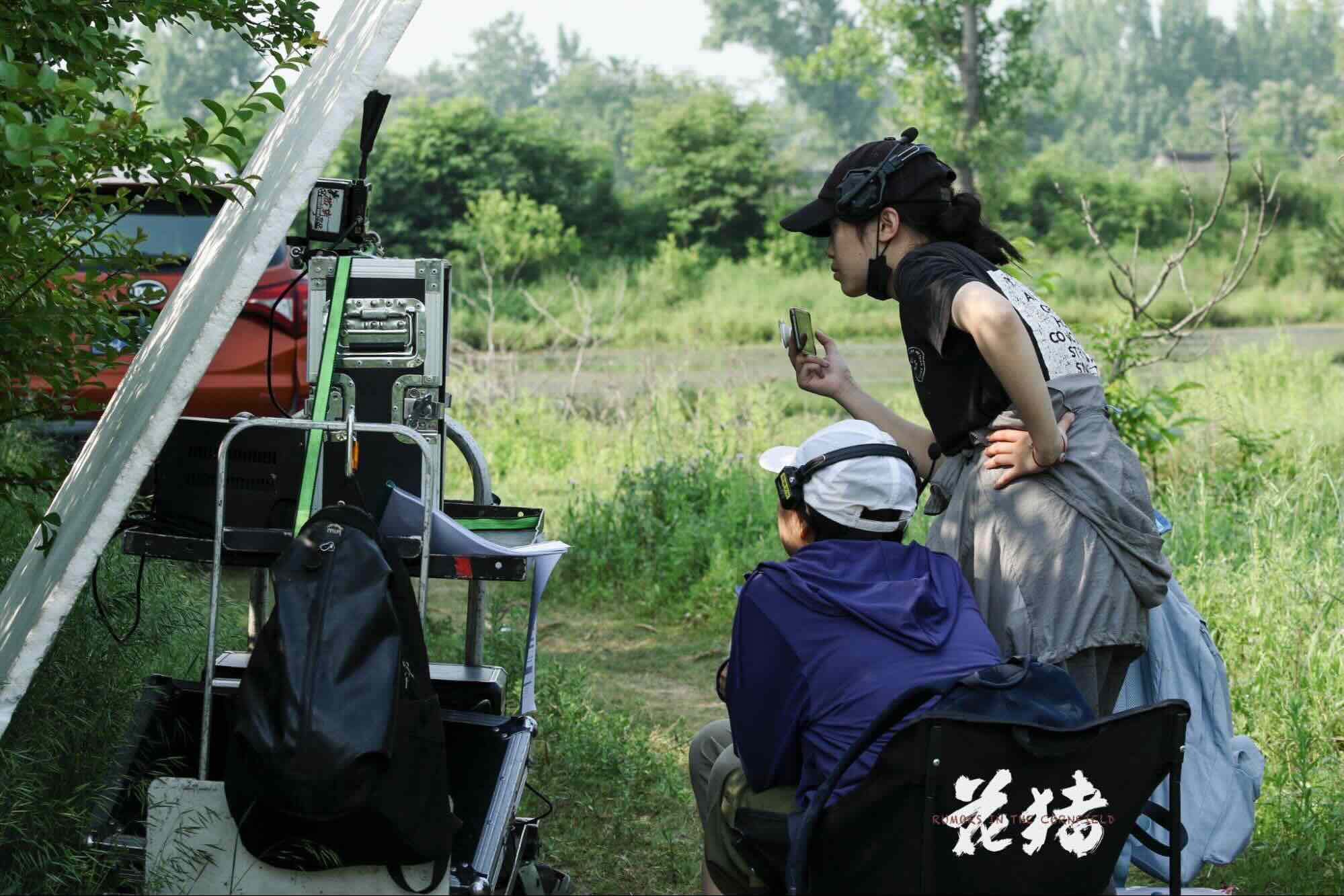
Zimeng Cui on the set of Rumors in the Cornfield. Image courtesy of Zimeng Cui.
A Producer Trained Between Two Industries
Cui was first trained in screenwriting in Shanghai, China, before shifting her focus to producing in the United States. That experience still shapes how she approaches a project.
“I read a script first as a writer and then as a producer,” she says. “I ask what the story needs, and then I figure out how to make it possible. That way of thinking carries over into my AI production work as well. Whether it’s drama, live-action footage or AI-generated imagery, story is always the starting point for my decisions.”
Rather than treating producing primarily as logistics, Cui sees it as a form of creative decision-making. A producer must understand the dramatic intention behind a scene before deciding where money, time and people should be allocated.
That perspective became especially important on Rumors in the Cornfield.
Turning an Award-Winning Pitch Into a Feature
Cui joined Rumors in the Cornfield after encountering the project at the 2022 FIRST International Film Festival’s Financing Forum. The project went on to receive the forum’s Special Promotion Award, accompanied by RMB 300,000 in funding.
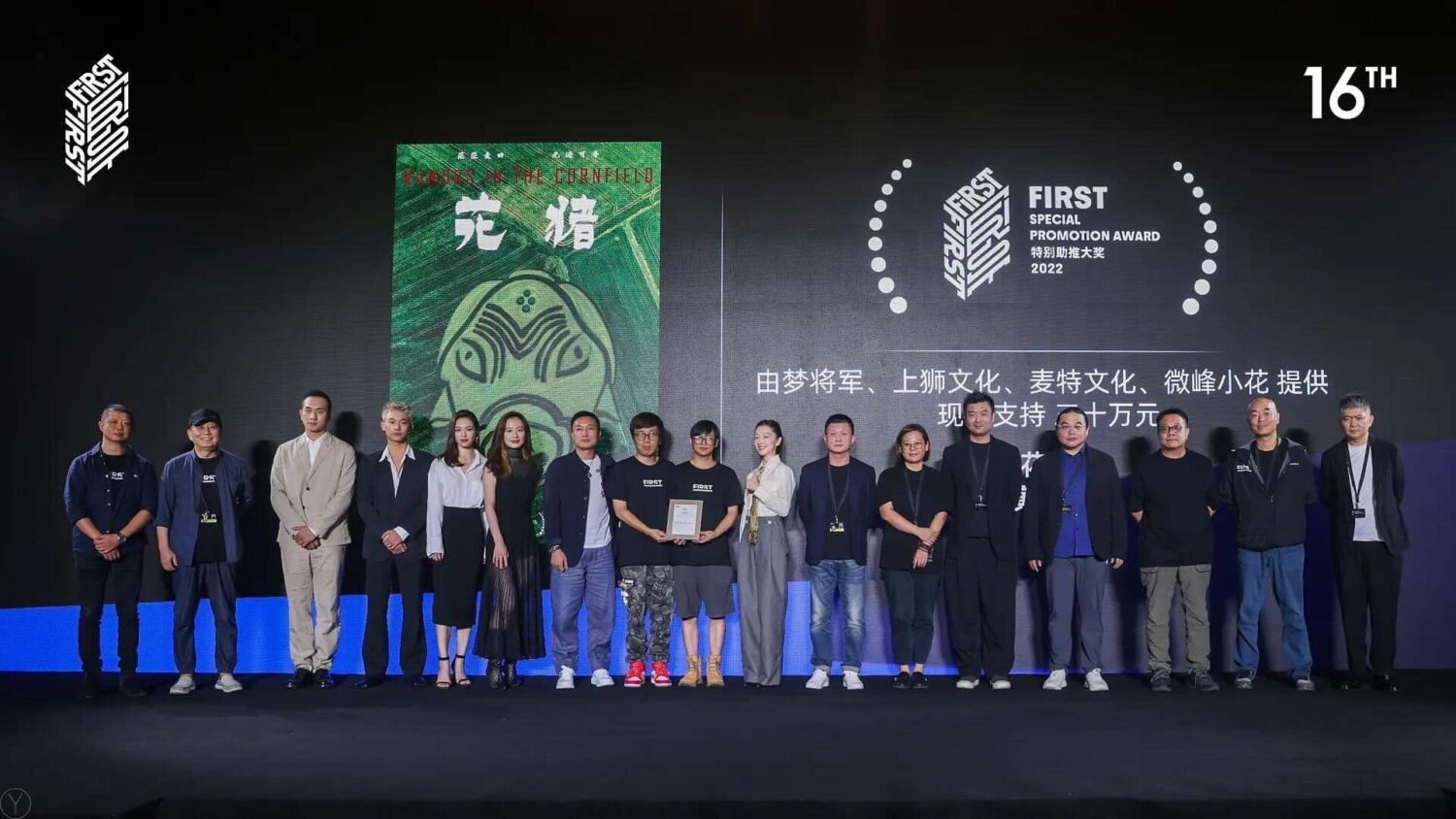
The production team of Rumors in the Cornfield at the 2022 FIRST International Film Festival Financing Forum. Image courtesy of Zimeng Cui.
At the time, however, the film had not yet secured the financing necessary to move into production. Cui helped build the production team and bring in investment, working to turn the project from a promising pitch into a completed feature. Actress Zhou Dongyu, who had served on the forum’s final jury, later joined the film as executive producer.
The 100-minute black comedy follows Lao Yu, a village pig castrator whose increasingly surreal encounters with an escaped pig, an unfinished house and a mysterious presence in the wheat fields expose the frustrations and absurdities of life in a rapidly changing rural community.
For Cui, the challenge was not simply getting the film made. It was preserving the specificity of the director’s vision while managing a production whose creative demands were unusually difficult to control.
Producing Around the Unpredictable
Many of the film’s most important elements could not be directed in the conventional sense. Principal photography ran from April 25 to May 29, a 35-day shoot in rural Henan that required Cui to manage a production shaped by animals, changing weather and a limited independent-film budget, while committing to filming the animals without causing harm. Their behavior could not be repeated on command, forcing Cui to build flexibility into the schedule.
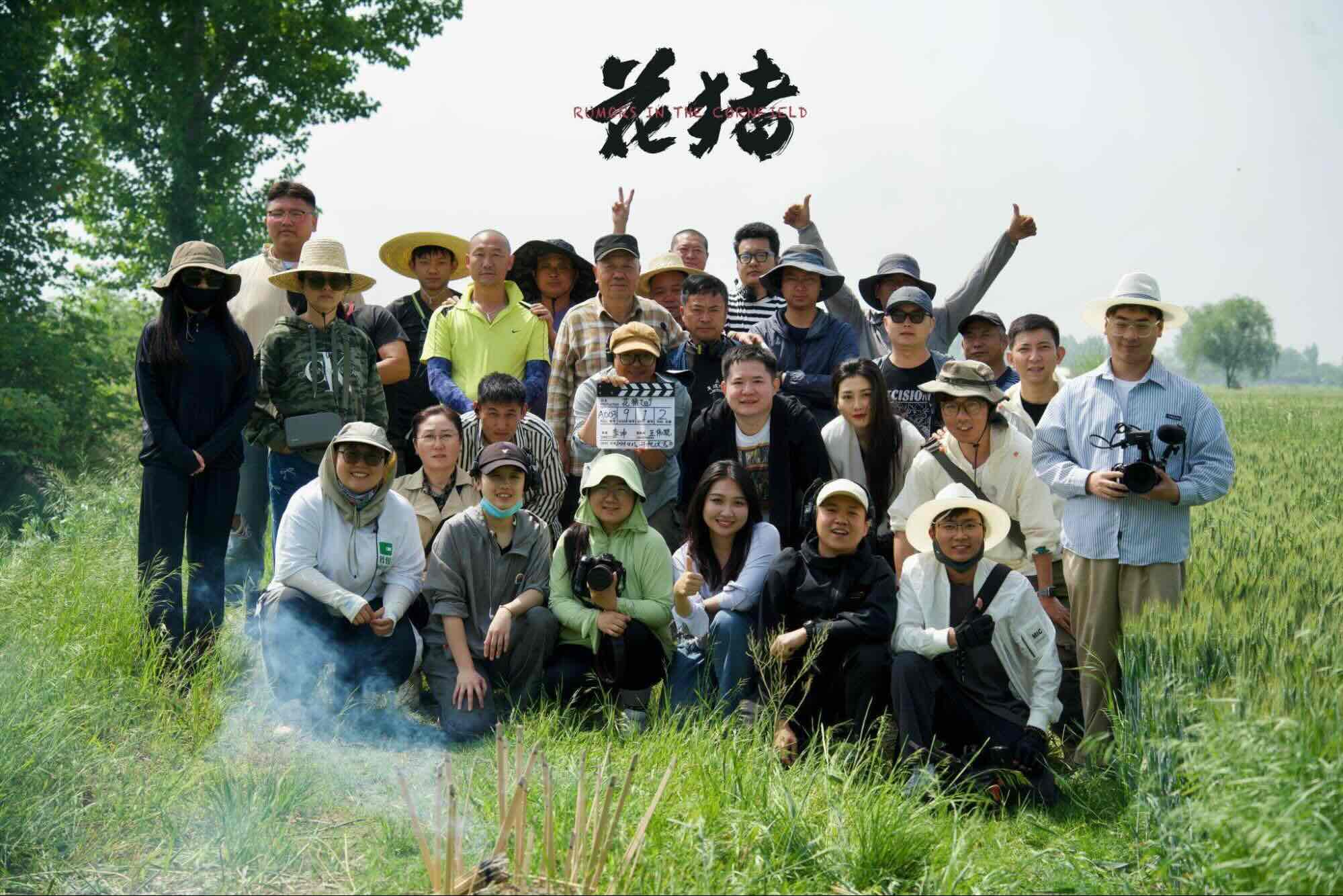
The production team of Rumors in the Cornfield on set. Image courtesy of Zimeng Cui.
“You can rehearse with actors. You cannot rehearse with a pig,” she said. “We had to build the schedule around the animals, not the other way around.”
The weather created another constraint. Li wanted real wind moving through the wheat rather than an artificial approximation, but the right conditions proved difficult to predict.
Cui tracked forecasts, reorganized the shooting order and kept actors working at nearby locations while a smaller unit watched the wheat field.
“Zimeng’s critical role was keeping a very unpredictable shoot organized and on budget,” Li said. “I insisted on waiting for the real wind, which could easily have broken our schedule. Instead of asking me to compromise, she restructured everything around it. She protected my vision without letting the production fall apart.”
When the wind finally arrived, it flattened parts of the field. One patch, the crew noticed, appeared to resemble a pig.
For Cui, the accidental image reinforced the value of what cannot be planned. But the weeks spent waiting also sharpened another question: which parts of a film truly require the physical world, and which can be achieved differently?
From Live Action to AI Production
Cui had already begun studying artificial intelligence and large language models before moving to the United States. She later expanded that interest into diffusion models and AI-generated imagery, and now applies those tools across advertising, short-form drama and visual production.
Her interest in AI grew not from a desire to replace filmmaking, but from the practical concerns she had already encountered as a producer.
A traditional production is shaped by scarcity. Locations are available for limited periods. Weather changes. Actors and crew have schedules. Reshoots cost money. Animals behave unpredictably. Every additional shooting day creates another layer of expense.
AI introduces a different set of possibilities.
“AI shouldn’t be dismissed just because it is new,” Cui says. “It can support part of what we shoot in live action, with greater efficiency and far more control over the result. I believe the next era of filmmaking will combine live action and AI.”
For Cui, the important question is not whether AI or live action is superior. It is deciding what each scene actually needs.
A producer might choose to shoot the emotional core of a sequence practically while using AI to extend an environment, test an image before production or supplement a shot that would otherwise require significant additional resources. In another scene, the unpredictability of a real location or performance might be precisely what gives the image its value.
“My job as a producer is to decide where the camera is irreplaceable, and where technology can carry the load,” she says.
That distinction becomes particularly meaningful for independent productions, where creative ambitions frequently exceed available resources.
Filmmaking in the AI Era
Cui has also spoken at AI and entertainment forums in the United States, including programs at MIT and the USC School of Cinematic Arts, discussing how generative technologies are changing the way filmmakers think about production.
Her perspective remains grounded in producing rather than technology for its own sake. “AI shouldn’t be dismissed just because it is new,” she says. “It can support part of what we shoot in live action, with greater efficiency and far more control over the result. I believe the next era of filmmaking will combine live action and AI.”
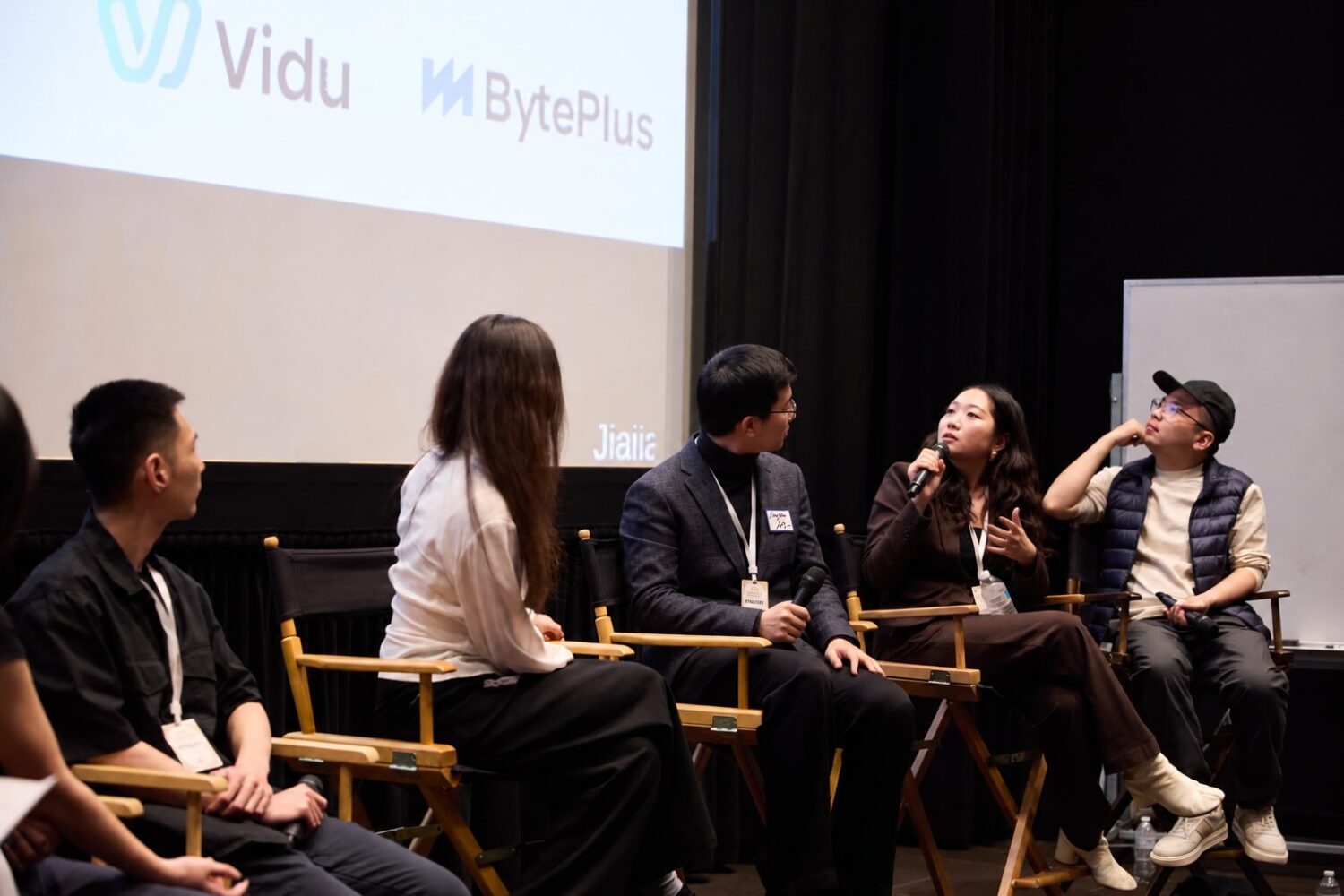
Zimeng Cui speaking at the 2026 AAPI Entertainment & Casting Summit at the USC School of Cinematic Arts. Image courtesy of Zimeng Cui.
AI may make certain images easier to create, but Cui argues that it places greater responsibility on the people deciding how those tools should be used. The more production options filmmakers have, the more important judgment becomes.
A producer must still decide which images matter, where resources should be concentrated and how dramatically different production methods can belong to the same visual world. “My job as a producer is to decide where the camera is irreplaceable, and where technology can carry the load,” she says.
Looking Ahead
For Cui, the future of filmmaking lies in a closer integration of live action and AI, particularly for independent productions working with limited budgets. She believes this combination will increasingly shape how producers plan shoots, allocate resources and bring ambitious stories to the screen.
“Working across China and the United States has shaped how I think about production,” she says. “I want to bring that experience into projects where live action and AI work together to expand what we can achieve within a limited budget.”
As these tools become part of everyday production, she believes the producer’s judgment will become even more important. “The question is deciding which approach best serves each scene, and keeping the film’s creative vision consistent,” Cui says.
The experience of Rumors in the Cornfield remains a useful example. Sometimes the right decision is to use a new tool to gain greater control. Sometimes it is to restructure an entire shooting day and wait for the wind.